From the first time you cook them, some recipes seem like they belong in your kitchen. For me, one of those dishes is pico de gallo.
I honestly didn’t anticipate something made with such commonplace ingredients to become such a favourite when I first discovered this straightforward salsa after a buddy suggested preparing it at home. I made a large bowl for my family last weekend, and in a matter of minutes, the kitchen was filled with the aroma of ripe tomatoes, garlic, cilantro, and lime. Everyone kept returning for “just a little more” during that particular supper.
Anti-Inflammatory Pico de Gallo Recipe
Pico de Gallo is a fresh Mexican-style salsa made primarily from tomatoes, onion, chile peppers, cilantro, lime, and garlic. Because it is packed with vegetables and herbs and is naturally low in fat and calories, it can be an easy addition to a balanced, anti-inflammatory eating pattern. It should not be considered a treatment for inflammation or a medical condition.
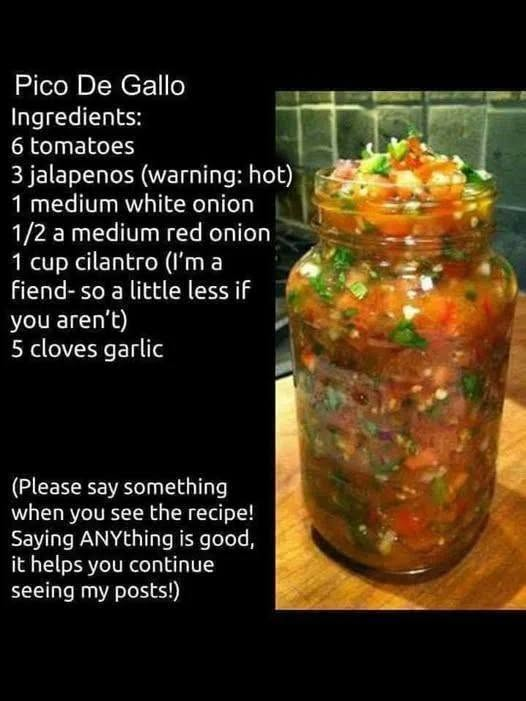
The recipe in your image uses a generous amount of garlic, cilantro, jalapeño, and both white and red onion. Here’s a polished version that keeps those proportions while adding lime and a modest amount of salt.
🌶️ Ingredients
Makes approximately 6–8 servings
- 6 ripe tomatoes, diced
- 3 jalapeños, finely diced
- 1 medium white onion, finely diced
- ½ medium red onion, finely diced
- ½–1 cup fresh cilantro, chopped
- 5 garlic cloves, finely minced
- Juice of 2 fresh limes
- ¼–½ teaspoon sea salt, or to taste
- ¼ teaspoon freshly ground black pepper, optional
Optional anti-inflammatory additions
- ½ teaspoon freshly grated ginger
- ½ teaspoon ground turmeric + a pinch of black pepper
- ½ avocado, diced
- 1–2 tablespoons extra-virgin olive oil
Tip: Tomatoes provide lycopene, while onions, garlic, cilantro, and peppers contribute various plant compounds. The overall benefit comes from the dietary pattern rather than any single ingredient.
👩🍳 How to Make Pico de Gallo
- Prepare the tomatoes.
Dice the tomatoes into small, even pieces. If they’re particularly watery, remove some seeds and excess liquid. - Chop the vegetables.
Finely dice the white onion, red onion, and jalapeños. For a milder salsa, remove the jalapeño seeds and membranes. - Add garlic and cilantro.
Mince the garlic and finely chop the cilantro. - Combine.
Add everything to a large mixing bowl. - Add lime juice.
Squeeze in the fresh lime juice and gently toss. - Season.
Add salt and optional black pepper. Taste and adjust the lime, salt, and chile. - Rest.
Refrigerate for about 15–60 minutes before serving. This gives the flavors time to blend. Established Pico de Gallo recipes similarly recommend chilling before serving. - Serve fresh.
Keep refrigerated in a covered container. For a conservative food-safety approach, consume within about 3 days; USDA MyPlate’s recipe gives this refrigeration period.
🥑 Why This Can Fit an Anti-Inflammatory Diet
Rather than calling any one food “anti-inflammatory,” it’s more accurate to look at the overall dietary pattern.
Pico de Gallo is useful because it provides:
- 🍅 Tomatoes: a major dietary source of lycopene and a source of vitamin C.
- 🧅 Onions: contain plant compounds such as quercetin.
- 🧄 Garlic: adds flavor without requiring much salt or saturated fat.
- 🌶️ Jalapeños: provide vitamin C and capsaicin.
- 🌿 Cilantro: contributes herbs and micronutrients.
- 🍋 Lime: provides acidity and vitamin C.
- 🥑 Avocado: optional healthy unsaturated fat and additional fiber.
Fresh Pico de Gallo is also naturally low in calories and fat. For comparison, a USDA MyPlate version provides about 33 calories, 1.6 g fiber, and 25 mg vitamin C per ½ cup, although nutrition varies considerably with the ingredients and proportions used.
📊 Approximate Nutrition
Because the recipe in your image is substantially different from standardized recipes, these are estimates rather than laboratory values.
For approximately ½ cup:
| Nutrient | Approximate amount |
|---|---|
| Calories | 25–40 kcal |
| Carbohydrates | 5–8 g |
| Fiber | 1–2 g |
| Protein | ~1 g |
| Fat | <1 g |
| Added sugar | 0 g |
| Vitamin C | Moderate |
| Sodium | Depends heavily on added salt |
For reference, published Pico de Gallo recipes range from roughly 10–33 calories per serving, depending on serving size and formulation.
🍽️ Serving Suggestions
Use this Pico de Gallo as more than a tortilla-chip dip:
- Serve over grilled fish
- Spoon over grilled or roasted chicken
- Add to tacos and burrito bowls
- Serve with black beans and brown rice
- Add to scrambled or boiled eggs
- Spoon over baked potatoes or sweet potatoes
- Add to a quinoa or grain bowl
- Serve alongside grilled vegetables
- Pair with avocado or guacamole
- Use as a fresh topping for whole-grain toast
The Academy of Nutrition and Dietetics specifically notes that Pico de Gallo works well with fish, chicken, fajitas, tacos, enchiladas, quesadillas, and eggs.
🌱 Healthy Variations
1. Avocado Pico de Gallo
Add ½–1 diced avocado immediately before serving for creamy texture and unsaturated fat.
2. Mango Pico de Gallo
Add diced mango for natural sweetness and a tropical variation.
3. Cucumber Pico de Gallo
Add finely diced cucumber for extra crunch and hydration.
4. Pineapple Pico de Gallo
Combine tomato, pineapple, jalapeño, red onion, cilantro, and lime.
5. Extra-Hot Pico
Keep the jalapeño seeds or replace some jalapeños with serrano peppers.
6. Mild Pico
Use only one jalapeño and remove the seeds and membranes.
7. Low-Sodium Pico
Skip added salt or use only a small amount. The lime, garlic, onion, and cilantro provide plenty of flavor.
8. Mediterranean-Inspired Variation
Add cucumber, parsley, a little olive oil, and lemon while reducing the chile.
❓ Related Questions
Is Pico de Gallo good for an anti-inflammatory diet?
It can be a nutritious component of one. Its vegetables, herbs, and fruit provide fiber and numerous plant compounds while keeping calories and saturated fat low. However, Pico de Gallo isn’t a medical treatment for inflammation.
Can I eat Pico de Gallo every day?
For most people, a modest serving can easily fit into a balanced diet. Varying your vegetables and fruits throughout the week is still beneficial.
Is Pico de Gallo good for weight management?
It can be a useful low-calorie topping that adds flavor and volume to meals. Mayo Clinic lists Pico de Gallo among recipes suitable for weight-management and heart-healthy eating patterns.
Is Pico de Gallo keto-friendly?
Traditional Pico de Gallo is generally low in carbohydrates, although the exact amount depends on the tomato and onion quantities. A nutrition-reviewed recipe lists about 4 g total carbohydrate per serving.
How long does homemade Pico de Gallo last?
For best quality, use it within a few days and keep it refrigerated in a sealed container. USDA MyPlate recommends refrigeration for up to 3 days.
How do I make Pico de Gallo less watery?
Use firm, ripe tomatoes, remove some seeds and excess juice, and chop rather than crush them. Drain excess liquid before serving.
How do I make onions less strong?
After chopping, rinse them briefly under cold water or allow them to sit with the lime juice. The VA recipe specifically recommends these approaches for reducing raw-onion intensity.
🥗 Final Thoughts
This Pico de Gallo is a simple way to make everyday meals more colorful, flavorful, and vegetable-rich without relying on heavy sauces. The combination of fresh tomatoes, onions, garlic, jalapeño, cilantro, and lime makes an especially versatile salsa.