There’s something comforting about making a warm cup of tea at home. Somehow, it makes everything feel a little slower and gives you a quiet moment to yourself.
I first heard about Hibiscus and Lemon Tea from a friend who recommended it while we were talking about simple homemade drinks. The deep-red color of hibiscus immediately caught my attention, but I wasn’t quite sure what the flavor would be like. Hibiscus can have a naturally tart taste, so I wondered if my family would actually enjoy it—or if it would be a little too sour for us..
Hibiscus and Lemon Tea — Anti-Inflammatory Herbal Tea Recipe
Hibiscus and Lemon Tea is a vibrant, naturally tart herbal drink made with dried hibiscus flowers, fresh lemon, and water. It is naturally caffeine-free when prepared from hibiscus alone and can be enjoyed hot or cold. Hibiscus contains anthocyanins and other plant compounds with antioxidant and potentially anti-inflammatory properties.
This easy anti-inflammatory tea recipe is a refreshing alternative to sugary beverages and can fit nicely into a healthy lifestyle.
🌺 Hibiscus and Lemon Tea Recipe
Ingredients — 2 to 3 servings
-
2 tablespoons dried hibiscus flowers
-
3 cups water
-
½–1 fresh lemon, juiced
-
1 teaspoon honey, optional
-
½-inch fresh ginger, sliced or grated, optional
-
1 small cinnamon stick, optional
-
4–6 fresh mint leaves, optional
-
Ice cubes, for iced tea
Preparation
-
Boil the water: Bring 3 cups of water to a gentle boil.
-
Add hibiscus: Add the dried hibiscus flowers and reduce the heat.
-
Steep: Cover and allow the tea to steep for 5–10 minutes. A longer steep produces a deeper color and stronger flavor.
-
Add optional spices: For a warming anti-inflammatory-style blend, add ginger and cinnamon while steeping.
-
Strain: Remove the hibiscus flowers and spices.
-
Add lemon: Stir in fresh lemon juice after steeping.
-
Sweeten: Add a small amount of honey if desired.
-
Serve: Enjoy immediately while warm or refrigerate and serve over ice with mint and lemon slices.
⏱️ Recipe Details
-
Prep time: 5 minutes
-
Steeping time: 5–10 minutes
-
Total time: About 15 minutes
-
Servings: 2–3
-
Difficulty: Easy
-
Caffeine: Naturally caffeine-free when using pure hibiscus
-
Best for: Herbal tea, healthy drinks, refreshing beverages, anti-inflammatory lifestyle recipes
❤️ Why Hibiscus and Lemon Tea Is Popular
Hibiscus provides naturally occurring anthocyanins and antioxidants, while lemon contributes acidity, flavor, and some vitamin C. Research on hibiscus suggests potential benefits related to cardiovascular health, particularly blood pressure, although it should not be considered a treatment or cure for disease.
For an anti-inflammatory diet, the tea works best as one small part of an overall eating pattern that includes vegetables, fruits, legumes, whole grains, nuts, seeds, and other nutrient-dense foods.
Potential wellness benefits
-
Antioxidant-rich beverage
-
May support a healthy inflammatory response
-
Naturally caffeine-free
-
Refreshing and hydrating
-
Can be prepared without added sugar
-
May support cardiovascular wellness
-
Convenient alternative to sugary soft drinks
-
Ginger and cinnamon can add additional plant compounds and flavor
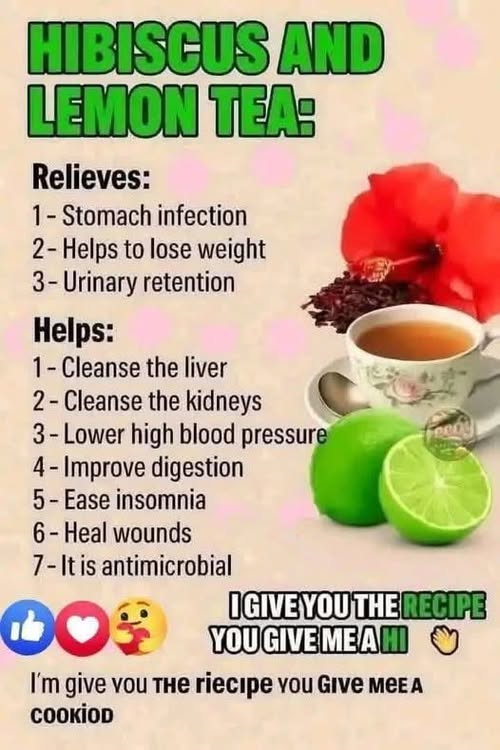
Important: Claims that this tea can cure infections, “cleanse” the liver or kidneys, heal wounds, or eliminate urinary retention are not established. It should be enjoyed as a beverage rather than used as a substitute for medical treatment.
🍋 Serving Suggestions
1. Hot Hibiscus Lemon Tea
Serve immediately in a mug with a lemon wheel and a few mint leaves. This is especially pleasant in cooler weather.
2. Iced Hibiscus Lemon Tea
Cool the brewed tea completely, pour over ice, and garnish with lemon and mint.
3. Morning Wellness Drink
Enjoy an unsweetened cup alongside a balanced breakfast. If you’re looking for healthy lifestyle drinks, keeping added sugar low is a simple choice.
4. Summer Refreshment
Make a larger batch, refrigerate it, and serve over ice with lemon slices, cucumber and fresh mint.
5. Dinner Beverage
Serve chilled as a colorful, caffeine-free alternative to soda or alcoholic beverages.
🌿 Variations
Ginger Hibiscus Lemon Tea
Add fresh ginger while steeping for a spicy, warming flavor.
Cinnamon Hibiscus Tea
Add one cinnamon stick during brewing. Remove it before serving.
Mint Hibiscus Lemon Tea
Add fresh mint after brewing for a cooling flavor.
Hibiscus Lemon Ginger Tea
Combine hibiscus, lemon and ginger for a particularly bright and zesty herbal tea.
Orange Hibiscus Tea
Replace part of the lemon with fresh orange juice or add a strip of orange peel.
Berry Hibiscus Tea
Add strawberries, raspberries or blueberries after the tea has cooled for a fruity iced beverage.
Sugar-Free Hibiscus Tea
Simply omit honey or sugar. The naturally tart flavor is excellent over ice.
Hibiscus Lemonade
Make a stronger hibiscus infusion, cool it, then dilute with cold water and add extra fresh lemon juice. Sweeten lightly if desired.
🥄 Nutrition
The exact nutrition depends on how much lemon and sweetener you use.
Unsweetened version
A cup of plain hibiscus tea with a small amount of lemon is generally very low in calories, with little to no fat or protein. The main nutritional contribution comes from the plant compounds in hibiscus and the vitamin C provided by lemon.
If honey is added
Honey increases:
-
Calories
-
Carbohydrates
-
Sugar
For a low-calorie beverage or weight-management-friendly drink, use little or no added sweetener.
Nutrition-friendly preparation
For the simplest healthy version:
Hibiscus + water + fresh lemon + mint
No refined sugar is necessary.
❓ Frequently Asked Questions
Is Hibiscus and Lemon Tea anti-inflammatory?
Hibiscus contains anthocyanins and other antioxidant compounds that have potential anti-inflammatory effects. However, drinking this tea should not be presented as a treatment for chronic inflammation or inflammatory disease.
Can I drink Hibiscus and Lemon Tea every day?
For many healthy adults, moderate consumption as a beverage may be reasonable. However, individual circumstances matter, particularly if you take medications or have a medical condition.
Does Hibiscus and Lemon Tea contain caffeine?
Pure hibiscus tea is naturally caffeine-free. Check the ingredient label if you’re using a commercial tea blend because other tea leaves may have been added.
Can I drink it before bed?
Because pure hibiscus is caffeine-free, it can be a suitable evening beverage. However, the evidence does not establish hibiscus tea as a treatment for insomnia.
Does it help with weight loss?
Hibiscus and lemon tea itself does not magically burn body fat. An unsweetened version can, however, be a low-calorie alternative to sugary drinks, which can be useful as part of an overall weight-management plan.
Can I use fresh hibiscus flowers?
For culinary use, use hibiscus products specifically identified as edible and intended for tea. Dried hibiscus calyces are convenient and commonly used for herbal infusions.
Can I drink it cold?
Absolutely. Brew it normally, cool it, refrigerate it, and serve over ice.
Can I add turmeric?
Yes. A small amount of turmeric can create a turmeric and hibiscus tea variation. Ginger, cinnamon and turmeric also complement the tart hibiscus flavor.
⚠️ A Few Safety Considerations
Hibiscus may lower blood pressure. If you take blood-pressure medication, have unusually low blood pressure, are pregnant or breastfeeding, or have a chronic medical condition, talk with a healthcare professional before making concentrated hibiscus beverages a regular part of your routine.
Also, urinary retention is not something to treat with herbal tea. New or severe urinary retention requires medical evaluation.
If lemon aggravates acid reflux or stomach irritation, reduce the amount or leave it out.
💡 Related Questions
Is hibiscus tea good for inflammation?
It contains antioxidant plant compounds that may support a healthy inflammatory response, but it isn’t a medical treatment.
What is the best time to drink hibiscus tea?
Morning, afternoon or evening can all work. Choose the time that fits your routine.
Can hibiscus tea lower blood pressure?
Some research suggests it may have a modest blood-pressure-lowering effect, which is also why people taking blood-pressure medication should use caution.
Can I make hibiscus tea without sugar?
Yes. Lemon, mint, ginger and cinnamon can provide plenty of flavor without added sugar.
What can I add to hibiscus tea for an anti-inflammatory drink?
Ginger, cinnamon, turmeric, lemon, mint and berries are flavorful options that complement an antioxidant-rich diet.
How long does homemade hibiscus tea last?
For best flavor and freshness, refrigerate it in a covered container and consume it within a few days.
🌺 Final Thoughts
Hibiscus and Lemon Tea is an easy, colorful and refreshing homemade beverage with a naturally tangy flavor. Its biggest strengths are its simplicity, low-calorie potential, caffeine-free nature and abundance of interesting plant compounds.