Lemon, Garlic, Ginger & Cinnamon Honey Infusion: A Homemade Anti-Inflammatory Wellness Recipe
Recipe Description
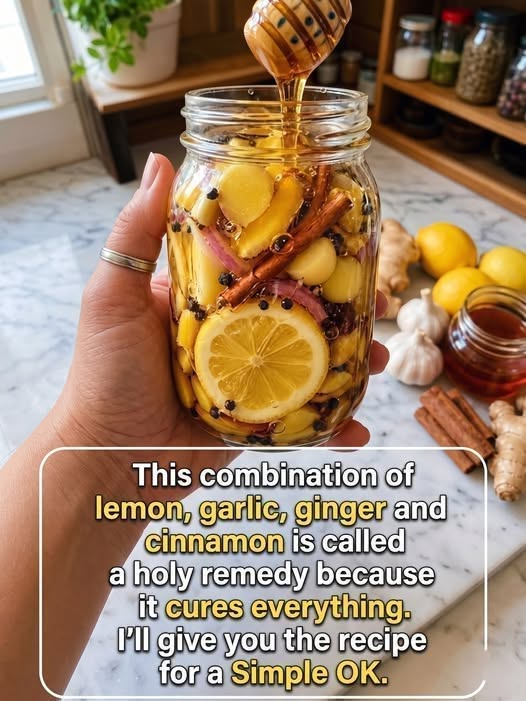
Lemon, Garlic, Ginger & Cinnamon Honey Infusion is a homemade wellness mixture made with fresh lemon, garlic, ginger, cinnamon, and raw honey. These everyday ingredients are popular in traditional home remedies and are often used to prepare soothing drinks and flavorful natural wellness blends.
Ginger contains gingerols, garlic contains sulfur compounds such as allicin, cinnamon contains antioxidant compounds, and lemon provides vitamin C. Honey adds natural sweetness and may help soothe a sore throat or cough.
This recipe may complement a balanced, healthy lifestyle. However, it is important to understand that no scientific evidence shows that this combination cures every illness or treats chronic inflammation on its own. It should not replace prescribed medication or medical treatment.
Recipe Information
- Preparation time: 15 minutes
- Infusion time: 12–24 hours for a quick infusion; longer storage requires additional food-safety precautions.
- Total time: Approximately 15 minutes plus resting time
- Yield: Approximately 1 small jar
- Serving size: 1 teaspoon to start, if tolerated
- Recipe type: Homemade wellness infusion
- Dietary suitability: Vegetarian and gluten-free, depending on ingredient handling
- Main ingredients: Lemon, garlic, ginger, cinnamon, and honey
Ingredients
- 1 medium lemon, thoroughly washed
- 4–6 garlic cloves, peeled
- 2–3 inches (5–7.5 cm) fresh ginger root, washed and thinly sliced
- 2 cinnamon sticks
- 1 cup (approximately 240 ml) honey
- 5–6 whole black peppercorns, optional
Use clean, dry utensils and a clean glass jar. Choose fresh ingredients and good-quality honey.
Important food-safety note: Fresh lemon, garlic, and ginger contain moisture. Covering them with honey does not automatically make the mixture shelf-stable or safe for long-term storage. This recipe is intended for a short-term refrigerated preparation, not an unrefrigerated preserved product.
Instructions: How to Make Lemon, Garlic, Ginger & Cinnamon Honey Infusion
Step 1: Prepare the ingredients
Wash the lemon and ginger thoroughly under running water. Pat them dry with a clean towel. Peel the garlic cloves and remove any damaged portions.
Step 2: Slice the lemon and ginger
Cut the lemon into thin slices and remove visible seeds. Thinly slice the ginger to help its flavor distribute throughout the mixture.
Step 3: Prepare the jar
Wash the glass jar and lid thoroughly. Use clean utensils and allow the jar to dry completely before adding the ingredients.
Step 4: Layer the ingredients
Place a few lemon slices in the jar, followed by garlic cloves, ginger slices, and a piece of cinnamon stick. Continue layering until the ingredients are used.
Add the optional black peppercorns if desired.
Step 5: Add the honey
Pour honey over the ingredients. Use a clean spoon to gently release trapped air and help coat the ingredients. Do not assume that all ingredients must remain submerged in honey for the mixture to be safe.
Step 6: Refrigerate
Close the jar and place it in the refrigerator immediately. For the freshest flavor, allow the mixture to rest for 12–24 hours before using it.
Because this is a fresh, moist mixture without a validated preservation process, prepare a small batch and use it promptly. Do not store it at room temperature or rely on honey alone to preserve it. Discard it if there are signs of spoilage, such as mold, unusual bubbling, or an off smell.
Step 7: Serve
Stir the mixture with a clean spoon before serving. You can use a small amount in warm water or tea, or add it to a suitable food preparation.
Avoid adding honey to boiling water if you want to preserve its delicate flavor.
Potential Health Benefits
1. Ginger and antioxidant support
Ginger contains gingerols and related compounds studied for their antioxidant and anti-inflammatory properties. Ginger may help some people with nausea and digestive discomfort. However, the amount of active compounds in a homemade honey infusion is variable, and its effect on inflammation is not guaranteed.
2. Garlic and cardiovascular wellness
Garlic contains sulfur compounds that have been studied for potential effects on blood pressure and cholesterol. Results vary by preparation, dose, and individual health status. This recipe should not be considered a treatment for high blood pressure or high cholesterol.
3. Lemon and vitamin C
Fresh lemon contributes vitamin C, which supports normal immune function and collagen formation. The actual vitamin C content depends on the amount of lemon used and how the mixture is stored.
4. Cinnamon and antioxidant compounds
Cinnamon contains compounds with antioxidant activity. Research into its effects on blood sugar and inflammation is ongoing, and evidence is insufficient to recommend this honey infusion as a treatment for diabetes or inflammatory disease.
5. Honey for throat comfort
Honey may soothe a cough or irritated throat in some people. It is a source of sugar, however, and should be consumed in moderation.
6. Supporting a healthy lifestyle
This infusion may be enjoyed as part of a balanced diet that includes vegetables, fruits, whole grains, adequate protein, sleep, and regular physical activity. No single food or drink can independently eliminate inflammation throughout the body.
Serving Suggestions
Here are several ways to enjoy the mixture:
- Warm wellness drink: Stir 1 teaspoon into a cup of warm water. Avoid very hot water if it irritates your throat.
- Ginger-lemon tea: Add a small amount to freshly brewed herbal tea after it has cooled slightly.
- Salad dressing: Mix a small quantity with olive oil and a little vinegar for a sweet, tangy dressing.
- Marinade: Use a small amount in a marinade for roasted vegetables or other foods. Cook the marinade appropriately if it has contacted raw meat.
- Breakfast topping: Add a little to plain yogurt or oatmeal, if appropriate for your dietary needs.
Start with a small amount because garlic, ginger, and cinnamon can be strong and may cause heartburn or stomach irritation in some people.
Recipe Variations
1. Lemon, Ginger & Honey Infusion
Omit the garlic and cinnamon for a simpler, milder flavor. Combine sliced lemon and ginger with honey, refrigerate promptly, and use as a short-term preparation.
2. Garlic and Ginger Wellness Blend
Combine garlic, ginger, and a small amount of honey without lemon or cinnamon. Refrigerate immediately and use promptly. This variation is particularly pungent and may not suit people with sensitive stomachs.
3. Turmeric, Ginger & Honey Drink
For a warm drink, simmer sliced ginger in water, remove from the heat, and stir in a small pinch of turmeric and honey once the liquid has cooled slightly. This is an alternative flavor combination, not a proven treatment for arthritis or chronic inflammation.
4. Caffeine-Free Lemon Herbal Tea
Steep ginger slices in hot water, allow the drink to cool to a comfortable temperature, and add lemon juice and a small amount of honey. This option avoids the need to store a jar of fresh ingredients in honey.
5. Sugar-Conscious Version
Prepare the drink with fresh lemon and ginger, then add little or no honey according to taste. Remember that honey is an added sugar, even when it is raw or minimally processed.
Nutrition Information
The following estimates are for 1 teaspoon of honey alone, not a laboratory-tested serving of the complete infusion:
- Calories: Approximately 21
- Carbohydrates: Approximately 5.7 grams
- Total sugars: Approximately 5.7 grams
- Protein: 0 grams
- Fat: 0 grams
- Fiber: 0 grams
The nutritional values of the finished infusion will depend on the quantity consumed, how much honey is eaten, and how much juice and other ingredient material is transferred into the serving. It is not possible to provide reliable exact nutrition facts for this homemade mixture without a defined serving and nutritional analysis.
Honey contributes most of the calories and sugar when a teaspoon of the mixture is consumed. Lemon, garlic, ginger, and cinnamon may contribute small amounts of nutrients and plant compounds, depending on the serving.
Precautions and Food Safety
Although these ingredients are commonly used in food, the mixture is not suitable for everyone.
- Honey and infants: Never give honey to children younger than 12 months because of the risk of infant botulism.
- Diabetes and blood sugar management: Honey can raise blood glucose. Consider your overall carbohydrate intake and follow your healthcare professional’s advice.
- Blood-thinning medication: Garlic and ginger may affect bleeding risk, particularly in concentrated amounts or when combined with certain medications. Ask your healthcare professional before using this mixture regularly if you take anticoagulants or antiplatelet drugs.
- Heartburn and digestive sensitivity: Lemon, garlic, and ginger can aggravate reflux, heartburn, or stomach discomfort in some people.
- Liver health and cinnamon: Cassia cinnamon can contain substantial amounts of coumarin, which may harm the liver with excessive or prolonged intake. Ceylon cinnamon generally contains much less coumarin.
- Allergies: Avoid any ingredient to which you are allergic.
- Pregnancy and breastfeeding: Culinary quantities may be appropriate for many people, but concentrated or medicinal use should be discussed with a healthcare professional.
- Food storage: Refrigerate the mixture immediately. Do not store it in a pantry or leave it at room temperature for extended periods. Honey is not a substitute for validated food preservation methods.
Seek medical advice for persistent symptoms, unexplained swelling, ongoing joint pain, fever, or signs of a significant infection.
Frequently Asked Questions
1. Is lemon, garlic, ginger, and cinnamon honey infusion anti-inflammatory?
These ingredients contain compounds studied for antioxidant and anti-inflammatory activity. However, research on individual ingredients does not establish that this specific homemade mixture meaningfully reduces inflammation in people. It should be considered a food preparation rather than an anti-inflammatory medicine.
2. Can this mixture cure arthritis?
No. There is no reliable evidence that this recipe cures osteoarthritis, rheumatoid arthritis, or other inflammatory joint conditions. People with persistent joint pain should seek an appropriate medical assessment and evidence-based treatment.
3. Does it boost the immune system?
Lemon provides vitamin C, and the other ingredients contain various plant compounds. Adequate nutrition supports normal immune function, but this mixture has not been shown to prevent infections or guarantee stronger immunity.
4. How much should I take daily?
There is no scientifically established therapeutic dose for this mixture. If you enjoy it as a food, a small amount such as 1 teaspoon may be a reasonable starting point for an otherwise healthy adult, provided the ingredients are tolerated. This is a culinary suggestion, not a medical dosage recommendation.
5. Can I take it on an empty stomach?
You can consume it with food or in a drink, depending on your tolerance. Taking it on an empty stomach is not known to provide extra anti-inflammatory benefits and may aggravate nausea, reflux, or stomach irritation.
6. Can I drink it before bed?
A small amount in warm water may be soothing. However, honey contains sugar, and lemon or ginger may trigger reflux in susceptible people. Avoid consuming it close to bedtime if it worsens your symptoms.
7. How long does the mixture last?
There is no validated shelf life for this particular homemade preparation. Refrigeration slows microbial growth but does not guarantee safety. Make a small amount, keep it refrigerated, use it promptly, and discard any mixture showing signs of spoilage. For longer storage, use a tested preservation recipe from a reliable food-safety source.
8. Can I use powdered ginger or cinnamon?
Yes, for a freshly prepared drink. Use small culinary amounts and adjust to taste. A fresh drink made immediately before serving is simpler to handle safely than storing fresh ingredients in honey for an extended period.
9. Is raw honey better than regular honey?
Raw honey may differ in processing and some minor components, but there is insufficient evidence that raw honey makes this recipe a more effective anti-inflammatory treatment. Both raw and regular honey should be avoided for infants under 12 months.
10. Can I use this instead of prescribed medication?
No. Do not stop or replace prescribed medication with a homemade infusion. Discuss supplements and regular medicinal use of concentrated ingredients with your healthcare professional.
Related Recipe Ideas
If you enjoy this flavor combination, you may also like:
- Fresh ginger and lemon tea
- Honey and lemon throat-soothing drink
- Turmeric and ginger herbal tea
- Garlic and olive oil salad dressing
- Cinnamon-spiced herbal tea
- Fresh lemon and ginger water
- Homemade ginger tea with a small amount of honey
These are food and beverage ideas, not substitutes for medical care.
Final Thoughts
Lemon, Garlic, Ginger & Cinnamon Honey Infusion is a flavorful homemade mixture that brings together tangy citrus, pungent garlic, warming ginger, aromatic cinnamon, and sweet honey. It can be enjoyed in small quantities as part of a varied and balanced diet.