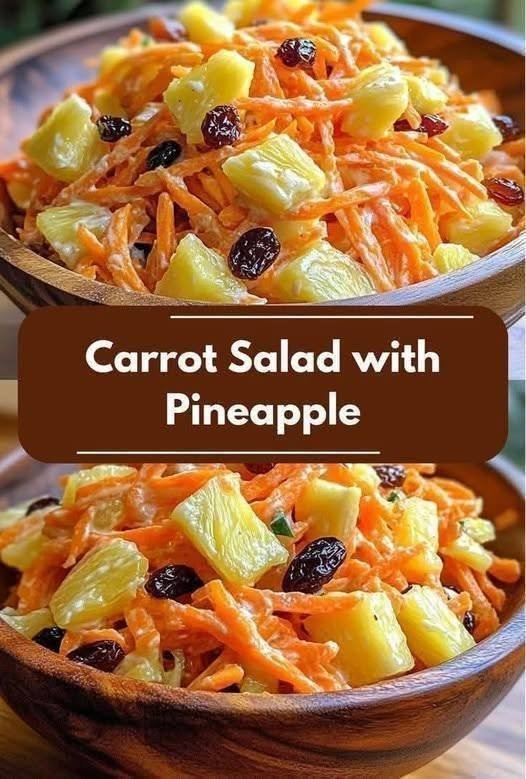
Carrot salad with pineapple is one of those recipes that can elevate an everyday meal. This straightforward salad combines flavours and textures that are difficult to resist with its vibrant orange carrots, juicy pineapple pieces, sweet raisins, and creamy dressing.
This recipe’s ease of preparation is what I adore most about it. You don’t need to spend hours in the kitchen, use complex cooking methods, or use fancy products. With just a few common ingredients and a little preparation time, you can create a vibrant side dish that looks.
Carrot Salad with Pineapple: Easy Anti-Inflammatory Recipe
Recipe Description
Carrot Salad with Pineapple is a refreshing, colorful, and naturally sweet side dish that combines crunchy shredded carrots, juicy pineapple chunks, and chewy raisins in a creamy dressing. This easy fruit and vegetable salad offers a delicious balance of sweet, tangy, and creamy flavors, making it a wonderful addition to everyday meals, summer picnics, family gatherings, and holiday dinners.
If you’re looking for healthy salad recipes, anti-inflammatory foods, or easy ways to add more fruits and vegetables to your diet, this carrot and pineapple salad is a great option. Carrots provide beta-carotene, which the body converts into vitamin A, while pineapple contains vitamin C and the enzyme bromelain. Both fruits and vegetables contribute nutrients that support overall health.
For a lighter, more anti-inflammatory-inspired version, use plain Greek yogurt instead of mayonnaise, reduce added sugar, and choose unsweetened pineapple. Although no single food can treat inflammation, a balanced diet rich in fruits, vegetables, fiber, and other minimally processed foods can support overall well-being.
Preparation Time: 15 minutes
Cooking Time: 0 minutes
Chilling Time: 30 minutes
Total Time: 45 minutes
Servings: 4
Course: Side Dish, Salad
Cuisine: American-inspired
Dietary Options: Vegetarian; gluten-free when prepared with suitable ingredients
Ingredients
- 3 cups fresh carrots, peeled and shredded
- 1 cup pineapple chunks, fresh or canned in juice and well drained
- 1/3 cup raisins
- 1/2 cup plain Greek yogurt or mayonnaise
- 1 tablespoon fresh lemon juice
- 1–2 teaspoons honey or maple syrup, optional
- 1 tablespoon chopped walnuts or sunflower seeds, optional
- A small pinch of salt, optional
Optional Anti-Inflammatory Ingredients
- 1 tablespoon chia seeds for extra fiber and plant-based omega-3 fats
- 1/4 teaspoon ground cinnamon for additional flavor
- 1 tablespoon freshly squeezed orange juice for a citrus twist
Instructions
Step 1: Prepare the Carrots
Wash, peel, and grate the carrots using a box grater or food processor. Place the shredded carrots in a large mixing bowl. For the best texture, use freshly grated carrots rather than packaged shredded carrots.
Step 2: Prepare the Pineapple
Cut fresh pineapple into small bite-sized chunks. If using canned pineapple, select pineapple packed in its own juice rather than heavy syrup. Drain thoroughly to prevent the salad from becoming watery.
Step 3: Make the Creamy Dressing
In a small bowl, whisk together the Greek yogurt or mayonnaise, lemon juice, and optional honey or maple syrup. Taste and adjust the sweetness or acidity according to your preference.
For a lighter salad dressing, use plain Greek yogurt. For a richer, traditional flavor, use mayonnaise or a combination of yogurt and mayonnaise.
Step 4: Combine the Ingredients
Add the shredded carrots, pineapple chunks, and raisins to the mixing bowl. Pour the dressing over the mixture and toss gently until all ingredients are evenly coated.
If desired, fold in chopped walnuts, sunflower seeds, or chia seeds for additional texture and nutrients.
Step 5: Chill the Salad
Cover the bowl and refrigerate for approximately 30 minutes. Chilling allows the flavors to blend and makes the salad especially refreshing.
Step 6: Serve and Enjoy
Stir gently before serving. Garnish with a few pineapple pieces, raisins, or chopped nuts for an attractive presentation.
Tips for the Best Carrot Salad with Pineapple
- Use fresh carrots: Freshly shredded carrots provide the best crunch and flavor.
- Drain the pineapple well: Excess juice can dilute the dressing.
- Adjust the sweetness: Pineapple and raisins already provide natural sweetness, so additional sweetener may not be necessary.
- Chill before serving: A short refrigeration period improves the overall flavor.
- Choose your dressing wisely: Greek yogurt can increase protein and reduce saturated fat compared with some mayonnaise-based dressings.
- Make it nut-free if needed: Omit walnuts and use sunflower seeds only if appropriate for your dietary needs.
- Avoid overmixing: Gentle tossing helps maintain the texture of the pineapple and carrots.
Health Benefits and Anti-Inflammatory Nutrition
1. Carrots and Beta-Carotene
Carrots are rich in beta-carotene, a plant pigment that the body converts into vitamin A. Vitamin A supports normal vision, immune function, and healthy skin. Carrots also provide dietary fiber, which contributes to digestive health.
2. Pineapple and Vitamin C
Pineapple supplies vitamin C, an antioxidant nutrient that supports normal immune function, collagen production, and protection of cells from oxidative damage. Pineapple also contains bromelain, a group of enzymes studied for potential health effects. Eating pineapple should not be considered a substitute for medical treatment.
3. Raisins and Plant Compounds
Raisins provide natural sweetness, carbohydrates, fiber, and various plant compounds. Because they are concentrated dried fruit, a moderate portion is useful for keeping the salad’s sugar and calorie content balanced.
4. Greek Yogurt for Protein
Plain Greek yogurt contributes protein and calcium, depending on the product. It also creates a creamy dressing without requiring mayonnaise. Some yogurt products contain live cultures, although the strains and amounts vary.
5. Nuts and Seeds for Healthy Fats
Walnuts and chia seeds provide plant-based omega-3 fats. Walnuts also contain unsaturated fats and other plant compounds. Adding a small amount can make the salad more satisfying.
6. Fiber and Digestive Health
Carrots, pineapple, raisins, and optional seeds contribute dietary fiber. Fiber supports regular bowel movements and helps nourish beneficial gut bacteria. Adequate fiber intake is one part of a balanced dietary pattern associated with long-term health.
Important health note: This recipe may fit into an anti-inflammatory eating pattern, but it is not a treatment for chronic inflammation, arthritis, autoimmune disease, or other medical conditions. Its nutritional value depends on the ingredients, portion size, and overall diet.
Serving Suggestions
Carrot Salad with Pineapple is versatile enough for casual lunches and special occasions.
- With grilled chicken: Serve alongside grilled chicken breast for a balanced meal with protein, vegetables, and fruit.
- With baked fish: Pair with baked salmon or another fish for a meal that includes protein and unsaturated fats.
- With vegetarian dishes: Serve with lentil patties, chickpeas, roasted vegetables, or a bean-based main course.
- At summer barbecues: Add it to a spread featuring grilled vegetables, corn, and lean proteins.
- For holiday dinners: Serve in a decorative bowl alongside roasted vegetables and other side dishes.
- For lunch meal prep: Portion into small containers and pair with a sandwich, boiled eggs, or legumes.
For a balanced plate, combine this salad with a source of protein and other vegetables rather than relying on the salad alone as a complete meal.
Recipe Variations
1. Healthy Carrot Salad with Pineapple and Greek Yogurt
Replace mayonnaise with plain Greek yogurt. Add lemon juice and a small amount of honey if needed. This version offers a creamy texture with more protein than many traditional mayonnaise-based dressings.
2. Vegan Carrot Pineapple Salad
Use unsweetened plant-based yogurt or a vegan mayonnaise. Replace honey with maple syrup or omit the sweetener entirely. Check product labels if you need a fully vegan preparation.
3. Sugar-Free Added-Sweetener Version
Skip honey, maple syrup, and added sugar. Use ripe fresh pineapple and a modest amount of raisins for natural sweetness. Note that the fruit still contains naturally occurring sugars.
4. Carrot Salad with Pineapple and Coconut
Add 2 tablespoons of unsweetened shredded coconut. Coconut gives the salad a tropical flavor and slightly chewy texture.
5. Crunchy Carrot Pineapple Salad with Nuts
Add chopped walnuts, almonds, or sunflower seeds just before serving. This adds crunch and healthy unsaturated fats. Avoid nuts if an allergy is present.
6. Apple and Pineapple Carrot Salad
Add one small diced apple for extra crunch and a sweet-tart flavor. Toss the apple with a little lemon juice to slow browning.
7. Tropical Carrot Salad with Orange
Add a few tablespoons of fresh orange segments and a little orange zest. This variation creates a bright citrus flavor that pairs well with pineapple.
8. Dairy-Free Creamy Carrot Salad
Use an unsweetened dairy-free yogurt made from soy, coconut, or another plant-based ingredient. The protein and fat content will vary by product.
9. High-Protein Carrot Salad
Use plain Greek yogurt and serve the salad with chickpeas, grilled chicken, or another protein-rich food. The yogurt increases the salad’s protein content, but the total amount depends on the brand and serving size.
Storage and Food Safety
- Store leftovers in an airtight container in the refrigerator at 40°F (4°C) or below.
- For the best texture and quality, eat within 3 days.
- Keep the salad refrigerated rather than leaving it at room temperature for extended periods.
- If preparing ahead, store the dressing separately and combine it with the carrots and pineapple shortly before serving for a crunchier texture.
- Discard the salad if it develops an unusual smell, appearance, or signs of spoilage.
Frequently Asked Questions
Is Carrot Salad with Pineapple anti-inflammatory?
It can be part of an anti-inflammatory dietary pattern because it contains fruits and vegetables that provide fiber, vitamins, and plant compounds. However, no single salad can prevent or cure inflammation. Overall dietary habits matter more than one recipe.
Can I eat carrot and pineapple salad every day?
Many people can enjoy this salad regularly as part of a varied diet. Consider portion size, added sweeteners, dressing ingredients, and your individual nutritional needs. Include a variety of other fruits and vegetables throughout the week.
Is this salad good for weight management?
It can fit into a weight-management meal plan. Carrots and pineapple provide fiber and nutrients, while Greek yogurt can contribute protein. Mayonnaise, nuts, and added sweeteners can increase the calorie content, so adjust portions according to your needs.
Can I make carrot salad without mayonnaise?
Yes. Plain Greek yogurt, unsweetened dairy-free yogurt, or a light lemon-based dressing can replace mayonnaise. Greek yogurt creates a creamy texture while generally providing more protein and less fat than regular mayonnaise.
Can I use canned pineapple?
Yes. Choose pineapple packed in its own juice when possible and drain it thoroughly. Pineapple packed in heavy syrup generally contains more added sugar.
Is carrot pineapple salad gluten-free?
The basic recipe is naturally gluten-free when all ingredients are suitable. Check the labels on yogurt, mayonnaise, sweeteners, and optional additions if you have celiac disease or need strict gluten avoidance.
Is this recipe suitable for people with diabetes?
It may fit into some diabetes meal plans, but portion sizes and individual carbohydrate needs matter. Pineapple and raisins contain carbohydrates and natural sugars. Consider reducing the raisins, omitting added sweeteners, measuring portions, and consulting your healthcare professional or registered dietitian for personalized guidance.
Can I prepare this salad the night before?
Yes. Prepare it the night before and refrigerate it in an airtight container. For the freshest texture, add the dressing shortly before serving or expect the carrots to soften slightly as they release moisture.
Can I freeze carrot salad with pineapple?
Freezing is not recommended. The carrots and pineapple release moisture and become softer after thawing, while yogurt- or mayonnaise-based dressing may separate.
What protein goes best with carrot pineapple salad?
Grilled chicken, baked fish, boiled eggs, tofu, lentils, and chickpeas all work well. The best choice depends on your dietary preferences and the rest of your meal.
What is the healthiest dressing for carrot salad?
Plain, unsweetened Greek yogurt with lemon juice is a nutritious option for people who want a creamy dressing with protein. A small amount of olive oil and lemon juice can also work, although it will produce a different texture.
Nutrition Information
The following values are estimates for one serving, assuming the recipe makes four servings using 3 cups of carrots, 1 cup of pineapple, 1/3 cup of raisins, 1/2 cup of plain nonfat Greek yogurt, and 1 tablespoon of lemon juice, without optional nuts or sweeteners.
- Calories: Approximately 130–160
- Protein: Approximately 5–7 g
- Carbohydrates: Approximately 25–32 g
- Dietary fiber: Approximately 3–5 g
- Total sugars: Approximately 18–24 g
- Fat: Approximately 0–3 g
- Vitamin A: A substantial source, primarily from carrots
- Vitamin C: A useful source, primarily from pineapple
- Calcium: Some, depending on the yogurt used
These figures are approximate and can vary with carrot size, pineapple variety, ingredient brands, and portion sizes. Using mayonnaise instead of nonfat Greek yogurt, adding nuts, or including sweeteners will change the nutritional values. For precise nutrition information, calculate the recipe using the exact products and quantities you use.
Final Thoughts
Carrot Salad with Pineapple is an easy, colorful recipe that brings together sweet fruit, crunchy vegetables, and a creamy dressing. It works as a refreshing side dish for weeknight meals, summer gatherings, and holiday celebrations.