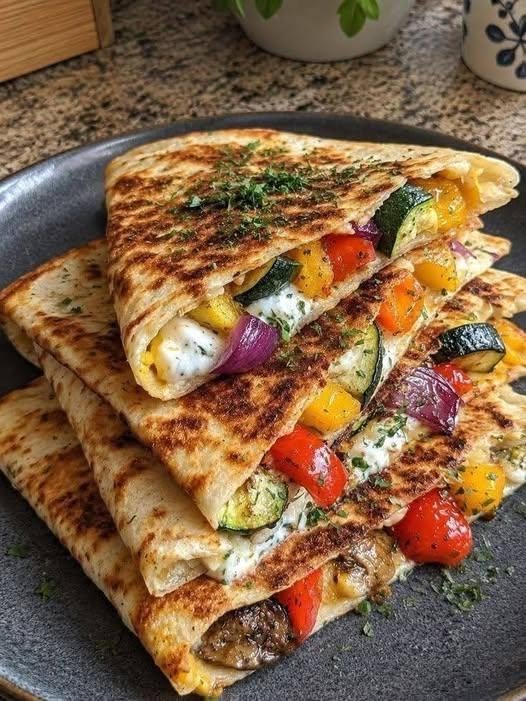
There’s nothing quite like the smell of freshly cooked food bringing everyone into the kitchen. I’m always drawn to meals that are warm, cheesy, and packed with fresh ingredients, and these Grilled Mediterranean Veggie Quesadillas are just the kind of recipe that makes an ordinary day feel special.
What I love most is how a few simple ingredients can create so much flavor. Sweet bell peppers, tender zucchini, red onion, juicy tomatoes, melted cheese, and fresh herbs come together inside golden, crispy tortillas. Every bite has the perfect mix of crunchy edges, creamy cheese, and delicious Mediterranean flavors. It’s a comforting, colorful meal that’s easy to make and even easier to love.
Anti-Inflammatory Grilled Mediterranean Veggie Quesadillas
Recipe Description
Grilled Mediterranean Veggie Quesadillas are a delicious, colorful, and nutritious meal featuring crispy whole-wheat tortillas stuffed with grilled zucchini, red and yellow bell peppers, red onion, fresh herbs, creamy mozzarella or feta cheese, and a flavorful garlic-herb yogurt sauce.
Inspired by the Mediterranean diet, this easy vegetarian recipe combines antioxidant-rich vegetables, heart-healthy olive oil, fresh herbs, and whole grains. These ingredients can help support an overall anti-inflammatory eating pattern when enjoyed as part of a balanced diet.
Perfect for a healthy lunch, quick weeknight dinner, meal prep, or a satisfying vegetarian snack, these quesadillas deliver a wonderful combination of smoky grilled vegetables, melted cheese, and creamy Mediterranean flavors.
Recipe at a Glance
- Preparation time: 15 minutes
- Cooking time: 15 minutes
- Total time: 30 minutes
- Servings: 4
- Cuisine: Mediterranean-inspired
- Course: Lunch, dinner, or healthy snack
- Diet: Vegetarian
- Cooking method: Grilling or stovetop cooking
- Difficulty: Easy
Ingredients
For the Mediterranean Veggie Quesadillas
- 4 medium whole-wheat tortillas
- 1 medium zucchini, sliced or diced
- 1 red bell pepper, chopped
- 1 yellow bell pepper, chopped
- 1 small red onion, chopped
- 1 cup cherry tomatoes, halved
- 1 cup fresh spinach, roughly chopped (optional)
- 1 cup shredded mozzarella cheese
- 1/2 cup crumbled feta cheese
- 2 tablespoons extra-virgin olive oil
- 2 cloves garlic, minced
- 1 teaspoon dried oregano
- 1/2 teaspoon ground cumin
- 1/2 teaspoon smoked paprika
- 1/4 teaspoon ground black pepper
- Salt to taste
- 2 tablespoons chopped fresh parsley
- 1 tablespoon chopped fresh basil or dill
For the Creamy Garlic-Herb Yogurt Sauce
- 1/2 cup plain Greek yogurt
- 1 tablespoon fresh lemon juice
- 1 small garlic clove, finely minced
- 1 tablespoon chopped fresh parsley or dill
- 1 teaspoon extra-virgin olive oil
- A pinch of black pepper
- Salt to taste
Optional Ingredients
- 1/2 cup cooked chickpeas for additional plant-based protein
- 1/2 avocado, sliced
- A pinch of red pepper flakes
- 1 teaspoon lemon zest
- A handful of arugula for serving
Instructions
Step 1: Prepare the Vegetables
Wash and dry all vegetables thoroughly. Dice the zucchini, bell peppers, and red onion into small, evenly sized pieces. Halve the cherry tomatoes and chop the spinach if using.
Keeping the vegetables relatively small helps them cook evenly and makes the quesadillas easier to fold and slice.
Step 2: Season the Vegetables
Place the zucchini, bell peppers, red onion, and tomatoes in a large bowl.
Add the olive oil, minced garlic, oregano, cumin, smoked paprika, black pepper, and a small amount of salt. Toss until the vegetables are evenly coated.
These Mediterranean-inspired herbs and spices add flavor without requiring excessive salt or heavy sauces.
Step 3: Grill the Vegetables
Heat a grill pan or large skillet over medium-high heat.
Add the seasoned vegetables and cook for approximately 6–8 minutes, stirring occasionally, until they are tender and lightly charred.
Add the spinach during the final minute, if using, and allow it to wilt.
Remove the vegetables from the pan and set them aside. If they release excess liquid, drain it before assembling the quesadillas to prevent soggy tortillas.
Step 4: Prepare the Yogurt Sauce
In a small bowl, combine the Greek yogurt, lemon juice, garlic, parsley or dill, olive oil, black pepper, and salt.
Mix until smooth and creamy. Taste and adjust the lemon juice or herbs as desired.
Refrigerate the sauce until serving time. This refreshing dip balances the smoky vegetables and rich cheese.
Step 5: Assemble the Quesadillas
Lay the tortillas on a clean work surface.
Sprinkle mozzarella over one half of each tortilla. Add a portion of the grilled vegetables, crumbled feta, and fresh herbs.
Add another light sprinkle of mozzarella to help bind the filling. Fold each tortilla in half.
Avoid overfilling the tortillas, as this can make them difficult to flip.
Step 6: Grill Until Golden and Crispy
Heat a nonstick skillet or grill pan over medium heat.
Place one or two folded quesadillas in the pan, depending on its size. Cook for approximately 3–4 minutes per side, pressing gently with a spatula, until the tortillas are golden brown and the cheese has melted.
Repeat with the remaining quesadillas.
For a crispier finish, lightly brush the outside of each tortilla with olive oil before cooking.
Step 7: Slice and Serve
Transfer the cooked quesadillas to a cutting board and allow them to rest for 1–2 minutes.
Cut each quesadilla into two or three wedges. Sprinkle with fresh parsley, basil, or dill.
Serve warm with the creamy garlic-herb yogurt sauce, fresh lemon wedges, and a side salad.
Why These Quesadillas Fit an Anti-Inflammatory Diet
An anti-inflammatory diet emphasizes a variety of vegetables, fruits, whole grains, legumes, nuts, seeds, and unsaturated fats. This recipe includes several ingredients that fit that pattern.
Extra-virgin olive oil: Provides monounsaturated fats and beneficial plant compounds, including polyphenols.
Bell peppers and tomatoes: Supply vitamin C and other antioxidant compounds that support normal cellular function.
Zucchini and red onion: Add fiber and a variety of plant nutrients to the meal.
Whole-wheat tortillas: Offer more fiber than many refined-flour tortillas, supporting digestive health and helping make the meal more satisfying.
Garlic and fresh herbs: Add flavor and plant compounds without relying on highly salted sauces.
Greek yogurt: Provides protein and a creamy texture. Choosing plain, unsweetened yogurt helps avoid unnecessary added sugar.
Mozzarella and feta: Add protein, calcium, and flavor. Using moderate portions can help manage saturated fat and sodium.
No single food or recipe can prevent or treat chronic inflammation. The potential benefits come from the overall dietary pattern and lifestyle, rather than from one meal alone.
Serving Suggestions
1. Serve with a Mediterranean Salad
Pair the quesadillas with a fresh salad made from cucumber, tomatoes, leafy greens, olives, lemon juice, and extra-virgin olive oil.
This adds freshness, fiber, and a wider variety of vegetables.
2. Add a Protein-Rich Side
For a more filling meal, serve with grilled chicken, baked salmon, lentil salad, or roasted chickpeas.
These options can help increase protein intake and make the meal suitable for a more substantial lunch or dinner.
3. Serve with Hummus
Offer a small bowl of hummus alongside the quesadillas. Chickpeas and tahini provide additional plant-based nutrients and make a satisfying Mediterranean-inspired accompaniment.
4. Make It a Healthy Lunchbox
Cut the quesadillas into wedges and pack them with cucumber sticks, cherry tomatoes, and a small container of yogurt sauce.
For food safety, refrigerate promptly and keep the sauce chilled until serving.
5. Create a Balanced Dinner Plate
Serve two quesadilla wedges with a generous portion of salad and a protein source if needed. Adjust portions to suit your appetite and nutritional requirements.
6. Pair with a Refreshing Drink
Enjoy with lemon water, unsweetened iced green tea, or sparkling water with fresh mint and citrus.
These drinks complement the Mediterranean flavors without adding substantial amounts of sugar.
Recipe Variations
1. Vegan Mediterranean Veggie Quesadillas
Replace mozzarella and feta with plant-based cheese, or use mashed chickpeas with tahini and lemon as part of the filling. Replace Greek yogurt with unsweetened dairy-free yogurt.
Check ingredient labels for added sodium and saturated fat, as these vary among plant-based products.
2. High-Protein Mediterranean Quesadillas
Add 1/2 to 1 cup of cooked chickpeas, white beans, or shredded grilled chicken.
You can also increase the amount of Greek yogurt served on the side. These additions make the meal more protein-rich and potentially more satisfying.
3. Gluten-Free Veggie Quesadillas
Use certified gluten-free corn tortillas or gluten-free wraps. Check the package instructions because different tortillas vary in flexibility and cooking time.
4. Spicy Mediterranean Quesadillas
Add red pepper flakes, finely chopped fresh chili, or a pinch of cayenne pepper to the vegetable mixture.
Serve with the yogurt sauce to balance the heat.
5. Spinach and Mushroom Quesadillas
Replace some of the zucchini and bell peppers with sliced mushrooms and additional spinach.
Cook the mushrooms until their moisture evaporates before assembling the quesadillas.
6. Avocado and Black Bean Variation
Add black beans and diced avocado to the filling. For the best texture, add the avocado after cooking or serve it on the side.
This variation provides additional fiber and makes the quesadillas particularly hearty.
7. Dairy-Light Version
Use a smaller amount of strongly flavored feta or mozzarella and increase the quantity of vegetables. Choose a lower-sodium cheese if you are watching your sodium intake.
8. Air-Fryer Mediterranean Quesadillas
Preheat the air fryer to approximately 180°C (350°F). Lightly brush the tortillas with olive oil and cook the folded quesadillas for about 5–8 minutes, turning halfway through.
Cooking times vary by appliance, tortilla thickness, and filling quantity, so check that the cheese has melted and the exterior is crisp.
Storage and Meal Prep
Refrigeration: Store leftover cooked quesadillas in an airtight container in the refrigerator for up to 3–4 days, provided they are refrigerated promptly and kept at 4°C (40°F) or below.
Reheating: Reheat in a skillet, oven, or air fryer until hot throughout. A skillet or air fryer generally gives the crispiest texture.
Freezing: Freeze fully cooled quesadillas individually, separated with parchment paper, in a freezer-safe container. For best quality, use within approximately 2 months.
Meal-prep tip: Prepare the grilled vegetables and yogurt sauce ahead of time, then assemble and cook the quesadillas shortly before eating. This helps maintain a crisp tortilla.
Approximate Nutrition Facts
The following estimates are for one serving, assuming the recipe makes four servings and includes whole-wheat tortillas, mozzarella, feta, olive oil, and yogurt sauce.
- Calories: 400–500 kcal
- Protein: 16–22 g
- Total carbohydrates: 38–48 g
- Dietary fiber: 5–8 g
- Total fat: 19–27 g
- Saturated fat: 6–10 g
- Total sugars: 5–9 g
- Sodium: 500–850 mg
- Calcium: approximately 200–350 mg
Actual values depend on tortilla size, cheese brands, portion sizes, added salt, and how much olive oil is used. The estimates may be lower if the yogurt sauce is served sparingly or higher if additional cheese or oil is added.
For more precise nutrition information, calculate the recipe using the specific ingredients and serving sizes you use.
Tips for a Healthier Nutritional Profile
- Choose whole-wheat tortillas with a short ingredient list and meaningful fiber content.
- Use extra-virgin olive oil in measured amounts.
- Increase the vegetable-to-cheese ratio.
- Select lower-sodium cheese and season with herbs, lemon, and spices.
- Add chickpeas or beans for extra fiber and plant protein.
- Choose plain Greek yogurt instead of a sweetened dip.
- If managing blood glucose, pay attention to tortilla size, total carbohydrate intake, and the amount of protein and fiber in the complete meal.
Frequently Asked Questions
1. Are Mediterranean veggie quesadillas anti-inflammatory?
They can fit into an anti-inflammatory eating pattern because they feature vegetables, olive oil, herbs, and whole grains. Their overall nutritional profile depends on the tortillas, cheese, oil, and portion sizes used.
2. What are the best anti-inflammatory vegetables for quesadillas?
Bell peppers, tomatoes, zucchini, spinach, red onions, and mushrooms are excellent options. Rotating vegetables throughout the week helps provide a wider variety of nutrients and plant compounds.
3. Can I eat these quesadillas every day?
They can be included regularly in a varied, balanced diet. For greater nutritional variety, alternate the vegetables, protein sources, and whole grains you use throughout the week.
4. Are these quesadillas good for weight management?
They can be part of a weight-management plan because they combine vegetables, fiber, fat, and protein. Portion size, added oil, cheese quantity, and overall daily energy intake influence whether the meal fits your goals.
5. Are Mediterranean veggie quesadillas suitable for people with diabetes?
They may fit into an individualized diabetes-friendly meal plan. Whole-grain tortillas, non-starchy vegetables, and protein can help create a balanced meal, but total carbohydrate content and portion size still matter. Individual needs vary.
6. Can I make the quesadillas without cheese?
Yes. Use mashed chickpeas, seasoned white beans, hummus, or a suitable plant-based alternative to provide a creamy filling. The texture will differ from a traditional cheese quesadilla.
7. Which cheese is best for Mediterranean quesadillas?
Mozzarella melts well, while feta adds a tangy Mediterranean flavor. A combination gives you both texture and flavor. Lower-sodium varieties can be useful if sodium intake is a concern.
8. Can I make these quesadillas ahead of time?
Yes. Cook the vegetables and prepare the yogurt sauce in advance. For the best texture, assemble and grill the tortillas just before serving.
9. What can I use instead of Greek yogurt?
Try plain regular yogurt, unsweetened dairy-free yogurt, or hummus. Choose an option that suits your dietary needs and preferred texture.
10. What makes this recipe different from ordinary cheese quesadillas?
The focus is on grilled vegetables, Mediterranean herbs, extra-virgin olive oil, whole-grain tortillas, and a lighter yogurt-based sauce. This provides more variety in plant foods and a different balance of flavor and nutrients.
Final Thoughts
Grilled Mediterranean Veggie Quesadillas are a practical way to bring colorful vegetables and Mediterranean-inspired flavors into everyday cooking. The combination of crisp tortillas, smoky zucchini, sweet bell peppers, red onion, melted cheese, fresh herbs, and creamy garlic yogurt creates a satisfying meal without requiring complicated techniques.