
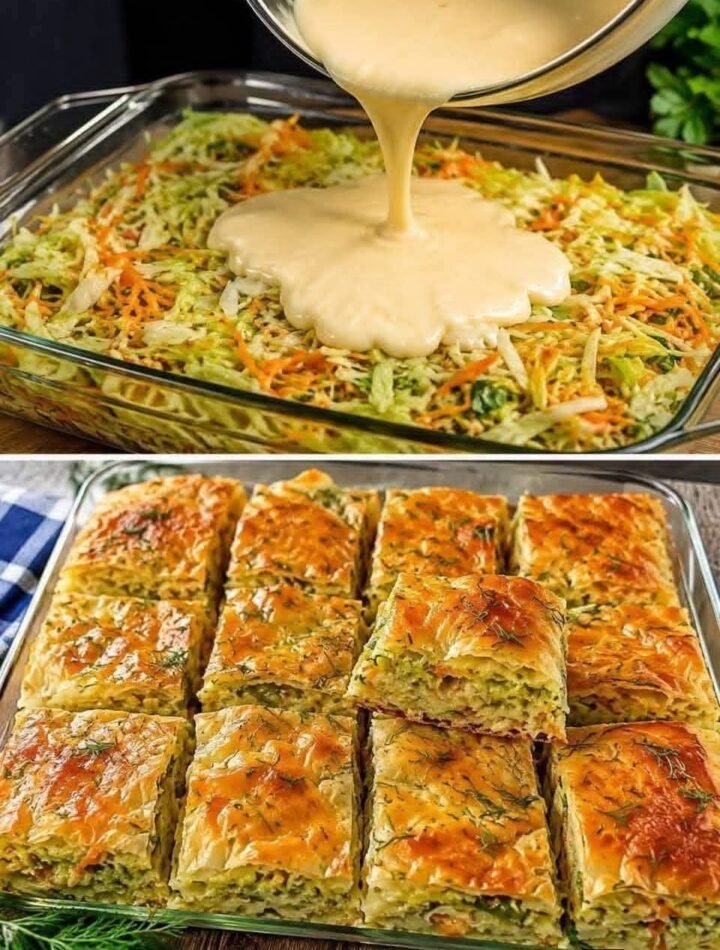
There’s nothing quite like the smell of a homemade meal baking in the oven. I’ve always loved recipes that turn simple, everyday ingredients into something delicious and comforting. You don’t need expensive ingredients or hours in the kitchen—sometimes, a little creativity and a handful of fresh vegetables are all it takes.
This Cheesy Vegetable Cabbage Bake is a perfect example. Made with tender cabbage, sweet carrots, fluffy eggs, and plenty of melted cheese, it has a beautifully golden top and a soft, flavorful center. It’s the kind of easy, comforting dish that makes an ordinary meal feel a little more special and brings everyone to the table eager for a taste..
Cheesy Vegetable Cabbage Bake – Anti-Inflammatory, Healthy & Easy Dinner Recipe
Recipe Description
Cheesy Vegetable Cabbage Bake is a delicious, oven-baked vegetable casserole made with shredded cabbage, carrots, eggs, cheese, and a creamy, savory mixture. It features tender vegetables, a golden-brown cheesy topping, and a soft, satisfying texture that makes it perfect for a healthy lunch, family dinner, or meal prep.
This easy cabbage bake is a great way to include more vegetables in your daily diet. Cabbage and carrots provide fiber, vitamins, and antioxidants, while eggs and cheese contribute protein and calcium. With a few simple ingredient swaps, you can make this recipe a more anti-inflammatory-friendly meal that fits into a balanced diet.
If you are looking for a healthy vegetable casserole, a low-carb cabbage recipe, or a comforting gluten-free dinner idea, this Cheesy Vegetable Cabbage Bake is a versatile option.
Recipe highlights:
-
Preparation time: 20 minutes
-
Cooking time: 35–45 minutes
-
Total time: Approximately 60–65 minutes
-
Servings: 6–8
-
Cuisine: Home-style, European-inspired
-
Cooking method: Oven-baked
-
Difficulty: Easy
-
Dietary options: Vegetarian, gluten-free, and low-carb with suitable ingredient choices
Ingredients
For the vegetable mixture
-
1 medium head of green cabbage, approximately 700–800 g
-
2 medium carrots, grated
-
1 medium onion, finely chopped
-
2 cloves garlic, minced
-
3 large eggs
-
1 cup (100–120 g) shredded mozzarella cheese
-
½ cup (50–60 g) grated cheddar cheese
-
½ cup (120 g) plain Greek yogurt
-
2 tablespoons extra-virgin olive oil
-
2 tablespoons chopped fresh dill or parsley
-
½ teaspoon ground black pepper
-
½ teaspoon paprika
-
½ teaspoon dried oregano
-
½ teaspoon turmeric powder, optional
-
Salt to taste
For the creamy binding mixture
-
2 additional large eggs
-
½ cup (120 ml) milk or unsweetened milk alternative
-
½ cup (60 g) whole-wheat flour or gluten-free all-purpose flour
-
1 teaspoon baking powder
-
½ teaspoon garlic powder
-
½ cup additional shredded cheese, optional for a cheesier topping
Note: The image suggests a creamy batter poured over shredded cabbage and carrots before baking. This version uses a yogurt-and-egg mixture with a little flour to help the casserole hold together. The result is a tender vegetable bake with a golden, cheesy crust.
Instructions: How to Make Cheesy Vegetable Cabbage Bake
Step 1: Prepare the vegetables
Preheat your oven to 190°C (375°F). Lightly grease a 9 × 13-inch baking dish with olive oil.
Remove any damaged outer cabbage leaves. Wash the cabbage, cut it into quarters, remove the hard core, and shred it finely.
Grate the carrots, chop the onion, mince the garlic, and finely chop the fresh herbs.
Step 2: Soften the cabbage
Heat the olive oil in a large skillet over medium heat. Add the chopped onion and cook for 3–4 minutes until softened.
Add the garlic and grated carrots, cooking for another 2 minutes. Add the shredded cabbage and stir well.
Cook for 5–8 minutes until the cabbage begins to soften and reduce in volume. Season with black pepper, paprika, oregano, turmeric if using, and salt.
Remove from the heat and allow the vegetables to cool slightly.
Tip: If the cabbage releases excess liquid, drain it before assembling the casserole. This helps prevent a soggy vegetable bake.
Step 3: Prepare the creamy mixture
In a large bowl, whisk together the eggs, Greek yogurt, milk, and flour until smooth.
Add the baking powder, garlic powder, and half of the mozzarella and cheddar cheeses. Mix until everything is evenly combined.
The mixture should be pourable but thick enough to coat the vegetables.
Step 4: Combine the ingredients
Transfer the softened cabbage, carrots, onion, and garlic into a large mixing bowl.
Add the chopped dill or parsley and stir well.
Pour the creamy egg mixture over the vegetables. Toss until the cabbage and carrots are evenly coated.
Step 5: Assemble the casserole
Spread the mixture evenly into the prepared baking dish.
Sprinkle the remaining mozzarella and cheddar cheese over the top. Add a little extra paprika or fresh dill for color and flavor, if desired.
Step 6: Bake until golden
Place the baking dish in the preheated oven and bake for 35–45 minutes, or until the top is golden brown and the center is set.
To check doneness, insert a knife into the center. It should come out without liquid egg mixture clinging to it. For a reliable food-safety check, the center should reach 71°C (160°F).
If the top browns too quickly, loosely cover the dish with foil for the remainder of the cooking time.
Step 7: Rest and serve
Remove the casserole from the oven and let it rest for 10 minutes before cutting.
Garnish with fresh parsley or dill, slice into portions, and serve warm.
The finished Cheesy Vegetable Cabbage Bake should have a lightly crisp, golden cheese topping and a tender, savory vegetable filling.
Serving Suggestions
This healthy cabbage casserole works well as either a main dish or a side dish.
For a balanced lunch or dinner:
-
Serve with a fresh cucumber, tomato, and leafy-green salad.
-
Pair with roasted chicken, grilled fish, or baked tofu for additional protein.
-
Add a side of brown rice, quinoa, or lentils for a more filling meal.
-
Serve with plain Greek yogurt mixed with lemon juice, garlic, and herbs as a cooling sauce.
For a healthy breakfast or brunch:
Serve a warm slice with boiled eggs, fresh tomatoes, or avocado. It can also be prepared ahead of time and reheated for a convenient savory breakfast.
For a low-carb dinner:
Pair the casserole with steamed broccoli, roasted cauliflower, or a leafy-green salad. Use almond flour or omit the flour and adjust the egg mixture as needed for a lower-carbohydrate version.
For meal prep:
Cut the cooled casserole into individual portions and store them in airtight containers. It makes an easy lunch for work or a quick dinner on busy weekdays.
Anti-Inflammatory Benefits of the Ingredients
An anti-inflammatory diet emphasizes a variety of vegetables, fruits, legumes, whole grains, nuts, seeds, and healthy fats. This recipe can fit into that eating pattern, although no single food or recipe is proven to treat inflammation.
-
Cabbage: Provides vitamin C, fiber, and plant compounds, including glucosinolates, that are studied for their potential health benefits.
-
Carrots: Contain beta-carotene, which the body can convert into vitamin A, as well as other antioxidant compounds.
-
Extra-virgin olive oil: Supplies monounsaturated fat and polyphenols associated with heart-healthy dietary patterns.
-
Garlic and onion: Contain sulfur-containing compounds and other plant chemicals that contribute flavor and are being studied for their biological effects.
-
Turmeric: Contains curcumin, a compound researched for its potential anti-inflammatory activity. Culinary amounts should not be considered a treatment for inflammatory conditions.
-
Fresh herbs: Dill and parsley provide flavor and small amounts of vitamins and beneficial plant compounds.
-
Greek yogurt: Adds protein and calcium, while helping create a creamy texture.
For a more anti-inflammatory-friendly version, use extra-virgin olive oil, plenty of vegetables, moderate amounts of cheese, and minimal highly processed ingredients. The overall dietary pattern matters more than any single ingredient.
Recipe Variations
1. Gluten-Free Cheesy Cabbage Bake
Replace the whole-wheat flour with certified gluten-free all-purpose flour. You can also experiment with a small amount of almond flour, although the texture will be different.
2. Low-Carb Cabbage Casserole
Omit the flour and baking powder, increase the eggs slightly if necessary, and use full-fat plain Greek yogurt. Choose unsweetened ingredients and serve with non-starchy vegetables.
3. High-Protein Vegetable Bake
Add 1 cup of cottage cheese to the egg mixture or serve the casserole with grilled chicken, tofu, or beans. Cottage cheese can also replace some of the shredded cheese.
4. Dairy-Free Cabbage Bake
Use an unsweetened, unflavored plant-based yogurt and milk alternative, along with dairy-free shredded cheese. Check the labels for added sugar and other ingredients you prefer to avoid.
5. Spicy Vegetable Casserole
Add chili flakes, cayenne pepper, or finely chopped green chilies. Cumin and coriander also work well with the cabbage and carrot mixture.
6. Mediterranean-Style Cabbage Bake
Add chopped spinach, sliced olives, oregano, and a little feta cheese. Use extra-virgin olive oil and fresh parsley for a Mediterranean-inspired flavor.
7. Mushroom and Cabbage Bake
Sauté 1 cup of sliced mushrooms with the onion before adding the cabbage. Mushrooms provide a savory, earthy flavor and make the casserole feel heartier.
8. Vegan Cabbage Bake
Replace the eggs with a suitable plant-based binding mixture, such as chickpea flour mixed with water, and use dairy-free yogurt and cheese. The texture will differ from the egg-based version, so adjust the liquid gradually.
Storage and Reheating
-
Refrigerator: Store in an airtight container for 3–4 days at 4°C (40°F) or below.
-
Freezer: Freeze individual portions in freezer-safe containers for up to 2–3 months for best quality.
-
Oven reheating: Warm at 175°C (350°F) until heated through.
-
Microwave reheating: Heat individual portions in short intervals until steaming hot throughout.
-
Food safety: Refrigerate leftovers within 2 hours of cooking. Reheat leftovers to 74°C (165°F).
For the best texture, allow frozen portions to thaw in the refrigerator before reheating. The cabbage may soften slightly after freezing, but the flavor should remain enjoyable.
Estimated Nutrition Facts
The following values are approximate and depend on the amount of cheese, flour, oil, and yogurt used.
Estimated for 1 serving, assuming 8 servings per recipe:
|
Nutrient |
Approximate amount |
|---|---|
|
Calories |
220–280 kcal |
|
Protein |
11–15 g |
|
Total carbohydrates |
16–22 g |
|
Dietary fiber |
3–5 g |
|
Total fat |
12–17 g |
|
Saturated fat |
4–7 g |
|
Total sugars |
5–7 g |
|
Sodium |
300–500 mg |
|
Calcium |
150–230 mg |
|
Vitamin C |
25–45 mg |
These estimates are illustrative rather than laboratory-verified nutrition data. Actual values will vary with ingredient brands and serving size.
For a more accurate calorie count, calculate the nutrition information from the exact ingredients and quantities you use.
Frequently Asked Questions
1. Is Cheesy Vegetable Cabbage Bake healthy?
It can be a nutritious meal because it combines vegetables with protein from eggs and dairy. Cabbage and carrots contribute fiber and vitamins. To make it more heart-healthy, use olive oil, choose moderate amounts of cheese, and pair it with other vegetables or a lean protein source.
2. Is cabbage good for an anti-inflammatory diet?
Cabbage provides vitamin C, fiber, and plant compounds that contribute to a varied, plant-rich diet. It can be a useful addition to an anti-inflammatory eating pattern, but it should not be considered a cure or treatment for inflammation.
3. Can I make this recipe without flour?
Yes. You can omit the flour for a more vegetable-forward, lower-carbohydrate casserole. The texture will be softer and less bread-like. Make sure the egg mixture sets fully before serving.
4. Can I prepare the casserole in advance?
Yes. Cook and cool the vegetables, then refrigerate them separately from the egg mixture if preparing well ahead. Combine the ingredients just before baking for the best texture. Alternatively, assemble the casserole and refrigerate it briefly before baking, ensuring that the center cooks completely.
5. Why is my cabbage bake watery?
Cabbage contains a substantial amount of water. If it is not drained properly, that moisture can collect in the baking dish. Sauté the cabbage before baking, allow excess liquid to evaporate, and drain the mixture if needed.
6. Which cheese works best?
Mozzarella provides a stretchy texture, cheddar adds a stronger flavor, and Parmesan contributes a savory finish. A mixture of mozzarella and cheddar gives a good balance of melt and flavor.
7. Can I use red cabbage instead of green cabbage?
Yes. Red cabbage works well, although it has a stronger flavor and may produce a more colorful filling. The cooking time may vary slightly depending on how finely it is shredded.
8. Is this recipe suitable for weight management?
It can fit into a weight-management plan when portions and ingredients align with your needs. Cabbage adds volume and fiber, while eggs and cheese contribute protein and fat. Reducing the cheese slightly and adding more vegetables can lower the calories per serving.
9. Can I make this cabbage bake in an air fryer?
Yes, if you have a suitable oven-safe dish that fits your air fryer. Use a smaller batch, cook at approximately 160–170°C (320–340°F), and check the center regularly. Cooking time depends on the depth of the dish and your appliance.
10. What can I serve with cabbage casserole for dinner?
A green salad, roasted vegetables, lentil soup, grilled chicken, baked fish, or tofu all complement this recipe. For a vegetarian meal, lentils or beans can help provide additional protein and fiber.
11. Is this recipe keto-friendly?
The standard recipe is not necessarily ketogenic because cabbage, carrots, flour, and milk contribute carbohydrates. You can make it lower in carbohydrates by omitting the flour, reducing the carrots, and choosing suitable dairy products. Calculate net carbohydrates using the exact ingredients if you follow a ketogenic diet.
12. Can I make this recipe without eggs?
Yes, but the casserole will need another binding ingredient. Chickpea flour, a commercial egg replacer, or a carefully formulated flaxseed mixture may work. The texture will differ, and you may need to adjust the liquid and baking time.
Final Thoughts
Cheesy Vegetable Cabbage Bake is a simple, comforting way to turn everyday vegetables into a satisfying homemade meal. The combination of cabbage, carrots, eggs, herbs, and melted cheese delivers a savory flavor with a tender center and golden top.