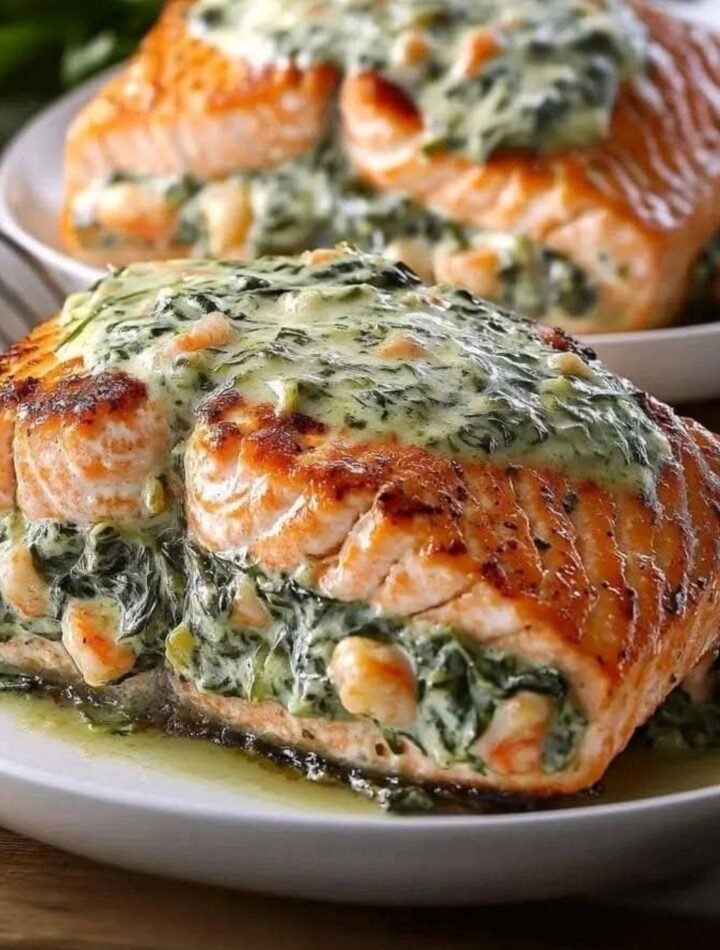
Some recipes make an ordinary dinner feel like a little celebration. Mediterranean Creamy Spinach & Shrimp Stuffed Salmon is one of those meals that brings comfort, flavor, and a touch of elegance to the table. Imagine tender, golden salmon filled with creamy spinach, juicy shrimp, fragrant garlic, and a hint of fresh lemon. It looks like something you might order at your favorite restaurant, yet it is surprisingly easy to prepare at home.
What makes this dish so special is the way the ingredients come together. The salmon is rich and flaky, the shrimp adds a delicate sweetness, and the creamy spinach filling brings everything together. A little lemon juice and a handful of fresh herbs brighten the flavors, creating a Mediterranean-inspired meal that feels both indulgent and nourishing.
Whether you are planning a cozy family dinner, preparing something special for the weekend, or simply craving a delicious seafood meal, this stuffed salmon is a wonderful recipe to try. It is proof that a few fresh ingredients and a little time in the kitchen can turn an everyday meal into something memorable.
Mediterranean Creamy Spinach & Shrimp Stuffed Salmon
An Anti-Inflammatory Mediterranean Diet Recipe
Recipe Description
Mediterranean Creamy Spinach & Shrimp Stuffed Salmon is a delicious, restaurant-quality seafood dish that combines tender, pan-seared salmon with a creamy filling made from shrimp, spinach, garlic, herbs, and Parmesan cheese. Finished in the oven until perfectly flaky, this elegant meal delivers rich flavor, satisfying protein, and nourishing ingredients inspired by the Mediterranean diet.
Salmon is naturally rich in omega-3 fatty acids, while spinach provides essential vitamins, minerals, and antioxidants. Garlic, olive oil, lemon juice, and herbs add Mediterranean flavor and complement a balanced, anti-inflammatory eating pattern.
This high-protein seafood recipe is ideal for a healthy dinner, meal prep, special occasions, or anyone looking for nutritious Mediterranean diet recipes without sacrificing taste.
Preparation Time and Cooking Details
Prep time: 20 minutes
Cook time: 20–25 minutes
Total time: 40–45 minutes
Servings: 4
Cuisine: Mediterranean-inspired
Course: Main course
Cooking method: Pan-searing and baking
Diet style: High-protein, Mediterranean-inspired, gluten-free when using suitable ingredients
Difficulty: Moderate
Ingredients
For the Salmon
4 salmon fillets, approximately 6 ounces (170 g) each, preferably thick-cut
1 tablespoon extra-virgin olive oil
1 tablespoon fresh lemon juice
3 cloves garlic, minced
1/2 teaspoon paprika
1/2 teaspoon dried oregano
1/2 teaspoon black pepper
1/2 teaspoon sea salt, or to taste
For the Creamy Spinach and Shrimp Filling
8 ounces (225 g) small shrimp, peeled, deveined, and chopped
2 cups fresh spinach, finely chopped
4 ounces (115 g) cream cheese, softened
1/4 cup plain Greek yogurt
1/4 cup freshly grated Parmesan cheese
2 cloves garlic, minced
1 tablespoon extra-virgin olive oil
1 tablespoon fresh lemon juice
1/2 teaspoon dried oregano
1/4 teaspoon black pepper
A pinch of red pepper flakes, optional
For Garnish
Fresh parsley, chopped
Lemon wedges
A little extra-virgin olive oil
Freshly ground black pepper
Instructions
Step 1: Prepare the Salmon
Preheat the oven to 400°F (200°C).
Pat the salmon fillets dry with paper towels. Using a sharp knife, carefully cut a pocket horizontally into the thickest side of each fillet. Avoid cutting all the way through.
In a small bowl, combine olive oil, lemon juice, minced garlic, paprika, oregano, salt, and black pepper.
Rub the mixture over the salmon fillets, including the outside and inside of each pocket. Set aside while preparing the filling.
Step 2: Cook the Shrimp
Heat one tablespoon of olive oil in a skillet over medium heat.
Add the chopped shrimp and cook for approximately 2–3 minutes, stirring occasionally, until the shrimp turn pink and opaque. Avoid overcooking, as they will finish heating inside the salmon.
Transfer the shrimp to a bowl and set aside.
Step 3: Prepare the Creamy Spinach Filling
Using the same skillet, add the minced garlic and cook for approximately 30 seconds until fragrant.
Add the chopped spinach and cook for 2–3 minutes, until wilted. If excess liquid accumulates, drain it to prevent the filling from becoming watery.
Reduce the heat to low. Stir in the softened cream cheese, Greek yogurt, Parmesan cheese, lemon juice, oregano, black pepper, and optional red pepper flakes.
Mix until smooth and creamy.
Fold in the cooked shrimp. Taste the filling and adjust the seasoning as needed.
Step 4: Stuff the Salmon
Spoon the creamy spinach and shrimp mixture into the pockets of the salmon fillets.
Divide the filling evenly among the four portions. Avoid overfilling, as the filling may spill out during cooking.
Place the stuffed salmon in a lightly oiled baking dish.
Step 5: Sear for Extra Flavor
For a golden, restaurant-style finish, heat a nonstick or oven-safe skillet over medium-high heat.
Sear the salmon for approximately 2 minutes on each side, handling the stuffed fillets carefully.
If your skillet is oven-safe, transfer it directly to the preheated oven. Otherwise, transfer the salmon to a baking dish.
This step is optional, but it helps develop a delicious golden crust.
Step 6: Bake Until Perfectly Flaky
Bake the salmon for approximately 10–15 minutes, depending on the thickness of the fillets and whether they were seared first.
Cook until the thickest part of the salmon reaches an internal temperature of 145°F (63°C), and the shrimp filling is hot throughout.
Use a food thermometer to confirm doneness. Cooking time may vary with the size of the fillets.
Step 7: Garnish and Serve
Remove the salmon from the oven and allow it to rest for 2–3 minutes.
Garnish with fresh parsley, lemon wedges, and a light drizzle of extra-virgin olive oil.
Serve warm with your favorite Mediterranean-inspired side dishes.
Why This Recipe Fits an Anti-Inflammatory Eating Pattern
An anti-inflammatory diet emphasizes minimally processed foods, vegetables, healthy fats, fiber-rich plant foods, and sources of omega-3 fatty acids. This recipe includes several ingredients that fit that approach.
Salmon: Provides high-quality protein and omega-3 fatty acids, particularly EPA and DHA, which support cardiovascular health and help regulate inflammatory processes in the body.
Spinach: Supplies vitamin K, folate, vitamin C, and carotenoid antioxidants that contribute to overall health.
Extra-Virgin Olive Oil: A central ingredient in the Mediterranean diet, providing monounsaturated fats and antioxidant compounds, including polyphenols.
Garlic: Adds flavor and contains sulfur-containing compounds that have been studied for their potential health benefits.
Lemon and Herbs: Enhance flavor without relying on excessive salt or heavy sauces.
Greek Yogurt: Adds protein and creaminess while allowing some of the cream cheese to be replaced with a lighter ingredient.
Although this meal contains ingredients associated with healthy dietary patterns, no single recipe can prevent, treat, or cure chronic inflammation. Overall dietary habits matter most.
Serving Suggestions
Pair this creamy stuffed salmon with balanced side dishes to create a complete Mediterranean-inspired meal.
1. Roasted Mediterranean Vegetables
Serve with roasted zucchini, bell peppers, red onions, and cherry tomatoes tossed in olive oil, garlic, and oregano.
2. Lemon Garlic Asparagus
Roast or steam asparagus and finish with fresh lemon juice, black pepper, and a little olive oil.
3. Quinoa Salad
Combine cooked quinoa with cucumber, cherry tomatoes, parsley, lemon juice, and olive oil for a fiber-rich side dish.
4. Brown Rice or Wild Rice
Serve the salmon over a modest portion of whole grains to add complex carbohydrates and complement the creamy filling.
5. Mediterranean Chickpea Salad
Mix chickpeas with cucumber, tomatoes, red onion, parsley, lemon juice, and extra-virgin olive oil for additional fiber and plant-based protein.
6. Cauliflower Mash
For a lower-carbohydrate alternative to mashed potatoes, serve with mashed cauliflower seasoned with garlic, black pepper, and olive oil.
7. Fresh Green Salad
Toss mixed greens, cucumber, avocado, and tomatoes with a lemon-olive oil dressing.
For a balanced plate, aim to include vegetables, a protein source, and an appropriate portion of whole grains or other high-fiber carbohydrates.
Recipe Variations
1. Dairy-Light Mediterranean Stuffed Salmon
Replace the cream cheese with additional Greek yogurt and use a smaller amount of Parmesan. The filling will be tangier and slightly less rich.
2. Dairy-Free Stuffed Salmon
Use an unsweetened dairy-free cream cheese alternative and omit the Parmesan or replace it with a suitable dairy-free alternative. Check labels for added sodium and saturated fat.
3. Low-Carbohydrate Stuffed Salmon
The recipe is already relatively low in carbohydrates. Pair it with asparagus, broccoli, sautéed zucchini, or cauliflower mash instead of rice or bread.
4. Extra-Garlic Spinach and Shrimp Salmon
Add one additional garlic clove to the filling and finish with fresh parsley and lemon zest for a more pronounced Mediterranean flavor.
5. Spicy Mediterranean Salmon
Add red pepper flakes, a pinch of cayenne, or a little smoked paprika to the filling for extra heat.
6. Feta and Spinach Stuffed Salmon
Replace part of the Parmesan with crumbled feta cheese for a tangier Mediterranean flavor. Because feta is salty, reduce the added salt.
7. Sun-Dried Tomato Variation
Add one or two tablespoons of finely chopped sun-dried tomatoes to the filling for a savory, slightly sweet flavor. Choose tomatoes packed in oil and drain them well.
8. Herb-Rich Salmon
Add fresh dill, parsley, or basil to the filling. Dill and lemon pair particularly well with salmon and shrimp.
9. Budget-Friendly Version
Use frozen salmon fillets and frozen peeled shrimp. Thaw them safely in the refrigerator, drain thoroughly, and pat dry before cooking.
10. Meal-Prep Version
Prepare the spinach and shrimp filling in advance and refrigerate it in a covered container. Stuff and cook the salmon closer to serving time for the best texture.
Storage and Food Safety
Refrigeration: Store leftover salmon in an airtight container in the refrigerator within two hours of cooking. Consume within 3–4 days.
Reheating: Reheat leftovers to an internal temperature of 165°F (74°C). Use a covered oven-safe dish at a moderate temperature to help prevent the salmon from drying out.
Freezing: Cooked stuffed salmon can be frozen in airtight, freezer-safe packaging, although the creamy filling may change texture after thawing. For the best quality, consume within approximately 2–3 months.
Make-ahead preparation: The filling can be prepared up to one day in advance and refrigerated. Keep raw seafood refrigerated and separate from ready-to-eat foods. For the best food safety and texture, stuff the salmon shortly before cooking.
Estimated Nutrition Facts
The following figures are estimates per serving, assuming the recipe makes four servings and uses the listed ingredients. Actual values depend on salmon size, shrimp quantity, dairy brands, and the amount of oil retained during cooking.
Calories: 480–560 kcal
Protein: 45–55 g
Total fat: 28–36 g
Saturated fat: 8–12 g
Carbohydrates: 5–9 g
Dietary fiber: 1–2 g
Total sugars: 2–4 g
Sodium: 450–750 mg
Omega-3 fatty acids: approximately 1.5–3 g, depending on the salmon
These values are approximate, not laboratory-tested nutrition data. For more accurate tracking, calculate the recipe using the exact products and quantities you use.
To reduce saturated fat, choose reduced-fat cream cheese and plain Greek yogurt. To reduce sodium, use less added salt and Parmesan, and select unseasoned shrimp.
Frequently Asked Questions
1. Is Mediterranean Creamy Spinach and Shrimp Stuffed Salmon anti-inflammatory?
It can fit well into an anti-inflammatory eating pattern. Salmon supplies omega-3 fatty acids, spinach provides antioxidants and vitamins, and extra-virgin olive oil contributes unsaturated fats and polyphenols. Its overall benefits depend on the rest of your diet and lifestyle.
2. Is stuffed salmon good for weight management?
It can be. Salmon and shrimp provide substantial protein, which helps support fullness and muscle maintenance. Portion size and the total calories from cream cheese, Parmesan, and olive oil still matter when managing weight.
3. Is this recipe suitable for a Mediterranean diet?
Yes, with a few considerations. Salmon, spinach, olive oil, garlic, lemon, herbs, and vegetables fit the Mediterranean dietary pattern. For an even more Mediterranean-inspired version, use more vegetables, whole grains, legumes, and olive oil while keeping saturated fat and sodium moderate.
4. Can I make this recipe without cream cheese?
Yes. Use thick plain Greek yogurt with a small amount of Parmesan, or choose a suitable dairy-free cream cheese alternative. Add yogurt over low heat to help prevent curdling.
5. Can I use frozen spinach?
Yes. Thaw it completely, squeeze out excess water, and add it to the garlic before mixing in the creamy ingredients. Removing excess moisture is important for a thick filling.
6. Can I use frozen shrimp?
Yes. Thaw the shrimp safely in the refrigerator, drain, pat dry, and chop before cooking. Avoid adding excess moisture to the filling.
7. How do I keep the filling from leaking out?
Choose thick salmon fillets, make a deep pocket without cutting through the opposite side, and avoid overstuffing. Place the fillets seam-side up in a baking dish and handle them gently.
8. How do I know when the salmon is cooked?
Check the thickest part with a food thermometer. The recommended safe internal temperature for fish is 145°F (63°C). The flesh should also look opaque and separate easily with a fork.
9. Can I prepare stuffed salmon ahead of time?
You can prepare the filling ahead and refrigerate it. For the best texture and food safety, assemble the stuffed salmon shortly before cooking rather than leaving raw stuffed seafood in the refrigerator for an extended period.
10. What can I serve with stuffed salmon for a low-carb dinner?
Try roasted broccoli, asparagus, cauliflower mash, sautéed zucchini, or a fresh green salad with lemon and olive oil.
11. Is salmon healthier than chicken?
Both can be nutritious protein sources. Salmon generally provides more EPA and DHA omega-3 fatty acids, while skinless chicken breast is typically leaner and contains less total fat. The better choice depends on your nutritional needs and meal preferences.
12. Can I make this recipe gluten-free?
Yes. The listed ingredients are naturally gluten-free in their basic forms. Check product labels, especially for seasoning blends, processed cheeses, and packaged seafood, to avoid unexpected gluten-containing ingredients.
Final Thoughts
Mediterranean Creamy Spinach and Shrimp Stuffed Salmon brings together the rich taste of salmon, delicate shrimp, tender spinach, garlic, lemon, and a velvety cheese filling in one impressive meal.