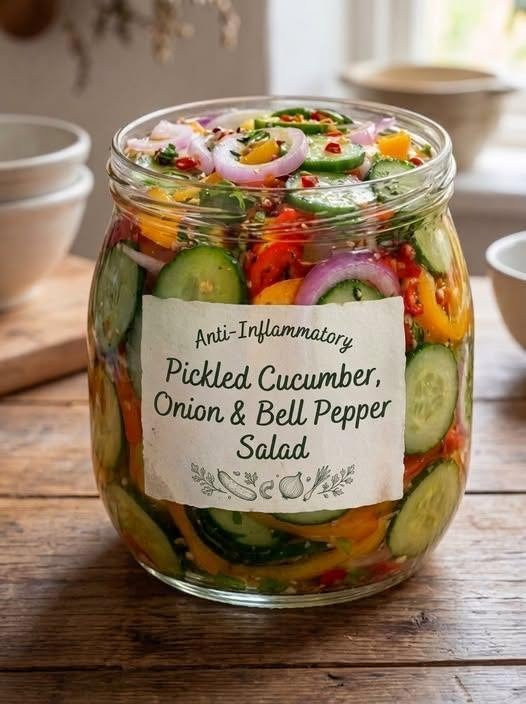
Opening the refrigerator and discovering a jar of vibrant, handmade pickled vegetables is incredibly reassuring. Together, the vibrant red, yellow, and orange bell peppers, purple onion rings, and brilliant green cucumbers look stunning, but the greatest part is that they taste as good as they look.
A family member suggested using handmade pickled vegetables rather than store-bought ones, which sparked my interest in creating this salad. The thought of always having something crunchy, tart, and fresh on hand for a quick side dish appealed to me. After attempting it at.
Anti-Inflammatory Pickled Cucumber, Onion & Bell Pepper Salad
Recipe Description
Anti-Inflammatory Pickled Cucumber, Onion & Bell Pepper Salad is a refreshing, crunchy, colorful vegetable salad made with crisp cucumbers, red onions, sweet bell peppers, fresh herbs, and a tangy homemade vinegar dressing. This easy refrigerator pickle recipe combines fresh ingredients with simple pantry staples to create a healthy side dish that complements almost any meal.
This quick pickled vegetable salad is ideal for people looking for healthy meal prep ideas, low-calorie side dishes, heart-healthy eating patterns, and delicious ways to add more vegetables to their daily diet. Cucumbers provide hydration, bell peppers supply vitamin C, and onions contain beneficial plant compounds. Extra virgin olive oil and herbs can add flavor and beneficial fats.
Although these ingredients can support an overall balanced, anti-inflammatory eating pattern, no single salad or food can treat or cure inflammation.
Recipe at a Glance
- Preparation Time: 15 minutes
- Marinating Time: 30 minutes to 2 hours
- Total Time: 45 minutes to 2 hours 15 minutes
- Servings: 6
- Course: Salad, side dish, appetizer
- Cuisine: Mediterranean-inspired
- Diet: Vegetarian, vegan, dairy-free, and gluten-free when using suitable ingredients
- Difficulty: Easy
- Storage: Refrigerate in an airtight container and consume within 3–4 days for best quality.
Ingredients
For the Vegetable Salad
- 3 medium cucumbers, thinly sliced
- 1 medium red onion, thinly sliced into rings
- 1 red bell pepper, thinly sliced
- 1 yellow or orange bell pepper, thinly sliced
- 2 tablespoons fresh parsley, finely chopped
- 1 tablespoon fresh dill, chopped (optional)
- 1 small garlic clove, finely minced (optional)
- 1 small jalapeño, thinly sliced (optional)
- 1 teaspoon sesame seeds or mustard seeds (optional)
For the Pickling Dressing
- 1/2 cup apple cider vinegar or white wine vinegar
- 1/2 cup water
- 2 tablespoons extra virgin olive oil (optional)
- 1 tablespoon honey or pure maple syrup, optional
- 1 teaspoon sea salt, or to taste
- 1/2 teaspoon freshly ground black pepper
- 1/2 teaspoon dried oregano
- 1/2 teaspoon ground turmeric (optional)
- 1/4 teaspoon red pepper flakes (optional)
Ingredient note: Apple cider vinegar creates a fruity tang, while white wine vinegar offers a cleaner, sharper flavor. The olive oil gives the dressing a richer texture. Honey or maple syrup balances the acidity without making the salad overly sweet.
This is a refrigerator salad, not a shelf-stable canned pickle. Keep it refrigerated and do not store it at room temperature.
Instructions
Step 1: Prepare the Vegetables
Wash the cucumbers, bell peppers, parsley, and dill under running water. Pat them dry with a clean towel.
Slice the cucumbers into thin rounds. Peel the red onion and cut it into thin rings. Remove the seeds and membranes from the bell peppers and slice them into strips.
For extra crunch, choose firm cucumbers and avoid overripe vegetables. English cucumbers or Persian cucumbers work particularly well.
Step 2: Make the Pickling Dressing
In a medium mixing bowl, whisk together the vinegar, water, salt, black pepper, oregano, and optional turmeric and red pepper flakes.
Add the honey or maple syrup if you prefer a slightly sweeter dressing. Stir until the salt dissolves.
If using olive oil, whisk it in at the end. Taste the dressing and adjust the seasoning to suit your preferences.
Step 3: Combine the Ingredients
Place the sliced cucumbers, red onion, red bell pepper, and yellow or orange bell pepper in a large glass bowl or clean glass jar.
Add the minced garlic, chopped parsley, dill, and optional jalapeño or seeds.
Pour the dressing over the vegetables. Toss gently or stir with a clean spoon until the vegetables are evenly coated.
Step 4: Refrigerate and Marinate
Cover the bowl or jar and refrigerate for at least 30 minutes.
For a more developed pickled flavor, allow the salad to marinate for 1–2 hours. Toss or stir it once during this time so the dressing reaches all the vegetables.
The cucumbers should remain crisp, while the onions and peppers absorb the tangy dressing.
Step 5: Serve and Enjoy
Stir the salad before serving. Use a clean serving spoon to transfer it to a bowl, and drizzle a little of the dressing over the vegetables if desired.
Garnish with fresh parsley, dill, or a sprinkle of black pepper.
Serve chilled for the best flavor and texture.
Serving Suggestions
This versatile cucumber, onion, and bell pepper salad pairs well with everyday meals and special occasions.
- Grilled chicken or fish: Serve alongside grilled chicken breast, baked salmon, or white fish for a balanced meal.
- Healthy lunch bowls: Add the salad to quinoa bowls, brown rice bowls, or chickpea bowls.
- Mediterranean meals: Pair it with hummus, whole-grain pita, lentils, olives, and grilled vegetables.
- Sandwiches and wraps: Add a small portion to chicken wraps, falafel wraps, or vegetarian sandwiches for crunch and acidity.
- Barbecue side dish: Serve with grilled vegetables, kebabs, or lean meat as a refreshing alternative to creamy coleslaw.
- Meal prep lunches: Portion it into small containers alongside protein and whole grains for convenient weekday meals.
- Plant-based dinners: Combine it with roasted chickpeas, baked tofu, or beans for a satisfying vegetarian meal.
For a balanced plate, combine this salad with a protein source, fiber-rich carbohydrates, and healthy fats.
Variations and Substitutions
1. Mediterranean Anti-Inflammatory Salad
Add cherry tomatoes, sliced olives, fresh oregano, and a little lemon juice. Serve with chickpeas or grilled fish.
2. Spicy Pickled Cucumber Salad
Add jalapeño, red pepper flakes, or a small amount of fresh chili. Adjust the heat gradually to avoid overpowering the fresh vegetables.
3. Sugar-Free Pickled Vegetable Salad
Omit honey or maple syrup. The vinegar, herbs, and natural sweetness of the bell peppers provide plenty of flavor.
4. Low-Sodium Version
Reduce the salt and emphasize garlic, dill, parsley, black pepper, lemon zest, and vinegar. People following a medically prescribed sodium restriction should tailor the recipe to their individual requirements.
5. Turmeric and Ginger Variation
Add a small amount of freshly grated ginger and a pinch of turmeric. These ingredients contribute distinctive flavor and plant compounds, but their inclusion does not make the salad a treatment for inflammation.
6. Lemon and Herb Cucumber Salad
Replace part of the vinegar with fresh lemon juice and increase the parsley and dill. This creates a lighter, citrus-forward flavor.
7. Asian-Inspired Pickled Salad
Use rice vinegar, thinly sliced cucumber, red onion, bell pepper, sesame seeds, and a little fresh ginger. Add a small amount of sesame oil if desired.
8. Protein-Rich Meal Prep Salad
Add chickpeas or white beans just before serving. For a non-vegan version, serve with grilled chicken, boiled eggs, or crumbled feta cheese.
9. Extra-Crunchy Pickle Salad
Use Persian cucumbers, slice the vegetables evenly, and refrigerate immediately after mixing. Add delicate herbs shortly before serving for a fresher flavor.
Health Benefits and Anti-Inflammatory Nutrition
This recipe contains a variety of vegetables and optional herbs that can contribute to a balanced diet.
Cucumbers: Provide water and a small amount of fiber and vitamin K. Their high water content makes them a refreshing addition to meals.
Red onions: Contain quercetin and other plant compounds. They also contribute flavor without requiring heavy sauces.
Bell peppers: Supply vitamin C and colorful carotenoid compounds. Red, yellow, and orange varieties provide different combinations of plant pigments.
Parsley and dill: Add fresh flavor and small amounts of vitamins and plant compounds.
Extra virgin olive oil: Provides predominantly monounsaturated fat and polyphenols. It is a useful ingredient in Mediterranean-style eating patterns.
Apple cider vinegar: Adds acidity and flavor. It should not be considered a proven anti-inflammatory treatment or a detoxifying agent.
Turmeric and ginger: Offer distinctive flavors and naturally occurring plant compounds. The amount used in this recipe is culinary rather than a therapeutic dose.
An anti-inflammatory eating pattern generally emphasizes a variety of vegetables and fruits, legumes, whole grains, nuts, seeds, and unsaturated fats while limiting excessive intake of highly processed foods. This salad can be one component of that broader pattern.
Nutrition Information
The following values are estimates for one serving, assuming the recipe makes six servings and includes the optional olive oil and honey. Actual values depend on ingredient sizes, quantities, and how much dressing is consumed.
- Calories: approximately 100–120 kcal
- Total Fat: 5–6 g
- Saturated Fat: approximately 0.7–1 g
- Carbohydrates: 12–15 g
- Dietary Fiber: 2–3 g
- Total Sugars: 7–9 g
- Protein: 2 g
- Sodium: approximately 350–450 mg
- Vitamin C: a meaningful contribution toward daily needs
- Vitamin K: a small contribution toward daily needs
These are approximate values, not laboratory-tested nutrition facts. Sodium levels can vary substantially with the amount of salt added. If you omit the olive oil and sweetener, the calorie content will generally be lower.
For a more filling meal, pair one serving with beans, lentils, tofu, fish, chicken, or another protein source.
Storage and Food Safety
- Store the salad in a clean, airtight container in the refrigerator at 40°F (4°C) or below.
- For best texture and flavor, consume it within 3–4 days.
- Always use a clean utensil when serving.
- Keep the vegetables refrigerated throughout storage.
- Discard the salad if it develops mold, an unusual odor, unexpected bubbling, or other signs of spoilage.
- Do not assume that vinegar makes this recipe safe for pantry storage. This recipe has not been tested as a shelf-stable canning formula.
The cucumbers gradually soften as they absorb the dressing, so the salad is usually crunchiest during the first couple of days.
Frequently Asked Questions
1. Is this pickled cucumber salad good for an anti-inflammatory diet?
Yes, it can fit into an anti-inflammatory eating pattern because it contains vegetables, herbs, and optional extra virgin olive oil. However, no single food guarantees a reduction in inflammation. Overall dietary habits matter more than any one recipe.
2. Can I make this salad without sugar?
Yes. Honey and maple syrup are optional. Leave them out for a tangier, lower-sugar salad.
3. How long should cucumbers marinate?
Thirty minutes is enough for a lightly pickled flavor. One to two hours produces a more developed flavor, while overnight refrigeration can make the vegetables more tangy but slightly softer.
4. Can I make this salad ahead of time?
Yes. Prepare it a few hours before serving and refrigerate it. For the best crunch, serve it within the first 24–48 hours.
5. Is apple cider vinegar necessary?
No. White wine vinegar, rice vinegar, or another food-grade vinegar with a similar acidity can work. The flavor will change depending on the vinegar you choose.
6. Is this recipe suitable for weight management?
It can be a useful option because it contains vegetables and can be relatively low in calories. Portion size and the amount of oil or sweetener affect the final calorie content. Sustainable weight management depends on overall eating patterns, activity, sleep, and other individual factors.
7. Can I eat this salad every day?
Many people can enjoy a vegetable salad regularly as part of a varied diet. If you are sensitive to acidic foods, have reflux symptoms, or need to limit sodium, adjust the vinegar and salt to your needs.
8. Can I use this recipe for canning?
No. This recipe is designed for refrigerated consumption, not shelf-stable canning. Safe canning requires a tested recipe with validated acidity and processing instructions.
9. What protein goes best with this salad?
Grilled chicken, baked salmon, tofu, chickpeas, lentils, and boiled eggs all pair well. Choose the option that best suits your dietary preferences.
10. How can I keep the vegetables crunchy?
Choose firm cucumbers, slice the vegetables evenly, refrigerate the salad promptly, and avoid marinating it for excessively long periods. Adding fresh herbs just before serving also helps preserve their bright flavor.
Final Thoughts
Anti-Inflammatory Pickled Cucumber, Onion & Bell Pepper Salad is an easy, colorful way to make everyday vegetables more appealing. Its combination of crunchy cucumbers, tangy onions, sweet bell peppers, fresh herbs, and a simple vinegar dressing creates a refreshing side dish for lunch, dinner, barbecues, and meal prep.