
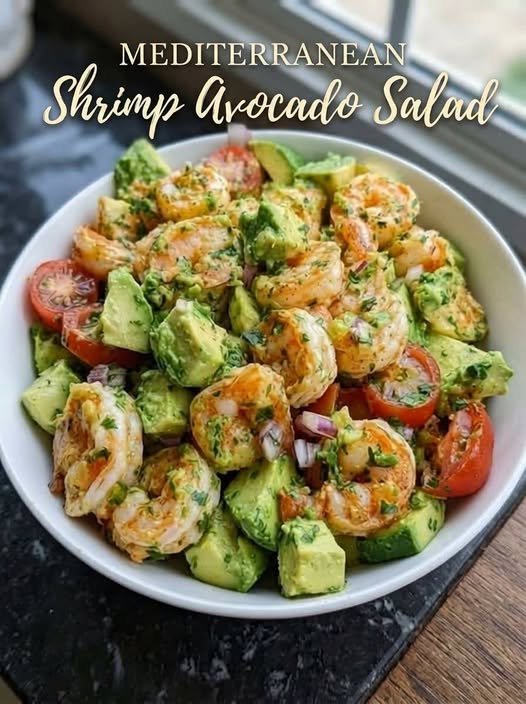
There’s something wonderful about a meal that tastes fresh, feels comforting, and looks beautiful without spending hours in the kitchen. Mediterranean Shrimp Avocado Salad is one of those recipes that brings everything together in the simplest way. Juicy garlic-seasoned shrimp, creamy avocado, sweet cherry tomatoes, crunchy cucumber, and a zesty lemon-olive oil dressing create a combination that’s hard to resist.
What I love most about this salad is how a few fresh ingredients can turn an ordinary meal into something special. It’s perfect for a quick lunch on a busy day, a relaxed family dinner, or a weekend gathering with friends. The vibrant colors make it look gorgeous on the table, while the tender shrimp and buttery avocado add a satisfying richness to every bite. It’s fresh, flavorful, and wholesome—the kind of meal you’ll want to make again and again.
Mediterranean Shrimp Avocado Salad: A Healthy Anti-Inflammatory Recipe
Recipe Description
Mediterranean Shrimp Avocado Salad is a fresh, colorful, protein-rich meal made with juicy seasoned shrimp, creamy avocado, sweet cherry tomatoes, crisp cucumber, red onion, fresh herbs, and a zesty lemon-olive oil dressing.
Inspired by the Mediterranean diet, this easy shrimp salad combines lean protein, heart-healthy fats, fiber, and antioxidant-rich vegetables. It is an excellent option for anyone looking for healthy Mediterranean recipes, anti-inflammatory meals, low-carb lunches, or nutritious dinners that are quick to prepare.
Avocado and extra-virgin olive oil provide monounsaturated fats, while tomatoes and fresh herbs contribute beneficial plant compounds. Shrimp supplies lean protein and essential nutrients, making this salad a satisfying choice for a balanced eating pattern.
Prep Time: 15 minutes
Cook Time: 8 minutes
Total Time: 23 minutes
Servings: 4
Course: Lunch, dinner, or healthy side dish
Cuisine: Mediterranean-inspired
Dietary Style: Gluten-free, low-carb, high-protein, and naturally dairy-free
Ingredients
For the Salad
- 1 pound (450 g) large shrimp, peeled and deveined
- 2 ripe avocados, diced
- 1 1/2 cups cherry tomatoes, halved
- 1 medium cucumber, diced
- 1/4 cup red onion, finely chopped
- 1/4 cup fresh parsley, chopped
- 2 tablespoons fresh dill or cilantro, chopped (optional)
- 1 tablespoon extra-virgin olive oil
- 2 garlic cloves, minced
- 1/2 teaspoon smoked paprika
- 1/2 teaspoon dried oregano
- 1/4 teaspoon ground black pepper
- 1/4 teaspoon salt, or to taste
For the Lemon Olive Oil Dressing
- 3 tablespoons extra-virgin olive oil
- 2 tablespoons freshly squeezed lemon juice
- 1 teaspoon lemon zest
- 1 teaspoon Dijon mustard (optional)
- 1 small garlic clove, finely minced
- 1 teaspoon red wine vinegar (optional)
- Black pepper, to taste
- A small pinch of salt, to taste
Instructions
Step 1: Prepare the Shrimp
Pat the shrimp dry with paper towels. Place them in a bowl and add 1 tablespoon of olive oil, minced garlic, smoked paprika, dried oregano, black pepper, and salt.
Toss until the shrimp are evenly coated with the seasonings.
Step 2: Cook the Shrimp
Heat a large skillet over medium-high heat. Add the seasoned shrimp in a single layer.
Cook for approximately 2–3 minutes per side, depending on their size, until the shrimp turn pink, opaque, and firm. Cook to an internal temperature of 145°F (63°C).
Remove from the skillet and allow the shrimp to cool slightly before adding them to the salad.
Step 3: Prepare the Vegetables
Wash and dry the cherry tomatoes, cucumber, and fresh herbs.
Cut the cherry tomatoes in half, dice the cucumber and avocados, and finely chop the red onion and parsley.
Place the tomatoes, cucumber, red onion, parsley, and optional dill in a large salad bowl.
Step 4: Make the Mediterranean Dressing
In a small bowl, whisk together the extra-virgin olive oil, lemon juice, lemon zest, Dijon mustard, minced garlic, and red wine vinegar.
Season with a little salt and black pepper. Taste and adjust the lemon juice or seasoning as desired.
Step 5: Assemble the Salad
Add the diced avocado and cooked shrimp to the bowl of vegetables.
Pour the dressing over the salad and gently toss until everything is lightly coated. Avoid vigorous mixing to keep the avocado pieces intact.
Step 6: Serve Fresh
Taste the salad and adjust the seasoning if needed. Garnish with extra parsley, fresh dill, cracked black pepper, or a squeeze of lemon juice.
Serve immediately for the freshest flavor and best avocado texture.
Why This Salad Fits an Anti-Inflammatory Eating Pattern
An anti-inflammatory diet emphasizes a variety of minimally processed foods, including vegetables, fruit, legumes, whole grains, nuts, seeds, and unsaturated fats.
This Mediterranean-inspired salad includes several ingredients that fit that approach:
- Avocado: Provides monounsaturated fat, fiber, potassium, and other nutrients.
- Extra-virgin olive oil: Supplies monounsaturated fat and phenolic compounds associated with the benefits of Mediterranean-style eating.
- Tomatoes: Contain lycopene, a naturally occurring antioxidant.
- Lemon and fresh herbs: Add flavor and plant compounds without relying on heavy sauces.
- Shrimp: Provides high-quality protein, vitamin B12, selenium, and other essential nutrients.
- Cucumber and red onion: Add hydration, fiber, and a variety of plant compounds.
No single recipe can guarantee reduced inflammation or treat an inflammatory condition. However, this salad can be part of a balanced dietary pattern that supports overall health.
Serving Suggestions
1. For a Light, Healthy Lunch
Serve a generous bowl of shrimp avocado salad on its own. It provides protein, vegetables, and healthy fats in one refreshing meal.
2. For a Mediterranean Dinner
Pair the salad with grilled vegetables, roasted zucchini, eggplant, or asparagus. A side of lentil soup also complements the Mediterranean flavors.
3. For a More Filling Meal
Add quinoa, farro, brown rice, or a slice of whole-grain sourdough bread. These options provide additional carbohydrates and fiber.
4. For Meal Prep
Prepare the shrimp, chop the vegetables, and mix the dressing ahead of time. Store each component separately and add the avocado shortly before serving.
5. For Entertaining
Serve the salad on a large platter with lemon wedges and fresh herbs. It works well for summer lunches, family dinners, picnics with proper refrigeration, and Mediterranean-inspired gatherings.
Recipe Variations
1. Spicy Mediterranean Shrimp Salad
Add red pepper flakes, cayenne pepper, or finely chopped fresh chili to the shrimp seasoning for a spicy version.
2. Greek Shrimp Avocado Salad
Add crumbled feta cheese, Kalamata olives, and a little dried oregano. If using feta, reduce the added salt because the cheese is naturally salty.
3. Low-Carb and Keto-Friendly Salad
Keep the recipe as written and check the ingredients in any prepared mustard or dressing. The salad is naturally low in carbohydrates compared with grain-based meals, although avocado and tomatoes still contribute some carbohydrates.
4. Dairy-Free Mediterranean Salad
The original recipe is dairy-free. Avoid feta and other dairy-based toppings if you want to maintain that quality.
5. High-Protein Shrimp Salad
Increase the shrimp portion or add a side of boiled eggs. You can also serve the salad with a suitable high-protein whole grain or legumes to make the meal more substantial.
6. Salmon Avocado Salad
Replace the shrimp with cooked salmon. Salmon provides more omega-3 fatty acids, making it another excellent option for a Mediterranean-style meal.
7. Vegan Mediterranean Avocado Salad
Replace shrimp with chickpeas, white beans, or grilled tofu. These alternatives provide plant-based protein and fiber.
8. Extra-Crunchy Salad
Add chopped bell peppers, shredded cabbage, radishes, or toasted pumpkin seeds for additional texture.
9. Lemon Herb Shrimp Salad
Increase the fresh parsley and dill, add extra lemon zest, and omit the smoked paprika for a brighter, herb-forward flavor.
Storage and Food Safety
- Store leftover salad in an airtight container in the refrigerator at 40°F (4°C) or below.
- For the best quality, eat the assembled salad within 24 hours because avocado can brown and the vegetables can release moisture.
- Cooked shrimp should generally be refrigerated promptly and used within 3–4 days, following standard food-safety guidance.
- If preparing the salad in advance, store the shrimp, vegetables, avocado, and dressing separately when possible.
- Do not leave cooked seafood at room temperature for more than two hours, or one hour when temperatures exceed 90°F (32°C).
- Discard seafood that has been stored improperly or shows signs of spoilage.
Nutrition Information
The following values are estimates for one serving, assuming the recipe makes four servings and includes the full amount of dressing.
- Calories: approximately 350–420 kcal
- Protein: approximately 27–32 g
- Total carbohydrates: approximately 12–17 g
- Dietary fiber: approximately 6–8 g
- Net carbohydrates: approximately 6–11 g
- Total fat: approximately 21–29 g
- Saturated fat: approximately 3–5 g
- Sugar: approximately 3–5 g
- Sodium: approximately 400–700 mg
Actual nutrition values vary with shrimp size, avocado size, the amount of dressing consumed, and the salt used.
Key Nutritional Benefits
Protein: Shrimp supports muscle maintenance and normal body functions.
Monounsaturated fats: Avocado and olive oil provide fats that can help support cardiovascular health when used in place of less healthy fat sources.
Fiber: Avocado and vegetables contribute fiber, which supports digestive health and helps make the meal satisfying.
Antioxidants: Tomatoes, herbs, and other vegetables supply compounds that help protect cells from oxidative damage.
Micronutrients: Shrimp and vegetables provide a range of vitamins and minerals, including vitamin B12, selenium, potassium, and vitamin C.
For personalized nutrition targets, particularly if you have kidney disease, diabetes, high blood pressure, or a medically prescribed diet, adjust portions and ingredients with guidance from a qualified healthcare professional.
Frequently Asked Questions
1. Is Mediterranean Shrimp Avocado Salad anti-inflammatory?
It can fit an anti-inflammatory eating pattern because it contains vegetables, avocado, olive oil, herbs, and lean seafood. The overall dietary pattern matters more than any individual food, and this salad is not a treatment for inflammatory disease.
2. Is shrimp healthy to eat regularly?
Shrimp is a lean source of protein and provides vitamin B12 and selenium. It can fit into a balanced diet. People with shellfish allergies should avoid it, and anyone managing a medical condition should follow individualized dietary advice.
3. Can I eat this salad for weight loss?
Yes, it can be included in a weight-management plan. Its protein, fiber, and unsaturated fats may help with fullness. Portion size, total daily calorie intake, and overall eating habits still determine weight changes.
4. Is this salad keto-friendly?
It can fit many low-carbohydrate eating plans. For strict ketogenic diets, calculate the net carbohydrates from the actual ingredient quantities and serving size.
5. Can I make the salad ahead of time?
Yes. Cook the shrimp and prepare the vegetables ahead of time. Keep the dressing separate and cut the avocado just before serving to help preserve its color and texture.
6. Can I use frozen shrimp?
Yes. Thaw frozen shrimp safely in the refrigerator overnight or under cold running water in a sealed bag. Pat dry before seasoning and cooking.
7. Can I use bottled lemon juice?
Fresh lemon juice is preferable for its bright flavor, but bottled lemon juice can be used when fresh lemons are unavailable.
8. What can I use instead of olive oil?
Avocado oil is a suitable alternative for both cooking the shrimp and preparing the dressing. The flavor will be slightly different.
9. Is this salad gluten-free?
The basic ingredients are naturally gluten-free. Check the labels of prepared mustard, vinegar, seasonings, and other packaged ingredients if you need to avoid gluten strictly.
10. How can I reduce the sodium?
Use less added salt, choose plain unseasoned shrimp, and avoid salty additions such as feta and olives. Lemon juice, garlic, black pepper, and fresh herbs provide plenty of flavor without requiring extra salt.
11. Can I eat this salad for dinner?
Absolutely. It provides protein, healthy fats, and vegetables. Add whole grains or legumes if you want a more energy-dense meal.
12. Does avocado help reduce inflammation?
Avocado supplies monounsaturated fats, fiber, and various plant compounds. It can be part of a healthy dietary pattern, but it should not be viewed as a stand-alone anti-inflammatory treatment.
Related Mediterranean Recipes to Try
- Mediterranean Chickpea Salad with Cucumber and Tomatoes
- Greek Chicken Salad with Lemon Olive Oil Dressing
- Grilled Salmon Avocado Salad
- Mediterranean Quinoa Salad with Fresh Herbs
- Garlic Lemon Shrimp with Roasted Vegetables
- Healthy Tuna Avocado Salad
- Greek Lentil Salad with Parsley and Red Onion
- Roasted Vegetable and Hummus Bowl
- Mediterranean Baked Salmon with Garlic and Herbs
- Fresh Cucumber Tomato Salad with Extra-Virgin Olive Oil
These recipes offer similar ingredients and flavors, making it easier to build a varied Mediterranean-style weekly meal plan.
Final Thoughts
Mediterranean Shrimp Avocado Salad is a simple, flavorful way to bring together lean protein, fresh vegetables, avocado, and extra-virgin olive oil. Its bright lemon dressing and fresh herbs make it satisfying without relying on heavy sauces or complicated cooking methods.


