
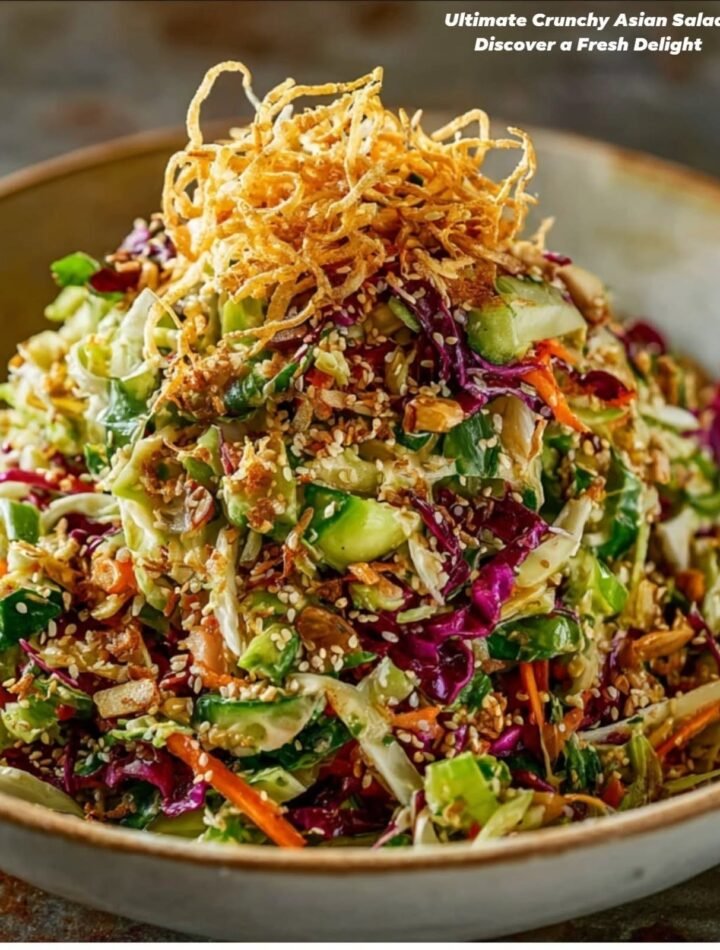
Ultimate Crunchy Asian Salad: An Anti-Inflammatory Recipe for a Fresh, Healthy Lifestyle
Recipe Description
The Ultimate Crunchy Asian Salad is a colorful, refreshing, and nutrient-rich dish that combines crisp cabbage, fresh cucumbers, carrots, green onions, and red cabbage with crunchy almonds, sesame seeds, and crispy noodle toppings. Tossed in a delicious Asian-inspired sesame ginger dressing, this salad delivers a satisfying balance of sweet, tangy, savory, and nutty flavors.
This healthy Asian salad recipe is an excellent option for anyone looking for anti-inflammatory foods, a nutrient-dense lunch, a light dinner, or a healthy side dish. Its combination of colorful vegetables, nuts, and seeds provides dietary fiber, antioxidants, vitamins, and healthy fats that support an overall balanced diet.
You can easily customize this crunchy cabbage salad to suit vegetarian, vegan, gluten-free, and high-protein meal plans.
Recipe at a Glance
- Preparation Time: 20 minutes
- Cooking Time: 5 minutes if preparing homemade crispy toppings
- Total Time: 25 minutes
- Servings: 4
- Cuisine: Asian-inspired
- Course: Lunch, dinner, side dish, or meal prep
- Diet: Vegetarian, with vegan and gluten-free options
- Flavor Profile: Crunchy, fresh, tangy, savory, and slightly sweet
Ingredients
For the Salad
- 3 cups green cabbage, finely shredded
- 2 cups red cabbage, thinly sliced
- 1 large cucumber, diced or thinly sliced
- 1 medium carrot, julienned
- 3 green onions, finely chopped
- 1 cup fresh cilantro, roughly chopped
- 1/2 cup sliced almonds
- 2 tablespoons sesame seeds
- 1/2 cup crispy rice noodles or crunchy chow mein noodles, optional
- 1/2 cup edamame, cooked and shelled, optional for additional protein
- 1/2 cup thinly sliced bell peppers, optional
For the Anti-Inflammatory Sesame Ginger Dressing
- 3 tablespoons extra-virgin olive oil
- 2 tablespoons rice vinegar
- 1 tablespoon reduced-sodium soy sauce or tamari
- 1 tablespoon fresh lemon or lime juice
- 1 tablespoon freshly grated ginger
- 1 small garlic clove, minced
- 1 teaspoon toasted sesame oil
- 1–2 teaspoons honey or pure maple syrup
- 1/2 teaspoon ground turmeric, optional
- 1/4 teaspoon freshly ground black pepper
- 1–2 tablespoons water, as needed to adjust consistency
This homemade salad dressing combines ginger, garlic, olive oil, and optional turmeric for a flavorful addition to a balanced, plant-forward meal. These ingredients contain compounds studied for their potential health benefits, although the dressing itself is not a treatment for inflammation.
Optional Protein Additions
For a more filling and balanced meal, add one of the following:
- 1 cup grilled chicken breast, sliced
- 1 cup baked tofu cubes
- 1 cup cooked edamame
- 1 cup cooked shrimp
- 2 boiled eggs, sliced
Step-by-Step Instructions
Step 1: Prepare the Vegetables
Wash and dry all vegetables thoroughly. Finely shred the green and red cabbage, slice the cucumber, julienne the carrot, and chop the green onions and cilantro.
Place the prepared vegetables in a large salad bowl. Make sure the vegetables are relatively dry to help the dressing coat them evenly without becoming watery.
Step 2: Toast the Nuts and Seeds
Place the sliced almonds in a dry skillet over medium-low heat. Toast for approximately 2–4 minutes, stirring frequently until lightly golden and fragrant.
Add the sesame seeds during the final minute if desired. Remove from the heat and allow everything to cool.
Keep a close eye on the nuts and seeds because they can burn quickly.
Step 3: Prepare the Sesame Ginger Dressing
In a small bowl or jar, combine the olive oil, rice vinegar, soy sauce, lemon or lime juice, grated ginger, minced garlic, sesame oil, honey or maple syrup, optional turmeric, and black pepper.
Whisk thoroughly or shake the jar until the ingredients are well combined.
Add a little water if the dressing is too strong or thick. Taste and adjust the acidity, sweetness, or saltiness according to your preference.
Step 4: Assemble the Salad
Add the toasted almonds, sesame seeds, and optional edamame to the bowl of vegetables.
Pour approximately two-thirds of the dressing over the salad. Toss gently until the vegetables are evenly coated.
Taste and add more dressing as needed.
Step 5: Add the Crunchy Topping
Just before serving, sprinkle crispy rice noodles or crunchy chow mein noodles over the salad.
This final step preserves the texture and gives the dish its signature crunch.
For a lighter, whole-food-focused option, use extra toasted almonds, pumpkin seeds, or sunflower seeds instead of fried noodles.
Step 6: Serve Fresh
Serve immediately while the vegetables remain crisp and the toppings are crunchy.
For a more substantial meal, add grilled chicken, tofu, shrimp, or edamame.
What Makes This Salad Anti-Inflammatory?
Chronic inflammation is associated with several health conditions, and dietary patterns rich in vegetables, fruits, nuts, seeds, and other minimally processed foods may support overall health. No single salad can prevent or cure inflammatory diseases, but this recipe can contribute to a balanced eating pattern.
1. Red and Green Cabbage
Cabbage provides vitamin C, fiber, and other beneficial plant compounds. Red cabbage also contains anthocyanins, the pigments responsible for its purple-red color.
2. Fresh Ginger
Ginger contains bioactive compounds called gingerols. Ginger has been studied for its potential anti-inflammatory effects, although the amount in a typical salad dressing should not be considered a therapeutic dose.
3. Garlic
Garlic contributes flavor and contains sulfur-containing compounds that are being investigated for various health effects.
4. Extra-Virgin Olive Oil
Extra-virgin olive oil supplies predominantly monounsaturated fats and polyphenols. It is a useful ingredient in Mediterranean-style eating patterns associated with several markers of better cardiometabolic health.
5. Almonds and Sesame Seeds
Almonds provide vitamin E, fiber, and unsaturated fats. Sesame seeds contribute unsaturated fats, minerals, and plant compounds.
6. Carrots and Cucumbers
Carrots provide beta-carotene, which the body can convert into vitamin A. Cucumbers contribute water and freshness, helping make the salad hydrating and satisfying.
7. Optional Turmeric
Turmeric contains curcumin, a compound studied for its potential biological effects. Adding turmeric to food can contribute flavor and variety, but ordinary culinary quantities are not equivalent to concentrated supplements.
Serving Suggestions
For a Healthy Lunch
Serve a generous bowl with grilled chicken, tofu, or edamame for protein. Pair it with a piece of whole-grain bread or a small serving of brown rice for a more complete meal.
For a Light Dinner
Enjoy the salad with grilled fish, baked salmon, or roasted tofu. Add avocado for extra creaminess and unsaturated fat.
For Meal Prep
Prepare the shredded vegetables, dressing, and crunchy toppings separately. Store them in individual airtight containers in the refrigerator.
Keep the dressing and crispy toppings separate until you are ready to eat. This helps preserve freshness and prevents soggy vegetables.
For best texture, prepare the salad components in advance and assemble portions as needed over the next 3–4 days, keeping ingredients properly refrigerated and discarding anything that develops unusual odors, textures, or signs of spoilage.
For Parties and Potlucks
Serve the salad on a large platter and scatter the toasted almonds and sesame seeds over the top. Place crispy noodles in a separate bowl so guests can add them just before eating.
Offer the dressing on the side to help maintain the salad’s crunch.
For Weight Management
Use plenty of cabbage, carrots, and cucumber, and measure the nuts, dressing, and crunchy toppings. These ingredients provide valuable nutrients but can add calories quickly, particularly when the dressing or toppings are used generously.
A serving with lean protein can make a satisfying meal that fits into many balanced weight-management plans.
Recipe Variations
1. Vegan Asian Crunch Salad
Replace honey with maple syrup and check that the crispy noodles are egg-free. Use tofu or edamame for plant-based protein.
2. Gluten-Free Asian Salad
Choose certified gluten-free tamari instead of conventional soy sauce. Replace regular chow mein noodles with gluten-free crispy rice noodles or toasted seeds, and verify that all packaged ingredients are gluten-free.
3. High-Protein Asian Chicken Salad
Add grilled chicken breast, extra edamame, or baked tofu. This variation is ideal for a filling lunch or post-workout meal.
4. Low-Carbohydrate Asian Salad
Reduce or omit the crispy noodles and sweetener. Increase the cucumber, cabbage, and protein, and use a modest amount of sesame ginger dressing.
The total carbohydrate content will depend on the specific ingredients and serving size.
5. Spicy Asian Crunch Salad
Add chili flakes, fresh chili, or a small amount of chili-garlic sauce to the dressing.
Adjust the heat to your preference.
6. Creamy Sesame Ginger Salad
Whisk one tablespoon of tahini into the dressing, adding water gradually until smooth.
This creates a creamy texture and a stronger sesame flavor.
7. Peanut Crunch Salad
Replace some of the almonds with chopped roasted peanuts and add a teaspoon of natural peanut butter to the dressing.
This variation provides a richer flavor inspired by peanut-based Asian dressings.
8. Low-Sodium Salad
Use reduced-sodium tamari or soy sauce, increase the lemon juice and ginger, and avoid heavily salted crispy noodles or nuts.
9. Whole-Food Crunchy Salad
Skip the fried noodle topping and use extra cabbage, toasted pumpkin seeds, sunflower seeds, and almonds.
This option emphasizes vegetables, fiber, and unsaturated fats while retaining plenty of crunch.
Storage and Food Safety
- Store the undressed vegetables in an airtight container in the refrigerator.
- Refrigerate the dressing separately in a sealed jar and use clean utensils when serving.
- For best quality, consume the assembled salad promptly because salt and acid gradually draw moisture from the vegetables.
- Keep cooked chicken, shrimp, eggs, and other perishable protein additions refrigerated.
- Refrigerate perishable ingredients within two hours, or within one hour when temperatures exceed 90°F (32°C).
- Store crispy toppings in a dry, sealed container at room temperature according to their packaging instructions.
If preparing the salad for several days, keep the dressing and crunchy toppings separate until serving.
Estimated Nutrition Facts
The following values are estimates for one serving, assuming the recipe makes four servings and includes the almonds, sesame seeds, dressing, and crispy noodle topping. Actual nutrition will vary with the type and quantity of noodles, oil, sweetener, and other ingredients used.
- Calories: approximately 350–430 kcal
- Protein: approximately 8–11 g
- Total carbohydrates: approximately 25–35 g
- Dietary fiber: approximately 6–9 g
- Total fat: approximately 23–30 g
- Saturated fat: approximately 3–5 g
- Total sugars: approximately 8–12 g
- Sodium: approximately 250–500 mg
These estimates do not include optional chicken, tofu, shrimp, or additional protein toppings.
How to Adjust the Nutrition Profile
- For more protein, add chicken breast, tofu, edamame, or shrimp.
- For more fiber, increase the cabbage and add extra vegetables or edamame.
- For fewer calories, measure the olive oil, almonds, and crispy noodles.
- For less sodium, use reduced-sodium tamari and unsalted nuts.
- For less added sugar, reduce or omit the honey or maple syrup.
Frequently Asked Questions
Is Asian Crunch Salad good for an anti-inflammatory diet?
It can be a good addition to an overall anti-inflammatory eating pattern because it includes colorful vegetables, nuts, seeds, and ginger. The overall dietary pattern matters more than any single recipe, and this salad is not a medical treatment.
Can I make this salad ahead of time?
Yes. Chop the vegetables and prepare the dressing up to a few days ahead, storing them separately in the refrigerator. Add the dressing, almonds, sesame seeds, and crispy noodles just before serving for the best texture.
What is the healthiest dressing for Asian salad?
A homemade dressing made with extra-virgin olive oil, ginger, garlic, rice vinegar, and reduced-sodium soy sauce or tamari is a flavorful option. Controlling the amount of oil, sodium, and added sugar allows you to tailor it to your dietary needs.
Can I eat this salad every day?
You can include it regularly as part of a varied diet. Rotate vegetables, protein sources, nuts, and seeds to obtain a broader range of nutrients and avoid relying on one meal for all your nutritional needs.
Is this recipe suitable for weight loss?
It can fit into a weight-management plan because cabbage and other vegetables provide volume and fiber. Portion size, dressing, crunchy toppings, and additional ingredients determine the overall calorie content.
How can I make this salad more filling?
Add grilled chicken, tofu, edamame, chickpeas, or shrimp. A serving of brown rice or quinoa can also make it more substantial.
Can I make this recipe without noodles?
Absolutely. Replace the noodles with extra toasted almonds, pumpkin seeds, sunflower seeds, or roasted chickpeas. These alternatives offer different textures and nutritional profiles.
Is this salad gluten-free?
Not automatically. Conventional soy sauce and many chow mein noodles contain wheat. Use gluten-free tamari and certified gluten-free crunchy toppings, and check the labels of all packaged ingredients.
Can I make the dressing without sesame oil?
Yes. Use a little extra-virgin olive oil instead. The flavor will be less nutty, but the dressing will still taste fresh and delicious.
What can I use instead of almonds?
Try walnuts, cashews, peanuts, pumpkin seeds, or sunflower seeds, depending on your preferences and allergy requirements.
Does this salad contain enough protein for a full meal?
The basic vegetarian recipe provides some protein from the nuts and seeds, but it may not be enough for everyone’s needs. Add chicken, tofu, edamame, shrimp, or another protein source to make it more substantial.
Is fresh ginger better than powdered ginger?
Fresh ginger provides a bright, aromatic flavor that works especially well in salad dressing. Ground ginger is a convenient substitute, although the taste differs. Neither form should be viewed as a substitute for medical care.
Final Thoughts
The Ultimate Crunchy Asian Salad is a versatile, colorful recipe that combines crisp vegetables, toasted nuts, sesame seeds, and a refreshing ginger dressing. It is easy to customize for vegan meals, gluten-free diets, high-protein lunches, and balanced weight-management plans.
Its main appeal is the combination of texture, flavor, and nutrient-rich ingredients. By emphasizing vegetables, unsaturated fats, and optional lean or plant-based protein, you can create a satisfying meal that fits into a healthy lifestyle.


