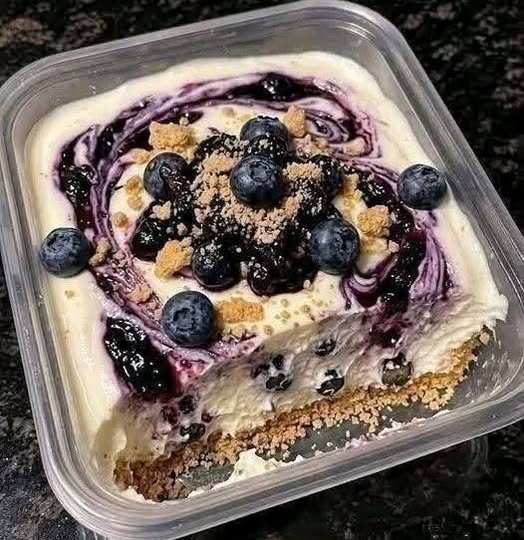
Blueberry cheesecake is undoubtedly one of those sweets that can elevate an ordinary day. This delicacy is as lovely as it is tasty, with a buttery biscuit crust, sweet blueberry swirls, fresh berries on top, and a creamy cheesecake filling.
I was first introduced to this concept by a buddy who like simple homemade treats. Last weekend, I made the decision to try it with my family, and to be honest, it was a really nice little treat. After supper, we sipped tea, told stories, and stole a couple more spoonfuls right out of.
Anti-Inflammatory Blueberry Cheesecake Recipe: Creamy, Healthy, No-Bake Dessert
Recipe Description
This anti-inflammatory blueberry cheesecake is a creamy, delicious dessert inspired by the classic blueberry cheesecake. It features a smooth cream cheese filling, a crunchy biscuit crust, juicy blueberries, and a beautiful blueberry swirl. With a few wholesome ingredient swaps, you can create a lighter dessert that includes antioxidant-rich berries, healthy fats, and less added sugar.
Blueberries are known for their anthocyanins, the natural plant compounds responsible for their deep blue-purple color. These compounds have antioxidant properties and may help support overall health. While no single dessert can prevent or treat inflammation, choosing nutrient-rich ingredients and moderating added sugar can help make this cheesecake part of a balanced eating pattern.
This recipe is ideal for family gatherings, summer parties, afternoon tea, birthdays, and anyone looking for a healthier dessert option.
Recipe at a glance
- Preparation time: 25 minutes
- Cooking time: 0–10 minutes, depending on your crust
- Chilling time: 4–6 hours
- Total time: Approximately 5 hours
- Servings: 8
- Difficulty: Easy
- Recipe type: No-bake blueberry cheesecake
- Dietary options: Vegetarian, gluten-free adaptable, and lower-sugar adaptable
Ingredients
For the Cheesecake Crust
- 1 cup (100 g) crushed digestive biscuits or graham crackers
- 3 tablespoons (42 g) melted unsalted butter or coconut oil
- 1 tablespoon almond flour, optional
- 1 teaspoon ground cinnamon, optional
For a more nutrient-dense crust, use finely ground almonds, walnuts, or oats instead of some of the biscuits.
For the Creamy Cheesecake Filling
- 400 g cream cheese, softened
- 1 cup (240 g) plain Greek yogurt
- 1/3 cup (80 ml) heavy cream, optional for extra richness
- 1/4 cup (50 g) honey or pure maple syrup, adjusted to taste
- 1 teaspoon pure vanilla extract
- 1 tablespoon fresh lemon juice
- 1 teaspoon finely grated lemon zest, optional
- 1 tablespoon gelatin dissolved according to package instructions, optional for a firmer cheesecake
Use a suitable vegetarian setting agent, such as agar-agar, if desired, following the product’s specific preparation instructions.
For the Blueberry Swirl
- 1 1/2 cups (225 g) fresh or frozen blueberries
- 1–2 tablespoons honey or maple syrup, optional
- 1 tablespoon lemon juice
- 1 teaspoon chia seeds, optional, for thickening
For the Topping
- 1/2 cup fresh blueberries
- 2 tablespoons crushed almonds, walnuts, or pistachios
- 1 tablespoon chia seeds or ground flaxseed, optional
- A few fresh mint leaves, optional
- A small amount of extra blueberry sauce
Instructions
Step 1: Prepare the Crust
- Crush the digestive biscuits or graham crackers into fine crumbs.
- Mix the crumbs with melted butter or coconut oil.
- Add the almond flour and cinnamon if using.
- Press the mixture firmly into the bottom of a square container or an 8-inch springform pan.
- Refrigerate for 15–20 minutes to help the crust set.
For a firmer baked crust, bake it at 175°C (350°F) for 8–10 minutes and allow it to cool completely before adding the filling.
Step 2: Make the Blueberry Sauce
- Place the blueberries, lemon juice, and optional honey or maple syrup in a small saucepan.
- Cook over medium-low heat for approximately 5–8 minutes, stirring occasionally.
- Gently mash some of the berries to release their juices while leaving a few whole.
- Stir in the chia seeds if you want a thicker sauce.
- Remove from the heat and let the mixture cool completely.
Frozen blueberries work well and do not need to be thawed beforehand.
Step 3: Prepare the Cheesecake Filling
- Beat the softened cream cheese until smooth and creamy.
- Add the Greek yogurt, honey or maple syrup, vanilla extract, and lemon juice.
- Mix until the ingredients are fully combined and the filling is free of lumps.
- If using heavy cream, whip it separately until softly thickened and gently fold it into the filling.
- If using gelatin, prepare it according to the package directions and incorporate it as instructed by the manufacturer.
Taste the filling and adjust the sweetness or lemon juice to your preference.
Step 4: Assemble the Cheesecake
- Remove the chilled crust from the refrigerator.
- Spread the cheesecake filling evenly over the crust.
- Spoon the cooled blueberry sauce over the top.
- Use a toothpick or knife to swirl the sauce gently through the filling.
- Scatter the fresh blueberries and chopped nuts over the surface.
Avoid mixing the blueberry sauce too deeply if you want distinct purple swirls.
Step 5: Chill Until Firm
- Cover the container or pan.
- Refrigerate for at least 4–6 hours, preferably overnight.
- Once set, slice into eight portions or scoop into dessert bowls if using a storage container.
Keep the cheesecake refrigerated until serving.
Serving Suggestions
- Fresh fruit dessert: Serve with extra blueberries, sliced strawberries, or raspberries.
- Healthy breakfast-inspired treat: Enjoy a small slice alongside plain Greek yogurt and fresh fruit. Although cheesecake is dessert, this pairing can add protein and fruit to the meal.
- Afternoon tea: Serve chilled with unsweetened green tea or herbal tea.
- Dinner party dessert: Plate individual slices with a spoonful of homemade blueberry sauce and a few crushed pistachios.
- Summer gathering: Prepare the cheesecake in individual jars for easy serving and portion control.
- Holiday dessert table: Garnish with lemon zest, mint leaves, and fresh berries for an attractive presentation.
Variations and Substitutions
1. Lower-Sugar Blueberry Cheesecake
Reduce the added honey or maple syrup and rely on ripe blueberries, vanilla, and lemon zest for flavor. You can also use an appropriate non-nutritive sweetener if it suits your dietary needs.
Remember that the crust and dairy ingredients may still contribute carbohydrates and calories.
2. Gluten-Free Blueberry Cheesecake
Use certified gluten-free biscuits, gluten-free oats, or a nut-based crust. Check all packaged ingredients to ensure they meet your requirements.
3. Higher-Protein Cheesecake
Replace some of the cream cheese with additional plain Greek yogurt or strained high-protein yogurt. The final texture may be softer and tangier, so chilling or using a suitable setting agent can help.
4. Dairy-Free Blueberry Cheesecake
Use dairy-free cream cheese and unsweetened coconut yogurt or another thick plant-based yogurt. Coconut cream can add richness. Check that all ingredients are dairy-free, and expect differences in texture and nutritional values.
5. Vegan Blueberry Cheesecake
Combine a cashew-based filling with coconut cream, lemon juice, vanilla, and a plant-based sweetener. Use coconut oil or a plant-based alternative in the crust and choose a vegan setting agent if needed.
6. Blueberry Lemon Cheesecake
Increase the lemon zest and add a little extra lemon juice to create a bright, refreshing flavor that complements the blueberries.
7. Mixed Berry Cheesecake
Replace some of the blueberries with blackberries, raspberries, or strawberries. A mixed-berry topping adds variety in flavor, texture, and plant compounds.
8. Nutty Antioxidant-Rich Cheesecake
Add finely chopped walnuts, almonds, or pistachios to the topping. Nuts provide unsaturated fats, fiber, and minerals, although they also increase the calorie content.
9. Chia Blueberry Cheesecake
Add chia seeds to the blueberry sauce and allow it to thicken before swirling it into the filling. Chia seeds contribute fiber and plant-based omega-3 fatty acid ALA.
10. Baked Blueberry Cheesecake
For a traditional baked version, prepare the crust as described above and use a suitable baked cheesecake filling. Bake according to the proportions and method of the chosen baked cheesecake recipe. The yogurt-based filling in this no-bake version should not automatically be used with the same baking time.
Nutrition Information
The following figures are estimates for one of eight servings made with cream cheese, Greek yogurt, butter-based biscuit crust, a small amount of honey, and blueberries. Actual nutrition will vary depending on the brands, quantities, and substitutions used.
- Calories: 300–380 kcal
- Protein: 6–9 g
- Total carbohydrates: 25–35 g
- Total sugars: 15–23 g
- Total fat: 19–27 g
- Saturated fat: 9–14 g
- Dietary fiber: 1–3 g
- Sodium: 180–300 mg
These values are approximate, not laboratory-tested nutrition data. For accurate values, calculate the recipe using the nutrition labels of your specific ingredients and divide by the number of servings.
Is Blueberry Cheesecake Anti-Inflammatory?
Blueberries contain anthocyanins and other polyphenols that have antioxidant activity. Greek yogurt provides protein, while nuts and seeds can contribute unsaturated fats and fiber.
However, the term anti-inflammatory should be used carefully. Research on blueberries and their compounds suggests potential health benefits, but this cheesecake has not been shown to treat inflammation or any medical condition. Cream cheese, butter, and sweeteners can contribute substantial saturated fat, calories, and added sugar, depending on the recipe.
For a more health-conscious version:
- Use plenty of blueberries.
- Choose plain, unsweetened Greek yogurt.
- Limit added sweeteners to the amount you need.
- Include nuts, chia seeds, or ground flaxseed if desired.
- Keep portions moderate.
- Pair the dessert with an overall eating pattern rich in vegetables, fruits, whole grains, legumes, nuts, and other minimally processed foods.
People managing diabetes, food allergies, or specific medical conditions may need to adjust the ingredients and serving size to their individual needs.
Storage and Food Safety
- Refrigerator: Store in a covered container at 4°C (40°F) or below and consume within 3–4 days.
- Freezer: Freeze individual portions in airtight containers for approximately 1–2 months for best quality.
- Thawing: Defrost frozen portions in the refrigerator.
- Serving: Avoid leaving cheesecake at room temperature for more than 2 hours, or more than 1 hour when temperatures exceed 32°C (90°F).
- Texture: Fresh blueberries may release juice during storage, and frozen portions may become slightly softer after thawing.
Frequently Asked Questions
1. Can I make blueberry cheesecake without baking?
Yes. This recipe is designed to be prepared without baking the filling. Simply prepare the crust, mix the filling, add the blueberry swirl, and refrigerate until firm. Baking the crust is optional.
2. Can I use frozen blueberries?
Yes. Frozen blueberries are excellent for the sauce and can be used directly from the freezer. Fresh berries are best for the final garnish because they generally maintain their shape better.
3. Are blueberries good for an anti-inflammatory diet?
Blueberries contain anthocyanins and other polyphenols associated with antioxidant activity. They can be part of a balanced dietary pattern that supports overall health, but they should not be considered a treatment for inflammation.
4. How can I make cheesecake healthier?
Use plain Greek yogurt, reduce added sugar, add more fruit, and consider a crust made partly with oats or nuts. Keep in mind that even a modified cheesecake remains an energy-dense dessert.
5. Can I make blueberry cheesecake without cream cheese?
Yes. Thick Greek yogurt, strained yogurt, or dairy-free cream cheese alternatives can be used, but the cheesecake may have a tangier flavor and a softer consistency. A tested recipe or appropriate setting agent may be necessary.
6. Why is my no-bake cheesecake too soft?
Common reasons include insufficient chilling, a filling that contains too much liquid, or cream cheese and yogurt with a softer consistency. Chill overnight, use thick strained yogurt, and follow the setting agent’s instructions if using one.
7. Can I prepare blueberry cheesecake the night before?
Absolutely. Overnight chilling helps the filling firm up and allows the flavors to blend. Add delicate garnishes just before serving for the freshest appearance.
8. Is blueberry cheesecake suitable for weight loss?
It can fit into a weight-management plan when portions and total daily calorie intake are considered. A smaller serving, less added sugar, and a lighter filling can reduce calories, but no individual dessert causes weight loss.
9. Can people with diabetes eat blueberry cheesecake?
The answer depends on individual carbohydrate tolerance, medication, and dietary guidance. The crust, sweeteners, and dairy ingredients all affect the nutritional profile. Consider a smaller serving, reduce added sugar, and calculate the carbohydrate content of the actual recipe.
10. What can I use instead of honey?
Pure maple syrup, a suitable alternative sweetener, or a smaller quantity of sugar can work. You can also omit the sweetener if the blueberries are naturally sweet enough for your taste.
Related Recipe Ideas
If you enjoy this dessert, consider trying:
- Healthy blueberry overnight oats
- Greek yogurt blueberry parfait
- No-bake lemon cheesecake
- Raspberry chia seed pudding
- Mixed berry smoothie with Greek yogurt
- Oat and almond breakfast bars
- Baked blueberry oatmeal
- Dairy-free cashew cheesecake
- Low-sugar strawberry cheesecake
- Homemade blueberry chia jam
These recipes can provide additional ways to enjoy fruit, whole grains, nuts, and seeds as part of a varied diet.
Final Thoughts
This anti-inflammatory blueberry cheesecake combines a creamy filling, a crumbly crust, and a vibrant blueberry swirl to create a dessert that looks impressive and tastes indulgent. Its blueberries provide beneficial plant compounds, while Greek yogurt, nuts, and seeds offer opportunities to improve the recipe’s protein, fiber, and unsaturated-fat content.