
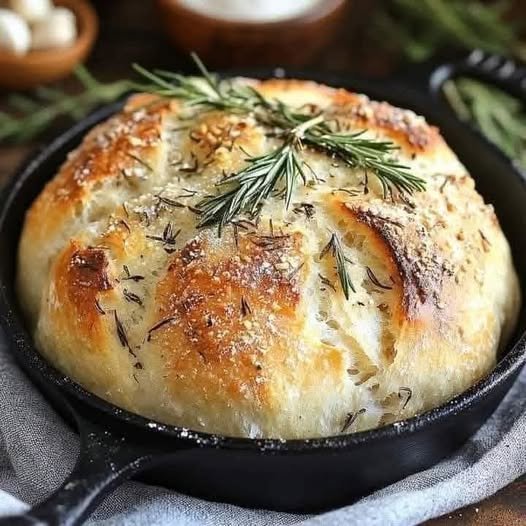
There’s nothing quite like the smell of freshly baked bread drifting through the house. It always makes the kitchen feel warmer and brings back those lovely memories of sharing homemade food with family. For me, baking bread isn’t just about having something delicious to eat. It’s about slowing down, enjoying the little things, and creating moments worth remembering.
I actually got the idea for this Rosemary Garlic No-Knead Artisan Bread from a friend who absolutely loves baking. She recommended her favorite rustic bread recipe one weekend and told me how surprisingly easy it was to make. No stand mixer, no endless kneading, and no complicated steps! I was a little skeptical at first, but I decided to give it a try. And honestly, I’m so glad I did. The combination of fresh rosemary, garlic, and that beautiful golden, crunchy crust won me over from the very first bite!
Anti-Inflammatory Rosemary Garlic No-Knead Artisan Bread
A Healthy Homemade Bread Recipe with Fresh Rosemary, Garlic, Olive Oil, and Mediterranean-Inspired Ingredients
Recipe Description
Enjoy the comforting taste of freshly baked artisan bread with this delicious Anti-Inflammatory Rosemary Garlic No-Knead Artisan Bread. Featuring a golden, crispy crust and a soft, fluffy interior, this homemade bread combines aromatic fresh rosemary, flavorful garlic, heart-healthy olive oil, and wholesome ingredients.
Inspired by the Mediterranean diet, this easy no-knead bread recipe is perfect for anyone looking to incorporate more plant-based ingredients and flavorful whole foods into their daily meals.
Rosemary and garlic are widely appreciated for their antioxidant compounds, while extra virgin olive oil provides beneficial monounsaturated fats. Together, they create a delicious bread that complements a balanced, anti-inflammatory eating pattern.
Best of all, you don’t need a stand mixer or complicated bread-making techniques. Simply mix, allow the dough to rise, and bake!
Preparation Time
- Prep Time: 15 minutes
- Rising Time: 8–12 hours
- Cooking Time: 40–45 minutes
- Total Time: Approximately 9–13 hours
- Servings: 10–12 slices
- Cuisine: Mediterranean-inspired
- Course: Breakfast, Snack, Side Dish
- Difficulty: Easy
Ingredients
For the Artisan Bread
- 3 cups bread flour or whole wheat bread flour
- 1 ½ cups warm water
- 2 teaspoons instant yeast
- 1 ½ teaspoons sea salt
- 1 tablespoon extra virgin olive oil
- 1 teaspoon honey (optional)
For the Rosemary Garlic Topping
- 3–4 cloves fresh garlic, minced
- 2 tablespoons fresh rosemary, finely chopped
- 1 tablespoon extra virgin olive oil
- ½ teaspoon dried thyme
- ½ teaspoon freshly ground black pepper
- 1 teaspoon sesame seeds (optional)
- A pinch of flaky sea salt
Instructions
Step 1: Prepare the Dough
In a large mixing bowl, combine bread flour, instant yeast, and sea salt.
Add warm water, extra virgin olive oil, and honey if using.
Mix with a wooden spoon until a sticky, shaggy dough forms. The dough does not need kneading.
Step 2: Add Rosemary and Garlic
Add minced garlic, chopped fresh rosemary, and dried thyme to the dough.
Mix gently until the herbs and garlic are evenly distributed.
The fresh rosemary gives the bread its distinctive Mediterranean aroma, while garlic adds a delicious savory flavor.
Step 3: Allow the Dough to Rise
Cover the mixing bowl with a clean kitchen towel or plastic wrap.
Leave the dough at room temperature for 8–12 hours, or until it has doubled in size and looks bubbly.
This slow fermentation helps develop the bread’s flavor and texture.
Step 4: Shape the Bread
Lightly flour a clean work surface.
Transfer the dough onto the surface and gently fold the edges toward the center to form a round loaf.
Avoid overworking the dough.
Place it on a piece of parchment paper and allow it to rest for approximately 30–45 minutes.
Step 5: Preheat the Oven
Preheat your oven to 450°F (230°C).
Place a Dutch oven or oven-safe covered pot inside the oven while it preheats.
Allow the pot to become thoroughly hot.
Step 6: Prepare the Topping
In a small bowl, combine:
- Extra virgin olive oil
- Minced garlic
- Fresh rosemary
- Black pepper
- Sesame seeds, if desired
Brush or drizzle the mixture over the top of the dough.
Sprinkle with flaky sea salt.
Step 7: Bake the Artisan Bread
Carefully remove the hot Dutch oven from the oven.
Transfer the dough into the pot using the parchment paper.
Cover with the lid and bake for 30 minutes.
Remove the lid and bake for another 10–15 minutes, until the crust becomes golden brown and crispy.
Step 8: Cool and Serve
Remove the bread from the Dutch oven and place it on a wire rack.
Allow it to cool for at least 30–45 minutes before slicing.
Enjoy your homemade Rosemary Garlic No-Knead Artisan Bread!
Why You’ll Love This Anti-Inflammatory Bread
- Mediterranean-Inspired Ingredients: Uses rosemary, garlic, and extra virgin olive oil, ingredients commonly featured in Mediterranean-style eating.
- Easy No-Knead Method: No complicated kneading or special bread-making equipment required.
- Antioxidant-Rich Herbs: Rosemary and garlic contain naturally occurring antioxidant compounds.
- Homemade Goodness: Allows you to control the ingredients, salt, and added sugars.
- Versatile and Delicious: Perfect for breakfast, lunch, dinner, or healthy snacking.
- Crispy Artisan Crust: Delivers bakery-style texture with a soft and flavorful center.
Anti-Inflammatory Benefits of the Ingredients
1. Fresh Rosemary
Rosemary contains antioxidant compounds, including rosmarinic acid and carnosic acid. It adds wonderful flavor while supporting a diet rich in plant-based ingredients.
2. Fresh Garlic
Garlic contains sulfur-containing compounds, including allicin, which have been studied for their antioxidant and other biological properties.
3. Extra Virgin Olive Oil
Extra virgin olive oil is a staple of the Mediterranean diet. It provides monounsaturated fats and polyphenols that can contribute to a healthy dietary pattern.
4. Whole Wheat Flour
Choosing whole wheat flour increases the fiber content compared with refined white flour. Dietary fiber supports digestive health and helps promote fullness.
5. Thyme and Black Pepper
These flavorful seasonings contain naturally occurring plant compounds and provide additional flavor without relying on excessive salt.
Important: No individual bread recipe can prevent or treat chronic inflammation. Its ingredients can complement an overall balanced anti-inflammatory diet, but the complete dietary pattern matters most.
Serving Suggestions
This savory homemade artisan bread pairs beautifully with a variety of healthy meals.
- Breakfast: Serve toasted slices with avocado, boiled eggs, or hummus.
- Lunch: Pair with Mediterranean vegetable soup or homemade lentil soup.
- Dinner: Serve alongside grilled salmon, roasted vegetables, or baked chicken.
- Healthy Snack: Enjoy with extra virgin olive oil and balsamic vinegar.
- Mediterranean Platter: Pair with hummus, olives, cucumber, cherry tomatoes, and feta cheese.
- Sandwiches: Use slices to prepare delicious vegetable and grilled chicken sandwiches.
- Soup Side Dish: Serve warm with tomato soup, pumpkin soup, or creamy cauliflower soup.
Recipe Variations
1. Whole Wheat Rosemary Garlic Bread
Replace the bread flour with whole wheat bread flour for a higher-fiber version. You may need slightly more water depending on the flour.
2. Gluten-Free Rosemary Garlic Bread
Use a gluten-free bread flour blend specifically formulated for yeast baking. Follow the manufacturer’s hydration recommendations.
3. Vegan Rosemary Garlic Bread
The recipe is naturally vegan when you omit honey or replace it with a little maple syrup.
4. Rosemary Olive Bread
Add ¼ cup chopped Kalamata olives for a Mediterranean-inspired flavor.
5. Cheesy Rosemary Garlic Bread
Add ¼ cup grated Parmesan cheese for a richer, savory version.
6. Flaxseed and Chia Bread
Add 1 tablespoon ground flaxseed and 1 tablespoon chia seeds for additional fiber and plant-based omega-3 fats. Add a little extra water if needed.
7. Spicy Garlic Herb Bread
Add a pinch of red pepper flakes for a delicious spicy variation.
Storage Instructions
Room Temperature: Store the completely cooled bread in a paper bag or loosely covered bread container for up to 2 days.
Refrigerator: Refrigeration can make homemade bread dry more quickly, so room-temperature storage is generally preferable for short-term use.
Freezer: Slice the bread and freeze in an airtight freezer-safe bag for up to 2–3 months.
Reheating: Toast frozen slices directly or warm the loaf in an oven at 325°F (165°C) until heated through.
Nutrition Information
Approximate nutritional values per serving, based on 12 slices and using bread flour:
- Calories: 145 kcal
- Total Fat: 2.5 g
- Saturated Fat: 0.4 g
- Carbohydrates: 27 g
- Dietary Fiber: 1 g
- Protein: 4.5 g
- Sugar: 0.5 g
- Sodium: 290 mg
Nutrition values are estimates and will vary depending on flour type, ingredient brands, loaf size, and serving portions. Whole wheat flour will generally provide more dietary fiber.
Frequently Asked Questions
1. Is Rosemary Garlic Bread anti-inflammatory?
Rosemary, garlic, and extra virgin olive oil contain beneficial plant compounds and healthy fats. This bread can fit into an anti-inflammatory eating pattern, particularly when prepared with whole grain flour.
2. Can I eat this bread every day?
Yes, it can be enjoyed regularly as part of a balanced diet. Pay attention to portion sizes and choose whole grain flour when possible.
3. Is this recipe suitable for the Mediterranean diet?
Yes. Its olive oil, garlic, and rosemary are Mediterranean-inspired ingredients. Using whole grains and serving it with vegetables, legumes, and other nutritious foods makes it an even better fit.
4. Can I make this bread without a Dutch oven?
Yes. Use a heavy oven-safe baking dish with a lid. Alternatively, bake on a preheated baking sheet and introduce steam into the oven using a separate oven-safe pan of hot water.
5. Can I use dried rosemary instead of fresh?
Absolutely! Use approximately 2 teaspoons of dried rosemary in place of 2 tablespoons of fresh rosemary.
6. Does slow fermentation make bread healthier?
Slow fermentation can improve flavor and may change the digestibility and nutritional characteristics of bread. However, it does not automatically make bread anti-inflammatory or suitable for everyone.
7. Can I make this recipe with whole wheat flour?
Yes. Whole wheat flour provides more fiber, but it absorbs more water and can produce a denser loaf. Adjust the hydration as needed.
8. Is homemade bread healthier than store-bought bread?
Homemade bread gives you greater control over ingredients, sodium, added sugar, and flour choices. Its nutritional value still depends on the ingredients and preparation method.
9. Is this bread suitable for people following an anti-inflammatory diet?
It can be included in many balanced eating patterns. People with celiac disease or gluten sensitivity should use an appropriately certified gluten-free alternative.
10. How can I make this bread more nutritious?
Use whole wheat flour, add ground flaxseed, reduce excess salt, and serve it with healthy fats, vegetables, and protein-rich foods.
Final Thoughts
This Anti-Inflammatory Rosemary Garlic No-Knead Artisan Bread is a delicious way to bring homemade baking and Mediterranean-inspired flavors into your kitchen.