
A straightforward cooked dinner has a certain quality that unites everyone at the table. The best recipes aren’t always difficult or costly. Fresh ingredients, a little imagination, and a lot of love go into making them.
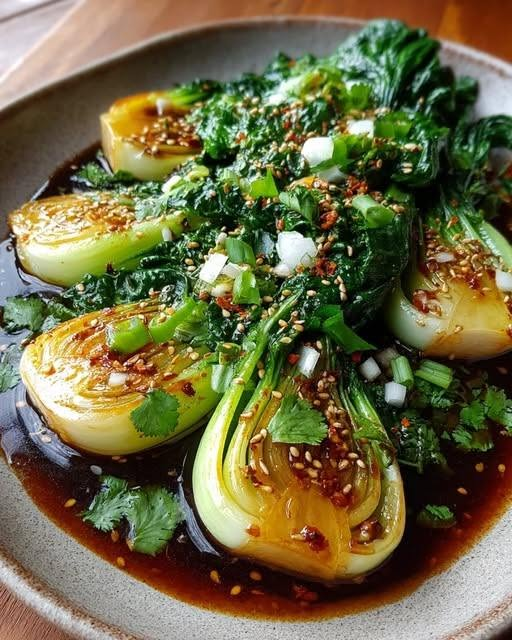
Finding new methods to make veggies exciting has always been fun for me, especially when they are flavourful. That’s precisely what makes this dish for Asian Garlic Sesame Bok Choy with Spicy Soy Sauce so delicious..
Asian Garlic Sesame Bok Choy with Spicy Soy Sauce (Anti-Inflammatory Recipe)
Recipe Description
Asian Garlic Sesame Bok Choy with Spicy Soy Sauce is a delicious, healthy, and flavorful vegetable side dish inspired by Asian cuisine. This easy bok choy recipe combines tender, golden-seared baby bok choy with a rich garlic sesame sauce, a hint of chili, naturally sweet honey, and savory soy sauce.
Finished with toasted sesame seeds, fresh cilantro, and chopped green onions, this dish delivers the perfect balance of savory, spicy, sweet, and nutty flavors.
Beyond its delicious taste, this recipe features nutrient-rich ingredients that can support an overall anti-inflammatory eating pattern. Bok choy provides vitamins C and K, while garlic, ginger, sesame seeds, and fresh herbs contribute beneficial plant compounds.
Whether you’re looking for a healthy Asian side dish, a low-calorie vegetable recipe, or an easy plant-forward dinner addition, this garlic sesame bok choy is a wonderful choice.
Recipe Information
- Preparation Time: 10 minutes
- Cooking Time: 15 minutes
- Total Time: 25 minutes
- Servings: 4
- Course: Side Dish
- Cuisine: Asian-Inspired
- Diet: Vegetarian (with vegetarian oyster sauce)
- Cooking Method: Pan-Seared and Simmered
- Difficulty: Easy
Ingredients
For the Bok Choy
- 4–5 baby bok choy
- 4 garlic cloves, finely minced
- 1 tablespoon fresh ginger, grated (optional)
- 2 tablespoons olive oil or avocado oil
- 2 spring onions, finely chopped
- 1 tablespoon sesame seeds
- 2 tablespoons fresh cilantro, chopped
- ½ teaspoon red chili flakes
For the Spicy Garlic Sesame Soy Sauce
- 3 tablespoons low-sodium soy sauce
- 1 tablespoon vegetarian mushroom oyster sauce
- 1 tablespoon honey or pure maple syrup
- 1 tablespoon rice vinegar
- 1 teaspoon toasted sesame oil
- ½ cup water
- 1 teaspoon cornstarch
- 2 tablespoons cold water for the cornstarch slurry
- ½ teaspoon chili flakes, or to taste
Instructions
Step 1: Prepare the Bok Choy
Wash the baby bok choy thoroughly under running water, making sure to remove dirt trapped between the leaves.
Trim the bottom ends slightly and cut each bok choy lengthwise into halves. Pat dry with a clean kitchen towel.
Step 2: Prepare the Sauce
In a small bowl, combine low-sodium soy sauce, vegetarian mushroom sauce, honey, rice vinegar, sesame oil, chili flakes, and water.
Mix well until the honey is dissolved. Set aside.
In another small bowl, dissolve the cornstarch in 2 tablespoons of cold water.
Step 3: Sear the Bok Choy
Heat olive oil or avocado oil in a large skillet over medium heat.
Place the bok choy halves cut-side down in the skillet. Cook for approximately 3–4 minutes until the cut surfaces become golden brown.
Flip carefully and cook for another 2 minutes until the leaves soften slightly while the stems remain crisp-tender.
Remove the bok choy temporarily and set aside.
Step 4: Cook the Garlic Sesame Sauce
Using the same skillet, add minced garlic and freshly grated ginger.
Cook for approximately 30–45 seconds until fragrant. Avoid burning the garlic.
Pour in the prepared soy sauce mixture and bring it to a gentle simmer.
Step 5: Thicken the Sauce
Add the cornstarch slurry gradually while stirring.
Allow the sauce to simmer for 1–2 minutes until it becomes slightly thick, glossy, and flavorful.
Taste and adjust the sweetness, acidity, or chili level according to your preference.
Step 6: Combine and Glaze
Return the seared bok choy to the skillet.
Spoon the garlic sesame sauce over the vegetables, making sure the cut surfaces and leaves are coated.
Simmer gently for another 2–3 minutes until the bok choy is tender but still has a pleasant crunch.
Step 7: Garnish and Serve
Transfer the bok choy to a serving plate.
Pour the remaining sauce around the vegetables.
Finish with toasted sesame seeds, chopped spring onions, fresh cilantro, and an optional sprinkle of chili flakes.
Serve immediately while warm.
Why This Recipe Is Anti-Inflammatory Friendly
An anti-inflammatory diet emphasizes vegetables, fruits, whole grains, legumes, nuts, seeds, and healthy fats.
This Asian-inspired bok choy recipe includes several ingredients that fit well into this eating pattern.
1. Bok Choy
Bok choy is a nutrient-dense cruciferous vegetable that provides vitamin C, vitamin K, folate, and other beneficial plant compounds.
Its antioxidants help protect cells from oxidative stress.
2. Garlic
Garlic contains sulfur-containing compounds, including allicin-related compounds, that have been studied for their antioxidant and potential anti-inflammatory properties.
3. Fresh Ginger
Ginger contains natural bioactive compounds called gingerols.
Ginger has been studied for its potential role in supporting a healthy inflammatory response.
4. Sesame Seeds
Sesame seeds provide healthy unsaturated fats, fiber, minerals, and antioxidant compounds.
They add a delicious nutty flavor while contributing nutritional value.
5. Olive Oil
Olive oil contains monounsaturated fats and antioxidant compounds, including polyphenols.
Extra-virgin olive oil is a useful ingredient in Mediterranean-style and anti-inflammatory eating patterns.
6. Fresh Cilantro and Green Onions
Fresh herbs and green vegetables provide additional vitamins, minerals, and plant compounds that contribute to a varied, nutrient-rich diet.
Important: No single food or recipe can cure inflammation or replace medical treatment. This dish can, however, be part of a balanced dietary pattern that supports overall health.
Serving Suggestions
Asian Garlic Sesame Bok Choy pairs beautifully with many healthy meals.
Here are some delicious serving ideas:
1. With Brown Rice
Serve over steamed brown rice for a fiber-rich meal. The rice absorbs the delicious garlic sesame sauce.
2. With Grilled Salmon
Pair with grilled salmon for a protein-rich dinner featuring omega-3 fatty acids.
3. With Garlic Chicken
Serve alongside grilled or pan-seared garlic chicken for a satisfying, balanced meal.
4. With Tofu
Add crispy baked tofu for a completely plant-based dinner.
5. With Asian Noodles
Serve with whole-grain noodles, soba noodles, or rice noodles for a comforting Asian-inspired meal.
6. As a Healthy Side Dish
Enjoy it alongside roasted vegetables, steamed fish, quinoa, or other lean protein sources.
Recipe Variations
1. Vegan Garlic Sesame Bok Choy
Replace honey with maple syrup and use vegetarian mushroom sauce instead of traditional oyster sauce. This creates a completely plant-based version.
2. Extra Spicy Bok Choy
Add fresh red chilies, extra chili flakes, or a little chili oil for a stronger spicy flavor.
3. Lemon Ginger Bok Choy
Add fresh lemon juice and extra grated ginger for a refreshing citrus flavor.
4. Low-Sodium Bok Choy
Use reduced-sodium soy sauce, reduce the amount of mushroom sauce, and avoid adding extra salt.
5. Gluten-Free Bok Choy
Use certified gluten-free tamari instead of regular soy sauce and check that all other sauces are gluten-free.
6. Protein-Packed Bok Choy
Add grilled tofu, edamame, tempeh, or chicken to turn this side dish into a more filling main course.
7. Honey Garlic Sesame Bok Choy
Increase the honey slightly and add extra fresh garlic for a sweeter, more pronounced garlic flavor.
Tips for the Best Garlic Sesame Bok Choy
- Choose fresh baby bok choy with firm white stems and vibrant green leaves.
- Wash thoroughly because dirt can collect between the leaves.
- Dry the bok choy before searing to encourage golden browning.
- Avoid overcrowding the skillet.
- Cook the garlic over medium or medium-low heat to prevent burning.
- Use low-sodium soy sauce to control the salt content.
- Add sesame oil toward the end to preserve its rich aroma.
- Avoid overcooking the bok choy because the stems should remain slightly crunchy.
- Toast sesame seeds lightly before garnishing for a deeper nutty flavor.
Storage and Meal Prep
Refrigeration: Store leftover bok choy in an airtight container in the refrigerator for up to 3 days.
Reheating: Reheat gently in a skillet over medium-low heat with a small splash of water. Avoid prolonged cooking.
Freezing: Freezing is not recommended because bok choy can lose its crisp texture after thawing.
Meal Prep Tip: Prepare the sauce in advance and refrigerate it separately. Wash and cut the bok choy shortly before cooking for the freshest texture.
Nutrition Information
The following nutrition information is an approximate estimate per serving, based on 4 servings and the ingredients listed.
- Calories: 110–140 kcal
- Protein: 3–5 g
- Carbohydrates: 12–16 g
- Dietary Fiber: 2–3 g
- Total Fat: 6–8 g
- Saturated Fat: 1 g
- Sugar: 5–7 g
- Sodium: 450–650 mg
- Vitamin C: A good source
- Vitamin K: A good source
- Calcium: Provides a modest amount
- Potassium: Provides a modest amount
Actual nutrition values vary depending on the size of the bok choy, the brands of sauces used, and the amount of oil and sweetener.
For a lower-sodium version, use reduced-sodium tamari or soy sauce and reduce the quantity of added sauces.
Frequently Asked Questions
1. Is bok choy good for an anti-inflammatory diet?
Yes. Bok choy is a cruciferous vegetable containing vitamins, antioxidants, and beneficial plant compounds. It fits well into a balanced anti-inflammatory eating pattern.
2. Can I eat bok choy every day?
Bok choy can be included regularly in a varied diet. However, eating different vegetables throughout the week helps provide a broader range of nutrients.
3. Is garlic sesame bok choy healthy?
Yes. It contains nutrient-rich vegetables, garlic, sesame seeds, and healthy fats. For a healthier version, choose low-sodium soy sauce and moderate the added sweetener.
4. Can I make this recipe without soy sauce?
Yes. You can substitute coconut aminos or a suitable low-sodium gluten-free alternative.
5. What can I use instead of oyster sauce?
Vegetarian mushroom sauce is an excellent substitute. You can also omit it and increase the garlic, ginger, and sesame flavors.
6. How do I prevent bok choy from becoming soggy?
Avoid overcooking it. Sear the cut sides first and simmer briefly in the sauce. The stems should remain crisp-tender.
7. Can I make this recipe ahead of time?
Yes. Prepare the sauce ahead of time, but cook the bok choy shortly before serving for the best flavor and texture.
8. Is this recipe suitable for weight management?
It can fit into a calorie-conscious eating plan because bok choy is naturally low in calories and provides fiber. Portion sizes, added oil, sauce, and accompanying foods will affect the overall meal.
9. Is bok choy keto-friendly?
Bok choy is relatively low in carbohydrates and can fit into many ketogenic meal plans. Use a sugar-free sweetener and check the carbohydrate content of your sauces.
10. Can I use regular cabbage instead of bok choy?
Yes. Baby napa cabbage or regular cabbage can be substituted, although cooking times and texture will differ.
Final Thoughts
Asian Garlic Sesame Bok Choy with Spicy Soy Sauce is a simple yet delicious way to enjoy more vegetables while adding exciting Asian-inspired flavors to your meals.