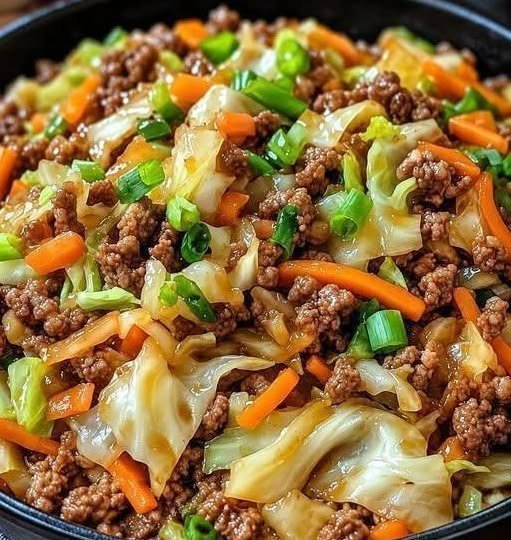
This Ground Beef & Cabbage Stir-Fry is definitely one of those dishes that seem like they were created for hectic weeknights.
I initially tried a variation of this when a buddy insisted that ground beef, cabbage, and a straightforward savoury sauce could somehow become a dinner that everyone would want to have again. Despite my doubts, I tried it last weekend. Everyone was hanging about asking when we could eat because the kitchen smelt so nice by the time I carried the skillet to the table.
Anti-Inflammatory Ground Beef & Cabbage Stir-Fry
This Ground Beef & Cabbage Stir-Fry is a quick, flavorful one-pan dinner made with lean ground beef, tender cabbage, colorful vegetables, garlic, ginger, and a savory sauce. It is naturally high in protein, vegetable-rich, and can easily fit a low-carb, gluten-free, keto-friendly, or healthy meal-prep eating pattern.
The combination of cabbage, carrots, garlic, ginger, green onions, and extra-virgin olive oil provides a variety of plant compounds and nutrients commonly emphasized in an anti-inflammatory style of eating. It isn’t a treatment for inflammation or a medical condition, but it can be part of an overall balanced diet.
🥬 Why You’ll Love This Recipe
-
One-pan meal: Minimal dishes and easy cleanup.
-
High-protein dinner: Ground beef provides protein, iron, zinc, and vitamin B12.
-
Vegetable-packed: Cabbage, carrots, and green onions add fiber and micronutrients.
-
Anti-inflammatory-inspired: Uses ginger, garlic, vegetables, and olive oil rather than a heavily processed sauce.
-
Meal-prep friendly: Keeps well for several days in the refrigerator.
-
Customizable: Easily make it low-carb, gluten-free, dairy-free, or spicier.
-
Budget-friendly: Ground beef and cabbage make an economical combination.
Ingredients
For the Stir-Fry
-
1 lb (450 g) lean ground beef
-
5–6 cups chopped green cabbage
-
1 cup carrots, julienned or thinly sliced
-
1 medium bell pepper, thinly sliced
-
4 green onions, sliced
-
3 cloves garlic, minced
-
1 tablespoon fresh ginger, grated
-
1–2 tablespoons extra-virgin olive oil
-
1 tablespoon sesame seeds, optional
-
Fresh cilantro, optional
Anti-Inflammatory-Inspired Sauce
-
3 tablespoons low-sodium tamari or soy sauce
-
1 tablespoon rice vinegar or apple cider vinegar
-
1 tablespoon sesame oil
-
1 teaspoon turmeric
-
½ teaspoon freshly ground black pepper
-
½ teaspoon red pepper flakes, optional
-
1 teaspoon honey or maple syrup, optional
-
2–3 tablespoons water
Gluten-free: Use certified gluten-free tamari instead of conventional soy sauce.
Lower-carb/keto: Omit the honey or maple syrup.
How to Make Ground Beef & Cabbage Stir-Fry
1. Prepare the sauce
Whisk together the tamari, vinegar, sesame oil, turmeric, black pepper, red pepper flakes, sweetener if using, and water. Set aside.
2. Brown the ground beef
Heat a large skillet or wok over medium-high heat.
Add the olive oil, followed by the ground beef. Break it apart with a wooden spoon and cook for approximately 6–8 minutes, until browned and cooked through.
If there is excessive rendered fat, carefully drain some of it.
3. Add garlic and ginger
Add the minced garlic and fresh ginger.
Stir-fry for about 30–60 seconds, just until fragrant. Avoid burning the garlic.
4. Cook the vegetables
Add the carrots and bell pepper. Cook for approximately 2–3 minutes.
Add the cabbage and continue cooking for another 4–6 minutes, stirring frequently.
The cabbage should become tender while retaining a little texture.
5. Add the sauce
Pour the prepared sauce over the beef and vegetables.
Toss everything together and cook for another 1–2 minutes, allowing the sauce to coat the ingredients.
6. Finish and serve
Turn off the heat and stir in the green onions.
Top with sesame seeds and fresh cilantro if desired.
Serve immediately.
Serving Suggestions
For a low-carb dinner, serve the stir-fry by itself or with cauliflower rice.
For a more substantial meal, serve it over:
-
Brown rice
-
White rice
-
Quinoa
-
Wild rice
-
Buckwheat
-
Rice noodles
For additional healthy fats, add:
-
Sliced avocado
-
Sesame seeds
-
Chopped walnuts
-
A small drizzle of extra-virgin olive oil
For extra vegetables, serve with steamed broccoli, mushrooms, snow peas, or edamame.
Meal Prep
Divide the finished stir-fry into 4 meal-prep containers. Refrigerate promptly and use within about 3–4 days. Reheat thoroughly before serving.
Variations
🥩 Ground Turkey & Cabbage Stir-Fry
Replace ground beef with lean ground turkey for a lighter-tasting variation.
🌶️ Spicy Beef & Cabbage
Add extra red pepper flakes, fresh chili, or a small amount of chili-garlic sauce.
🥦 Beef & Vegetable Stir-Fry
Add broccoli, mushrooms, zucchini, snow peas, or baby spinach.
🥥 Coconut-Ginger Version
Replace part of the sauce with unsweetened coconut milk and add extra ginger and lime.
🥑 Low-Carb Stir-Fry Bowl
Skip rice and serve over cauliflower rice with avocado and sesame seeds.
🌱 Plant-Based Version
Replace the beef with crumbled tofu, tempeh, or a plant-based ground-meat alternative.
🍋 Lemon-Ginger Version
Use fresh lemon juice instead of rice vinegar and add extra grated ginger for a brighter flavor.
Nutrition Information
Approximate nutrition per serving, assuming 4 servings and the ingredients above:
| Nutrient | Approx. amount |
|---|---|
| Calories | 400–450 kcal |
| Protein | 28–32 g |
| Carbohydrates | 18–22 g |
| Fiber | 5–6 g |
| Fat | 25–28 g |
| Sugar | 7–9 g |
| Sodium | 700–900 mg* |
*Sodium varies substantially depending on the soy sauce/tamari used.
These numbers are estimates rather than laboratory-tested nutrition facts. Using extra-lean beef, less oil, or a reduced-sodium tamari will change the totals.
Is Ground Beef & Cabbage Stir-Fry Anti-Inflammatory?
An “anti-inflammatory diet” is generally a dietary pattern, not a single food or recipe.
This recipe incorporates several foods frequently included in such patterns:
-
Cabbage: Provides fiber and vitamin C.
-
Carrots: Provide beta-carotene and other carotenoids.
-
Garlic: Contains sulfur-containing compounds.
-
Ginger: Contains bioactive compounds such as gingerols.
-
Extra-virgin olive oil: A source of monounsaturated fat and polyphenols.
-
Green vegetables and herbs: Increase overall plant-food variety.
-
Black pepper: Adds flavor without relying on large amounts of sugar or salt.
The overall dietary pattern matters more than any individual ingredient. For general health, this recipe works especially well alongside fruits, vegetables, whole grains, legumes, nuts, seeds, and other minimally processed foods.
Frequently Asked Questions
Can I make this recipe gluten-free?
Yes. Use gluten-free tamari rather than regular soy sauce and check the labels of all packaged ingredients.
Is this recipe keto-friendly?
It can be. Omit the honey/maple syrup and serve it without rice or noodles. Use a keto-friendly sauce and keep the carrots portion modest if you’re closely tracking carbohydrates.
Can I use frozen cabbage?
Yes. Frozen cabbage can work, although it may release more water and have a softer texture than fresh cabbage.
What is the best ground beef for stir-fry?
Lean ground beef, such as 90/10 or 93/7, provides a good balance between flavor and lower fat content.
Can I make it ahead?
Absolutely. It is particularly convenient for healthy meal prep. Store individual portions in airtight containers and refrigerate promptly.
Can I freeze Ground Beef & Cabbage Stir-Fry?
Yes. Allow it to cool, portion it into freezer-safe containers, and freeze. The cabbage will become softer after thawing, but the dish will still work well for a quick dinner.
What can I substitute for cabbage?
Try shredded Brussels sprouts, broccoli slaw, Napa cabbage, bok choy, or a mixture of cabbage and broccoli.
How can I reduce the sodium?
Use low-sodium tamari or soy sauce, reduce the amount slightly, and increase flavor with ginger, garlic, vinegar, lime juice, black pepper, and fresh herbs.
Final Thoughts
Ground Beef & Cabbage Stir-Fry is a practical healthy dinner recipe that combines protein, vegetables, bold Asian-inspired flavors, and simple preparation in one skillet. The ginger, garlic, colorful vegetables, and olive oil make it a particularly good fit for people looking to incorporate more nutrient-dense foods into an anti-inflammatory eating pattern.