
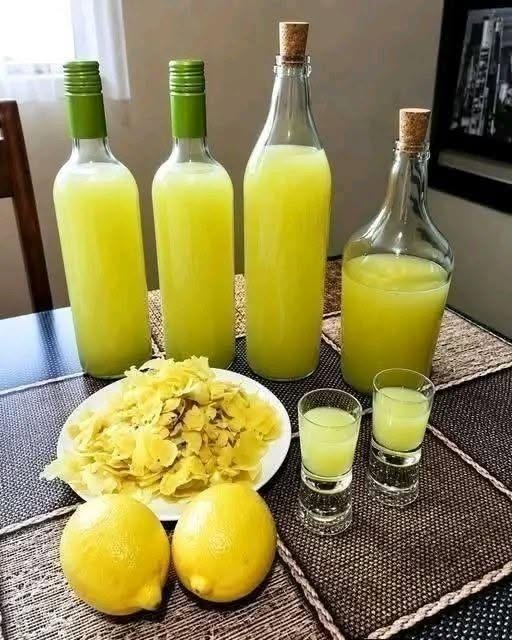
Certain recipes are more than just recipes. They become a part of your weekends, family get-togethers, and those little times when you want to unwind and savour something produced at home.
For me, one of those recipes is this homemade limoncello.
To be honest, I was shocked by how easy it was to make limoncello at home when a friend first suggested it. Last weekend, I tried it with my family, and as we were preparing it, the kitchen had a delightfully bright, lemony scent. Everyone wanted to know when I was going to create the next batch by the time we tried it.
Homemade Limoncello Recipe — Bright, Refreshing Italian Lemon Liqueur
If you’re looking for a Homemade Limoncello Recipe with a vibrant lemon flavor, this traditional-style lemon liqueur is simple to make with fresh lemon peels, high-proof alcohol, water, and sugar. It has a beautiful yellow color and a sweet-tart citrus aroma.
About the “anti-inflammatory” claim: Limoncello should not be considered an anti-inflammatory treatment. Lemons provide vitamin C and plant compounds, but limoncello also contains alcohol and added sugar; alcohol is not a health-promoting ingredient. Enjoy it as an occasional beverage rather than for medicinal purposes.
🍋 Homemade Limoncello Recipe
Ingredients
For the lemon infusion
-
8–10 organic lemons, preferably unwaxed
-
750 ml vodka or neutral high-proof spirit
-
2 cups (400 g) granulated sugar
-
2½ cups (600 ml) water
Optional
-
1–2 extra strips of lemon peel for stronger citrus aroma
-
A few fresh mint leaves when serving
Equipment
-
Vegetable peeler or citrus zester
-
Large glass jar with a tight-fitting lid
-
Fine-mesh strainer
-
Coffee filter or cheesecloth
-
Saucepan
-
Sterilized glass bottles
👩🍳 How to Make Limoncello
1. Prepare the lemons
Wash and dry the lemons thoroughly. Remove the yellow outer peel only, avoiding as much of the white pith as possible.
The pith can make the finished limoncello noticeably bitter.
2. Infuse the alcohol
Place the lemon peels in a clean glass jar and pour in the vodka.
Seal the jar and store it somewhere cool and dark for 7–14 days. Gently shake the jar once a day.
The alcohol will gradually become intensely yellow and fragrant.
3. Make the simple syrup
Combine the water and sugar in a saucepan over medium heat.
Stir until the sugar completely dissolves. Don’t boil it aggressively.
Allow the syrup to cool completely.
4. Strain the lemon infusion
Strain the alcohol through a fine-mesh strainer. For an especially clear homemade limoncello, strain it a second time through cheesecloth or a coffee filter.
Discard the spent lemon peels.
5. Combine
Slowly mix the cooled sugar syrup into the lemon-infused alcohol.
Taste and adjust the sweetness by adding a little more syrup if desired.
6. Rest the limoncello
Transfer the finished liqueur to clean bottles and refrigerate for at least 2–3 days before serving.
For a smoother flavor, let it rest for 1–2 weeks.
🥂 How to Serve Homemade Limoncello
Traditional limoncello is generally served very cold.
Try it:
-
Straight from the freezer in a small chilled glass
-
After dinner as a digestif
-
Over ice with a lemon twist
-
Mixed with sparkling water
-
With lemonade for a refreshing citrus drink
-
In a Limoncello Spritz with sparkling wine and soda
-
As a flavoring for desserts
-
Drizzled lightly over vanilla ice cream or sorbet
Easy Limoncello Spritz
Combine:
-
2 oz limoncello
-
3 oz chilled sparkling wine
-
1 oz soda water
-
Ice
-
Lemon wheel and fresh mint
Stir gently and serve immediately.
🍋 Variations
1. Creamy Limoncello
Make a Crema di Limoncello by incorporating a cooled dairy-based mixture into the lemon infusion. Keep it refrigerated and use a shorter storage period than traditional limoncello.
2. Less-Sweet Limoncello
Reduce the amount of simple syrup for a sharper, more intensely citrus-forward drink.
3. Meyer Lemon Limoncello
Use Meyer lemons for a softer, slightly floral citrus character.
4. Orange Limoncello
Replace the lemon peel with orange peel to create an orange-infused variation.
5. Herb-Infused Limoncello
Add a small amount of fresh basil, rosemary, or mint during the final infusion. Remove the herbs after a short period so they don’t overpower the citrus.
6. Limoncello Mocktail
For a non-alcoholic lemon drink, skip the alcohol and make a lemon syrup using fresh lemon zest, lemon juice, water, and sugar. Combine with sparkling water and ice.
🥗 Homemade Limoncello Nutrition
Nutrition varies substantially according to the alcohol used and, especially, the amount of sugar added.
For a 1 oz (30 ml) serving, a typical sweet limoncello may contain approximately:
| Nutrient | Approximate amount |
|---|---|
| Calories | 60–90 kcal |
| Carbohydrates | 7–12 g |
| Added sugar | 7–12 g |
| Protein | 0 g |
| Fat | 0 g |
| Fiber | 0 g |
These are estimates, not laboratory measurements.
Because most of the lemon peel is strained out, you should not assume that homemade limoncello provides the same nutritional benefits as eating a whole lemon.
Is limoncello anti-inflammatory?
Not in any established therapeutic sense. Lemon contains vitamin C and other citrus compounds, but limoncello is primarily an alcoholic, sugar-containing beverage. If your goal is an anti-inflammatory eating pattern, foods such as vegetables, fruits, legumes, whole grains, nuts, seeds, and oily fish are more appropriate components to emphasize.
❓ Frequently Asked Questions
How long does homemade limoncello take?
The active preparation is relatively short, but the lemon infusion generally takes 7–14 days, followed by several days of resting.
Should I refrigerate limoncello?
Yes. Refrigeration is particularly useful after opening and makes it pleasantly cold for serving.
Why is my limoncello bitter?
The most common reason is excessive white pith on the lemon peels. Use a sharp peeler and remove only the colored outer layer.
Can I use regular vodka?
Yes. A neutral vodka works well. Higher-proof neutral spirits can extract lemon oils more efficiently, but the final alcohol concentration should be handled responsibly.
Can I freeze limoncello?
Traditional limoncello with sufficient alcohol can become very cold and viscous in a household freezer without necessarily freezing solid. Your result depends on the final alcohol and sugar concentration.
How long does homemade limoncello last?
Its shelf life depends on the alcohol concentration, sugar concentration, storage conditions, and whether other ingredients are added. Traditional versions generally keep considerably longer than dairy-based versions. When in doubt, refrigerate and check for changes in appearance, smell, or flavor.
Can I make limoncello without alcohol?
Yes, but it technically isn’t limoncello. A non-alcoholic lemon syrup or lemon cordial can provide a similar sweet citrus profile.
🍋 Final Thoughts
This Homemade Limoncello Recipe is an easy way to turn fresh lemon peel into a fragrant, vibrant Italian-style liqueur. The keys are fresh aromatic lemons, avoiding the bitter white pith, giving the infusion enough time, and allowing the finished drink to rest before serving.