There are some recipes that quietly become part of your routine before you even realize it, and this Greek Chickpea Feta Salad quickly became one of those recipes for me.
A friend first recommended it when I was looking for something fresh, filling, and easy enough to make on a busy day. I gave it a try with my family last weekend, and I honestly didn’t expect it to be such a hit. But everyone went back for seconds! Even the family members who usually say, “Just give me a little salad,” ended up helping themselves to another serving.
Greek Chickpea Feta Salad — Anti-Inflammatory Mediterranean Recipe
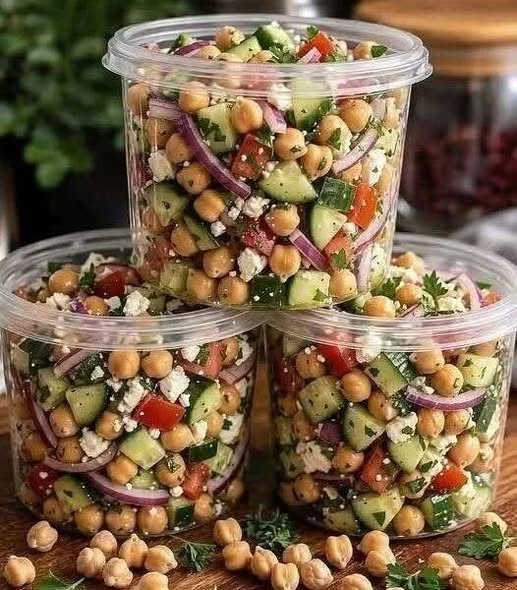
This Greek Chickpea Feta Salad is a fresh, colorful Mediterranean-style salad made with chickpeas, cucumber, tomatoes, red onion, feta, fresh herbs, extra-virgin olive oil, lemon, and oregano.
It makes an excellent high-fiber vegetarian lunch, meal-prep salad, side dish, or light dinner. Chickpeas provide plant protein and fiber, while vegetables, herbs, and extra-virgin olive oil fit well into a Mediterranean-style eating pattern. The American Heart Association also features chickpea-and-vegetable salads using similar ingredients.
Note: “Anti-inflammatory” is best understood as a dietary pattern rather than a medical treatment. This recipe contains several nutrient-dense foods associated with healthy Mediterranean-style eating, but no single food or recipe can treat inflammation or disease.
⭐ Recipe at a Glance
Recipe: Greek Chickpea Feta Salad
Cuisine: Greek / Mediterranean
Prep time: 15 minutes
Cook time: None
Total time: 15 minutes
Servings: 4
Best for: Healthy lunch, vegetarian meal prep, Mediterranean diet, high-fiber meals
🛒 Ingredients
For the salad
- 2 cans (15 oz / 425 g each) chickpeas, drained and thoroughly rinsed
- 1 large English cucumber, diced
- 1½ cups cherry tomatoes, halved
- ½ medium red onion, thinly sliced
- ¾ cup crumbled feta cheese
- ¼ cup fresh parsley, chopped
- 2 tablespoons fresh dill, chopped
- ¼ cup Kalamata olives, sliced — optional
- 1 small bell pepper, diced — optional
Lemon-Oregano Dressing
- ¼ cup extra-virgin olive oil
- 3 tablespoons fresh lemon juice
- 1 tablespoon red wine vinegar
- 1 teaspoon dried oregano
- 1 small garlic clove, finely minced
- ½ teaspoon Dijon mustard
- ¼ teaspoon black pepper
- Salt, to taste
For a lower-sodium version, use less feta and olives and choose no-salt-added or lower-sodium chickpeas. Rinsing canned beans can also help remove some added sodium.
👩🍳 How to Make Greek Chickpea Feta Salad
1. Prepare the chickpeas
Drain and rinse the chickpeas under cool running water. Pat them dry with a clean towel if you want a less watery salad.
2. Chop the vegetables
Dice the cucumber and bell pepper, halve the tomatoes, and thinly slice the red onion.
3. Make the dressing
Whisk together:
olive oil + lemon juice + red wine vinegar + oregano + garlic + Dijon + black pepper.
Taste and adjust the lemon, salt, or pepper.
4. Combine
Add chickpeas, cucumber, tomatoes, onion, parsley, dill, olives, and feta to a large bowl.
5. Dress the salad
Pour the dressing over the ingredients and gently toss until everything is coated.
6. Let the flavors develop
For the best flavor, refrigerate for 20–30 minutes before serving.
🌿 Why This Can Fit an Anti-Inflammatory Eating Pattern
This salad combines several foods commonly emphasized in Mediterranean-style eating:
Chickpeas: provide plant protein and dietary fiber. USDA nutrition resources list chickpeas as a source of dietary fiber, and the American Heart Association’s chickpea salad provides 6 g fiber per serving in its formulation.
Extra-virgin olive oil: supplies predominantly monounsaturated fat and is a staple fat in Mediterranean-style meals.
Tomatoes: provide vitamin C and carotenoids.
Red onion and garlic: add flavorful plant compounds without needing a heavy sauce.
Fresh herbs: parsley and dill add flavor, making it easier to keep the dressing relatively simple.
Cucumber and bell pepper: increase the vegetable content and add freshness and crunch.
Feta: provides protein and calcium but can contribute substantial sodium, so portion size matters.
The American Heart Association uses combinations of chickpeas, cucumber, tomatoes, onion, feta, olive oil and acidic dressings in its Mediterranean-style recipes.
🥗 Serving Suggestions
For lunch
Serve a generous bowl with:
- Whole-grain pita
- Hummus
- Fresh fruit
- Greek yogurt
For a high-protein meal
Add:
- Grilled chicken
- Grilled salmon
- Tuna
- Boiled eggs
- Extra chickpeas
For a Mediterranean dinner
Pair it with:
- Whole-grain pita
- Lentil soup
- Grilled vegetables
- Baked fish
- Roasted potatoes
For meal prep
Divide into 4 airtight containers. Keep the dressing separate if you want the vegetables particularly crisp.
🔄 Healthy Variations
🥑 Avocado Greek Chickpea Salad
Add ½–1 diced avocado immediately before serving.
🌱 Vegan Greek Chickpea Salad
Simply omit feta or replace it with a plant-based feta alternative.
🫒 Greek Olive Salad
Increase Kalamata olives and add a little oregano.
🌶️ Spicy Chickpea Salad
Add:
- Crushed red pepper
- Diced jalapeño
- Smoked paprika
🥬 Greek Chickpea Power Salad
Serve over:
- Spinach
- Romaine
- Arugula
- Kale
🍚 Mediterranean Chickpea Grain Bowl
Serve the salad over quinoa, brown rice, bulgur, or whole-grain couscous.
🐟 Mediterranean Protein Bowl
Add grilled salmon or tuna for a more substantial meal.
📊 Nutrition Information
Nutrition will vary depending on the exact feta, chickpeas, dressing and portion sizes.
As a useful comparison, an American Heart Association chickpea-cucumber-tomato salad provides 168 calories, 7 g protein and 6 g fiber per serving, while its Mediterranean salad variation provides 8 g protein and 4 g fiber per serving.
For this recipe, a reasonable estimate is approximately:
| Nutrient | Per serving |
|---|---|
| Calories | ~350–400 kcal |
| Protein | ~13–15 g |
| Carbohydrates | ~35–40 g |
| Fiber | ~9–11 g |
| Fat | ~18–22 g |
| Saturated fat | ~4–5 g |
| Sodium | ~500–700 mg* |
*Highly dependent on feta, olives and canned chickpeas.
USDA nutrition resources are useful for checking nutrient values of individual ingredients because nutrition varies by food type and preparation.
❓ Related Questions
Is Greek Chickpea Feta Salad good for weight management?
It can be a filling option because chickpeas and vegetables provide fiber, while chickpeas also contribute plant protein. Portion size and the amount of olive oil and feta determine the overall calorie content.
Can I eat this salad every day?
It can fit into a varied healthy diet, but variety is useful. Rotate vegetables, legumes, whole grains and protein sources throughout the week.
Is Greek Chickpea Feta Salad vegetarian?
Yes. The recipe is vegetarian. It isn’t vegan because of the feta.
How long does it last in the refrigerator?
For best quality, eat within about 3–4 days and keep it refrigerated in a sealed container.
Can I make it without feta?
Absolutely. Omit it for a dairy-free or vegan version.
Are canned chickpeas okay?
Yes. Choose no-salt-added or lower-sodium varieties when available and rinse them well. The American Heart Association specifically recommends rinsing and draining canned beans to remove some excess sodium.
Can I use dried chickpeas?
Yes. Cook them until tender, cool completely, and then use them in the salad.
Is this a gluten-free recipe?
The ingredients listed are naturally gluten-free, but check packaged ingredients such as mustard or feta for cross-contact if you need strict gluten avoidance.
💡 Meal-Prep Tip
For the freshest Greek Chickpea Feta Salad, store the chopped vegetables and chickpeas together but keep the dressing separate. Add feta, herbs and dressing shortly before eating.
For an easy Mediterranean meal prep, prepare four containers on Sunday and pair each serving with a whole-grain pita or another whole grain.
❤️ Final Thoughts
This Greek Chickpea Feta Salad is a simple way to build a colorful Mediterranean-style meal around legumes, vegetables, herbs, extra-virgin olive oil and modest amounts of feta.