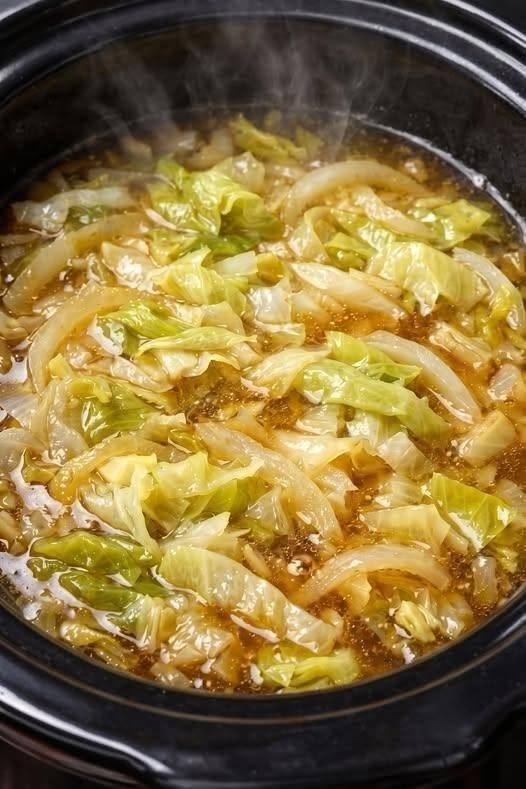
A meal that fills your house with a cosy aroma long before it’s time to eat has a unique quality. One of those dishes is Slow Cooker Cabbage with Onions, in my opinion. It’s easy to make, reasonably priced, and created with common materials, but the flavour is so reassuring that you wouldn’t believe how little work it requires.
These kinds of meals are my favourites, especially on the weekends when I want something homemade without having to stand in the kitchen all afternoon. I was reminded of the deliciousness of slow-cooked cabbage by a family member some time ago.
Anti-Inflammatory Slow Cooker Cabbage and Onions
A Healthy, Budget-Friendly Crockpot Vegetable Recipe
Recipe Description
Slow Cooker Cabbage and Onions is a simple, comforting vegetable dish made with tender cabbage, sweet onions, garlic, and a flavorful savory broth. This easy crockpot recipe is perfect for busy weeknights, healthy meal prep, and anyone looking for affordable, nutritious comfort food.
As the cabbage and onions cook slowly, they become soft, slightly sweet, and infused with the rich flavors of the broth and seasonings. The result is a warm, satisfying side dish that pairs beautifully with roasted chicken, baked fish, beans, or whole grains.
Cabbage is rich in vitamin C, vitamin K, and beneficial plant compounds called glucosinolates. Onions contain quercetin and other antioxidants. Including these vegetables in a balanced diet may support overall health and help promote a healthy inflammatory response. However, no single recipe can treat or cure chronic inflammation.
This recipe uses olive oil, garlic, low-sodium vegetable broth, and herbs to create a flavorful dish without relying on excessive butter or salt.
Recipe Details
- Prep Time: 15 minutes
- Cook Time: 4–5 hours on LOW or 2–3 hours on HIGH
- Total Time: Approximately 4 hours 15 minutes to 5 hours 15 minutes on LOW
- Servings: 6
- Course: Side Dish
- Cuisine: American-inspired comfort food
- Cooking Method: Slow cooker or crockpot
- Diet: Vegetarian, dairy-free, and gluten-free when using suitable broth
- Estimated Cost: Budget-friendly
Ingredients
- 1 medium green cabbage, approximately 2–2½ pounds
- 2 medium yellow onions, thinly sliced
- 3 cloves garlic, minced
- 3 cups low-sodium vegetable broth
- 1 tablespoon extra-virgin olive oil
- 1 tablespoon apple cider vinegar
- 1 teaspoon smoked paprika
- ½ teaspoon ground black pepper
- ½ teaspoon dried thyme
- ½ teaspoon onion powder
- ¼ teaspoon red pepper flakes, optional
- 1 bay leaf
- Salt to taste
- 1 tablespoon chopped fresh parsley, optional, for garnish
Optional ingredients:
- 1 medium carrot, thinly sliced
- 1 celery stalk, chopped
- ½ teaspoon ground turmeric
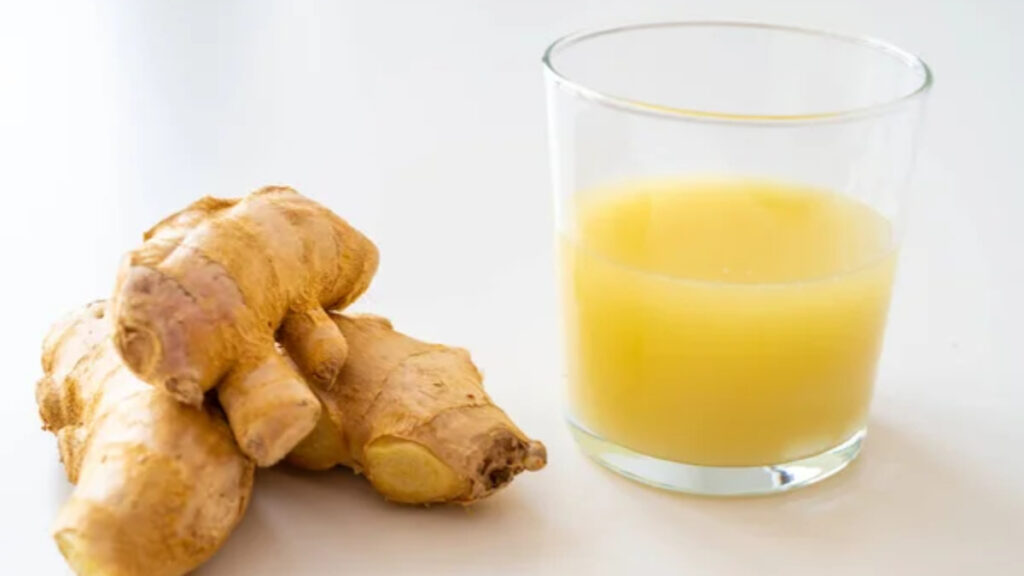
- 1 teaspoon fresh grated ginger
Instructions
Step 1: Prepare the Vegetables
Remove any damaged outer leaves from the cabbage. Rinse it thoroughly, cut it into quarters, remove the hard core, and slice the cabbage into bite-sized pieces.
Peel the onions and cut them into thin slices. Mince the garlic and prepare any optional vegetables.
Step 2: Add Ingredients to the Slow Cooker
Place the sliced cabbage and onions into a 5- to 6-quart slow cooker. Add the minced garlic, olive oil, smoked paprika, black pepper, dried thyme, onion powder, and optional red pepper flakes.
Pour the low-sodium vegetable broth over the vegetables. Add the bay leaf and stir gently to distribute the seasonings.
The cabbage will look bulky at first, but it will shrink as it cooks.
Step 3: Slow Cook Until Tender
Cover the slow cooker with its lid.
- LOW: Cook for 4–5 hours.
- HIGH: Cook for 2–3 hours.
Cooking times vary depending on the slow cooker and how finely the cabbage is sliced. Check near the end of cooking and continue until the cabbage reaches your preferred tenderness.
For firmer cabbage, begin checking earlier. For softer, more tender cabbage, allow additional cooking time as needed.
Step 4: Add the Finishing Flavors
Remove the bay leaf. Stir in the apple cider vinegar and taste the broth.
Adjust the flavor with additional black pepper, a little salt, or more vinegar if desired. Add fresh parsley just before serving.
For a richer flavor without adding much saturated fat, drizzle a small amount of extra-virgin olive oil over each serving.
Step 5: Serve and Enjoy
Serve the cabbage and onions warm, spooning some of the flavorful cooking liquid over the vegetables. Enjoy as a healthy side dish, a light vegetable soup, or part of a balanced meal.
Tips for the Best Slow Cooker Cabbage and Onions
- Choose fresh cabbage: Look for a firm, heavy head with crisp leaves.
- Slice evenly: Similar-sized pieces cook more consistently.
- Use low-sodium broth: This gives you more control over the sodium content.
- Avoid excess liquid: Cabbage releases moisture during cooking, so you generally do not need to cover it completely with broth.
- Add vinegar at the end: This brightens the naturally sweet flavor of the cooked vegetables.
- Adjust the texture: Cook for less time if you prefer a slight bite rather than very soft cabbage.
- Taste before adding salt: Broth and other ingredients may already contain sodium.
Anti-Inflammatory Benefits of Cabbage and Onions
This recipe features several ingredients that fit well into a balanced, anti-inflammatory eating pattern.
1. Cabbage
Cabbage provides vitamin C, vitamin K, fiber, and glucosinolates, which are plant compounds studied for their potential health benefits. Regularly eating cruciferous vegetables can contribute to a varied, nutrient-rich diet.
2. Onions
Onions contain quercetin and other antioxidant compounds. They also provide flavor and natural sweetness, helping reduce the need for heavy sauces or excessive salt.
3. Garlic
Garlic contains sulfur-containing compounds and adds a strong savory flavor. It can help make vegetable-based meals more satisfying without relying on processed seasonings.
4. Extra-Virgin Olive Oil
Extra-virgin olive oil contains monounsaturated fats and polyphenols. It is a useful alternative to large amounts of butter or other sources of saturated fat.
5. Herbs and Spices
Thyme and paprika add flavor, while optional turmeric and ginger introduce additional plant compounds. Their presence does not make the recipe a medical treatment, but herbs and spices can be part of a nutritious dietary pattern.
6. Low-Sodium Vegetable Broth
Choosing low-sodium broth helps limit added salt. This is especially useful for people who are monitoring their sodium intake.
Important note: An anti-inflammatory diet is a general eating pattern built around vegetables, fruits, legumes, whole grains, nuts, seeds, and unsaturated fats. This dish can contribute to that pattern, but it does not independently prevent or treat inflammatory diseases.
Serving Suggestions
Slow Cooker Cabbage and Onions is versatile enough to accompany many meals.
Healthy Weeknight Dinner
Serve with baked chicken breast, roasted turkey, or grilled fish and a side of brown rice.
Plant-Based Meal
Pair with lentils, chickpeas, white beans, or baked tofu for additional protein and fiber.
Low-Carbohydrate Meal
Enjoy alongside roasted chicken, baked salmon, or grilled tofu. The cabbage itself is naturally low in carbohydrates.
Comfort-Food Dinner
Serve with roasted potatoes, whole-grain bread, or a small portion of mashed potatoes.
Light Lunch
Place the cooked cabbage and broth in a bowl and top with fresh parsley and black pepper. Add white beans for a more filling meal.
Meal Prep
Divide the cooked vegetables into individual containers with a protein source and whole grain for convenient lunches throughout the week.
Recipe Variations
1. Garlic and Herb Cabbage
Increase the garlic to four or five cloves and add extra thyme and parsley. This version has a fresh, savory flavor.
2. Turmeric and Ginger Cabbage
Add ½ teaspoon ground turmeric and 1 teaspoon freshly grated ginger. These ingredients add warmth and variety to the dish, although their presence does not guarantee an anti-inflammatory effect.
3. Southern-Style Slow Cooker Cabbage
Use chicken broth and add black pepper, onion powder, and a small amount of smoked paprika. For a meatier version, add cooked turkey sausage or smoked turkey. Note that this variation is not vegetarian.
4. Spicy Cabbage and Onions
Add red pepper flakes, cayenne pepper, or a finely chopped fresh chili for a spicy finish.
5. Cabbage with Carrots and Celery
Add one sliced carrot and one chopped celery stalk. These vegetables contribute color, flavor, and additional nutrients.
6. Tomato and Cabbage Stew
Add one 14-ounce can of diced tomatoes and reduce the vegetable broth slightly if you prefer a thicker consistency. Adjust the seasonings to taste.
7. Cabbage with White Beans
Stir in one can of rinsed and drained white beans during the final 30 minutes of cooking, or until heated through. This makes the recipe more filling and adds plant-based protein.
8. Cabbage with Apple Cider Vinegar
Increase the apple cider vinegar slightly for a brighter, tangier flavor. Start with an additional teaspoon and adjust gradually.
9. Richer Cabbage and Onions
For a more traditional comfort-food flavor, substitute part of the olive oil with a small amount of butter. This adds richness but also increases saturated fat.
10. Vegan Slow Cooker Cabbage
Use vegetable broth and extra-virgin olive oil, and avoid butter or animal-based seasonings. The base recipe is naturally vegan when these ingredients are used.
Storage and Reheating
Refrigeration: Allow leftovers to cool and refrigerate them in shallow, airtight containers within two hours of cooking. Store for 3–4 days.
Freezing: Freeze in airtight, freezer-safe containers for approximately 2–3 months for best quality. The cabbage may become softer after thawing.
Reheating: Reheat on the stovetop over medium heat or in the microwave until steaming hot throughout, reaching 165°F (74°C).
Meal-prep tip: Store the cabbage with a little of its cooking liquid to help prevent it from drying out during reheating.
Nutrition Information
The following values are estimates for one serving, assuming six servings from the recipe as written. Actual nutrition will vary with the size of the cabbage, the broth brand, and the amount of oil and salt used.
| Nutrient | Estimated Amount per Serving |
|---|---|
| Calories | 90–110 kcal |
| Total Fat | 2.5–3.5 g |
| Saturated Fat | Less than 0.5 g |
| Carbohydrates | 15–18 g |
| Dietary Fiber | 4–6 g |
| Total Sugars | 7–9 g |
| Protein | 3–4 g |
| Sodium | 150–300 mg |
| Vitamin C | Approximately 35–60 mg |
| Vitamin K | Approximately 50–100 mcg |
| Potassium | Approximately 350–500 mg |
These are approximate estimates rather than laboratory-tested values. Sodium can vary considerably by broth brand and added salt.
Is This Recipe Good for Weight Management?
This cabbage recipe is relatively low in calories and provides fiber, making it a useful addition to balanced meals. For a more complete meal, combine it with a source of protein, such as beans, fish, chicken, eggs, or tofu.
Weight management depends on overall eating patterns, activity, sleep, and other individual factors rather than one specific food.
Frequently Asked Questions
1. Is Slow Cooker Cabbage and Onions anti-inflammatory?
It can fit into an anti-inflammatory eating pattern because it contains vegetables, garlic, and olive oil. These foods provide fiber and beneficial plant compounds. However, the recipe is not a treatment for inflammation or any medical condition.
2. Can I make this recipe without oil?
Yes. Omit the olive oil and use a little additional vegetable broth if needed. The dish will have less fat and a slightly different flavor.
3. Do I need to add water to the slow cooker?
You need some liquid to create the savory broth and help distribute the seasonings. Three cups of broth is a starting point, but you can use less if you prefer a more concentrated dish. The cabbage will also release moisture during cooking.
4. Can I use red cabbage instead of green cabbage?
Yes. Red cabbage works well and provides a different color and slightly different flavor. It may retain more firmness depending on the cooking time.
5. Can I cook cabbage and onions overnight?
For food safety and best texture, use the slow cooker’s recommended settings and avoid leaving cooked food at room temperature. If cooking overnight, follow the appliance manufacturer’s instructions and refrigerate leftovers promptly after serving.
6. Can I make this recipe on the stovetop?
Yes. Place the ingredients in a large covered pot, bring the liquid to a gentle simmer, and cook for approximately 25–40 minutes, stirring occasionally, until the cabbage is tender. Adjust the cooking time and liquid as needed.
7. Is cabbage good for gut health?
Cabbage provides dietary fiber, which contributes to digestive health. Individual tolerance varies, however, and cabbage can cause gas or bloating in some people.
8. Is this recipe keto-friendly?
Cabbage is relatively low in carbohydrates compared with many starchy vegetables, but onions contribute additional carbohydrates. A serving may fit some lower-carbohydrate meal plans, but strict ketogenic diets require calculating the actual net carbohydrates for the portion consumed.
9. Can I use chicken broth instead of vegetable broth?
Yes. Chicken broth gives the dish a savory flavor. Choose a low-sodium option if you want to control the salt content. The recipe will no longer be vegetarian or vegan.
10. Can I add meat to the crockpot?
Yes. Cooked shredded chicken, turkey, or fully cooked sausage can be added for a heartier meal. Follow appropriate food-safety guidance if using raw meat, and make sure it reaches a safe internal temperature.
11. Is cabbage soup good for detoxing?
Cabbage soup can contribute vegetables, water, and fiber to your diet, but it does not detox the body in a special way. Your liver and kidneys perform the body’s primary waste-processing functions. A balanced diet and adequate hydration are more useful long-term goals than restrictive detox diets.
12. How can I reduce the sodium in this recipe?
Use no-salt-added vegetable broth, avoid adding salt until the end, and flavor the dish with garlic, herbs, black pepper, and vinegar.
13. Can I make this recipe ahead of time?
Yes. Cook the dish in advance, refrigerate it promptly, and reheat portions as needed. The flavors may become more blended after resting overnight.
Final Thoughts
Slow Cooker Cabbage and Onions is an easy, affordable, and versatile vegetable recipe that brings together tender cabbage, sweet onions, garlic, herbs, and savory broth. It requires minimal preparation and can be adapted to vegetarian, vegan, low-sodium, and lower-carbohydrate eating preferences.