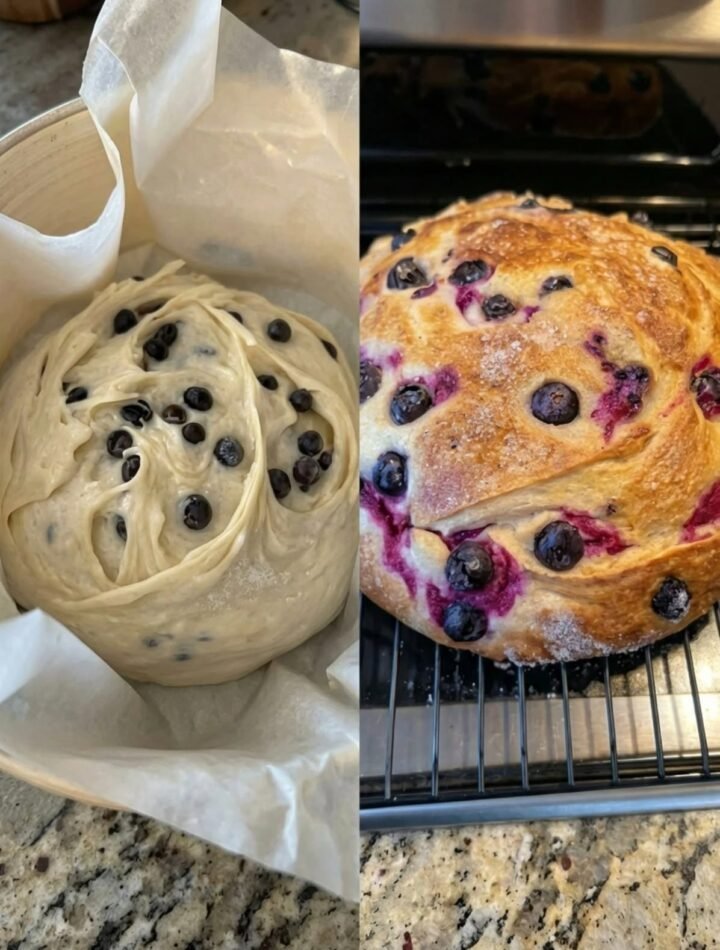
Homemade bread has a unique quality. Perhaps it’s the aroma that permeates the kitchen, the comfort of a newly baked loaf, or the straightforward delight of slicing into something you created yourself. And you get something genuinely worth sharing when you mix that magic with juicy, sweet blueberries and the tart taste of sourdough.
One of my favourite loaves to prepare when I want to add a little extra special touch to a typical weekend is this blueberry sourdough bread. Its lovely purple-blue pockets, soft and chewy filling, and golden, crusty outside.
Blueberry Sourdough Bread Recipe: Crusty, Naturally Fermented, and Full of Juicy Blueberries
Introduction
There is something truly special about a homemade loaf of Blueberry Sourdough Bread. Imagine a golden, crusty exterior, a soft and chewy center, and juicy blueberries tucked into every slice. The natural tanginess of sourdough pairs beautifully with the sweet, slightly tart flavor of blueberries, creating a loaf that feels both rustic and wonderfully indulgent.
I love how sourdough baking turns a handful of simple ingredients into something memorable. The process takes patience, but there is nothing quite like watching a loaf rise, filling the kitchen with the smell of freshly baked bread, and finally cutting into that beautiful golden crust.
Blueberry Sourdough Bread is a delicious choice for breakfast, weekend brunch, or an afternoon snack. Enjoy it toasted with almond butter, served with Greek yogurt, or simply spread with a little butter.
Blueberries also contain anthocyanins, the natural pigments responsible for their deep blue-purple color. These compounds have antioxidant properties, making blueberries a nutritious addition to a balanced diet. Combined with the fermentation process used in sourdough baking, this recipe offers a flavorful homemade alternative to many commercially prepared sweet breads.
Although no single bread can guarantee an anti-inflammatory effect, choosing whole-food ingredients and incorporating antioxidant-rich fruits into a balanced diet can support overall health.
Why You’ll Love This Blueberry Sourdough Bread
- Naturally fermented flavor: Active sourdough starter creates the loaf’s signature tangy taste.
- Antioxidant-rich blueberries: Blueberries provide anthocyanins, fiber, and vitamin C.
- Beautiful artisan appearance: The golden crust and purple berry streaks make every loaf unique.
- No refined sugar required: The recipe can be made without added sugar, allowing the blueberries to provide natural sweetness.
- Versatile breakfast bread: Serve it with eggs, yogurt, nut butter, or your favorite breakfast spread.
- Homemade ingredients: You control the flour, salt, fruit, and any optional sweeteners.
Preparation Time and Yield
- Preparation time: 30 minutes
- Initial resting time: 30–60 minutes
- Bulk fermentation: Approximately 4–6 hours, depending on temperature and starter activity
- Cold fermentation: 8–16 hours, optional but recommended for flavor
- Baking time: 40–50 minutes
- Yield: 1 medium artisan loaf
- Servings: Approximately 10 slices
These times are estimates. Sourdough fermentation depends on room temperature, flour type, and the strength of your starter.
Ingredients
For the Blueberry Sourdough Dough
- 500 g bread flour (approximately 4 cups, depending on how it is measured)
- 350 g water (1½ cups minus about 1 tablespoon)
- 100 g active sourdough starter (approximately ½ cup, depending on consistency)
- 10 g fine sea salt (approximately 1¾ teaspoons)
- 150 g fresh blueberries
- 1 teaspoon lemon zest, optional
- 1 tablespoon honey, optional
Fresh blueberries work especially well because they generally release less excess moisture than thawed frozen berries. If using frozen blueberries, thaw and drain them thoroughly, then pat them dry before adding them to the dough.
For a more fiber-rich loaf, you can replace up to 100 g of the bread flour with whole-wheat flour. The resulting bread may be slightly denser.
Step-by-Step Instructions
Step 1: Prepare Your Sourdough Starter
Make sure your sourdough starter is active and bubbly before beginning. A recently fed starter that has risen noticeably and smells pleasantly tangy is usually ready to use.
If your starter has been stored in the refrigerator, feed it and allow it to become active before making the dough.
A healthy starter is essential for good fermentation, a better crumb structure, and a loaf that rises properly.
Step 2: Mix the Flour and Water
In a large mixing bowl, combine the bread flour and water until no dry flour remains.
Cover the bowl and let the mixture rest for 30–60 minutes. This resting period, often called autolyse, helps hydrate the flour and encourages gluten development.
Step 3: Add the Starter and Salt
Add the active sourdough starter and salt to the dough. If using honey, add it now.
Mix thoroughly until the ingredients are incorporated. The dough may feel sticky at first, which is normal for a moderately high-hydration sourdough loaf.
Cover and allow it to rest for about 20–30 minutes.
Step 4: Begin Stretching and Folding
Over the next 2 hours, perform 3–4 sets of stretch-and-folds, spacing them approximately 30 minutes apart.
To do this, gently lift one side of the dough, stretch it upward without tearing, and fold it over the center. Rotate the bowl and repeat on all four sides.
These folds help build dough strength and create a structure that can hold the blueberries without collapsing.
Step 5: Add the Blueberries
After the first one or two sets of folds, gently incorporate the blueberries.
Spread the dough on a lightly dampened work surface, scatter the berries over it, and fold the dough carefully to distribute them. Add the lemon zest if desired.
Avoid vigorous kneading because blueberries can burst and release juice, which may tint the dough purple and make it stickier.
A few broken berries are perfectly fine. They create beautiful streaks of color throughout the loaf.
Step 6: Complete Bulk Fermentation
Cover the dough and allow it to continue fermenting at room temperature until it looks airy, has increased noticeably in volume, and shows bubbles around the sides.
This stage may take another 2–4 hours, although cooler kitchens may require longer.
Rather than relying entirely on the clock, look for a dough that has risen by approximately 50–75%, feels lighter, and jiggles slightly when the bowl is moved.
Avoid letting the dough overproof, especially in a warm kitchen.
Step 7: Shape the Loaf
Turn the dough onto a lightly floured surface.
Gently shape it into a round boule by folding the edges toward the center and creating surface tension without crushing the dough.
Let it rest for 15–20 minutes if it feels difficult to handle. Then tighten the round shape gently.
Place the loaf seam-side up in a well-floured proofing basket or a bowl lined with a clean, floured kitchen towel.
Step 8: Refrigerate for Cold Fermentation
Cover the dough and refrigerate it for 8–16 hours.
Cold fermentation develops sourdough flavor and makes the loaf easier to score before baking. It is optional, but it is a convenient way to prepare the bread ahead of time.
Step 9: Preheat the Oven
Place a Dutch oven with its lid inside the oven and preheat to 475°F (245°C) for approximately 30–45 minutes.
Handle the hot cookware carefully, and keep the lid and pot on a heat-safe surface when removing them.
Step 10: Score and Bake
Carefully transfer the cold dough onto a piece of parchment paper.
Use a sharp bread lame or a suitable scoring tool to make one confident slash across the surface. This gives the loaf room to expand as it bakes.
Lower the dough into the preheated Dutch oven, cover with the lid, and bake for 20 minutes.
Remove the lid, reduce the oven temperature to 425°F (220°C), and bake for another 20–30 minutes, until the crust is deeply golden brown.
The bread should sound hollow when tapped on the bottom. For a more reliable check, the center should reach approximately 205–210°F (96–99°C).
If the crust browns too quickly, reduce the temperature slightly and continue baking until the loaf is cooked through.
Step 11: Cool Before Slicing
Transfer the finished loaf to a wire rack and allow it to cool for at least 2 hours before slicing.
I know it is tempting to cut into a warm loaf immediately, especially when the smell of freshly baked bread fills the kitchen. However, cooling allows the interior crumb to set properly and helps prevent a gummy texture.
Once cooled, slice and enjoy your homemade Blueberry Sourdough Bread.
Serving Suggestions
Blueberry Sourdough Bread is versatile enough for breakfast, brunch, and snacks.
1. Toasted with Almond Butter
Toast a slice until the edges are crisp, then spread with almond butter. The nutty flavor complements the sweet blueberries, while the combination provides healthy fats and some protein.
2. With Greek Yogurt
Serve a slice alongside plain Greek yogurt and fresh berries for a balanced breakfast. Add a sprinkle of cinnamon or a few chopped walnuts if desired.
3. With Avocado and Eggs
For a more substantial meal, serve the bread with eggs and avocado. The savory ingredients contrast nicely with the slightly sweet, tangy loaf.
4. With Ricotta and Honey
Spread a thin layer of ricotta over a toasted slice and add a light drizzle of honey. This makes an easy brunch option or afternoon snack.
5. As French Toast
Use slightly stale slices to prepare French toast with eggs, milk, cinnamon, and vanilla. The blueberries add lovely bursts of fruit throughout the finished dish.
6. With Nut Butter and Chia Seeds
Spread almond or peanut butter over toasted bread and finish with a small sprinkle of chia seeds. Pair it with fruit for a satisfying breakfast.
Recipe Variations
Whole-Wheat Blueberry Sourdough Bread
Replace up to 100 g of bread flour with whole-wheat flour. This adds a nuttier flavor and increases the loaf’s fiber content. You may need to adjust the water slightly.
Lemon Blueberry Sourdough Bread
Add 1–2 teaspoons of finely grated lemon zest. Lemon brings brightness to the flavor and pairs beautifully with blueberries.
Blueberry Cinnamon Sourdough Bread
Add 1 teaspoon of ground cinnamon to the dough. Its warm aroma makes the loaf particularly appealing for autumn breakfasts and cozy weekend brunches.
Blueberry Walnut Sourdough Bread
Fold in 50–75 g of chopped walnuts along with the blueberries. Walnuts contribute crunch, healthy unsaturated fats, and a slightly earthy flavor.
Mixed Berry Sourdough Bread
Replace some of the blueberries with chopped strawberries or raspberries. Keep the total fruit quantity around 150 g, and drain any fruit that releases excess moisture.
Lower-Sugar Blueberry Bread
Skip the optional honey and use unsweetened ingredients. The blueberries provide natural sweetness, although the loaf will still taste like a mildly tangy artisan bread rather than a sweet cake.
Higher-Fiber Blueberry Sourdough
Use a portion of whole-grain flour and serve the bread with nuts, seeds, or Greek yogurt. These additions can help make breakfast more filling.
Is Blueberry Sourdough Bread Anti-Inflammatory?
Blueberry Sourdough Bread can fit into an anti-inflammatory eating pattern, particularly when made with simple ingredients and served alongside other nutrient-rich foods.
However, it is important to distinguish between foods that contain beneficial nutrients and foods proven to treat inflammation. This bread is not a treatment for chronic inflammation or any medical condition.
Here is how its ingredients may contribute to a balanced diet:
Blueberries: These berries contain anthocyanins and other polyphenols that have antioxidant activity. Research suggests that eating berries as part of a balanced diet may support cardiometabolic health, but the effects of a single serving of blueberry bread should not be overstated.
Sourdough fermentation: Fermentation changes the structure and flavor of dough and can affect the availability of certain nutrients. The extent of these effects depends on the starter, flour, fermentation duration, and baking method.
Whole-grain flour: Replacing some refined flour with whole-wheat flour increases dietary fiber and provides additional nutrients.
Nuts and seeds: Serving the bread with walnuts, chia seeds, or nut butter can add unsaturated fats, fiber, and other nutrients.
For a more balanced meal, pair a slice with Greek yogurt, eggs, or another protein source and enjoy it with fresh fruit.
People with celiac disease should not consume ordinary wheat-based sourdough bread. Sourdough fermentation does not reliably remove gluten or make conventional wheat bread safe for people who must avoid gluten.
Storage and Freezing Instructions
At room temperature: Once completely cool, store the loaf in a bread bag or suitable bread container for approximately 2–3 days. Avoid sealing it while warm because trapped steam can soften the crust.
In the refrigerator: Refrigeration can make bread stale more quickly, so it is generally not the best option for maintaining texture.
In the freezer: Slice the cooled loaf and freeze the slices in an airtight freezer-safe bag for up to about 3 months for best quality. Separate slices with parchment if needed.
To reheat: Toast slices directly from frozen or allow them to thaw before warming. A toaster or oven helps restore a pleasant texture.
Discard the bread if you notice mold or an unusual smell. Do not simply cut away a moldy patch from a soft loaf.
Troubleshooting Common Sourdough Problems
Why is my dough too sticky?
Blueberries release moisture, and high-hydration dough is naturally sticky. Use damp hands during folding, avoid crushing the berries, and resist adding large amounts of extra flour.
Why did my bread spread instead of rising upward?
Possible causes include weak gluten development, overproofing, insufficient shaping tension, or a starter that was not active enough.
Why is the inside gummy?
The loaf may have been underbaked or sliced before it cooled. Bake until the center reaches the recommended temperature and let the bread cool fully.
Why did my blueberries burst?
This is normal, especially with very ripe berries. Handle the dough gently and add the berries after the gluten has begun developing.
Can I make this bread without a Dutch oven?
Yes. Bake the loaf on a preheated baking stone or heavy baking sheet. Adding steam during the first part of baking can help the crust develop, but use a method suitable for your oven and avoid pouring water onto hot glass or other cookware that could shatter.
Nutrition Information
The following figures are estimates for one of 10 slices, based on the ingredient quantities listed above and excluding optional honey, toppings, and serving accompaniments.
- Calories: 190–220
- Carbohydrates: 38–43 g
- Protein: 5–7 g
- Total fat: 1–2 g
- Dietary fiber: 1–2 g
- Total sugars: 3–5 g
- Sodium: 200–300 mg
Actual nutrition values vary depending on the flour brand, starter composition, berry size, and slice thickness. For precise figures, calculate the recipe using the specific ingredients you use.
Although blueberries provide beneficial plant compounds, this bread is still primarily a carbohydrate-rich food. Pairing it with protein and healthy fats can create a more balanced breakfast.
Frequently Asked Questions
1. Is Blueberry Sourdough Bread healthy?
It can be part of a healthy diet. Blueberries provide fiber and antioxidant compounds, while sourdough fermentation contributes distinctive flavor. Portion size, flour choice, and what you serve alongside the bread all matter.
2. Is sourdough bread better for blood sugar?
Some studies suggest that certain sourdough breads may produce a different blood glucose response than comparable breads, but results vary considerably. Flour type, fermentation, recipe composition, and portion size all influence the response. Sourdough bread still contains carbohydrates and is not automatically low-glycemic or suitable for every person with diabetes.
3. Can I use frozen blueberries?
Yes. Thaw and drain them well, then pat them dry. Fold them into the dough gently to minimize excess moisture and color bleeding.
4. Can I prepare the dough overnight?
Yes. After bulk fermentation and shaping, refrigerate the dough for 8–16 hours. Bake it directly from the refrigerator the following day.
5. Can I make this recipe without added sweetener?
Absolutely. The optional honey can be omitted. Blueberries add natural sweetness, while the sourdough starter gives the loaf its characteristic tang.
6. Is Blueberry Sourdough Bread gluten-free?
No. This recipe uses wheat bread flour, which contains gluten. Ordinary sourdough fermentation does not make wheat bread safe for people with celiac disease.
7. How do I know when the loaf is fully baked?
Look for a deeply golden crust and an internal temperature of approximately 205–210°F (96–99°C). Allow the loaf to cool completely before slicing.
8. Can I make this recipe with whole-wheat flour?
Yes. Start by replacing about 20% of the bread flour with whole-wheat flour. Whole-grain flour absorbs water differently and may produce a denser crumb, so adjust hydration gradually.
9. What is the best way to eat leftover blueberry sourdough?
Toast a slice and serve it with almond butter, ricotta, Greek yogurt, or a little butter. Slightly stale slices also work well for French toast.
10. Does baking destroy the antioxidants in blueberries?
Heating can affect some sensitive plant compounds, and the amount retained depends on the baking conditions and recipe. Blueberries can still contribute beneficial nutrients after baking, although the exact amount of anthocyanins remaining in the finished loaf will vary.
Final Thoughts
Blueberry Sourdough Bread is a lovely way to bring together the rustic character of artisan bread and the fruity sweetness of blueberries. Its crisp crust, chewy interior, and colorful pockets of fruit make it a delicious addition to a weekend breakfast or a relaxed brunch.