
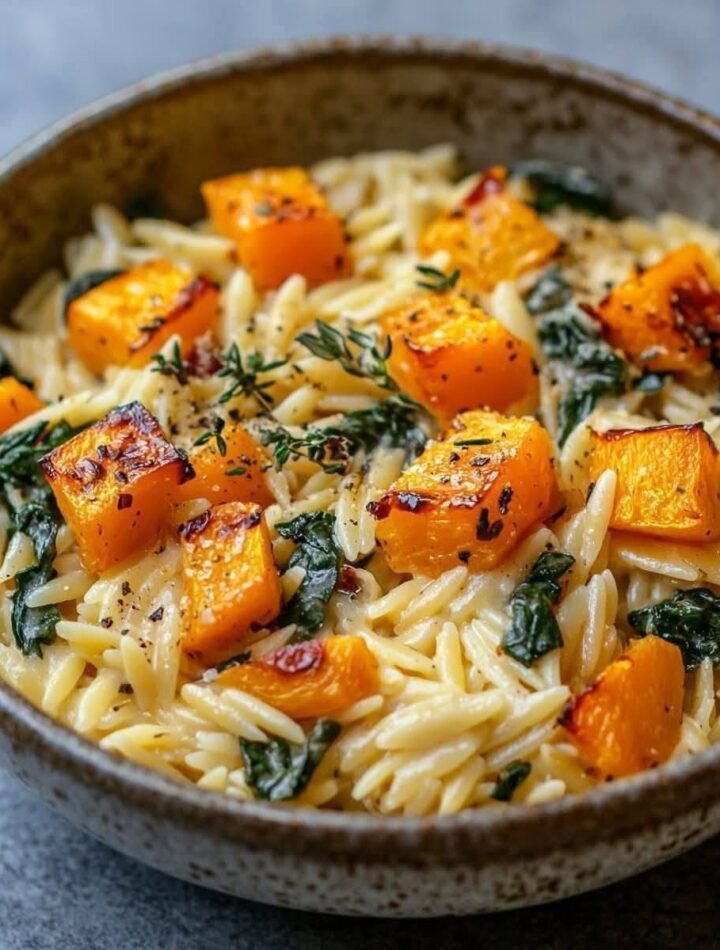
On a cold nite, there’s something that makes everything feel a little better—a warm bowl of creamy pasta. For me, this Creamy Roasted Butternut Squash Orzo with Spinach and Parmesan is just that kind of dish. It’s cozy, comforting, full of flavor, and simple enough to make on a busy weeknight when you want something homemade without spending hours in the kitchen.
The first time I made this dish, I wanted something a little different from our usual pasta dinner. I had a butternut squash sitting on the counter, a handful of fresh spinach in the fridge,
Creamy Roasted Butternut Squash Orzo with Spinach and Parmesan: An Anti-Inflammatory Comfort Food Recipe
Recipe Description
Creamy Roasted Butternut Squash Orzo with Spinach and Parmesan is a comforting, Mediterranean-inspired meal that combines sweet, caramelized butternut squash, tender orzo pasta, fresh spinach, aromatic garlic, and savory Parmesan cheese in a creamy, flavorful sauce.
This easy butternut squash orzo recipe is ideal for anyone looking for a delicious vegetarian dinner, a cozy fall meal, or a balanced comfort food option featuring vegetables and nutrient-rich ingredients. Butternut squash provides beta-carotene, spinach contributes folate and vitamin K, and extra-virgin olive oil supplies unsaturated fats.
For an anti-inflammatory-inspired diet, this recipe emphasizes vegetables, olive oil, garlic, herbs, and minimally processed ingredients. Although no single recipe can treat inflammation, this combination can fit into a balanced eating pattern that supports overall health.
Recipe at a glance
- Preparation time: 15 minutes
- Cooking time: 30–35 minutes
- Total time: 45–50 minutes
- Servings: 4
- Cuisine: Mediterranean-inspired
- Course: Lunch or dinner
- Diet: Vegetarian, with an optional gluten-free adaptation
- Difficulty: Easy to moderate
- Flavor profile: Creamy, savory, slightly sweet, garlicky, and herbaceous
Ingredients
For the roasted butternut squash
- 3 cups butternut squash, peeled and cut into 1-inch cubes
- 1 tablespoon extra-virgin olive oil
- 1/2 teaspoon dried thyme
- 1/2 teaspoon smoked paprika
- 1/4 teaspoon freshly ground black pepper
- 1/4 teaspoon salt, or to taste
For the creamy spinach orzo
- 1 cup dry orzo pasta
- 2 cups fresh baby spinach
- 3 cloves garlic, minced
- 1 small yellow onion, finely chopped
- 3 cups low-sodium vegetable broth, plus extra if needed
- 1/3 cup freshly grated Parmesan cheese
- 1/4 cup milk or unsweetened, unflavored plant-based milk
- 1 tablespoon extra-virgin olive oil
- 1 teaspoon fresh lemon juice
- 1/2 teaspoon dried oregano
- 1/4 teaspoon freshly ground black pepper
- Salt to taste
- 1 tablespoon fresh thyme or chopped parsley for garnish
Optional ingredients:
- 1 tablespoon nutritional yeast for additional savory flavor
- 1/4 teaspoon red pepper flakes for gentle heat
- 2 tablespoons toasted pumpkin seeds for crunch
- 1/4 teaspoon ground turmeric for an earthy flavor
- A small pinch of freshly grated nutmeg
Instructions
Step 1: Roast the butternut squash
Preheat the oven to 200°C (400°F).
Place the cubed butternut squash on a large baking tray. Drizzle with olive oil, then sprinkle with thyme, smoked paprika, salt, and black pepper.
Toss until the cubes are evenly coated. Spread them into a single layer, leaving space between the pieces for proper roasting.
Roast for 25–30 minutes, turning halfway through, until the squash is tender, golden brown, and lightly caramelized around the edges.
Set aside while preparing the orzo.
Step 2: Sauté the onion and garlic
Heat 1 tablespoon of olive oil in a large, deep skillet or saucepan over medium heat.
Add the chopped onion and cook for 3–4 minutes, stirring occasionally, until softened.
Add the minced garlic, oregano, and optional red pepper flakes. Cook for another 30–60 seconds, stirring constantly to prevent the garlic from burning.
Step 3: Toast the orzo
Add the dry orzo to the pan and stir for approximately 1 minute.
Lightly toasting the pasta helps develop its flavor and allows it to absorb the aromatic oil.
Step 4: Cook the orzo in vegetable broth
Pour in the vegetable broth and stir well, scraping up any flavorful bits from the bottom of the pan.
Bring the mixture to a gentle simmer. Reduce the heat to medium-low and cook for approximately 9–12 minutes, stirring frequently.
Check the package instructions because cooking times vary by brand. Add a little extra hot broth or water if the mixture becomes too thick before the orzo is tender.
The finished orzo should be soft but retain a slight bite, with a creamy consistency.
Step 5: Add spinach and Parmesan
Reduce the heat to low.
Stir in the fresh spinach and cook for 1–2 minutes until wilted.
Add the milk, grated Parmesan, and lemon juice. Stir until the cheese melts and the sauce becomes creamy.
If the sauce is too thick, add a splash of warm broth. If it is too loose, simmer gently for another minute or two, stirring frequently.
Taste and adjust the salt, black pepper, and lemon juice as needed.
Step 6: Fold in the roasted squash
Gently fold most of the roasted butternut squash into the creamy orzo, reserving a few cubes for the topping.
For a richer texture, lightly mash two or three squash cubes into the pasta. This naturally thickens the sauce without requiring heavy cream.
Step 7: Garnish and serve
Transfer the creamy orzo to serving bowls.
Top with the reserved roasted squash, additional Parmesan, fresh thyme or parsley, and toasted pumpkin seeds if desired.
Serve immediately while warm and creamy.
Why This Recipe Fits an Anti-Inflammatory Eating Pattern
An anti-inflammatory diet generally emphasizes vegetables, fruits, whole grains, legumes, nuts, seeds, and unsaturated fats. This recipe incorporates several of those food groups, although regular orzo is made from refined wheat rather than whole grain.
Butternut squash
Butternut squash contains beta-carotene, which the body can convert into vitamin A. It also provides fiber and other beneficial plant compounds.
Roasting brings out its natural sweetness and creates a satisfying texture without deep-frying.
Spinach
Spinach provides folate, vitamin K, carotenoids, and other nutrients. Including leafy greens regularly is a useful way to increase the nutritional variety of everyday meals.
Extra-virgin olive oil
Extra-virgin olive oil contains monounsaturated fats and antioxidant compounds called polyphenols. It is a staple of the Mediterranean dietary pattern, which is associated with several markers of better cardiometabolic health.
Garlic and herbs
Garlic, thyme, oregano, and parsley add flavor without relying heavily on salt. They also contribute small amounts of beneficial plant compounds.
Parmesan cheese
Parmesan supplies protein and calcium and adds a concentrated savory flavor. Because it is salty and contains saturated fat, a moderate amount can help balance flavor and nutritional preferences.
Lemon juice
Fresh lemon juice brightens the dish and balances the sweetness of the squash and richness of the cheese.
Important note: This meal can contribute to a varied, nutrient-rich diet, but it is not a medical treatment for chronic inflammation or any inflammatory condition.
Serving Suggestions
This creamy roasted butternut squash orzo is filling enough to serve as a main course, but it also pairs well with several fresh and protein-rich sides.
1. Serve with a Mediterranean salad
Combine cucumber, tomatoes, red onion, parsley, and lemon juice with a little olive oil. The crisp vegetables complement the creamy pasta.
2. Add a lean protein
Serve with grilled chicken breast, baked salmon, or lemon-herb tofu for a more protein-rich meal.
3. Pair with roasted vegetables
Roasted broccoli, Brussels sprouts, carrots, or cauliflower add texture and increase the variety of vegetables on your plate.
4. Add a side of legumes
White beans, chickpeas, or lentils can increase the fiber and plant protein content. Stir a drained can of rinsed white beans into the orzo during the final few minutes of cooking.
5. Make it a cozy fall dinner
Serve in warm bowls with fresh thyme, black pepper, toasted pumpkin seeds, and a small side of whole-grain bread.
6. Serve as a side dish
This recipe also works as a side for roasted chicken, baked fish, or grilled tofu. For a smaller side portion, divide the recipe into six servings instead of four.
Recipe Variations
1. Vegan creamy butternut squash orzo
Replace the Parmesan with nutritional yeast or a vegan Parmesan alternative. Use unsweetened plant-based milk and vegetable broth.
For additional creaminess, stir in 2 tablespoons of cashew butter or a little unsweetened cashew cream.
2. Gluten-free butternut squash orzo
Use gluten-free orzo if available, or substitute a small gluten-free pasta shape.
Cooking time and liquid requirements may differ, so follow the package instructions and check the texture frequently.
3. High-protein orzo
Add cooked chickpeas, white beans, shredded chicken, or baked tofu.
You can also use a higher-protein pasta made from legumes, but you may need to adjust the cooking time and liquid.
4. Dairy-free spinach orzo
Replace Parmesan with nutritional yeast and use unsweetened oat milk, soy milk, or cashew milk.
Choose a plant-based milk without added sugar or strong flavor.
5. Extra-creamy orzo without heavy cream
Mash some of the roasted squash directly into the sauce. You can also blend a portion of the squash with warm broth before adding it to the pasta.
This creates a smooth texture while keeping the ingredient list relatively simple.
6. Spicy roasted squash orzo
Add red pepper flakes, a pinch of cayenne, or freshly cracked black pepper to the squash before roasting.
Keep the heat moderate if you prefer the natural sweetness of the squash to remain prominent.
7. Mushroom and spinach orzo
Sauté sliced mushrooms with the onion before adding the garlic. Mushrooms contribute an earthy, savory flavor that pairs well with Parmesan and thyme.
8. Lemon and herb orzo
Increase the lemon juice slightly and add fresh parsley, basil, or dill just before serving.
This variation tastes brighter and works particularly well for spring and summer meals.
9. Whole-grain version
If you can find whole-wheat orzo, use it in place of regular orzo. It generally provides more fiber, although it may require additional cooking liquid and time.
10. Turmeric-inspired version
Add a small pinch of ground turmeric along with the garlic and oregano. Black pepper can complement its earthy flavor.
Turmeric in a normal serving of this recipe should not be considered an equivalent to a therapeutic dose or a treatment for inflammation.
Storage and Meal Prep
Refrigeration
Allow the leftovers to cool promptly, then transfer them to an airtight container and refrigerate within two hours of cooking.
Store for up to 3–4 days in the refrigerator.
Reheating
Reheat on the stovetop over low heat or in the microwave until steaming hot throughout.
Add 1–3 tablespoons of broth, water, or milk per serving to loosen the sauce, since orzo continues absorbing liquid as it sits.
Freezing
Freezing is possible, but the pasta and spinach may become softer and the sauce may change texture after thawing.
For the best texture, freeze in individual airtight portions for up to 2 months. Thaw overnight in the refrigerator and reheat thoroughly with additional liquid.
Meal-prep tip
Roast the squash ahead of time and refrigerate it separately. When ready to eat, prepare the orzo and fold in the roasted squash near the end.
This helps preserve the golden, caramelized texture of the squash.
Troubleshooting Tips
Why is my orzo too thick?
Orzo absorbs liquid quickly, especially after cooking. Add warm vegetable broth a little at a time until the sauce reaches your preferred consistency.
Why is my orzo sticking to the pan?
Stir frequently and keep the heat at a gentle simmer. Add more broth if the liquid evaporates too quickly.
How do I prevent the squash from becoming mushy?
Cut it into similarly sized cubes, spread them in a single layer, and avoid overcrowding the baking tray.
Can I make it without cheese?
Yes. Use nutritional yeast, vegan Parmesan, or a spoonful of cashew cream for a dairy-free alternative.
How do I make it more flavorful without extra salt?
Use freshly minced garlic, lemon zest, black pepper, smoked paprika, fresh herbs, and good-quality vegetable broth. Unsalted roasted pumpkin seeds can add additional texture.
Nutrition Information
The following figures are estimates for one serving when the recipe is divided into four portions using the ingredients listed above, including Parmesan and milk. Actual values will vary with ingredient brands, the amount of salt, and the precise quantity of squash and cheese used.
- Calories: approximately 400–450 kcal
- Protein: approximately 12–15 g
- Carbohydrates: approximately 55–65 g
- Dietary fiber: approximately 5–7 g
- Total fat: approximately 13–17 g
- Saturated fat: approximately 3–5 g
- Total sugars: approximately 6–9 g
- Sodium: approximately 350–650 mg
- Potassium: approximately 650–850 mg
- Calcium: approximately 150–230 mg
- Vitamin A: a substantial amount, primarily from the butternut squash and spinach
These are approximate recipe estimates, not laboratory-tested nutrition facts.
How to adjust the nutrition
- For more protein: Add chickpeas, white beans, tofu, chicken, or fish.
- For more fiber: Choose whole-wheat orzo, add legumes, or serve with a large vegetable salad.
- For less sodium: Use low-sodium broth, reduce the added salt, and measure the Parmesan.
- For a dairy-free version: Replace milk and Parmesan with suitable plant-based alternatives.
- For a lighter version: Reduce the olive oil slightly and use milk instead of heavy cream.
- For a more substantial meal: Add a source of protein and an extra serving of vegetables.
Frequently Asked Questions
1. Is butternut squash orzo anti-inflammatory?
It can fit into an anti-inflammatory eating pattern because it contains vegetables, olive oil, herbs, and other nutrient-rich ingredients. However, no individual food or meal can guarantee reduced inflammation.
2. Is creamy butternut squash orzo healthy?
It can be part of a balanced diet. It provides carbohydrates for energy, vegetables, some fiber, and nutrients from squash and spinach. Adding beans or another protein source can make the meal more balanced.
3. Can I use frozen butternut squash?
Yes. Frozen squash works well. Roast it according to the package guidance, allowing extra time if needed for excess moisture to evaporate. Avoid thawing it in a way that leaves the cubes excessively wet.
4. Can I make this recipe without heavy cream?
Absolutely. This recipe uses milk and Parmesan rather than heavy cream. Mashing some roasted squash into the sauce creates additional creaminess.
5. What is orzo pasta?
Orzo is a small, rice-shaped pasta traditionally made from wheat. Despite its appearance, it is pasta rather than rice. Standard orzo contains gluten.
6. Can I cook orzo directly in vegetable broth?
Yes. Cooking it directly in broth allows the pasta to absorb flavor and helps create a creamy, risotto-like consistency. Stir regularly and add more liquid when necessary.
7. Can I prepare this recipe ahead of time?
Yes. Roast the squash and chop the vegetables in advance. You can also cook the entire dish ahead, but the orzo will thicken as it cools. Add broth during reheating to restore its creamy texture.
8. What protein goes best with butternut squash orzo?
Chickpeas, white beans, tofu, grilled chicken, and baked salmon all pair well with its sweet, savory flavor.
9. Is this recipe suitable for weight management?
It can fit into a weight-management meal plan depending on portion size, overall energy needs, and the rest of the diet. Vegetables and fiber can help make meals satisfying, while measured portions of oil and cheese help manage calorie intake.
10. Can I eat this recipe on a Mediterranean diet?
Yes. The use of vegetables, olive oil, herbs, and moderate amounts of cheese is compatible with a Mediterranean-inspired approach. For a more whole-grain-focused version, use whole-wheat orzo and add beans or chickpeas.
11. Can I make this recipe vegan and gluten-free?
Yes. Choose gluten-free orzo, use vegetable broth, and replace the milk and Parmesan with unsweetened plant-based milk and nutritional yeast or vegan cheese.
12. What herbs work best with roasted butternut squash?
Thyme, rosemary, sage, oregano, and parsley all complement butternut squash. Thyme and sage are especially suitable for a cozy autumn-inspired flavor.
Final Thoughts
Creamy Roasted Butternut Squash Orzo with Spinach and Parmesan is a versatile vegetarian pasta recipe that brings together comforting texture, seasonal vegetables, aromatic herbs, and rich savory flavor.