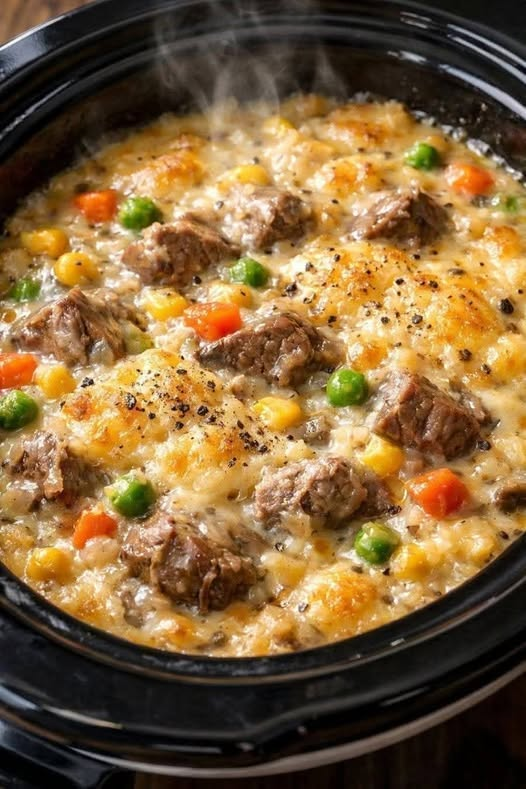
Certain recipes simply have the ability to create a homely atmosphere. That’s precisely what a creamy meat and potato dish is to me. The aroma of soft potatoes, fragrant carrots, tender beef, and a rich, creamy sauce that has been cooking slowly for hours greets you as you enter the kitchen after a hard day.
I adore returning to comfort cuisine like this Creamy Slow Cooker Beef and Potato Casserole. It has a lot of classic flavours and is simple and hearty. The finest aspect?
Creamy Slow Cooker Beef and Potato Casserole – Anti-Inflammatory Comfort Food Recipe
Recipe Description
Creamy Slow Cooker Beef and Potato Casserole is a hearty, comforting one-pot meal made with tender beef, soft potatoes, colorful vegetables, and a rich, savory cream sauce. This easy slow cooker dinner is perfect for busy weeknights, family meals, and anyone looking for a delicious homemade comfort food recipe.
With a few thoughtful ingredient choices, this casserole can fit into an anti-inflammatory eating pattern. Lean beef provides protein, iron, and vitamin B12, while vegetables contribute fiber, vitamins, and antioxidants. Garlic, ginger, turmeric, and black pepper add flavor and plant compounds associated with a balanced, healthy diet.
This recipe uses simple ingredients and requires minimal hands-on preparation. Let your slow cooker gently cook everything until the beef becomes tender and the potatoes absorb the delicious savory flavors.
Recipe Details
- Prep time: 20 minutes
- Cook time: 6–8 hours on LOW or 3–4 hours on HIGH
- Total time: Approximately 6 hours 20 minutes to 8 hours 20 minutes
- Servings: 6
- Cuisine: American-inspired comfort food
- Cooking method: Slow cooker
- Difficulty: Easy
- Diet: High-protein, vegetable-rich; adaptable to a gluten-free diet
- Best for: Family dinner, meal prep, cozy winter meals, and healthy comfort food
Ingredients
For the Beef and Vegetables
- 1½ pounds (680 g) lean beef stew meat, cut into bite-sized cubes
- 1½ pounds (680 g) potatoes, diced
- 1 cup carrots, sliced
- 1 cup frozen peas
- 1 cup diced onion
- 3 cloves garlic, minced
- 1 tablespoon fresh ginger, finely grated (optional)
- 2 tablespoons extra-virgin olive oil, optional
- 2 cups low-sodium beef broth
- 1 teaspoon dried thyme
- 1 teaspoon dried rosemary
- 1 teaspoon paprika
- ½ teaspoon ground turmeric
- ½ teaspoon freshly ground black pepper
- ½ teaspoon salt, or to taste
- 1 tablespoon Worcestershire sauce, preferably a lower-sodium variety
For the Creamy Sauce
- ¾ cup plain Greek yogurt, preferably added at the end
- ½ cup milk or unsweetened milk alternative
- 1 tablespoon cornstarch mixed with 2 tablespoons cold water, optional for thickening
- ½ cup shredded cheddar cheese, optional
- 2 tablespoons chopped fresh parsley, for garnish
Anti-inflammatory ingredient note: Extra-virgin olive oil, garlic, ginger, turmeric, herbs, and a variety of vegetables can complement an anti-inflammatory dietary pattern. No single ingredient or recipe can guarantee reduced inflammation. The overall eating pattern matters most.
Step-by-Step Instructions
Step 1: Prepare the Ingredients
Trim excess visible fat from the beef and cut it into evenly sized cubes. Wash and dice the potatoes, slice the carrots, chop the onion, and mince the garlic.
For additional flavor, choose lean beef and use a variety of colorful vegetables. Leave the potato skins on if you enjoy them and want extra fiber, after washing them thoroughly.
Step 2: Brown the Beef (Optional)
Heat the olive oil in a skillet over medium-high heat. Brown the beef cubes in batches for approximately 2–3 minutes per side.
Browning develops a deeper savory flavor. It is optional, so you can skip this step when preparing a quick, low-effort slow cooker meal.
Step 3: Add the Ingredients to the Slow Cooker
Place the potatoes, carrots, onions, and beef in the slow cooker. Add the minced garlic, ginger, thyme, rosemary, paprika, turmeric, black pepper, salt, Worcestershire sauce, and low-sodium beef broth.
Stir gently to distribute the seasonings. Keep the ingredients in an even layer to promote consistent cooking.
Step 4: Slow Cook Until Tender
Cover the slow cooker and cook for 6–8 hours on LOW or approximately 3–4 hours on HIGH, until the beef is tender and the potatoes are cooked through.
Cooking times vary according to the slow cooker, the size of the beef cubes, and the cut of meat. The beef should be tender enough to break apart easily with a fork.
For food safety, whole cuts and stew meat should reach at least 145°F (63°C), followed by a three-minute rest, as a minimum safe temperature. For tender beef stew, longer cooking until fork-tender is generally necessary.
Step 5: Add the Peas
Stir in the frozen peas during the final 20–30 minutes of cooking. This helps them retain their color and texture.
Step 6: Make the Sauce Creamy
Mix the milk with the cornstarch slurry, if using. Stir the mixture into the casserole during the final 20–30 minutes and allow the sauce to thicken.
For a richer texture, turn off the slow cooker and let the mixture cool slightly. Stir in the Greek yogurt gradually. Avoid boiling the casserole after adding yogurt, as high heat can cause curdling.
Add the shredded cheddar cheese if desired. Stir until melted and creamy.
Step 7: Taste and Serve
Taste the casserole and adjust the salt, pepper, or herbs as needed. Garnish with freshly chopped parsley and serve warm.
Your creamy slow cooker beef and potato casserole is ready to enjoy!
Tips for an Anti-Inflammatory Version
An anti-inflammatory diet generally emphasizes vegetables, fruits, whole grains, legumes, nuts, seeds, and unsaturated fats while limiting highly processed foods and excessive added sugar.
Use these practical adjustments to make this recipe more compatible with that approach:
- Choose lean beef: Trim visible fat and use moderate portions. You can substitute part of the beef with beans or lentils.
- Use extra-virgin olive oil: This provides predominantly monounsaturated fat and beneficial plant compounds.
- Add turmeric and black pepper: These provide flavor and plant compounds, although culinary amounts should not be viewed as a treatment for inflammation.
- Include garlic and ginger: Both add flavor without relying on excess salt.
- Increase the vegetables: Add mushrooms, celery, green beans, or extra carrots.
- Choose low-sodium broth: This helps control the sodium content of the finished dish.
- Use Greek yogurt instead of heavy cream: This can increase protein and reduce saturated fat, depending on the products used.
- Moderate the cheese: A small amount adds flavor without making cheese the main source of richness.
- Keep the potato skins: When suitable for your preference and recipe, the skins contribute additional fiber.
- Balance your plate: Serve with leafy greens or another vegetable side for a more varied meal.
These modifications may improve the recipe’s overall nutritional profile, but they do not make the casserole a medical treatment for arthritis, autoimmune conditions, or other inflammatory diseases.
Serving Suggestions
This casserole is filling enough to serve as a complete main dish, but a few simple sides can make the meal more balanced.
- Fresh green salad: Toss mixed greens, cucumber, tomatoes, and lemon juice with extra-virgin olive oil.
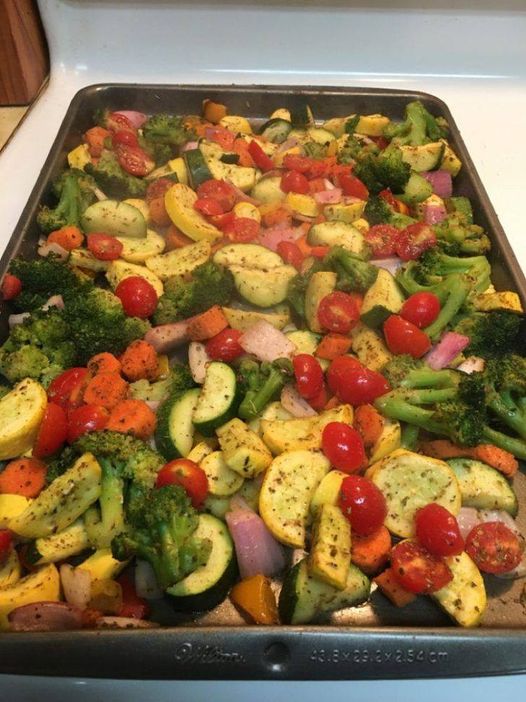
- Steamed broccoli: Add fiber, vitamin C, and a fresh green vegetable to the meal.
- Roasted Brussels sprouts: Their slightly crisp texture complements the creamy sauce.
- Whole-grain bread: Serve a modest slice for soaking up the savory gravy.
- Sautéed spinach: Cook spinach with garlic and olive oil for a quick vegetable side.
- Brown rice or quinoa: These can be served in smaller portions if you prefer a grain alongside the casserole.
- Fresh herbs: Finish with parsley, thyme, or chives for extra aroma and flavor.
For an easy family dinner, serve one portion of casserole with a generous helping of green vegetables and water or unsweetened tea.
Recipe Variations
1. Dairy-Free Creamy Beef and Potato Casserole
Replace the Greek yogurt and milk with an unsweetened, unflavored plant-based alternative. Use a little cornstarch slurry to thicken the sauce. Check the ingredient labels for added sugar and sodium.
2. Gluten-Free Slow Cooker Beef Casserole
Use certified gluten-free beef broth, cornstarch, and gluten-free Worcestershire sauce. Check all packaged ingredients to avoid hidden gluten.
3. High-Protein Beef and Vegetable Casserole
Use lean beef, plain Greek yogurt, and additional peas. You can also add white beans for more protein and fiber.
4. Mediterranean-Inspired Beef Casserole
Use extra-virgin olive oil, garlic, rosemary, thyme, tomatoes, and additional vegetables. Finish with parsley and a small squeeze of lemon juice.
5. Turmeric and Ginger Beef Casserole
Increase the fresh ginger slightly and add another small pinch of turmeric, according to taste. Keep the black pepper moderate if you prefer a milder flavor.
6. Lower-Sodium Beef and Potato Casserole
Use no-salt-added beef broth, reduce the added salt, and replace some of the Worcestershire sauce with fresh herbs, garlic, and lemon juice.
7. Mushroom Beef Casserole
Add 1–2 cups of sliced mushrooms. They bring an earthy flavor that complements the beef and creates a satisfying savory sauce.
8. Budget-Friendly Beef and Potato Stew
Use a suitable economical stewing cut, add extra carrots and potatoes, and replace part of the beef with lentils or beans. Adjust the cooking time according to the ingredients used.
Storage and Meal Prep
Refrigeration: Allow the casserole to cool slightly, then transfer it to shallow, airtight containers. Refrigerate within two hours of cooking and consume within 3–4 days.
Freezing: Freeze cooled portions in freezer-safe containers for approximately 2–3 months for best quality. The potatoes and dairy-based sauce may change texture slightly after thawing.
Reheating: Reheat individual portions in the microwave or on the stovetop until the center reaches 165°F (74°C). Add a splash of broth or milk if the sauce has thickened during storage.
Meal-prep tip: Divide the casserole into individual portions before refrigerating. Pair each portion with a different vegetable side throughout the week for variety.
Do not leave the casserole at room temperature for extended periods, and do not use a slow cooker to reheat refrigerated leftovers.
Estimated Nutrition Information
The following values are estimates for one serving, assuming six servings and including lean beef, potatoes, vegetables, broth, Greek yogurt, milk, and the optional cheese and oil in the quantities listed. Actual values vary with the beef cut, dairy products, portion sizes, and whether optional ingredients are used.
- Calories: approximately 430–520 kcal
- Protein: approximately 32–38 g
- Carbohydrates: approximately 35–45 g
- Dietary fiber: approximately 5–7 g
- Total fat: approximately 15–23 g
- Saturated fat: approximately 5–8 g
- Sugar: approximately 5–8 g
- Sodium: approximately 450–800 mg
These figures are illustrative rather than laboratory-verified nutrition data. For accurate nutrition information, calculate the ingredients using their actual product labels and the final number of servings.
Potential Nutritional Benefits
Protein: Beef provides complete protein to support muscle maintenance and normal body functions.
Iron and vitamin B12: Beef contributes nutrients needed for red blood cell production and neurological function.
Fiber: Potatoes, peas, carrots, and other vegetables contribute fiber that supports digestive health.
Vitamin C and other micronutrients: Vegetables provide vitamins and plant compounds that help support normal physiological functions.
Unsaturated fats: Extra-virgin olive oil supplies monounsaturated fats and polyphenols.
Herbs and spices: Garlic, ginger, turmeric, rosemary, and thyme contribute flavor and bioactive plant compounds.
Remember that the nutritional benefits of this meal depend on the complete diet, ingredient choices, portion sizes, and individual health needs.
Frequently Asked Questions
1. Is creamy slow cooker beef and potato casserole anti-inflammatory?
It can be adapted to fit an anti-inflammatory eating pattern by using lean beef, extra-virgin olive oil, plenty of vegetables, herbs, and low-sodium broth. However, it is not inherently an anti-inflammatory treatment, and no individual meal can guarantee a reduction in inflammation.
2. Can I make this recipe without cream?
Yes. Plain Greek yogurt stirred in at the end provides creaminess and protein. Alternatively, use milk thickened with cornstarch or an unsweetened dairy-free alternative.
3. Do I need to brown the beef first?
No. Browning is optional. It adds flavor and color, but you can put the raw beef directly into the slow cooker. Follow the recommended cooking time and ensure the beef is cooked thoroughly and tender.
4. Which potatoes work best?
Yukon Gold potatoes hold their shape while becoming creamy. Red potatoes also work well. Russet potatoes produce a softer texture and may break down more during long cooking.
5. Can I use frozen vegetables?
Yes. Frozen peas and mixed vegetables are convenient choices. Add delicate vegetables near the end of cooking to help preserve their texture.
6. Can I prepare this casserole ahead of time?
You can chop the vegetables and measure the seasonings in advance. For food safety, refrigerate prepared ingredients promptly. Keep raw beef separate from ready-to-eat foods and avoid leaving a loaded slow cooker insert at room temperature for hours.
7. Can I cook it overnight?
It is generally better to follow the manufacturer’s cooking and holding instructions rather than leave the meal cooking unattended for an unusually long period. Excessive cooking can make vegetables mushy and may dry out some cuts of beef.
8. Is this recipe suitable for weight management?
It can fit into a weight-management plan when portion sizes and total daily energy intake suit your needs. Lean beef, vegetables, and a measured amount of cheese or oil can help create a satisfying meal. Calories are still important, even when ingredients are nutritious.
9. Can I make it in an Instant Pot?
Yes, but the cooking method and timing need to be adjusted. Use the pressure-cook setting according to your appliance’s instructions and the size and cut of the beef. Add delicate vegetables and dairy ingredients afterward as appropriate. Do not simply transfer the slow cooker cooking time to the pressure cooker.
10. What can I use instead of beef?
Chicken thighs, turkey, mushrooms, or a combination of lentils and beans can be used, but each alternative will have different cooking times and nutritional values. Check doneness according to the ingredient used.
11. Can this casserole help with arthritis or joint pain?
There is no evidence that this specific casserole treats arthritis or relieves joint pain. A balanced dietary pattern rich in vegetables, fruits, legumes, whole grains, nuts, seeds, and unsaturated fats may support overall health, but persistent joint pain should be discussed with a qualified healthcare professional.
12. Is this recipe good for meal prep?
Yes. It reheats well and can be divided into individual containers for convenient lunches and dinners. Store it safely in the refrigerator or freezer and reheat leftovers thoroughly.
Final Thoughts
Creamy Slow Cooker Beef and Potato Casserole is a practical way to enjoy traditional comfort food with a more balanced approach to everyday nutrition. Tender beef, potatoes, peas, carrots, garlic, herbs, and a creamy sauce create a satisfying meal that works well for family dinners and weekly meal preparation.
For a more anti-inflammatory-friendly version, prioritize lean beef, extra-virgin olive oil, colorful vegetables, low-sodium broth, and herbs and spices. Use Greek yogurt instead of heavy cream if you enjoy its flavor and texture, and serve the casserole with a fresh salad or steamed vegetables.