
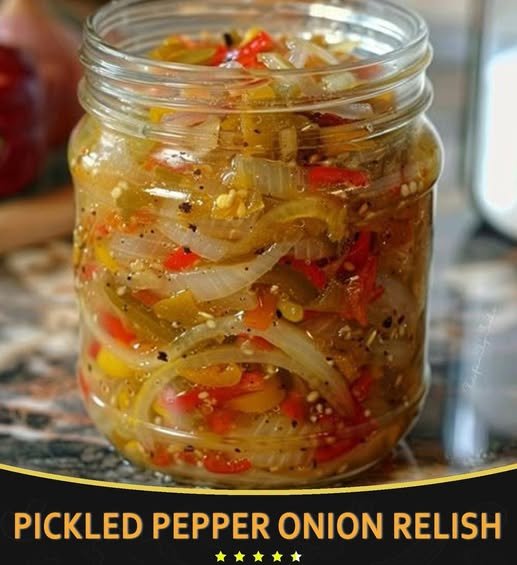
Handmade pickles and relishes have a unique quality. They have the power to transform a routine meal into something special, and sometimes the most straightforward recipes are the ones we return to time and time again. One of those tiny culinary gems that adds colour, crunch, and a delightful tangy flavour to the table is pickled pepper and onion relish.
I think it’s a great idea to keep a jar of this relish in the fridge because it adds a little excitement to regular meals. Vibrant bell peppers, thinly sliced onions, vinegar, and spices combine to make a lovely blend that tastes sweet, sour,
Pickled Pepper and Onion Relish Recipe: A Tangy, Anti-Inflammatory Condiment
Recipe Description
Pickled Pepper and Onion Relish is a colorful, tangy, slightly sweet condiment made with sliced bell peppers, onions, white vinegar, and aromatic spices. It adds a refreshing crunch and bright flavor to sandwiches, burgers, grilled vegetables, roasted chicken, fish, and salads.
This homemade pickled vegetable relish is easy to prepare and can be adapted to suit low-sugar, vegetarian, vegan, and gluten-free diets. Bell peppers provide vitamin C and carotenoids, while onions contain quercetin and other plant compounds that contribute to a balanced, anti-inflammatory eating pattern.
Although this relish contains nutritious vegetables, it is not a treatment for inflammation or any medical condition. Its nutritional benefits depend on the ingredients, preparation method, and serving size.
Preparation time: 20 minutes
Cooking time: 10–15 minutes
Cooling time: 30–60 minutes
Total time: Approximately 1 hour 15 minutes
Yield: About 1 large jar, depending on the vegetables and liquid used
Serving size: Approximately 2 tablespoons
Difficulty: Easy
Dietary suitability: Vegetarian, vegan, and naturally gluten-free when suitable ingredients are used
Ingredients
Main Ingredients
- 945 mL mixed bell peppers, thinly sliced
- 2 large onions, thinly sliced
- 235 mL white vinegar with 5% acidity
- 235 mL water
- 2 tablespoons sugar, optional, for balancing the acidity
- 1 tablespoon salt, or adjust to taste
- 1 teaspoon mustard seeds
- 1 teaspoon black peppercorns or coarsely ground black pepper
- 1/2 teaspoon celery seeds, optional
- 1/2 teaspoon turmeric powder, optional
- 1 small garlic clove, thinly sliced, optional
- 1/4 teaspoon red pepper flakes, optional, for extra heat
For an anti-inflammatory-inspired version, you can include turmeric and black pepper as flavoring ingredients. However, the amounts used in this recipe are culinary quantities and should not be considered a medical treatment.
Instructions
Step 1: Prepare the Vegetables
Wash the bell peppers thoroughly and remove their stems, seeds, and inner membranes. Slice them into thin strips.
Peel the onions and slice them thinly. If using garlic, peel and slice it as well.
Step 2: Prepare the Pickling Liquid
In a stainless-steel saucepan, combine the white vinegar, water, salt, and optional sugar.
Add the mustard seeds, black pepper, celery seeds, turmeric, and red pepper flakes if desired.
Bring the mixture to a gentle boil, stirring until the salt and sugar dissolve.
Step 3: Add the Vegetables
Add the sliced peppers and onions to the saucepan. Simmer gently for approximately 3–5 minutes, stirring occasionally.
The vegetables should soften slightly while retaining some crunch. Avoid prolonged cooking if you prefer a crisp relish.
Step 4: Transfer to a Clean Jar
Place the hot vegetables into a clean, heat-safe glass jar using clean utensils.
Pour the hot pickling liquid over the vegetables until they are covered. Leave a little space at the top and allow the contents to cool safely before refrigerating.
Use a clean lid and refrigerate promptly. Do not leave the jar at room temperature for extended periods.
Step 5: Allow the Flavors to Develop
For the best flavor, refrigerate the relish for at least 4–24 hours before serving. The peppers and onions will absorb the tangy pickling liquid as they rest.
Keep the relish refrigerated and use a clean utensil each time you serve it.
Important food safety note: This is a refrigerator-pickle recipe, not a shelf-stable canning recipe. Do not store it in the pantry. For long-term room-temperature storage, use a tested canning recipe with validated vinegar acidity, proportions, processing time, and jar size.
Serving Suggestions
Pickled Pepper and Onion Relish is a versatile condiment that can add flavor, texture, and acidity to everyday meals.
- Grilled chicken: Spoon a tablespoon or two over grilled chicken breast for a tangy finish.
- Fish and seafood: Serve with baked salmon, grilled fish, or shrimp.
- Healthy sandwiches: Add to whole-grain sandwiches, wraps, or vegetable burgers.
- Fresh salads: Mix a small amount into leafy green salads or grain bowls.
- Roasted vegetables: Serve alongside roasted cauliflower, zucchini, eggplant, or potatoes.
- Rice and beans: Add a spoonful to brown rice, lentils, chickpeas, or black beans.
- Egg dishes: Use as a bright topping for omelets, scrambled eggs, or boiled eggs.
- Cheese boards: Pair with cheese, crackers, olives, and fresh vegetables.
For a balanced meal, combine this relish with a source of protein, whole grains, and other vegetables.
Anti-Inflammatory Benefits and Nutrition
An anti-inflammatory diet generally emphasizes vegetables, fruits, legumes, whole grains, nuts, seeds, and healthy fats. This relish can contribute to that overall pattern.
Bell Peppers
Bell peppers provide vitamin C and carotenoids, including beta-carotene in certain varieties. Vitamin C supports normal immune function and collagen formation, while carotenoids contribute antioxidant activity.
Onions
Onions contain quercetin and other plant compounds. They also provide small amounts of fiber and prebiotic carbohydrates that can support a varied, plant-rich diet.
Turmeric and Black Pepper
Turmeric contains curcuminoids, including curcumin, which have been studied for their biological effects. Black pepper contains piperine, a compound that can influence the absorption and metabolism of certain substances.
The small culinary amounts used in this relish are not equivalent to standardized supplements, and evidence does not establish that this recipe treats inflammation.
Vinegar
Vinegar provides the characteristic sour taste of pickles. It should not be regarded as a detoxification product or a proven anti-inflammatory treatment.
Sodium Considerations
Pickled foods can contain considerable sodium. If you are limiting sodium because of high blood pressure, kidney disease, or another medical reason, consider smaller servings and consult your healthcare professional about suitable amounts.
Recipe Variations
1. Sugar-Free Pickled Pepper and Onion Relish
Omit the sugar for a sharper, more savory flavor. This variation is useful for people who want to reduce added sugar, although the relish may taste more acidic.
2. Spicy Pepper and Onion Relish
Add sliced jalapeños, chili flakes, or a small amount of fresh chili pepper. Wear gloves when handling hot peppers and avoid touching your eyes.
3. Turmeric and Black Pepper Relish
Add a small amount of ground turmeric and black pepper to the pickling liquid for an earthy flavor and additional plant compounds.
4. Sweet-and-Tangy Relish
Add a little more sugar to balance the vinegar. Adjust according to taste rather than making the relish excessively sweet.
5. Apple Cider Vinegar Version
Use apple cider vinegar with 5% acidity instead of white vinegar. The flavor will be fruitier and slightly milder, but the recipe should retain an appropriate tested acidity for safe preservation. For refrigerator storage, keep the finished relish chilled.
6. Mediterranean-Style Relish
Add oregano, sliced garlic, and a small amount of chopped parsley after the mixture has cooled. Serve with grilled vegetables, hummus, or whole-grain pita.
7. Extra-Crunchy Relish
Slice the vegetables slightly thicker and simmer them for only a short time. Refrigerate promptly and allow the pickling liquid to season them gradually.
Storage Instructions
- Store the relish in a clean, sealed glass jar in the refrigerator at 4°C (40°F) or below.
- Keep the vegetables submerged in the pickling liquid.
- Always use clean utensils when serving.
- For best quality, aim to consume the relish within 2–3 weeks. Discard it sooner if you notice mold, unusual odors, unexpected bubbling, or other signs of spoilage.
- Do not taste a product that appears spoiled.
- Do not assume that vinegar alone makes a homemade relish safe for room-temperature storage.
These storage recommendations apply to a refrigerator pickle, not a commercially processed or properly validated shelf-stable product.
Estimated Nutritional Information
The following values are approximate estimates for a serving of 2 tablespoons (about 30 g). Actual values depend on the amount of sugar and salt used, the vegetable proportions, and how much pickling liquid is consumed.
- Calories: 10–20 kcal
- Carbohydrates: 2–4 g
- Total sugars: 1–3 g, depending on added sugar
- Dietary fiber: 0.3–0.7 g
- Protein: 0.2–0.5 g
- Total fat: 0–0.2 g
- Saturated fat: 0 g
- Sodium: approximately 100–250 mg, potentially higher depending on the salt concentration
- Vitamin C: variable, depending on the pepper varieties and cooking time
These figures are estimates, not laboratory-tested nutrition facts. The relish is a condiment rather than a substantial source of protein, healthy fats, or dietary fiber.
Frequently Asked Questions
1. Is Pickled Pepper and Onion Relish anti-inflammatory?
It contains vegetables that provide vitamin C, carotenoids, and other plant compounds. These can fit into an anti-inflammatory dietary pattern, but the relish itself has not been established as a treatment for inflammation.
2. Can I eat this relish every day?
Many people can enjoy a small serving regularly as part of a balanced diet. Consider its sodium content, acidity, and your individual dietary needs. People who experience reflux or irritation from acidic foods may prefer smaller servings.
3. Is this recipe suitable for weight management?
It can be a relatively low-calorie condiment, particularly when prepared without added sugar. Use it to add flavor to vegetables, legumes, lean proteins, and whole grains instead of relying on high-calorie sauces.
4. Can I make it without sugar?
Yes. Sugar is optional in this refrigerator-pickle recipe and primarily balances the vinegar’s sharpness. Omitting it creates a more sour, savory relish.
5. Can I use apple cider vinegar?
Yes, provided you use vinegar with a clearly stated acidity of 5% for this refrigerator recipe. Changing vinegar types or acidity can affect flavor and preservation safety, so do not use this recipe for shelf-stable canning without a tested formulation.
6. How long does homemade pepper and onion relish last?
For best quality, aim to use it within 2–3 weeks when continuously refrigerated at 4°C (40°F) or below. Discard it if there are signs of spoilage. Homemade refrigerator pickles do not have the same validated shelf life as commercially processed products.
7. Can I use this relish on a low-carb diet?
A small serving can fit into many lower-carbohydrate eating plans, especially if no sugar is added. Check the ingredients and estimate the carbohydrate content based on your serving size.
8. Is pickled relish good for gut health?
The peppers and onions provide some fiber and plant compounds, but vinegar-pickled vegetables are not necessarily probiotic. Unless the vegetables undergo a suitable fermentation process, you should not assume they contain live beneficial cultures.
9. Is it safe for people with high blood pressure?
The recipe can be high in sodium depending on the amount of salt used. People who need to restrict sodium should consider a lower-sodium preparation and seek individualized advice from their healthcare professional.
10. Can I preserve this relish without refrigeration?
Not using this recipe as written. It is intended for refrigerated storage. Shelf-stable preservation requires a tested canning recipe and the correct acidity and heat-processing method.
Final Thoughts
Pickled Pepper and Onion Relish is an easy, colorful way to add tangy flavor to meals without relying on heavy sauces. Its combination of bell peppers, onions, vinegar, and spices offers versatility for everyday cooking, from grilled chicken and fish to salads, sandwiches, legumes, and roasted vegetables.