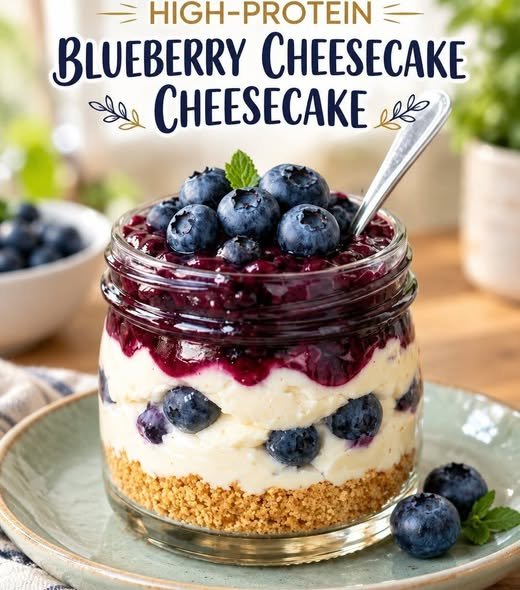
Some desserts have a special way of making an ordinary day feel a little brighter, and this High-Protein Blueberry Cheesecake is one of those treats. With a buttery biscuit base, a smooth and creamy filling, juicy blueberries, and a sweet blueberry topping, every spoonful is full of flavor. What I love most is that it feels like an indulgent dessert while also giving you a little extra protein.
I’m always drawn to recipes that are easy to make at home but still feel special. Whether I’m craving something sweet after dinner, looking for a little comfort after a stressful day, or simply spending a relaxed weekend in the kitchen, this cheesecake is a lovely choice. It doesn’t require complicated ingredients or hours of preparation, just a few simple steps and some time in the fridge to let everything come together..
High-Protein Blueberry Cheesecake: A Healthy, Anti-Inflammatory Dessert
Recipe Description
Enjoy a creamy, delicious, and nutritious High-Protein Blueberry Cheesecake made with protein-rich Greek yogurt, light cream cheese, fresh blueberries, and a crunchy graham cracker crust. This no-bake blueberry cheesecake combines the classic taste of cheesecake with wholesome ingredients to create a satisfying dessert for anyone looking for healthy dessert recipes, high-protein snacks, or an easy meal-prep treat.
Blueberries are rich in anthocyanins, which are natural antioxidants that help protect cells from oxidative stress. Combined with protein-rich dairy products and fiber-containing ingredients, this dessert can fit into a balanced, anti-inflammatory eating pattern.
Unlike traditional cheesecake, this lighter version emphasizes protein, fruit, and portion control without sacrificing flavor. It is perfect for fitness enthusiasts, busy families, and anyone looking for a healthier alternative to conventional desserts.
Preparation time: 20 minutes
Chilling time: 3–4 hours
Total time: Approximately 4 hours
Servings: 4 individual cheesecake jars
Difficulty: Easy
Recipe type: High-protein dessert, no-bake cheesecake, healthy snack
Dietary options: Vegetarian; gluten-free adaptable
Ingredients
For the Crust
- 1 cup (100 g) graham cracker crumbs or digestive biscuit crumbs
- 2 tablespoons (28 g) melted unsalted butter
- 1 tablespoon milk, if needed to help the crumbs bind
For the High-Protein Cheesecake Filling
- 1 cup (225 g) plain Greek yogurt, preferably high-protein
- 200 g light cream cheese, softened
- 1/2 cup (120 g) cottage cheese, blended until smooth
- 2–3 tablespoons honey or pure maple syrup, adjusted to taste
- 1 teaspoon pure vanilla extract
- 1 tablespoon lemon juice
- 1 teaspoon lemon zest, optional
- 1 teaspoon unflavored gelatin plus 1 tablespoon cold water, optional, for a firmer texture
For the Blueberry Topping
- 1 1/2 cups (225 g) fresh or frozen blueberries
- 1 tablespoon lemon juice
- 1–2 tablespoons honey or maple syrup, optional
- 1 teaspoon chia seeds, optional, for natural thickening
- 1 tablespoon water, if needed
Optional Garnishes
- A few fresh blueberries
- Fresh mint leaves
- A small spoonful of Greek yogurt
- A light sprinkle of cinnamon
- Chopped walnuts or almonds
Instructions
Step 1: Prepare the Cheesecake Crust
- Place the graham cracker crumbs in a mixing bowl.
- Add the melted butter and stir until the crumbs resemble damp sand.
- Divide the mixture evenly among four small jars or dessert glasses.
- Press the crumbs firmly into the bottom of each jar using the back of a spoon.
- Refrigerate the jars while preparing the filling.
For a lighter crust, replace half of the biscuit crumbs with finely ground oats. For a gluten-free version, use certified gluten-free oats and gluten-free biscuits.
Step 2: Make the High-Protein Cheesecake Filling
- Blend the cottage cheese until completely smooth.
- In a mixing bowl, beat the softened cream cheese until creamy.
- Add the Greek yogurt, blended cottage cheese, honey or maple syrup, vanilla extract, lemon juice, and optional lemon zest.
- Mix until smooth and creamy, scraping down the sides of the bowl as needed.
- Taste the filling and adjust the sweetness according to your preference.
If you want a firmer, sliceable filling, bloom the gelatin in cold water for approximately 5 minutes. Gently warm it until dissolved, allow it to cool slightly, and slowly mix it into the cheesecake filling. Do not add hot gelatin directly to a cold mixture.
For a soft, spoonable cheesecake served in jars, you can omit the gelatin.
Step 3: Prepare the Blueberry Topping
- Add the blueberries, lemon juice, and water to a small saucepan.
- Cook over medium-low heat for approximately 5–8 minutes, stirring occasionally.
- Gently crush some of the berries to release their juices while leaving others whole.
- Add honey or maple syrup if extra sweetness is desired.
- Stir in chia seeds if you prefer a thicker topping.
- Remove from the heat and allow the blueberry mixture to cool completely.
Frozen blueberries work well in this recipe and do not need to be thawed beforehand.
Step 4: Assemble the Cheesecake Jars
- Remove the prepared crusts from the refrigerator.
- Spoon the cheesecake filling evenly over each crust.
- Smooth the tops with a spoon.
- Add a generous layer of cooled blueberry topping.
- Cover the jars and refrigerate for at least 3–4 hours, or overnight for the best texture.
Step 5: Garnish and Serve
Before serving, top each cheesecake jar with fresh blueberries, mint leaves, or a small spoonful of Greek yogurt.
Serve chilled for a creamy texture and refreshing blueberry flavor.
Serving Suggestions
High-Protein Blueberry Cheesecake is versatile enough for breakfast-style meal prep, a post-workout snack, or a lighter dessert after dinner.
- Healthy breakfast: Serve a small jar with boiled eggs or another protein-rich breakfast option.
- Post-workout snack: Enjoy after exercise as part of a meal or snack that provides protein and carbohydrates.
- Healthy dessert: Serve after lunch or dinner when you want something sweet without a large slice of traditional cheesecake.
- Meal-prep dessert: Prepare individual jars in advance for convenient portions throughout the week.
- Dinner-party treat: Garnish with fresh berries and mint for an elegant presentation.
- Afternoon snack: Pair with unsweetened tea or coffee.
For portion control, divide the recipe into four equal servings and adjust the serving size to suit your nutritional needs.
Recipe Variations
1. Sugar-Free Blueberry Cheesecake
Replace honey and maple syrup with a suitable zero-calorie sweetener. Check the labels of your biscuits, yogurt, and cream cheese because they may contain added sugar.
2. Gluten-Free High-Protein Cheesecake
Use certified gluten-free biscuits or a mixture of ground almonds and oats for the crust. Confirm that all packaged ingredients are labeled gluten-free.
3. Low-Carb Blueberry Cheesecake
Replace the biscuit crust with finely ground almonds mixed with a little melted butter. Use a low-carbohydrate sweetener and choose unsweetened, lower-carbohydrate dairy products.
This version can reduce carbohydrates, although the final nutritional values depend on the specific ingredients.
4. Extra-High-Protein Cheesecake
Choose Greek yogurt with a high protein content, use blended low-fat cottage cheese, and select a higher-protein cream cheese alternative if available.
You can also add a small amount of unflavored protein powder. Mix it in gradually and add a little extra yogurt if the filling becomes too thick.
5. Vegan Blueberry Cheesecake
Use unsweetened soy yogurt, a plant-based cream cheese, and a suitable vegan protein source. Replace butter with melted coconut oil or a plant-based alternative.
Choose a vegan biscuit crust and use agar-agar or another suitable setting agent according to its package instructions.
6. Lemon Blueberry Cheesecake
Add extra lemon zest and a little more lemon juice to the filling. The bright citrus flavor balances the sweetness of the blueberries.
7. Mixed-Berry Cheesecake
Replace some or all of the blueberries with raspberries, strawberries, or blackberries. Mixed berries offer different flavors and a range of naturally occurring plant compounds.
8. Blueberry Chia Cheesecake
Add one teaspoon of chia seeds to the blueberry topping. Let the mixture rest until it thickens. Chia seeds provide fiber and plant-based omega-3 fatty acids.
9. Baked High-Protein Cheesecake
For a baked variation, use a suitable cheesecake filling recipe specifically formulated for baking. Greek yogurt and cottage cheese can behave differently from full-fat cream cheese, so the no-bake filling above should not simply be baked without adjusting the proportions and method.
Anti-Inflammatory Benefits of the Ingredients
An anti-inflammatory diet emphasizes a variety of fruits, vegetables, whole grains, legumes, nuts, seeds, and other minimally processed foods. This cheesecake includes several ingredients that can complement that eating pattern.
Blueberries
Blueberries contain anthocyanins and other polyphenols that contribute to their antioxidant activity. Research suggests that berry-rich diets may support aspects of cardiometabolic health, although no single dessert can prevent or treat chronic inflammation.
Greek Yogurt
Plain Greek yogurt supplies protein and calcium. Depending on the product, it may also contain live cultures. Choose an unsweetened variety to reduce added sugar.
Cottage Cheese
Cottage cheese adds protein and a creamy consistency. It also provides calcium, although sodium content varies between brands.
Lemon Juice
Lemon juice contributes vitamin C and a fresh flavor that can reduce the need for additional sweetener.
Oats, Nuts, and Chia Seeds
When used in the crust or topping, these ingredients can add fiber, unsaturated fats, and other nutrients. These additions can also make the dessert more filling.
Important: This is an anti-inflammatory-inspired dessert, not a medical treatment. Its healthfulness depends on the overall diet, portion size, and ingredient choices.
Nutritional Information
The following values are estimates for one serving when the recipe is divided into four jars using the ingredients listed above, including the biscuit crust, butter, dairy filling, and a moderately sweetened blueberry topping.
| Nutrient | Estimated amount per serving |
|---|---|
| Calories | 350–420 kcal |
| Protein | 18–23 g |
| Total carbohydrates | 35–45 g |
| Dietary fiber | 2–4 g |
| Total sugars | 18–27 g |
| Total fat | 15–21 g |
| Saturated fat | 7–11 g |
| Calcium | 150–250 mg |
| Sodium | 250–450 mg |
Actual nutrition varies by brand, fat content, sweetener quantity, crust ingredients, and serving size. These figures are illustrative estimates, not laboratory-tested values.
For more accurate tracking, calculate the nutrition using the exact ingredient labels and the final number of servings.
How to Make the Recipe More Nutritious
- Choose plain, high-protein Greek yogurt instead of sweetened yogurt.
- Reduce added honey or maple syrup if you prefer a less sweet dessert.
- Use fresh or frozen blueberries without added sugar.
- Add chia seeds or ground flaxseed for additional fiber.
- Use a lighter crust or reduce the amount of butter if lowering calories is a priority.
- Compare cream cheese labels for saturated fat and sodium.
- Keep portions consistent if you are tracking calories or macronutrients.
Storage and Meal-Prep Tips
- Store the cheesecake jars covered in the refrigerator.
- For the best quality, consume within 3–4 days.
- Keep the jars refrigerated at 4°C (40°F) or below.
- Use clean utensils when serving and avoid leaving the cheesecake at room temperature for extended periods.
- If preparing in advance, allow the blueberry topping to cool before adding it to the filling.
- For the freshest appearance, add mint leaves and fresh blueberry garnishes just before serving.
Freezing may change the texture of the yogurt-based filling, so refrigeration is generally preferable for this recipe.
Frequently Asked Questions
1. Is High-Protein Blueberry Cheesecake healthy?
It can be a nutritious dessert option because it provides protein, fruit, and calcium. Its overall nutritional value depends on the amount of added sugar, the type of dairy products, the crust, and the serving size.
2. How much protein does one serving contain?
One serving may provide approximately 18–23 grams of protein with the ingredients specified here. Actual protein content depends on the yogurt, cottage cheese, and cream cheese brands used.
3. Can I eat blueberry cheesecake while trying to lose weight?
Yes, it can fit into a weight-management plan when portion sizes and total daily calorie intake align with your needs. For a lower-calorie version, reduce the crust and added sweetener and choose suitable lower-fat dairy products.
4. Is blueberry cheesecake suitable for breakfast?
It can be enjoyed as an occasional breakfast or breakfast-style snack. Pair it with additional whole foods if you need a more substantial meal.
5. Can I make this recipe without protein powder?
Absolutely. Greek yogurt, cottage cheese, and cream cheese provide protein naturally. Protein powder is optional and is not required for a creamy, high-protein result.
6. Can I use frozen blueberries?
Yes. Frozen blueberries are convenient and work well in the topping. Cook them until they release their juices and allow the topping to cool before assembling the jars.
7. Is this recipe suitable for people with diabetes?
It may be adaptable, but suitability depends on individual carbohydrate requirements, medication, and blood glucose response. Use unsweetened dairy products, limit added sweeteners, measure the biscuit crust, and consult your healthcare professional or registered dietitian for personalized guidance.
8. Does this cheesecake reduce inflammation?
There is no guarantee that this recipe will reduce inflammation. Blueberries contain beneficial polyphenols, but the evidence relates to dietary patterns and specific health outcomes rather than this particular dessert as a treatment.
9. Can I make this cheesecake without gelatin?
Yes. The cheesecake will have a softer, spoonable consistency. Chilling it overnight can help it firm up, but it will not be as structured as a gelatin-set cheesecake.
10. How can I make the cheesecake less sweet?
Use unsweetened Greek yogurt, reduce the honey or maple syrup, and rely on the natural flavor of ripe blueberries. Lemon zest can enhance the flavor without adding sugar.
11. Can I prepare this recipe for weekly meal prep?
Yes. Divide the cheesecake into individual jars and refrigerate them promptly. For the best texture and food safety, consume within 3–4 days.
12. Is this cheesecake keto-friendly?
The standard recipe is not typically keto-friendly because the biscuits, blueberries, and sweetener contribute carbohydrates. An almond-flour crust and a suitable low-carbohydrate sweetener can reduce the carbohydrate content, but the final recipe must be calculated to confirm its suitability.
Related Healthy Recipes to Try
If you enjoy this recipe, consider trying these related ideas:
- High-Protein Strawberry Cheesecake Cups
- No-Bake Greek Yogurt Cheesecake
- Healthy Blueberry Chia Pudding
- Protein-Packed Overnight Oats with Blueberries
- Low-Sugar Lemon Cheesecake Jars
- Cottage Cheese Chocolate Mousse
- Mixed-Berry Yogurt Parfaits
- Healthy Raspberry Cheesecake Bites
- Blueberry Oatmeal Breakfast Bars
- High-Protein Peanut Butter Yogurt Dip
These recipes can offer additional ways to enjoy protein-rich dairy foods, berries, and other nutritious ingredients.
Final Thoughts
High-Protein Blueberry Cheesecake is a creamy, refreshing dessert that combines the classic flavor of cheesecake with blueberries, Greek yogurt, and cottage cheese. Its individual-serving format makes it convenient for meal prep, portion control, and satisfying sweet cravings.