
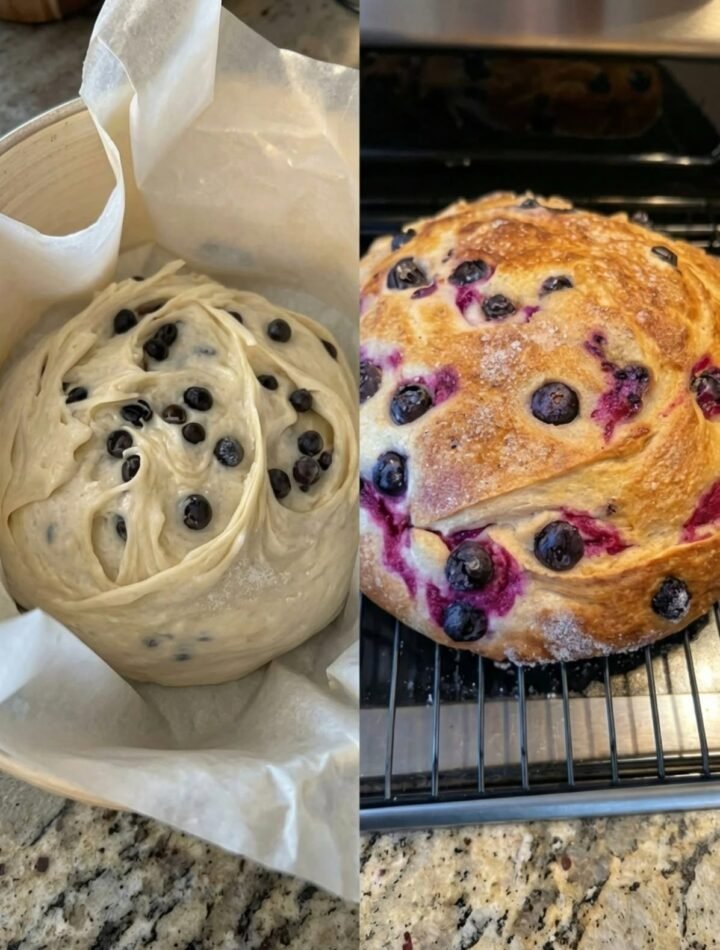
There’s something truly comforting about making bread at home. I love how the kitchen slowly fills with the warm smell of baking bread, how the dough comes together under my hands, and that little moment of excitement when I finally slice into a freshly baked loaf. For me, baking sourdough is more than just making food. It’s a simple way to slow down, relax, and enjoy the little things in life.
Blueberry sourdough bread makes that experience even more special. Picture a beautifully golden, crispy crust with a soft, chewy center filled with juicy blueberries. Every slice has its own little bursts of sweetness, balanced by the gentle tang of naturally fermented sourdough. It’s the kind of bread that tastes wonderful straight from the cutting board but is just as delicious toasted for breakfast, served at weekend brunch, or enjoyed as an afternoon treat with a warm cup of tea or coffee.
Anti-Inflammatory Blueberry Sourdough Bread Recipe: Easy Homemade Artisan Loaf
Recipe Description
Blueberry Sourdough Bread is a delicious homemade artisan loaf that combines the natural tang of sourdough with juicy blueberries and a beautifully golden, crusty exterior. With its soft, chewy crumb, naturally fermented flavor, and bursts of sweet berries, this bread is perfect for breakfast, brunch, healthy snacking, or a weekend baking project.
This blueberry sourdough recipe is made with an active sourdough starter, fresh or frozen blueberries, bread flour, water, and salt. A small amount of honey or maple syrup is optional for a touch of sweetness.
Blueberries contain anthocyanins, which are plant compounds with antioxidant properties. Whole-grain flour can add fiber and other nutrients, while sourdough fermentation may improve the availability of certain minerals and make bread easier for some people to digest. Although no single food can prevent or treat inflammation, this recipe can be part of a balanced, anti-inflammatory eating pattern.
Recipe at a Glance
- Prep time: 30 minutes
- Fermentation time: 8–14 hours, depending on room temperature and starter activity
- Active folding time: Approximately 2 hours
- Baking time: 45–55 minutes
- Total time: Approximately 10–16 hours, including fermentation
- Yield: 1 medium-to-large artisan loaf
- Servings: 10–12 slices
- Difficulty: Intermediate
- Baking method: Dutch oven or covered oven-safe baking pot
Ingredients
For the Blueberry Sourdough Bread
- 100 g active sourdough starter, bubbly and recently fed
- 350 g bread flour
- 50 g whole-wheat flour (optional; substitute bread flour if preferred)
- 280 g water, room temperature
- 8 g fine sea salt
- 150 g fresh blueberries, washed and thoroughly dried, or frozen blueberries used straight from the freezer
- 1 tablespoon honey or pure maple syrup (optional)
- 1 teaspoon finely grated lemon zest (optional)
- 1 tablespoon rice flour or regular flour for dusting the proofing basket
Optional Toppings
- A light sprinkle of flour for a rustic finish
- A small amount of rolled oats
- A few extra blueberries pressed gently into the surface before baking
Equipment Needed
- Large mixing bowl
- Kitchen scale
- Dough scraper
- Clean kitchen towel or reusable bowl cover
- Banneton proofing basket or a bowl lined with a clean, floured towel
- Dutch oven with a lid
- Parchment paper
- Sharp bread lame or knife
- Wire cooling rack
Step-by-Step Instructions
Step 1: Prepare the Sourdough Starter
Feed your sourdough starter according to your usual schedule. Allow it to become bubbly, active, and expanded.
For best results, use the starter when it is near its peak activity. An active starter helps the dough rise naturally without commercial yeast.
Step 2: Mix the Dough
In a large bowl, combine the bread flour, whole-wheat flour, and water. Mix until no dry flour remains.
Cover the bowl and let the mixture rest for 30–45 minutes. This resting period, commonly called autolyse when made with flour and water alone, helps hydrate the flour and develop gluten.
Add the active sourdough starter, salt, and optional honey or maple syrup. Mix and squeeze the dough gently until the ingredients are evenly incorporated.
The dough should feel soft, slightly sticky, and elastic.
Step 3: Begin Bulk Fermentation
Cover the bowl and allow the dough to rest at room temperature for approximately 30 minutes.
Perform a set of stretch-and-folds by lifting one side of the dough, stretching it gently upward, and folding it over the center. Rotate the bowl and repeat on all four sides.
Repeat this process every 30 minutes for the next 1½–2 hours, completing approximately 3–4 sets.
These folds strengthen the dough and help it hold its shape during baking.
Step 4: Add the Blueberries
After the first set or two of folds, gently incorporate the blueberries.
Spread the dough carefully on a lightly dampened work surface if necessary. Distribute the berries over the dough, then fold the dough over itself to enclose them.
Handle the blueberries gently to minimize crushing. Fresh berries that have been washed and thoroughly dried generally make incorporation easier. Frozen blueberries can also work well, but they may release more moisture and streak the dough purple.
Avoid excessive kneading after adding the berries, as this can damage their skins and weaken the dough structure.
Step 5: Complete Bulk Fermentation
Cover the dough and allow it to continue fermenting until it looks noticeably expanded, aerated, and smoother, with bubbles developing around the edges.
Depending on the temperature of your kitchen and the strength of your starter, bulk fermentation may take approximately 4–7 hours in total from the initial mixing. Cooler kitchens may require longer.
Use the dough’s appearance and texture rather than relying exclusively on the clock. The dough should rise substantially but does not necessarily need to double.
Step 6: Shape the Loaf
Lightly flour your work surface and turn out the dough.
Gently stretch it into a rough rectangle, taking care not to squeeze out all the air. Fold the sides toward the center, then roll or fold the dough into a compact round.
Turn it seam-side down and use your hands or a dough scraper to create surface tension without tearing the dough or crushing the blueberries.
Place the shaped loaf seam-side up in a well-floured proofing basket or towel-lined bowl.
Step 7: Proof the Dough
Cover the loaf and choose one of these proofing methods:
- Room-temperature proof: Allow it to rise for approximately 1–3 hours, until slightly puffy and responsive to a gentle touch.
- Overnight cold proof: Cover and refrigerate for approximately 8–14 hours. This develops flavor and makes the loaf easier to score.
Proofing time depends on dough temperature, starter strength, and room conditions. Avoid overproofing, which can cause the loaf to spread or lose its structure.
Step 8: Preheat the Oven
Place a Dutch oven with its lid inside the oven. Preheat to 230°C (450°F) for approximately 30–45 minutes.
Use oven mitts and handle the hot pot carefully.
If you do not have a Dutch oven, use a suitable oven-safe baking vessel with a lid. A baking stone or steel with a separate steam method is another option, provided the equipment is designed for that use.
Step 9: Score and Bake
Carefully turn the cold or proofed dough onto parchment paper, keeping the seam underneath.
Use a sharp bread lame or knife to make one confident slash across the top. This gives the loaf room to expand in the oven.
Transfer the loaf and parchment into the preheated Dutch oven and cover with the lid.
Bake covered for 25 minutes. Remove the lid and continue baking for another 20–30 minutes, until the crust is deeply golden brown and the loaf is baked through.
If the berries begin to darken too quickly, monitor the loaf closely toward the end of baking.
Step 10: Cool Before Slicing
Transfer the finished loaf to a wire rack and allow it to cool for at least 2 hours.
Cooling is essential because the interior continues to set after the loaf leaves the oven. Cutting too early can produce a gummy texture, especially around the juicy blueberries.
Slice with a serrated bread knife and enjoy.
Tips for the Best Blueberry Sourdough Bread
- Use an active starter. A weak starter may lead to a dense loaf and extended fermentation.
- Dry fresh blueberries thoroughly. Excess surface moisture can make the dough wetter and more difficult to shape.
- Add the berries gradually. Gentle incorporation preserves more whole berries and creates attractive pockets of fruit.
- Adjust the water if needed. Blueberries release moisture during mixing and baking, so beginners may prefer starting with 260–270 g of water and adding more gradually.
- Watch the fermentation. Temperature and starter activity matter more than exact timing.
- Do not skip cooling. A fully cooled loaf has a better crumb and cleaner slices.
- Use a kitchen scale. Weighing ingredients produces more consistent results than measuring flour by volume.
- For a less sweet loaf, omit the optional honey or maple syrup. The blueberries provide natural fruit sweetness.
Anti-Inflammatory Nutrition Benefits
Blueberry sourdough bread can contribute useful nutrients to a balanced diet, although its health benefits depend on the ingredients and portion size.
Blueberries
Blueberries provide anthocyanins and other polyphenols, along with vitamin C and dietary fiber. These compounds have antioxidant activity and are studied for their potential role in supporting overall health.
Sourdough Fermentation
Traditional sourdough fermentation produces organic acids and changes the structure of the dough. Depending on the flour and fermentation method, this process may reduce some phytates and improve the bioavailability of certain minerals.
Sourdough bread is not automatically gluten-free or suitable for everyone with digestive conditions. People with celiac disease must use certified gluten-free ingredients and an appropriate gluten-free preparation method.
Whole-Wheat Flour
Replacing some refined flour with whole-wheat flour increases fiber and provides additional minerals and plant compounds. Fiber supports digestive health and can help make meals more satisfying.
Healthy Ways to Enjoy It
For a more nutrient-dense meal, pair a slice with plain Greek yogurt, unsweetened nut butter, eggs, or another source of protein. Fresh fruit and unsweetened tea are also good accompaniments.
No particular bread is guaranteed to reduce inflammation. Overall dietary patterns, sleep, physical activity, and other lifestyle factors play important roles in health.
Serving Suggestions
1. Healthy Breakfast
Toast a slice and spread it with unsweetened almond butter. Add a few fresh blueberries and a sprinkle of chia seeds for extra fiber and texture.
2. Sourdough French Toast
Dip slices into a mixture of egg, milk, cinnamon, and vanilla. Cook in a lightly oiled skillet until golden on both sides. Serve with fresh fruit and plain yogurt.
3. Brunch Board
Serve thin slices with fresh berries, plain Greek yogurt, walnuts, and soft cheese for a colorful brunch spread.
4. Sweet Afternoon Snack
Enjoy a slice lightly toasted with a small amount of butter, tahini, or nut butter. Cinnamon and lemon zest can enhance the flavor without requiring much added sugar.
5. Dessert-Style Serving
Toast the bread and top it with ricotta, a few extra blueberries, and a drizzle of honey. Keep the sweetener modest if you prefer a lower-added-sugar option.
6. Savory Pairing
Although this bread is fruity, its mild sourdough tang pairs nicely with eggs, mild cheeses, or a simple omelet.
Recipe Variations
1. Blueberry Lemon Sourdough Bread
Add 1–2 teaspoons of finely grated lemon zest to the dough. The citrus brightens the berry flavor without significantly changing the dough’s hydration.
2. Blueberry Walnut Sourdough
Add 50–75 g chopped walnuts during the final folding stage. Walnuts provide a pleasant crunch and contain alpha-linolenic acid, a plant-based omega-3 fatty acid.
3. Whole-Wheat Blueberry Sourdough
Replace up to half of the bread flour with whole-wheat flour. The loaf will have a nuttier flavor and more fiber, but it may be denser and may require adjustments to the water.
4. Cinnamon Blueberry Sourdough
Add 1 teaspoon ground cinnamon to the flour before mixing. Cinnamon complements the blueberries and works particularly well for breakfast toast.
5. Lower-Added-Sugar Version
Leave out the honey or maple syrup. Choose naturally sweet, ripe blueberries and enjoy the loaf without additional sweeteners.
6. Mixed Berry Sourdough
Replace some or all of the blueberries with chopped strawberries, raspberries, or blackberries. Use firm fruit, remove excess moisture, and expect more color bleeding with softer berries.
7. Blueberry Oat Sourdough
Replace up to 30–40 g of the flour with finely ground oats, or sprinkle rolled oats over the crust before baking. Because oats absorb water differently, adjust the hydration gradually.
8. Higher-Fiber Artisan Bread
Use a greater proportion of whole-grain flour and consider adding a small quantity of seeds. Make hydration adjustments gradually, as whole grains and seeds can absorb additional water.
Storage and Freezing Instructions
Room Temperature
Store the fully cooled loaf in a paper bread bag or loosely wrapped bread container for approximately 2–3 days. The crust may soften over time, especially in humid conditions.
Avoid sealing a warm loaf in an airtight container because trapped steam can make the crust soggy.
Refrigerator
Refrigeration can accelerate staling, so it is generally not the first choice for storing a plain loaf. If your kitchen is very warm or humid, refrigeration may be useful for managing spoilage, but the texture may change.
Freezer
For longer storage, slice the completely cooled loaf and freeze the slices in a freezer-safe bag for up to about 2–3 months for best quality.
Toast frozen slices directly, or thaw them at room temperature before serving.
Estimated Nutrition Information
The following estimates are for one loaf made with the ingredients listed above and divided into 12 slices. Actual values vary with flour brands, blueberry size, optional sweeteners, moisture loss, and slice thickness.
Estimated nutrition per slice:
- Calories: 150–180 kcal
- Protein: 4–6 g
- Total carbohydrates: 29–35 g
- Dietary fiber: 1–3 g
- Total sugars: 3–6 g
- Total fat: 0.5–2 g
- Saturated fat: 0–0.5 g
- Sodium: 230–300 mg
These figures are approximate and should not be treated as laboratory-verified nutrition data. For more accurate values, calculate the recipe using the exact ingredient labels and final serving count.
To increase fiber and improve overall meal balance, use more whole-grain flour where appropriate and serve the bread with protein-rich foods. For people monitoring blood glucose, portion size and the total carbohydrate content of the meal are important.
Frequently Asked Questions
1. Can I use frozen blueberries?
Yes. Frozen blueberries can be added directly from the freezer without thawing. They may create purple streaks and release moisture, so fold them in gently.
2. Why did my blueberry sourdough bread turn purple?
Blueberry skins contain natural pigments called anthocyanins. When the berries break during mixing, these pigments spread through the dough. Purple streaks are normal and do not necessarily indicate a problem.
3. Why is my bread dense?
Common causes include an inactive starter, insufficient fermentation, weak gluten development, or shaping and proofing problems. Check that your starter reliably rises after feeding and allow the dough to become aerated before shaping.
4. Can I make blueberry sourdough bread without a Dutch oven?
Yes. Bake on a preheated baking stone or heavy baking sheet and use a suitable oven-safe method to introduce steam during the initial baking period. Follow the equipment manufacturer’s safety instructions.
5. Can I use all-purpose flour instead of bread flour?
Yes, although the loaf may have a slightly softer structure and spread more. Start with less water if the dough feels excessively loose and add more as needed.
6. Is blueberry sourdough bread anti-inflammatory?
It contains blueberries, which provide antioxidant polyphenols, and may include whole grains that contribute fiber. These are useful features in a balanced diet, but the bread itself is not a treatment for inflammation and has not been shown to prevent inflammatory diseases.
7. Is sourdough bread healthier than regular bread?
It depends on the recipe and the person’s dietary needs. Sourdough fermentation can influence flavor, acidity, and mineral availability. Whole-grain content, sodium, portion size, and the overall diet are also important.
8. Is this bread suitable for weight management?
It can fit into a balanced eating plan when portions are appropriate. Pairing a slice with protein and fiber-rich foods may help make breakfast more satisfying. No single food causes weight loss or weight gain independently of the overall diet.
9. Can I make this recipe vegan?
Yes. The basic dough is naturally vegan if you omit honey or replace it with maple syrup. Check that any optional toppings are also plant-based.
10. Can I prepare the dough overnight?
Yes. After shaping, cover the dough and refrigerate it for an overnight cold proof. Bake it the next day, checking that it has not overproofed.
11. Why is the inside gummy?
The loaf may have been sliced before cooling, underbaked, or fermented incorrectly. Bake until the crust is deeply golden, allow sufficient cooling time, and adjust hydration if the dough is too wet.
12. How can I make the bread more nutritious?
Use a suitable proportion of whole-wheat flour, avoid unnecessary added sugar, and serve moderate portions with protein-rich foods. Adding walnuts can provide additional unsaturated fats, while seeds may contribute fiber and minerals.
Related Recipe Ideas
If you enjoy homemade blueberry sourdough bread, try these related recipes:
- Whole-Wheat Sourdough Bread: A hearty everyday loaf with additional fiber.
- Lemon Blueberry Sourdough Muffins: A softer, sweeter option for breakfast or brunch.
- Cinnamon Raisin Sourdough Bread: A fruit-filled loaf with warm spice.
- Walnut Sourdough Bread: A rustic loaf with crunchy nuts and a nutty flavor.
- Overnight Sourdough Bread: A practical method for preparing artisan bread around a busy schedule.
- Sourdough Avocado Toast: A savory breakfast option with avocado, eggs, or seeds.
- Healthy Blueberry Breakfast Toast: Toasted sourdough with Greek yogurt or unsweetened nut butter.
Final Thoughts
Homemade Blueberry Sourdough Bread is a flavorful way to combine traditional sourdough baking with the natural sweetness and color of blueberries. Its golden crust, chewy texture, and juicy berry pockets make it an appealing choice for breakfast, brunch, and homemade snacks.