
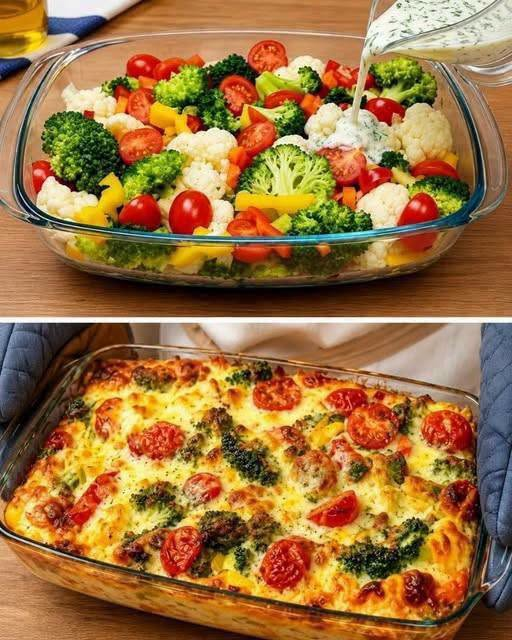
There’s nothing quite like pulling a warm, cheesy casserole out of the oven after a long day. The cheese is golden and bubbling, the vegetables look bright and colorful, and the kitchen smells amazing with garlic and fresh herbs. It’s the kind of homemade meal that makes you want to grab a plate, sit down with your family, and enjoy every bite.
This Cheesy Baked Vegetable Casserole with Creamy Herb Sauce is a wonderful way to turn everyday vegetables into a comforting, delicious meal. Tender broccoli, soft cauliflower, juicy cherry tomatoes, and sweet bell peppers are coated in a creamy garlic-herb sauce and topped with melted cheese. Every bite brings together fresh flavors, a creamy texture, and that irresistible cheesy goodness we all love..
Cheesy Baked Vegetable Casserole with Creamy Herb Sauce: An Anti-Inflammatory Recipe
Recipe Description
Cheesy Baked Vegetable Casserole with Creamy Herb Sauce is a comforting, colorful, and nutritious oven-baked meal featuring broccoli, cauliflower, cherry tomatoes, and bell peppers covered in a creamy garlic-herb sauce and topped with melted cheese. This delicious vegetable casserole combines the goodness of fiber-rich vegetables, antioxidant-rich ingredients, healthy fats, and protein from dairy to create a satisfying meal for lunch or dinner.
If you’re looking for an anti-inflammatory diet recipe, a healthy vegetable bake, or a low-carb vegetarian dinner, this casserole is an excellent option. Broccoli and cauliflower provide fiber and beneficial plant compounds, while tomatoes contain lycopene and herbs add flavor without relying on excess salt.
Although no single dish can eliminate inflammation, eating a variety of colorful vegetables as part of a balanced dietary pattern can support overall health.
Recipe at a glance
- Preparation time: 20 minutes
- Cooking time: 30–40 minutes
- Total time: 50–60 minutes
- Servings: 6
- Cuisine: Mediterranean-inspired
- Course: Main course, lunch, or dinner
- Diet: Vegetarian; gluten-free with suitable ingredients
- Cooking method: Oven baking
- Flavor profile: Creamy, cheesy, garlicky, savory, and herbaceous
Ingredients
For the Vegetable Casserole
- 2 cups broccoli florets
- 2 cups cauliflower florets
- 1½ cups cherry tomatoes, halved
- 1 medium bell pepper, diced
- 1 small zucchini, sliced (optional)
- 1 small red onion, thinly sliced
- 2 tablespoons extra-virgin olive oil
- ½ teaspoon ground black pepper
- ½ teaspoon paprika
- ¼ teaspoon turmeric powder
- ½ teaspoon dried oregano
- Salt to taste
For the Creamy Herb Sauce
- ¾ cup plain Greek yogurt
- ½ cup milk, preferably unsweetened
- 2 garlic cloves, minced
- 1 tablespoon fresh lemon juice
- 1 tablespoon chopped fresh parsley
- 1 teaspoon dried Italian herbs
- ¼ teaspoon black pepper
- A small pinch of salt
For the Cheesy Topping
- 1 cup shredded mozzarella cheese
- ¼ cup grated Parmesan cheese
- 1 tablespoon chopped fresh parsley for garnish
For a lighter casserole, use reduced-fat cheese and plain low-fat Greek yogurt. For a richer version, use regular mozzarella and whole milk.
Step-by-Step Instructions
Step 1: Preheat the Oven
Preheat your oven to 200°C (400°F). Lightly grease a medium baking dish with olive oil to prevent sticking.
Step 2: Prepare the Vegetables
Wash and thoroughly dry the broccoli, cauliflower, cherry tomatoes, bell pepper, and zucchini. Cut the broccoli and cauliflower into bite-sized florets and slice the remaining vegetables evenly.
Place the vegetables in a large mixing bowl. Add olive oil, black pepper, paprika, turmeric, oregano, and a small amount of salt. Toss until the vegetables are evenly coated.
Step 3: Make the Creamy Herb Sauce
In a separate bowl, whisk together Greek yogurt, milk, minced garlic, lemon juice, parsley, Italian herbs, black pepper, and salt.
Mix until smooth and creamy. If the sauce is too thick, add a little more milk until it reaches a pourable consistency.
For a smoother sauce that is less likely to separate during baking, use room-temperature yogurt and avoid boiling the sauce.
Step 4: Assemble the Casserole
Arrange the seasoned vegetables evenly in the prepared baking dish.
Pour the creamy herb sauce over the vegetables, gently tossing or spreading it so that the vegetables are lightly coated.
Sprinkle the shredded mozzarella and grated Parmesan evenly over the top.
Step 5: Bake Until Golden
Place the baking dish in the preheated oven and bake for approximately 30–40 minutes, or until the vegetables are tender and the cheese is melted, bubbling, and lightly golden.
If the cheese browns too quickly, loosely cover the dish with foil. Remove the foil during the final few minutes if you want a more golden topping.
The exact cooking time will depend on the size of the vegetables and the depth of your baking dish.
Step 6: Rest and Garnish
Remove the casserole from the oven and let it rest for 5–10 minutes before serving. This allows the creamy sauce to settle.
Garnish with fresh parsley and, if desired, a little extra black pepper and lemon zest.
Serve warm as a vegetarian main dish or as a side dish with your favorite protein.
Why This Recipe Fits an Anti-Inflammatory Eating Pattern
An anti-inflammatory diet generally emphasizes vegetables, fruits, legumes, whole grains, nuts, seeds, healthy fats, and minimally processed foods.
This casserole incorporates several ingredients that fit that pattern:
- Broccoli: Contains fiber, vitamin C, and glucosinolates, plant compounds studied for their potential health benefits.
- Cauliflower: Provides fiber, vitamin C, and other beneficial plant compounds.
- Tomatoes: Supply lycopene and other antioxidants. Cooking tomatoes can increase the availability of lycopene.
- Bell peppers: Provide vitamin C and colorful plant pigments.
- Extra-virgin olive oil: Supplies monounsaturated fats and polyphenols associated with the Mediterranean dietary pattern.
- Garlic: Contains sulfur-containing compounds that contribute flavor and are being studied for their biological effects.
- Turmeric: Contains curcumin, a compound researched for its potential anti-inflammatory properties.
- Greek yogurt: Provides protein and calcium, helping make the casserole more satisfying.
- Fresh herbs: Add flavor and plant compounds without requiring large amounts of salt.
These ingredients can contribute to a nutritious eating pattern, but the recipe itself is not a treatment for arthritis, autoimmune conditions, chronic inflammation, or other medical problems.
Serving Suggestions
This cheesy vegetable casserole is versatile enough for everyday meals, family dinners, and meal preparation.
- For a balanced vegetarian dinner: Serve with lentil soup, chickpeas, or white beans to increase protein and fiber.
- For a Mediterranean-inspired meal: Pair with a fresh cucumber salad, whole-grain bread, and a small serving of olives.
- For a high-protein meal: Serve alongside grilled chicken, baked fish, tofu, or tempeh.
- For a low-carb dinner: Enjoy it on its own or with grilled chicken, eggs, or another suitable protein.
- For a family lunch: Serve with brown rice, quinoa, or whole-wheat couscous.
- For meal prep: Divide the casserole into individual containers with a side of beans or whole grains for convenient lunches.
For an anti-inflammatory meal plan, prioritize a variety of vegetables, adequate protein, whole foods, and healthy fats throughout the day rather than relying on a single recipe.
Recipe Variations
1. Dairy-Free Vegetable Casserole
Replace Greek yogurt with unsweetened, unflavored soy yogurt or a suitable cashew-based alternative. Use unsweetened plant milk and dairy-free shredded cheese.
Check ingredient labels for added sugar, excess sodium, and allergens.
2. Gluten-Free Casserole
The basic recipe can be gluten-free if all packaged ingredients, including cheese and seasonings, are suitable. No flour or breadcrumbs are necessary.
3. High-Protein Vegetable Bake
Add one cup of cooked chickpeas, white beans, cubed firm tofu, or cooked chicken. Adjust the sauce slightly if needed to ensure the ingredients remain lightly coated.
4. Low-Carb Cheesy Vegetable Casserole
Focus on broccoli, cauliflower, zucchini, and bell peppers. Use a moderate amount of cheese and avoid adding potatoes, pasta, or breadcrumbs.
The final carbohydrate content will depend on the ingredients and portion size.
5. Mediterranean Vegetable Gratin
Add sliced olives, chopped spinach, oregano, and a little crumbled feta cheese. Use extra-virgin olive oil and fresh lemon juice for a brighter flavor.
6. Turmeric and Ginger Variation
Add ½ teaspoon ground turmeric and a small amount of freshly grated ginger to the sauce. These ingredients provide a warm flavor and plant compounds of interest in nutrition research, but they do not guarantee an anti-inflammatory effect.
7. Vegan Vegetable Casserole
Use unsweetened plant yogurt, plant milk, and dairy-free cheese. Add chickpeas or white beans for extra plant protein.
8. Spicy Garlic Vegetable Bake
Add red pepper flakes, a pinch of cayenne, or chopped fresh chili. This variation is ideal for anyone who enjoys a little heat.
9. Extra-Creamy Mushroom Casserole
Add one cup of sliced mushrooms and sauté them before assembling the dish. Cooking the mushrooms first helps remove excess moisture and enhances their flavor.
10. Budget-Friendly Seasonal Vegetable Bake
Use affordable vegetables that are available locally, such as cabbage, carrots, green beans, or frozen broccoli and cauliflower. Cut the vegetables into similar sizes for even cooking.
Storage and Meal-Prep Instructions
Refrigeration: Allow the casserole to cool, then transfer it to an airtight container and refrigerate within two hours. Use within 3–4 days.
Freezing: Freeze cooled portions in freezer-safe containers for approximately 2–3 months for best quality. Yogurt-based sauces may change texture after freezing, so the sauce may become slightly grainy when reheated.
Reheating: Reheat individual portions in the microwave until steaming hot throughout. For larger portions, cover and reheat in an oven at 175°C (350°F) until heated through.
Meal-prep tip: Chop the vegetables and prepare the sauce separately in advance. Store them in the refrigerator and assemble the casserole shortly before baking for the best texture.
Estimated Nutrition Facts
The following values are estimates for one serving, assuming the recipe makes six servings and uses regular mozzarella, Parmesan, plain Greek yogurt, and whole milk. Actual nutrition varies by brand, ingredient quantity, and serving size.
- Calories: approximately 230–280 kcal
- Protein: 12–15 g
- Total carbohydrates: 12–16 g
- Dietary fiber: 3–5 g
- Total fat: 14–18 g
- Saturated fat: 5–7 g
- Total sugars: 5–8 g
- Sodium: approximately 300–500 mg
- Calcium: approximately 200–300 mg
- Vitamin C: a meaningful contribution toward daily needs
These estimates should not be treated as laboratory-tested nutrition facts. For accurate values, calculate the recipe using the specific products and quantities you use.
How to Make the Recipe More Nutritious
- Increase fiber by adding chickpeas, white beans, or other vegetables.
- Reduce saturated fat by using less cheese or choosing a lower-fat variety.
- Reduce sodium by limiting added salt and selecting lower-sodium cheese.
- Increase protein by adding tofu, legumes, chicken, or another suitable protein.
- Maintain a moderate portion of sauce and cheese while keeping vegetables the main ingredient.
Frequently Asked Questions
1. Is Cheesy Baked Vegetable Casserole anti-inflammatory?
It can fit into an anti-inflammatory eating pattern because it includes vegetables, olive oil, garlic, and herbs. However, no single food or recipe can reliably reduce inflammation on its own. Overall dietary habits matter most.
2. Can I eat this casserole every day?
You can include it regularly if it fits your nutritional needs, but variety is important. Rotate different vegetables, protein sources, and whole grains to obtain a broader range of nutrients.
3. Is this recipe suitable for weight management?
It can be part of a weight-management plan because vegetables provide volume and fiber. Portion size, cheese quantity, sauce ingredients, and the rest of your diet influence total calorie intake.
4. Is this a low-carb vegetable casserole?
The recipe is relatively moderate in carbohydrates compared with casseroles made with pasta or potatoes. For a stricter low-carb version, use suitable vegetables, check dairy product labels, and calculate the carbohydrate content of your portion.
5. Can I make this casserole without cheese?
Yes. Omit the cheese or replace it with a dairy-free alternative. Add nutritional yeast, garlic, herbs, and lemon zest for extra savory flavor.
6. Can I prepare the casserole ahead of time?
Yes. Prepare and season the vegetables, make the sauce, and refrigerate them separately. Assemble the casserole shortly before baking. If baking directly from a cold dish, allow additional cooking time and ensure it heats evenly.
7. Can I use frozen vegetables?
Yes. Frozen broccoli and cauliflower are convenient alternatives. Thaw and drain them thoroughly, or roast them briefly to remove excess moisture before assembling the casserole.
8. How do I stop the sauce from becoming watery?
Dry the vegetables thoroughly, avoid overcrowding the baking dish, and sauté watery vegetables such as mushrooms or zucchini before baking. Use a thick Greek yogurt and avoid adding too much milk.
9. What can I use instead of Greek yogurt?
Plain unsweetened skyr, a suitable thick dairy yogurt, or an unsweetened plant-based yogurt can work. The final consistency and nutritional profile will vary.
10. Is this casserole suitable for people with diabetes?
It may fit into an individualized diabetes meal plan, but carbohydrate content and portion size matter. Pairing the casserole with an appropriate protein source and monitoring individual responses can help. Consult a registered dietitian or healthcare professional for personalized guidance.
11. Does turmeric in this recipe treat chronic inflammation?
No. The small amount of turmeric used for cooking should be considered a seasoning, not a medical treatment. Research on curcumin supplements cannot automatically be applied to the amount present in a serving of food.
12. Can I make this casserole vegan and high-protein?
Yes. Use plant-based yogurt, unsweetened soy milk, and dairy-free cheese, then add chickpeas, lentils, tofu, or another plant protein. Soy milk and soy yogurt generally provide more protein than many almond-based alternatives.
Related Recipe Ideas
If you enjoy healthy baked vegetable dishes, try these related meal ideas:
- Mediterranean roasted vegetables with garlic and olive oil
- Anti-inflammatory broccoli and cauliflower soup
- Creamy spinach and mushroom casserole
- Turmeric-roasted cauliflower with chickpeas
- High-protein lentil and vegetable bake
- Garlic-herb roasted zucchini and bell peppers
- Healthy vegetarian meal-prep bowls
- Baked salmon with broccoli and lemon
- Chickpea and tomato Mediterranean skillet
- Dairy-free creamy vegetable gratin
These dishes can be combined into a balanced weekly meal plan that emphasizes vegetables, legumes, whole grains, healthy fats, and varied protein sources.
Final Thoughts
Cheesy Baked Vegetable Casserole with Creamy Herb Sauce is a delicious way to enjoy more vegetables without sacrificing comfort or flavor. The combination of broccoli, cauliflower, tomatoes, bell peppers, garlic, herbs, olive oil, and melted cheese creates a satisfying dish suitable for family dinners, vegetarian meal preparation, and a Mediterranean-inspired eating pattern.