Fluffy Japanese Cotton Cheesecake Recipe (Bakery-Style)
Meta Description: Learn how to make the ultimate fluffy Japanese cotton cheesecake with a light, airy texture and creamy flavor. This easy homemade cheesecake recipe includes expert baking tips, storage instructions, FAQs, and answers to common baking questions.
Fluffy Japanese Cotton Cheesecake
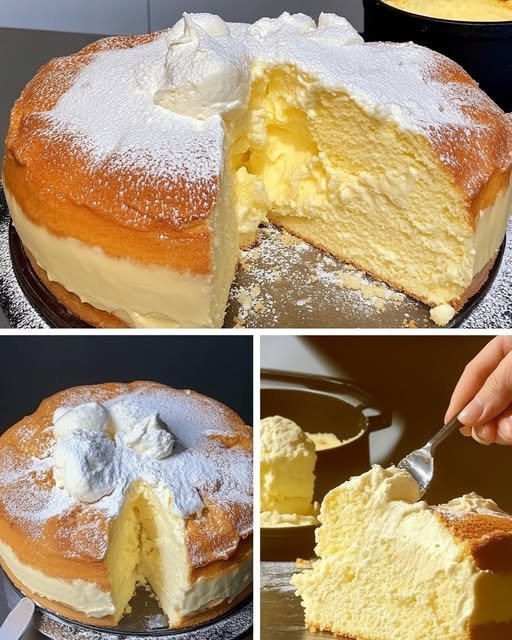
If you’re looking for a dessert that melts in your mouth, this Japanese Cotton Cheesecake is one of the best recipes to try. Unlike traditional New York cheesecake, this version is lighter, softer, and incredibly airy. It combines the richness of cream cheese with the delicate texture of a soufflé, making it perfect for birthdays, afternoon tea, family gatherings, or festive celebrations.
The cake shown in your image features a golden-brown top, a creamy center, and a generous dusting of powdered sugar with whipped cream. Its soft, cloud-like texture comes from whipped egg whites folded gently into a smooth cream cheese batter and baked in a water bath.
Ingredients
Cream Cheese Mixture
- 250 g cream cheese, softened
- 60 g unsalted butter
- 100 ml whole milk
- 6 egg yolks
- 70 g cake flour
- 20 g cornstarch
- 1 teaspoon vanilla extract
- 1 tablespoon lemon juice
- Pinch of salt
Meringue
- 6 egg whites
- 120 g granulated sugar
- ½ teaspoon cream of tartar (optional)
Decoration
- Powdered sugar
- Fresh whipped cream
- Fresh berries (optional)
Instructions
Step 1: Prepare the Oven
Preheat your oven to 150°C (300°F). Line an 8-inch round cake pan with parchment paper and wrap the outside with aluminum foil for the water bath.
Step 2: Make the Batter
Melt cream cheese, butter, and milk together over low heat until smooth. Remove from heat and let cool slightly.
Whisk in:
- Egg yolks
- Vanilla
- Lemon juice
Sift together cake flour, cornstarch, and salt. Fold into the mixture until smooth.
Step 3: Prepare the Meringue
Beat egg whites until foamy.
Add cream of tartar.
Gradually add sugar while beating until soft to medium peaks form.
Do not overbeat.
Step 4: Fold Together
Fold one-third of the meringue into the batter.
Add the remaining meringue gently using a spatula.
Avoid mixing vigorously to keep the batter airy.
Step 5: Bake
Pour batter into the prepared pan.
Place the pan inside a larger baking tray.
Fill the tray with hot water halfway up the sides.
Bake for:
- 25 minutes at 150°C
- Then 55–60 minutes at 130°C (265°F)
Turn off the oven and leave the cake inside with the door slightly open for 15 minutes.
Step 6: Cool
Cool completely before removing from the pan.
Dust with powdered sugar.
Top with whipped cream if desired.
Serve chilled or at room temperature.
Baking Tips
- Use room-temperature ingredients.
- Fold egg whites gently.
- Always bake in a water bath.
- Never open the oven during baking.
- Cool gradually to prevent cracking.
- Use cake flour for the softest texture.
Storage
- Refrigerate for up to 4 days.
- Freeze slices for up to 2 months.
- Thaw overnight in the refrigerator before serving.
Nutrition (Approximate Per Slice)
- Calories: 260
- Protein: 7 g
- Fat: 17 g
- Carbohydrates: 20 g
- Sugar: 15 g
- Calcium: 10% Daily Value
Frequently Asked Questions
Why did my cheesecake crack?
Cracks usually happen because of overbaking, sudden temperature changes, or skipping the water bath.
Why did my cheesecake collapse?
The meringue may have been overmixed, the batter may have lost too much air, or the cake may have been underbaked.
Can I make it without cake flour?
Yes. Replace cake flour with all-purpose flour mixed with a little cornstarch for a similar texture.
Can I use low-fat cream cheese?
Full-fat cream cheese is recommended for the best flavor and texture.
Can I make it ahead of time?
Yes. It tastes even better after chilling overnight.
Why is Japanese cheesecake so fluffy?
The whipped egg whites create a soufflé-like structure that gives the cake its signature airy texture.
What toppings go well with this cheesecake?
Fresh strawberries, blueberries, raspberries, whipped cream, chocolate sauce, caramel sauce, lemon curd, or fruit compote all pair beautifully.
Can I bake it without a water bath?
A water bath is strongly recommended because it provides gentle, even heat and helps prevent cracks and overbrowning.