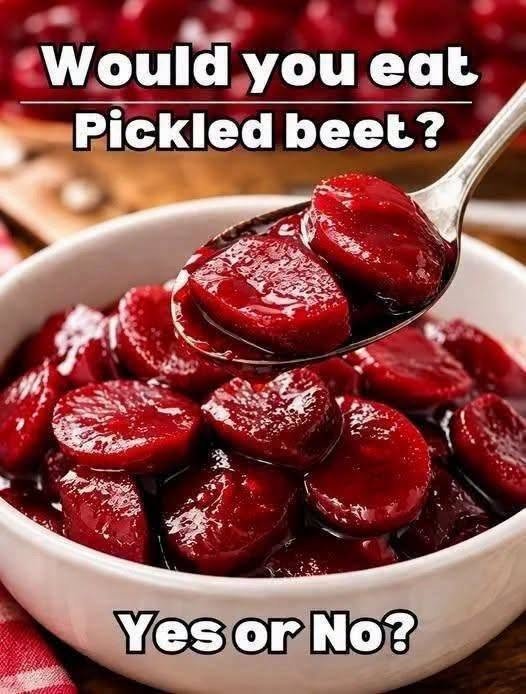
-
Prep Time: 20 minutes
-
Cook Time: 40 minutes
-
Total Time: 1 hour (plus 24 hours chilling time)
-
Yield: 4 pint jars (approx. 16 servings)
Ingredients
Primary Produce & Brine Base
-
Fresh Red Beets: 3 lbs (medium-sized, stems trimmed to 1 inch)
-
White Distilled Vinegar (5% acidity): 2 cups
-
Water: 1 cup
-
Granulated Sugar: 1 cup
-
Pickling Salt: 1 tbsp (coarse non-iodized salt)
Aromatic Spices
-
Cinnamon Stick: 1 whole stick
-
Whole Cloves: 6 to 8 whole cloves
-
Whole Allspice Berries: 1/2 tsp
-
Black Peppercorns: 1/2 tsp
Step-by-Step Instructions
Nutritional Profile
Pickled beets are low in calories, naturally fat-free, and rich in essential minerals and dietary fiber.
| Nutrient | Per Serving (1/4 cup / ~60g) | Daily Value (% DV) |
| Calories | 45 kcal | — |
| Total Fat | 0 g | 0% |
| Sodium | 180 mg | 8% |
| Total Carbohydrates | 11 g | 4% |
| Dietary Fiber | 1.5 g | 5% |
| Sugars | 9 g | — |
| Protein | 1 g | 2% |
| Folate (Vitamin B9) | 35 mcg | 9% |
| Manganese | 0.2 mg | 10% |
| Potassium | 160 mg | 3% |
High-Value Culinary & Canning Insights
1. Organic vs. Conventional Beets for Canning
Using organic heirloom varieties like Detroit Dark Red or Chioggia ensures robust natural sweetness without synthetic pesticide residues. Proper preparation—leaving stems intact during the initial boil—prevents the leaching of water-soluble betalain pigments, which preserve the deep red color and antioxidant density.
2. Food Safety & Acidity Ratios
Because beets are a low-acid root vegetable (pH ~5.3–6.0), safely processing them in a water-bath canner requires an adequate vinegar-to-water ratio. The brine must maintain a minimum 5% acetic acid level (standard commercial vinegar) to lower the pH below 4.6, preventing the growth of Clostridium botulinum bacteria in sealed anaerobic conditions.
3. Health Benefits of Dietary Nitrates and Betalains
Beets are naturally high in inorganic nitrates, which the body converts into nitric oxide. Nitric oxide acts as a vasodilator, aiding in blood pressure management, improved circulation, and enhanced athletic endurance. Additionally, betalain compounds provide potent anti-inflammatory and antioxidant benefits.
Frequently Asked Questions
How long do homemade pickled beets last?
Unopened canned pickled beets processed in a hot water bath stay fresh in a cool, dark pantry for up to 12 to 18 months. Opened jars stored in the refrigerator should be consumed within 3 to 4 weeks.
Can I use cider vinegar instead of white vinegar?
Yes, apple cider vinegar with 5% acidity can be substituted for white distilled vinegar. Apple cider vinegar provides a slightly milder, fruitier flavor profile, though it may darken the color of the beets slightly over time.
Why are my pickled beets soft instead of firm?
Soft or mushy pickled beets typically result from overcooking during the initial boil or under-chilling in the ice bath. Ensure you boil the beets just until tender-crisp (pierceable with a fork, but not fully soft) before peeling and packing.