Soft Skillet Pita Bread Recipe (No Oven Required) – Easy Homemade Pocket Bread
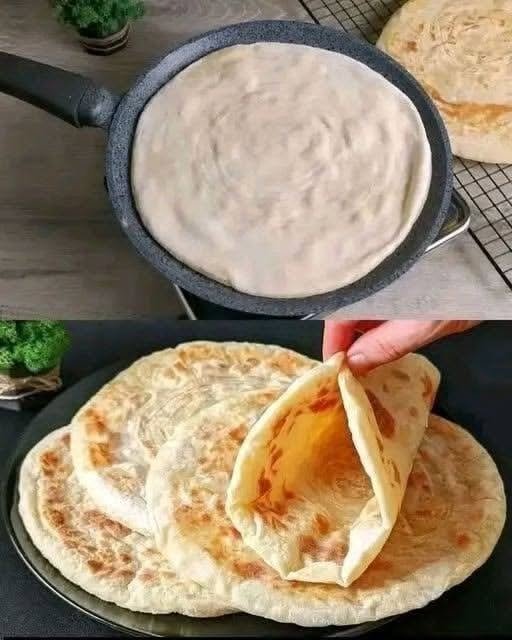
The bread shown in the image appears to be homemade skillet pita bread (Arabic bread). It is cooked on a stovetop instead of baked in an oven, creating a soft texture with a hollow pocket that is perfect for stuffing with vegetables, grilled chicken, falafel, kebabs, or cheese.
Homemade Skillet Pita Bread Recipe
Preparation Time
- Prep Time: 20 minutes
- Rising Time: 1–1½ hours
- Cook Time: 15 minutes
- Total Time: About 2 hours
Yield: 8 pita breads
Ingredients
- 3 cups all-purpose flour (360g)
- 1 cup warm water (240ml)
- 2 teaspoons instant yeast
- 1 teaspoon sugar
- 1 teaspoon salt
- 2 tablespoons olive oil
Optional:
- Extra flour for dusting
- Butter or olive oil for brushing after cooking
Instructions
Step 1: Activate the Yeast
Mix the warm water, sugar, and instant yeast in a bowl. Leave it for about 5–10 minutes until it becomes foamy.
Step 2: Prepare the Dough
Add the flour, salt, and olive oil. Mix until a soft dough forms.
Knead the dough for 8–10 minutes until it becomes smooth and elastic.
Step 3: First Rise
Place the dough in a lightly oiled bowl.
Cover it with a towel or plastic wrap and allow it to rise for 60–90 minutes until doubled in size.
Step 4: Divide the Dough
Punch down the dough gently.
Divide it into 8 equal balls.
Cover and let them rest for another 15 minutes.
Step 5: Roll Out
Roll each dough ball into a circle about 6–7 inches wide and approximately ¼ inch thick.
Avoid making them too thin.
Step 6: Cook on the Skillet
Heat a heavy non-stick skillet or cast-iron pan over medium-high heat.
Place one rolled dough into the dry hot pan.
Cook for about 1–2 minutes until bubbles begin to form.
Flip and cook another 1–2 minutes.
Flip once more if necessary until the pita fully puffs into a pocket.
Repeat with the remaining dough.
Step 7: Keep Soft
Immediately wrap the cooked pita breads in a clean kitchen towel.
This traps steam and keeps them soft for hours.
Why Does Pita Bread Puff?
The high heat rapidly creates steam inside the dough. The steam separates the upper and lower layers, forming the classic pita pocket. This pocket makes pita ideal for sandwiches and stuffed wraps.
Tips for Perfect Pocket Pita Bread
- Use fresh instant yeast.
- The skillet must be very hot before adding the dough.
- Do not roll the dough too thin.
- Allow the dough to rest before rolling.
- Avoid pressing the bread while cooking.
- Store cooked pita in a towel until serving.
- Freeze extra pita for up to three months.
Serving Suggestions
Homemade pita bread pairs well with:
- Chicken shawarma
- Beef kebabs
- Falafel
- Hummus
- Baba ganoush
- Greek salad
- Grilled vegetables
- Garlic butter
- Cream cheese
- Scrambled eggs
- Tuna salad
- Chicken salad
Storage Instructions
- Store at room temperature in an airtight bag for 2–3 days.
- Refrigerate for up to one week.
- Freeze for up to three months.
- Reheat in a skillet or microwave for 20–30 seconds before serving.
Frequently Asked Questions (FAQs)
Why didn’t my pita bread puff up?
The most common reasons are a skillet that isn’t hot enough, dough rolled too thin, insufficient gluten development from kneading, or dough that wasn’t allowed to rest and rise properly.
Can I make pita bread without yeast?
Yes, but it will resemble flatbread rather than traditional pocket pita because the yeast helps create the steam-trapping structure.
Can I use whole wheat flour?
Yes. Replace up to half of the all-purpose flour with whole wheat flour for a softer texture. Using 100% whole wheat will produce a denser bread.
Can I bake pita instead of cooking it on a skillet?
Yes. Bake at 475°F (245°C) for about 3–5 minutes on a preheated baking stone or baking tray until the pita puffs.
Why is my pita bread hard?
Overcooking, too much flour, or leaving the bread uncovered after cooking can cause it to dry out.
Can I freeze homemade pita bread?
Absolutely. Let the bread cool completely, then place parchment paper between each pita and freeze them in an airtight freezer bag.
Is pita bread healthy?
Pita bread can be part of a balanced diet. It is generally lower in fat than many enriched breads, and choosing whole wheat pita increases fiber and nutrient content.