
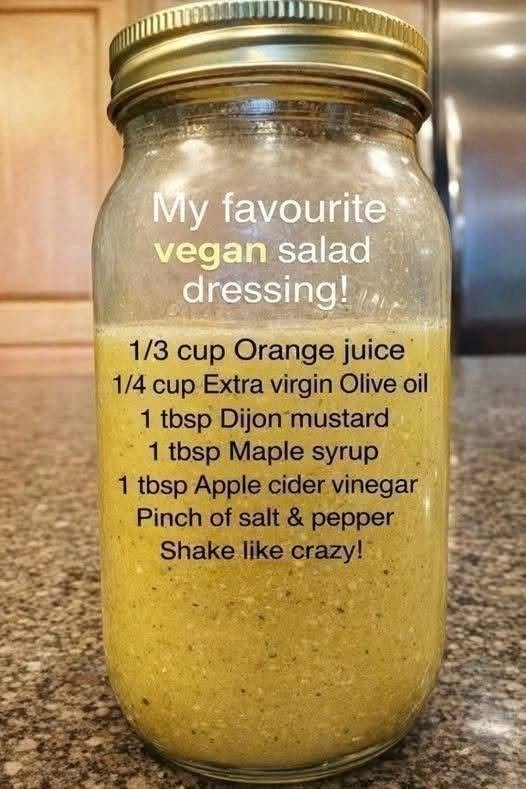
There’s something about a homemade salad dressing that makes even a simple bowl of vegetables feel special. One of my favorites is this Vegan Orange Dijon Salad Dressing. It’s fresh, tangy, a little sweet, and incredibly easy to prepare. With just a few everyday ingredients and about five minutes, you can make a dressing that adds a lovely burst of flavor to almost any salad.
I’m a big fan of recipes that don’t involve complicated steps or a long shopping list. After a busy day, I’d much rather spend a few minutes making something fresh than fussing over an elaborate recipe. That’s exactly why this dressing is such a great option. Simply add everything to a jar, put the lid on, and give it a good shake. In moments, you’ll have a delicious homemade dressing ready to drizzle over your favorite greens, roasted vegetables, or grain bowls..
Vegan Orange Dijon Salad Dressing (Anti-Inflammatory Recipe)
Recipe Description
Vegan Orange Dijon Salad Dressing is a fresh, tangy, naturally sweet salad dressing made with orange juice, extra virgin olive oil, Dijon mustard, pure maple syrup, and apple cider vinegar. This easy homemade vegan salad dressing combines bright citrus flavor with a smooth texture and a delicious balance of sweet, savory, and tangy notes.
Made with simple plant-based ingredients, this orange Dijon vinaigrette is a flavorful alternative to store-bought dressings that may contain added sugars, artificial flavors, or unnecessary preservatives. Extra virgin olive oil provides monounsaturated fats, while orange juice contributes vitamin C and other beneficial plant compounds.
This dressing fits beautifully into a balanced, Mediterranean-inspired eating pattern. Its ingredients may support overall health when enjoyed as part of a varied diet rich in vegetables, fruits, legumes, whole grains, nuts, and seeds.
Recipe at a Glance
- Preparation time: 5 minutes
- Cooking time: 0 minutes
- Total time: 5 minutes
- Cuisine: Mediterranean-inspired
- Course: Salad dressing, sauce, or marinade
- Diet: Vegan, vegetarian, dairy-free
- Yield: Approximately ¾ cup
- Servings: 6
- Skill level: Beginner
- Flavor profile: Citrusy, tangy, lightly sweet, and savory
Ingredients
For the Vegan Orange Dijon Dressing
- ⅓ cup fresh orange juice
- ¼ cup extra virgin olive oil
- 1 tablespoon Dijon mustard
- 1 tablespoon pure maple syrup
- 1 tablespoon apple cider vinegar
- A pinch of salt
- A pinch of freshly ground black pepper
Optional ingredients:
- ½ teaspoon finely grated orange zest for a stronger citrus flavor
- 1 small garlic clove, finely minced, for extra savory flavor
- ½ teaspoon freshly grated ginger for a warming, zesty variation
- 1 teaspoon chia seeds for additional texture and fiber
Check the Dijon mustard label to ensure it is vegan and free from any ingredients you prefer to avoid.
Instructions: How to Make Vegan Orange Dijon Salad Dressing
Step 1: Prepare the orange juice
Squeeze a fresh orange and measure ⅓ cup of juice. Strain out any large seeds or pulp if you prefer a smoother dressing.
Step 2: Combine the ingredients
Add the orange juice, extra virgin olive oil, Dijon mustard, maple syrup, apple cider vinegar, salt, and black pepper to a clean glass jar with a tight-fitting lid.
Step 3: Shake until emulsified
Secure the lid and shake vigorously for 30–60 seconds, or until the ingredients are thoroughly combined and the dressing looks creamy.
Alternatively, whisk everything together in a small bowl or blend briefly for a smoother consistency.
Step 4: Taste and adjust
Taste the dressing and adjust it according to your preference.
- For more sweetness, add a little maple syrup.
- For more tanginess, add a small splash of apple cider vinegar.
- For more citrus flavor, add orange zest.
- For a milder flavor, add a little more olive oil or orange juice.
Step 5: Serve or refrigerate
Pour the dressing over your favorite salad, drizzle it over roasted vegetables, or use it as a marinade for tofu. Shake again before each use because natural separation is normal.
Why This Dressing Is a Great Choice for Healthy Eating
1. Extra virgin olive oil
Extra virgin olive oil contains monounsaturated fats and naturally occurring polyphenols. Replacing some saturated fats with unsaturated fats can support cardiovascular health as part of a balanced diet.
2. Fresh orange juice
Orange juice provides vitamin C and citrus plant compounds. Vitamin C supports normal immune function and collagen formation.
3. Dijon mustard
Dijon mustard adds a sharp, savory taste and helps the oil and juice blend into a more cohesive dressing.
4. Apple cider vinegar
Apple cider vinegar adds acidity and brightness. However, evidence that small amounts of apple cider vinegar provide meaningful anti-inflammatory benefits is limited.
5. Pure maple syrup
Maple syrup balances the acidity of the orange juice, vinegar, and mustard. It is still an added sugar, so use a smaller amount if you prefer a less sweet dressing.
Is Vegan Orange Dijon Salad Dressing Anti-Inflammatory?
This recipe contains ingredients that can fit into an anti-inflammatory eating pattern, particularly extra virgin olive oil and citrus fruit.
Olive oil provides unsaturated fats and polyphenols, while oranges supply vitamin C and other plant compounds. These ingredients can complement a diet centered on vegetables, fruits, beans, lentils, whole grains, nuts, seeds, and other minimally processed foods.
However, no individual dressing can be guaranteed to reduce inflammation or treat an inflammatory condition. The overall dietary pattern, lifestyle, and individual health circumstances matter more than any single recipe.
For a more nutrient-dense version, use fresh orange juice, high-quality extra virgin olive oil, and a smaller amount of maple syrup. You can also add fresh ginger or finely minced garlic for additional flavor.
Serving Suggestions
1. Green salads
Toss with mixed greens, baby spinach, arugula, cucumber, cherry tomatoes, and avocado for a refreshing vegan salad.
2. Mediterranean grain bowls
Drizzle over quinoa, brown rice, roasted chickpeas, cucumber, tomatoes, red onion, and fresh parsley.
3. Roasted vegetables
Use it as a finishing dressing for roasted broccoli, carrots, cauliflower, sweet potatoes, or Brussels sprouts. Add it after roasting to preserve its fresh citrus flavor.
4. Vegan protein bowls
Serve with baked tofu, tempeh, lentils, or chickpeas alongside leafy greens and whole grains.
5. Fruit and nut salads
Combine baby spinach, orange segments, sliced apples, walnuts, pumpkin seeds, and a light drizzle of dressing.
6. Wraps and sandwiches
Spread a small amount inside a vegetable wrap or drizzle over a chickpea salad sandwich for a citrusy flavor boost.
7. Marinade for tofu
Use as a quick marinade for tofu or tempeh. Refrigerate while marinating, and discard marinade that has contacted raw ingredients if applicable.
Recipe Variations
1. Oil-Free Orange Dijon Dressing
Replace the olive oil with additional orange juice and a small amount of water, adding the liquid gradually until you reach your preferred consistency.
The result will be lighter and less rich, with a different texture and less fat than the original recipe.
2. Sugar-Free or Lower-Sugar Version
Reduce or omit the maple syrup. The orange juice already provides natural sweetness, although it also contains naturally occurring sugars.
3. Creamy Vegan Orange Dressing
Blend in 1–2 tablespoons of tahini for a creamy, nutty dressing. Add water gradually to thin it.
4. Ginger Orange Dijon Vinaigrette
Add ½ teaspoon of freshly grated ginger. This creates a bright, spicy flavor that pairs well with cabbage salads, carrots, and tofu bowls.
5. Garlic Orange Dijon Dressing
Add one small minced garlic clove or a little garlic powder for a more savory dressing.
6. Herb-Infused Citrus Dressing
Add chopped parsley, cilantro, basil, or fresh thyme. Herbs bring extra aroma and freshness without significantly changing the basic recipe.
7. Spicy Orange Dijon Dressing
Add a pinch of cayenne pepper or a little red pepper flakes for a spicy citrus vinaigrette.
8. Lemon Orange Vinaigrette
Replace part of the orange juice with fresh lemon juice for a sharper, less sweet flavor.
Storage and Food Safety
- Store the dressing in a clean, airtight jar in the refrigerator.
- For best quality, use within approximately 3–5 days.
- Shake well before serving because the oil and juice naturally separate.
- Discard the dressing if you notice mold, an unusual smell, or other signs of spoilage.
- Do not leave the dressing at room temperature for extended periods.
Because this dressing contains fresh juice and no validated preservation process, refrigeration is essential. The suggested storage period is a conservative home-use guideline, not a guarantee of safety.
Nutrition Information
The following values are estimates based on the listed ingredients, including ⅓ cup orange juice, ¼ cup olive oil, and one tablespoon each of Dijon mustard, maple syrup, and apple cider vinegar. Actual values vary by ingredient brand and serving size.
Estimated nutrition per serving, assuming 6 servings of approximately 2 tablespoons each:
- Calories: 110–125
- Total fat: 11–12 g
- Saturated fat: 1.5–2 g
- Carbohydrates: 3–5 g
- Total sugars: 2–4 g
- Protein: Less than 1 g
- Fiber: Less than 0.5 g
- Sodium: Approximately 50–120 mg
These figures are estimates rather than laboratory-tested nutrition facts. Sodium varies considerably by the Dijon mustard and the amount of salt used.
How to Make It Lighter
For a lower-calorie salad dressing:
- Use half the olive oil and replace the remainder with orange juice or water.
- Reduce the maple syrup to 1 teaspoon.
- Measure each serving instead of pouring directly from the jar.
These adjustments reduce calories or added sugar while preserving the main citrus and mustard flavors.
Frequently Asked Questions
Is this vegan orange Dijon salad dressing gluten-free?
The basic ingredients are generally gluten-free, but check the labels on Dijon mustard and other packaged ingredients if you have celiac disease or a gluten sensitivity.
Can I make this dressing without maple syrup?
Yes. Omit the maple syrup or replace it with a small amount of another sweetener that suits your dietary preferences. The finished dressing will taste more tart.
Can I use bottled orange juice?
Yes. Choose 100% orange juice without added sugar for a convenient alternative. Fresh orange juice generally provides a brighter flavor.
Can I use regular mustard instead of Dijon?
Yes. Yellow mustard can work, but it has a milder, sometimes more vinegary flavor. Whole-grain mustard creates a textured dressing.
Why does my salad dressing separate?
Oil and orange juice naturally separate because they do not fully mix on their own. Dijon mustard helps stabilize the mixture, but separation may still occur. Shake or whisk the dressing before serving.
Is apple cider vinegar necessary?
No. You can substitute white wine vinegar, red wine vinegar, or lemon juice. Each alternative changes the flavor slightly.
Is this dressing suitable for weight management?
It can fit into a weight-management eating plan. Olive oil is nutritious but calorie-dense, so portion size matters. Using a measured serving and pairing the dressing with vegetables and protein can help create a satisfying meal.
Can this dressing help reduce inflammation?
It includes olive oil and citrus juice, which can be components of a healthy dietary pattern. However, there is not enough evidence to claim that this particular dressing independently reduces inflammation or treats a medical condition.
How can I make the dressing thicker?
Whisk in a little more Dijon mustard or blend in tahini. You can also use a small amount of chia seeds and allow the mixture to rest briefly.
Can I prepare it ahead of time?
Yes. Prepare it a day ahead and refrigerate it in a sealed jar. Shake thoroughly before serving.
Related Recipe Ideas
If you enjoy this vegan orange Dijon dressing, try these complementary recipes:
- Vegan lemon tahini salad dressing
- Healthy balsamic vinaigrette
- Creamy avocado herb dressing
- Lemon garlic olive oil dressing
- Ginger sesame salad dressing
- Oil-free apple cider vinegar dressing
- Mediterranean chickpea salad
- Quinoa and roasted vegetable bowl
- Vegan kale salad with citrus dressing
These recipes offer different flavor profiles and can help add variety to a plant-based meal plan.
Final Thoughts
Vegan Orange Dijon Salad Dressing is a simple, versatile way to bring fresh citrus flavor to everyday meals. With orange juice, extra virgin olive oil, Dijon mustard, maple syrup, and apple cider vinegar, it delivers a balance of sweetness and tanginess in just five minutes.


