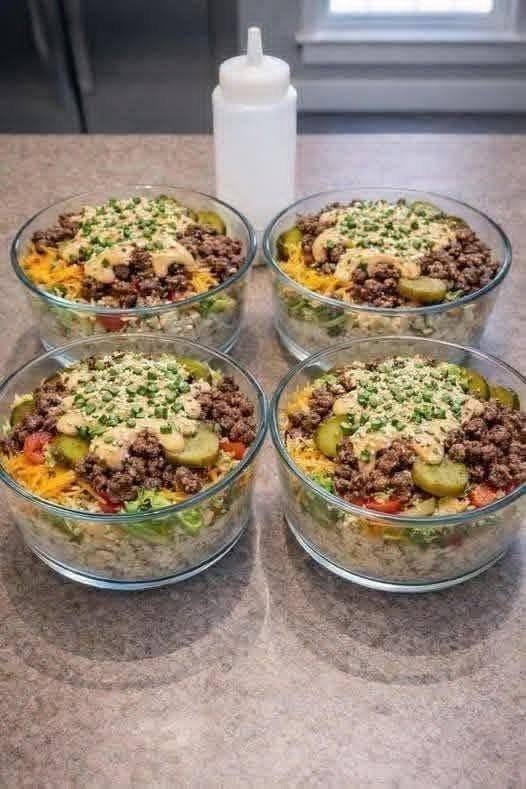
A dinner that unites everyone at the table without needing many hours in the kitchen has a unique quality. Cheeseburger salad bowls are just that type of dinner, in my opinion. Fresh veggies, seasoned ground beef, melted-in cheddar flavour, and a creamy homemade burger sauce are all stacked into a bowl with all the flavours I adore in a traditional cheeseburger.
I was first drawn to this recipe after hearing someone suggest making a salad bowl out of a hamburger. The idea of savouring those well-known burger flavours without a bun appealed to me. It sounded straightforward.
Anti-Inflammatory Cheeseburger Salad Bowls
A Healthy, High-Protein Meal Prep Recipe
Recipe Description
Cheeseburger Salad Bowls are a delicious, healthier twist on a classic cheeseburger, combining seasoned lean ground beef, crisp lettuce, juicy tomatoes, crunchy pickles, shredded cheddar cheese, and a creamy burger-inspired dressing. Served over a hearty base of brown rice or quinoa, these bowls offer the satisfying flavors of a cheeseburger in a convenient, customizable meal-prep format.
This anti-inflammatory-inspired recipe emphasizes whole foods, lean protein, colorful vegetables, and healthy fats. By using extra-virgin olive oil, fresh vegetables, and antioxidant-rich seasonings, you can create a balanced meal that fits into a healthy lifestyle.
Recipe at a glance
-
Prep time: 15 minutes
-
Cook time: 15 minutes
-
Total time: 30 minutes
-
Servings: 4
-
Cuisine: American-inspired
-
Meal type: Lunch, dinner, or meal prep
-
Diet: High-protein, customizable, gluten-free with suitable ingredients
-
Estimated calories: 450–600 per serving, depending on ingredients and dressing
Ingredients
For the Cheeseburger Bowls
-
1 pound (450 g) lean ground beef, preferably 90–95% lean
-
3 cups chopped romaine lettuce or mixed greens
-
1 cup cooked brown rice or quinoa
-
1 cup cherry tomatoes, halved
-
1 cup cucumber, diced
-
1/2 cup dill pickle slices
-
1 cup shredded cheddar cheese
-
1/2 small red onion, finely diced
-
1/2 cup shredded carrots, optional
-
1 tablespoon extra-virgin olive oil
-
1 teaspoon garlic powder
-
1 teaspoon smoked paprika
-
1/2 teaspoon ground black pepper
-
1/2 teaspoon onion powder
-
Salt to taste
For the Creamy Burger Dressing
-
1/2 cup plain Greek yogurt
-
1 tablespoon mayonnaise
-
1 tablespoon Dijon mustard
-
1 tablespoon ketchup with no added sugar, if preferred
-
1 tablespoon pickle juice
-
1 teaspoon apple cider vinegar
-
1/2 teaspoon garlic powder
-
Black pepper to taste
-
1–2 tablespoons water to thin, if needed
Optional Anti-Inflammatory Additions
-
1/2 teaspoon ground turmeric
-
A small pinch of black pepper to complement the turmeric
-
1 tablespoon chopped fresh parsley
-
1 tablespoon pumpkin seeds
-
1/2 avocado, sliced
-
Fresh lemon juice to taste
These ingredients can add variety, fiber, unsaturated fats, and beneficial plant compounds. No individual ingredient guarantees an anti-inflammatory effect; overall dietary patterns matter most.
Instructions
Step 1: Prepare the Base
Cook the brown rice or quinoa according to the package instructions. Allow it to cool slightly, then divide it between four meal-prep bowls.
Step 2: Cook the Ground Beef
Heat the olive oil in a skillet over medium heat. Add the ground beef and break it into small crumbles using a spatula.
Season with garlic powder, smoked paprika, onion powder, black pepper, and salt. Cook until browned and fully cooked, reaching an internal temperature of 160°F (71°C).
Drain excess fat if necessary and set aside.
Step 3: Make the Creamy Burger Dressing
In a small bowl, whisk together the Greek yogurt, mayonnaise, Dijon mustard, ketchup, pickle juice, apple cider vinegar, garlic powder, and black pepper.
Add a little water until the dressing reaches your preferred consistency. Taste and adjust the seasonings.
Step 4: Prepare the Vegetables
Wash and chop the lettuce, tomatoes, cucumber, and red onion. Slice the pickles and prepare any optional toppings.
For extra crunch and color, add shredded carrots or fresh parsley.
Step 5: Assemble the Cheeseburger Salad Bowls
Divide the cooked rice or quinoa among four bowls. Add the lettuce, tomatoes, cucumber, onion, and pickles.
Top each bowl with seasoned ground beef and shredded cheddar cheese. Drizzle with the creamy burger dressing.
Finish with avocado slices, pumpkin seeds, fresh parsley, or a squeeze of lemon if desired.
Step 6: Serve or Store
Enjoy immediately for the freshest texture, or store the components separately for meal prep. Add the dressing just before eating to keep the vegetables crisp.
Serving Suggestions
These cheeseburger bowls are versatile enough for lunch, dinner, and weekly meal preparation.
-
For a balanced dinner: Serve with extra leafy greens and a side of roasted broccoli.
-
For a high-protein lunch: Add extra lean beef or a serving of plain Greek yogurt-based dressing.
-
For a lower-carbohydrate meal: Replace the rice with extra lettuce, cabbage, or cauliflower rice.
-
For a Mediterranean-inspired meal: Add olives, parsley, cucumber, and lemon juice while reducing the cheddar.
-
For a family-friendly dinner: Set out the toppings separately so everyone can build their own bowl.
-
For meal prep: Pack the dressing, lettuce, and hot ingredients separately to preserve texture.
Recipe Variations
1. Low-Carb Cheeseburger Salad Bowl
Replace brown rice or quinoa with cauliflower rice or additional lettuce. Use a sugar-free ketchup and check pickle labels for added sugar if that matters to your dietary goals.
2. Anti-Inflammatory Turkey Burger Bowl
Replace the ground beef with lean ground turkey. Season with garlic, paprika, black pepper, and turmeric for a lighter variation.
3. Mediterranean Cheeseburger Bowl
Use extra-virgin olive oil, cucumber, tomatoes, red onion, parsley, and a lemon-yogurt dressing. Reduce the cheddar and add a few olives if desired.
4. Dairy-Free Cheeseburger Bowl
Omit the cheddar and replace Greek yogurt with an unsweetened dairy-free yogurt alternative. Check the labels for added sugar and ingredients that suit your needs.
5. Plant-Based Cheeseburger Bowl
Replace the beef with seasoned lentils, black beans, or a plant-based ground alternative. Use a dairy-free cheese and yogurt dressing if you want a fully plant-based meal.
6. Spicy Cheeseburger Bowl
Add cayenne pepper, chili flakes, or a little hot sauce to the beef. Mix hot sauce into the dressing for an extra kick.
7. Weight-Management-Friendly Cheeseburger Bowl
Use lean beef, plenty of vegetables, a moderate portion of rice, reduced-fat cheddar if preferred, and a measured serving of dressing. Protein and fiber can help make meals satisfying, while total energy intake remains the main factor in weight management.
Anti-Inflammatory Nutrition Benefits
This recipe can fit into a balanced eating pattern that supports general health.
-
Lean ground beef: Provides protein, iron, zinc, and vitamin B12.
-
Leafy greens: Supply folate, vitamin K, and other micronutrients.
-
Tomatoes: Provide lycopene and vitamin C.
-
Cucumbers and onions: Contribute water, fiber, and plant compounds.
-
Extra-virgin olive oil: Provides monounsaturated fats and polyphenols.
-
Greek yogurt: Adds protein and calcium while creating a creamy dressing.
-
Brown rice or quinoa: Provides carbohydrates and, depending on the choice, fiber and additional minerals.
-
Turmeric and black pepper: Add flavor and compounds of research interest, although the amount used in a recipe is not a treatment for inflammation.
-
Avocado and pumpkin seeds: Offer unsaturated fats, fiber, and minerals.
For a dietary pattern commonly associated with better cardiometabolic health, emphasize vegetables, fruits, legumes, whole grains, nuts, seeds, and unsaturated fats while limiting excessive sodium, added sugars, and heavily processed foods.
Estimated Nutrition Facts
Approximate values per serving, assuming four servings and the ingredients listed above, including rice or quinoa and the dressing.
-
Calories: 450–600 kcal
-
Protein: 30–40 g
-
Carbohydrates: 25–40 g
-
Dietary fiber: 4–8 g
-
Total fat: 20–32 g
-
Saturated fat: 7–12 g
-
Sugar: 4–9 g
-
Sodium: 500–900 mg
Actual values vary with the beef’s fat percentage, cheese quantity, pickle brine, dressing, grain choice, and portion size. For more accurate nutrition tracking, calculate the recipe using the exact products and quantities you use.
Storage and Meal Prep Tips
-
Refrigeration: Store cooked beef and prepared ingredients in airtight containers in the refrigerator at 40°F (4°C) or below. Use cooked leftovers within 3–4 days.
-
Keep components separate: Store the lettuce, dressing, cooked beef, and grain separately when possible.
-
Reheating: Reheat the beef and rice until steaming hot, then add the cold vegetables and dressing.
-
Freezing: Cooked ground beef can be frozen separately for longer storage. Fresh lettuce, cucumber, and the yogurt dressing are best prepared fresh.
-
Food safety: Refrigerate perishable ingredients promptly and avoid leaving prepared bowls at room temperature for more than two hours, or one hour when temperatures exceed 90°F (32°C).
Frequently Asked Questions
1. Are cheeseburger salad bowls anti-inflammatory?
They can be part of an anti-inflammatory-style eating pattern when prepared with plenty of vegetables, whole grains, unsaturated fats, and minimally processed ingredients. The term describes an overall dietary approach rather than a guaranteed effect from one meal.
2. Can I eat cheeseburger bowls for weight loss?
Yes. Portion sizes, ingredients, and your overall eating pattern determine how the meal fits your goals. Lean protein, vegetables, and fiber-rich carbohydrates can help make it satisfying.
3. How can I make this recipe higher in protein?
Increase the lean beef portion, use a higher-protein Greek yogurt dressing, or add beans. Adjust portions according to your individual energy and protein needs.
4. Can I prepare these bowls ahead of time?
Yes. Prepare the beef, grains, vegetables, and dressing in advance. Keep the components separate and assemble just before eating for the best texture.
5. What can I use instead of ground beef?
Ground turkey, ground chicken, lentils, black beans, or a plant-based mince all work well. Cooking times vary depending on the substitute.
6. Is this recipe gluten-free?
It can be gluten-free if the mustard, ketchup, pickles, seasonings, and other packaged ingredients are verified gluten-free. Plain rice, quinoa, fresh vegetables, and unseasoned meat are naturally gluten-free.
7. Can I make the dressing without mayonnaise?
Yes. Use additional plain Greek yogurt with a little olive oil, lemon juice, and mustard. This creates a creamy dressing without mayonnaise.
8. What is the best grain for cheeseburger bowls?
Brown rice provides a familiar, mild base. Quinoa adds plant protein and a slightly nutty flavor. Cauliflower rice is a useful lower-carbohydrate alternative.
9. Can I make this recipe dairy-free?
Yes. Omit the cheese and use an unsweetened dairy-free yogurt alternative for the dressing.
10. Which ingredients should I prioritize for an anti-inflammatory diet?
Focus on a consistent pattern rich in vegetables, fruit, legumes, whole grains, nuts, seeds, and unsaturated fats. Include herbs and spices for flavor, and limit excessive added sugar, sodium, and highly processed foods.
Final Thoughts
Anti-Inflammatory Cheeseburger Salad Bowls bring together the comforting flavor of a cheeseburger and the freshness of a colorful salad. With seasoned lean beef, crisp vegetables, a creamy Greek yogurt dressing, and a choice of whole grains, they offer a convenient option for healthy meal prep, high-protein lunches, and satisfying weeknight dinners.