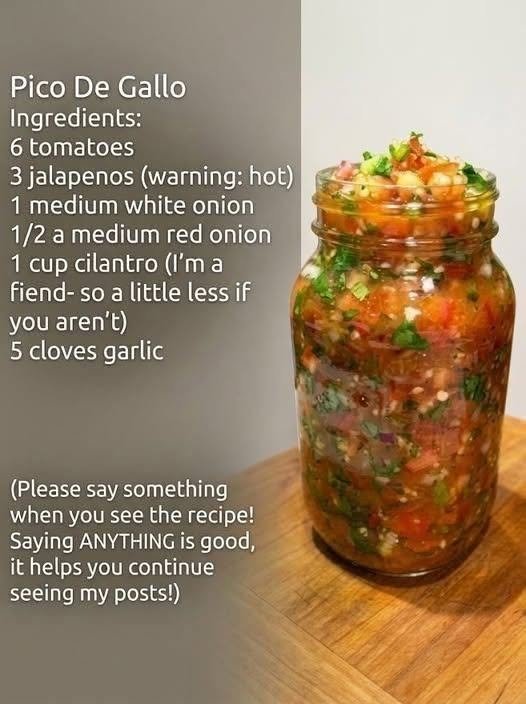
There’s something about fresh Pico de Gallo that makes a meal feel extra special. The combination of juicy tomatoes, crunchy onions, spicy jalapeños, and fresh cilantro brings so much color and flavor to the table. It’s simple, refreshing, and one of those little things that can turn an ordinary lunch or dinner into something everyone looks forward to.
What I love most about this recipe is how easy it is to make. You don’t need fancy kitchen gadgets, expensive ingredients, or hours of preparation. Just grab some fresh vegetables, chop everything up, mix it together, and you’re ready to go. Whether you’re preparing a relaxed weekend meal, hosting friends, or simply craving something fresh and flavorful, homemade Pico de Gallo is always a lovely choice.
Anti-Inflammatory Pico de Gallo Recipe: Fresh, Healthy, and Flavorful Mexican Salsa
Recipe Description
Pico de Gallo is a fresh Mexican salsa made with ripe tomatoes, jalapeños, onions, cilantro, and garlic. This easy homemade Pico de Gallo recipe is colorful, refreshing, naturally plant-based, and packed with vegetables that provide vitamins, minerals, and antioxidants.
If you’re looking for an anti-inflammatory diet recipe, Pico de Gallo is a delicious option to add to a balanced eating plan. Tomatoes contain lycopene, garlic and onions provide beneficial plant compounds, and cilantro adds freshness and flavor. Jalapeños also contain capsaicin, a compound being studied for its potential health benefits.
Unlike many store-bought salsa varieties, homemade Pico de Gallo lets you control the salt, ingredients, and spice level. Serve it with grilled chicken, fish, tacos, salads, or whole-grain dishes for a fresh and nutritious addition to your meals.
Recipe type: Mexican salsa, healthy side dish, vegetarian, vegan, gluten-free
Preparation time: 20–25 minutes
Cooking time: 0 minutes
Total time: 20–25 minutes, plus optional chilling
Servings: Approximately 8–10, depending on portion size
Dietary focus: Whole foods, vegetable-rich, Mediterranean-style and anti-inflammatory eating patterns
Ingredients
- 6 medium ripe tomatoes
- 3 jalapeños, finely chopped (warning: hot; adjust to taste)
- 1 medium white onion, finely chopped
- 1/2 medium red onion, finely chopped
- 1 cup fresh cilantro, chopped (use less if you prefer a milder herbal flavor)
- 5 cloves garlic, finely minced
Optional Ingredients
These ingredients are not included in the original ingredient list but can enhance the flavor and texture:
- 1–2 tablespoons fresh lime juice
- 1/4 teaspoon ground black pepper
- A small amount of sea salt, to taste
- 1–2 tablespoons finely chopped green onion, if desired
Lime juice is a particularly good addition because its acidity brightens the tomatoes and herbs.
Instructions: How to Make Pico de Gallo
Step 1: Prepare the Tomatoes
Wash the tomatoes thoroughly and pat them dry. Remove the stems and finely dice the tomatoes into small, even pieces.
If your tomatoes are exceptionally watery, remove some of the seeds and excess liquid to prevent the salsa from becoming too runny.
Step 2: Chop the Jalapeños
Wash the jalapeños and remove the stems. Finely chop them, removing the seeds and inner membranes if you want a milder salsa.
Wear kitchen gloves when handling hot peppers, and avoid touching your eyes afterward.
Step 3: Chop the Onions
Finely dice the white onion and red onion. Using both varieties gives the salsa a combination of sharp, savory flavor and a slightly sweet onion taste.
Step 4: Prepare the Cilantro and Garlic
Wash and dry the fresh cilantro before chopping it. Mince the garlic finely so its flavor distributes evenly throughout the salsa.
Fresh garlic gives this homemade Mexican salsa a stronger, more aromatic taste.
Step 5: Combine the Ingredients
Place the chopped tomatoes, jalapeños, white onion, red onion, cilantro, and garlic in a large mixing bowl.
Gently stir until the ingredients are evenly distributed.
Step 6: Add Optional Seasonings
Add fresh lime juice, a small amount of salt, and black pepper if desired. Taste the mixture and adjust the seasonings according to your preferences.
For a lower-sodium recipe, start without salt and add only a little if needed.
Step 7: Let the Flavors Develop
Serve immediately for a crisp, fresh taste, or refrigerate for 15–30 minutes to allow the flavors to blend.
The vegetables may release additional liquid as the salsa rests. Stir before serving.
Step 8: Serve and Enjoy
Transfer the Pico de Gallo to a serving bowl. Enjoy it as a fresh salsa, a topping for healthy meals, or a flavorful snack with vegetables or whole-grain tortilla chips.
Why Pico de Gallo Fits an Anti-Inflammatory Diet
Pico de Gallo contains several ingredients that contribute useful nutrients and plant compounds to a balanced diet.
1. Tomatoes: Lycopene and Antioxidants
Tomatoes provide vitamin C, potassium, and lycopene, a naturally occurring carotenoid with antioxidant activity. Lycopene has been studied for its potential role in protecting cells from oxidative stress.
2. Garlic: Beneficial Sulfur Compounds
Garlic contains sulfur-containing compounds that are being studied for their antioxidant and other biological effects. It adds bold flavor without requiring large amounts of salt.
3. Onions: Flavonoids and Prebiotic Fiber
Onions contain flavonoids, including quercetin, and provide some fiber. These compounds contribute to the variety of beneficial plant substances found in a vegetable-rich diet.
4. Jalapeños: Capsaicin
Jalapeños contain capsaicin, the compound responsible for their heat. Capsaicin has been studied for potential health effects, although eating jalapeños should not be considered a treatment for inflammation.
5. Cilantro: Vitamins and Plant Compounds
Fresh cilantro contributes vitamin K and other micronutrients, along with a distinctive herbal flavor that makes the salsa taste fresh without heavy sauces.
Important health note: Pico de Gallo is not a proven treatment for chronic inflammation or inflammatory diseases. Its value comes from contributing vegetables and plant compounds to an overall healthy eating pattern. Individual ingredients and dietary patterns affect people differently.
Serving Suggestions
Pico de Gallo is versatile and works well with many everyday meals.
- Grilled chicken: Spoon it over grilled chicken breast for a fresh, flavorful topping.
- Fish tacos: Add it to grilled fish tacos with cabbage and a squeeze of lime.
- Healthy grain bowls: Combine it with brown rice, quinoa, black beans, avocado, and grilled vegetables.
- Eggs: Serve it alongside scrambled eggs, omelets, or breakfast tacos.
- Beans and lentils: Use it to brighten black beans, lentil bowls, or other plant-based meals.
- Fresh salad: Mix a few spoonfuls into a green salad or serve it over sliced avocado.
- Healthy snacks: Pair it with cucumber slices, bell pepper strips, or whole-grain tortilla chips.
- Baked potatoes: Use it as a fresh topping for baked potatoes or roasted sweet potatoes.
- Grilled fish: Serve alongside salmon or another grilled fish for a balanced meal.
For a more filling meal, pair Pico de Gallo with protein-rich foods, fiber-rich whole grains, and healthy fats.
Recipe Variations
1. Mild Pico de Gallo
Use one jalapeño instead of three. Remove the seeds and inner membranes to reduce the heat further.
2. Extra-Spicy Pico de Gallo
Keep some jalapeño seeds and membranes, or add a small amount of finely chopped serrano pepper. Increase the heat gradually.
3. Lime and Cilantro Pico de Gallo
Add two tablespoons of fresh lime juice and adjust the cilantro to taste. This variation is particularly refreshing with grilled fish and chicken.
4. Avocado Pico de Gallo
Fold in one diced avocado just before serving. Avocado adds creamy texture, fiber, and monounsaturated fats.
5. Mango Pico de Gallo
Add one cup of diced ripe mango. The sweetness balances the jalapeños and pairs well with grilled fish, shrimp, or chicken.
6. Cucumber Pico de Gallo
Add one cup of finely diced cucumber for extra crunch and a refreshing flavor.
7. Low-Sodium Pico de Gallo
Skip the added salt or use a small amount. Lime juice, garlic, cilantro, and fresh pepper help create a satisfying flavor without relying on sodium.
8. Extra-Garlic Pico de Gallo
Keep the five cloves of garlic from the original recipe or increase the amount slightly if you enjoy a stronger garlic flavor. For a milder taste, start with two or three cloves.
9. Roasted Tomato Salsa
If you prefer a deeper, smokier flavor, roast the tomatoes, jalapeños, and garlic before chopping and mixing them with the onions and cilantro. This creates a different style of salsa rather than traditional fresh Pico de Gallo.
Storage and Food Safety
- Store leftover Pico de Gallo in a clean, airtight container in the refrigerator.
- For the best texture and flavor, enjoy it within 2–3 days.
- Refrigerate promptly and do not leave the salsa at room temperature for more than two hours, or one hour when temperatures exceed 90°F (32°C).
- Use clean utensils when serving to prevent contamination.
- Discard the salsa if it develops an unusual smell, mold, or other signs of spoilage.
Fresh tomatoes release liquid over time, so some separation is normal. Stir the salsa before serving.
Freezing is generally not recommended because the tomatoes and onions become soft and watery after thawing.
Nutrition Information
The following is an approximate estimate for one serving, assuming 10 servings and the six main ingredients only. Actual values vary with vegetable size and ingredient quantities.
| Nutrient | Approximate amount per serving |
|---|---|
| Calories | 25–35 kcal |
| Carbohydrates | 5–7 g |
| Protein | 1–2 g |
| Total fat | 0–0.5 g |
| Dietary fiber | 1–2 g |
| Total sugars | 3–4 g |
| Sodium | 5–15 mg |
| Vitamin C | Varies by ingredients |
| Vitamin K | Varies by cilantro quantity |
| Potassium | Varies by tomato size |
These estimates exclude optional salt, tortilla chips, avocado, and other serving accompaniments. The recipe is naturally low in fat and contains no added sugar.
Frequently Asked Questions
1. Is Pico de Gallo anti-inflammatory?
Pico de Gallo contains vegetables and herbs that provide antioxidants and other beneficial plant compounds. It can fit into an anti-inflammatory eating pattern, but there is insufficient evidence to say that this specific recipe directly treats or reduces chronic inflammation.
2. Is Pico de Gallo good for weight management?
It can be a helpful choice because it is relatively low in calories and provides flavor without requiring a creamy or oil-heavy dressing. Pair it with protein and fiber-rich foods for a more satisfying meal.
3. Is homemade Pico de Gallo healthier than store-bought salsa?
Homemade Pico de Gallo gives you control over the ingredients and sodium content. Store-bought products can also be nutritious, so compare ingredient lists and nutrition labels when choosing one.
4. Can I make Pico de Gallo without cilantro?
Yes. Replace cilantro with a smaller amount of fresh parsley, or simply leave it out. The flavor will be different but still delicious.
5. Can I make this recipe without jalapeños?
Yes. Omit the jalapeños for a mild salsa. You can add extra tomato, cucumber, or bell pepper for additional texture.
6. How do I prevent watery Pico de Gallo?
Use firm, ripe tomatoes, remove excess seeds and liquid if needed, and chop the ingredients evenly. If making it ahead, drain excess liquid before serving.
7. Can I prepare Pico de Gallo ahead of time?
Yes. You can prepare it several hours in advance and refrigerate it in an airtight container. For the freshest texture, add lime juice and adjust the seasonings shortly before serving.
8. Is Pico de Gallo suitable for a vegan or gluten-free diet?
The basic recipe is naturally vegan and gluten-free, provided the ingredients and any accompaniments meet those dietary requirements.
9. Can Pico de Gallo help lower blood sugar?
The basic recipe contains vegetables and fiber, with relatively little carbohydrate per serving. However, it is not a treatment for diabetes and does not independently guarantee lower blood sugar. Consider portion sizes and the foods served alongside it.
10. Is Pico de Gallo suitable for people with acid reflux?
It depends on individual tolerance. Tomatoes, lime juice, garlic, and spicy jalapeños may trigger symptoms in some people. Reduce or omit the ingredients that cause discomfort.
11. How can I make Pico de Gallo more filling?
Add diced avocado or serve it with black beans, lentils, grilled chicken, fish, eggs, or quinoa. These additions provide nutrients and can make the overall meal more satisfying.
12. What is the difference between Pico de Gallo and salsa?
Pico de Gallo is typically a chunky, uncooked mixture of diced vegetables and herbs. Many other salsas are blended, cooked, or roasted and may have a thinner consistency.
Final Thoughts
This fresh Pico de Gallo recipe is a simple way to add color, flavor, and vegetables to everyday meals. With ripe tomatoes, spicy jalapeños, two types of onion, fresh cilantro, and garlic, it delivers a satisfying combination of texture and flavor without complicated cooking techniques.