Muffins cooked at home have a unique quality. A typical day can be transformed into something special by the aroma of freshly baked goods filling the kitchen, the little bursts of sweetness from juicy blueberries, and that first warm mouthful with a cup of tea or coffee.
I adore recipes that are easy enough to cook on a lazy weekend morning but tasty enough to make everyone want more. These Blueberry Cottage Cheese Oat Muffins have rapidly emerged as one of my favourite recipes. They use eggs, healthy oats, delicious blueberries, and creamy cottage cheese to make tender, filling tiny.
Anti-Inflammatory Blueberry Cottage Cheese Oat Muffins
Recipe Description
These Blueberry Cottage Cheese Oat Muffins are a delicious, protein-rich breakfast option made with wholesome oats, creamy cottage cheese, eggs, and antioxidant-rich blueberries. They have a soft, moist texture, naturally sweet blueberry flavor, and a lightly golden exterior.
This easy, flourless muffin recipe is ideal for healthy meal prep, busy mornings, post-workout snacks, and balanced eating. Oats provide fiber, cottage cheese contributes protein and calcium, and blueberries contain anthocyanins, beneficial plant compounds with antioxidant properties.
If you’re looking for an anti-inflammatory-inspired breakfast, these muffins emphasize minimally processed ingredients and nutrient-dense foods. No single recipe can treat or prevent inflammation, but it can be part of an overall healthy eating pattern.
Recipe at a Glance
- Prep time: 10 minutes
- Cook time: 18–25 minutes
- Total time: Approximately 30–35 minutes
- Servings: 12 mini muffins or 6 standard muffins, depending on pan size
- Cuisine: Healthy American-inspired
- Dietary style: High-protein, oat-based, naturally gluten-free when certified gluten-free oats are used
- Difficulty: Easy
Ingredients
Main Ingredients
- 1 cup rolled oats
- 1 cup cottage cheese
- 2 large eggs
- 1/2 cup fresh or frozen blueberries
- 1 teaspoon baking powder
- 1 teaspoon vanilla extract
- 1–2 tablespoons honey or pure maple syrup, optional
- 1/2 teaspoon ground cinnamon, optional
- A pinch of salt, optional
Optional Add-Ins
- 1 tablespoon ground flaxseed for additional fiber and plant-based omega-3 fatty acids
- 1 tablespoon chia seeds for extra fiber
- 1/4 teaspoon ground ginger for a warm, spicy flavor
- 1 tablespoon chopped walnuts for crunch and healthy fats
Instructions
Step 1: Prepare the Oven
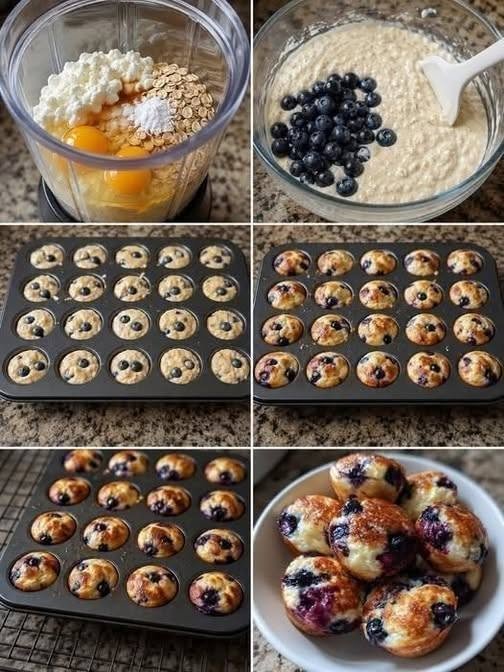
Preheat the oven to 350°F (175°C). Lightly grease a mini muffin pan or standard muffin tin, or line it with silicone or paper muffin liners.
Step 2: Blend the Batter
Add the rolled oats, cottage cheese, eggs, baking powder, vanilla extract, and optional honey or maple syrup to a blender.
Blend until the mixture is mostly smooth and the oats are finely incorporated. The cottage cheese should blend into a creamy batter.
If you prefer a more textured muffin, pulse the ingredients briefly instead of blending completely smooth.
Step 3: Add the Blueberries
Transfer the batter to a mixing bowl if needed. Gently fold in the blueberries using a spatula.
If using frozen blueberries, add them directly from the freezer to reduce excess color bleeding.
Step 4: Fill the Muffin Pan
Divide the batter evenly among the prepared muffin cups, filling each approximately three-quarters full.
For extra blueberry flavor, place a few additional berries on top of each muffin.
Step 5: Bake
Bake mini muffins for approximately 18–22 minutes or standard muffins for approximately 22–25 minutes.
The muffins are ready when the tops are lightly golden, the centers are set, and a toothpick inserted into the center comes out mostly clean.
Step 6: Cool and Serve
Allow the muffins to cool in the pan for 5–10 minutes before transferring them to a wire rack.
Because cottage cheese provides moisture, the muffins may feel delicate while hot. Cooling helps them firm up and makes them easier to remove.
Serving Suggestions
- Healthy breakfast: Serve two muffins with fresh fruit and unsweetened tea or coffee.
- High-protein breakfast: Pair with Greek yogurt or an additional egg for a more substantial meal.
- Post-workout snack: Enjoy with milk or a protein-rich yogurt to support recovery and help meet daily protein needs.
- Anti-inflammatory-inspired meal: Serve alongside walnuts, chia seeds, strawberries, or other colorful fruits.
- Healthy dessert: Warm a muffin slightly and top with plain Greek yogurt and a few fresh blueberries.
- Meal-prep snack: Pack muffins in individual containers for a convenient grab-and-go breakfast or afternoon snack.
Recipe Variations
1. Sugar-Free Blueberry Muffins
Skip the honey or maple syrup. Ripe blueberries and vanilla provide natural sweetness. The muffins will be mildly sweet rather than dessert-like.
2. Gluten-Free Cottage Cheese Muffins
Use certified gluten-free oats and check that all other ingredients are gluten-free. Oats are naturally gluten-free but can be contaminated during processing.
3. Lemon Blueberry Muffins
Add 1 teaspoon of finely grated lemon zest and 1–2 teaspoons of lemon juice for a fresh, bright flavor.
4. Cinnamon Walnut Muffins
Add 1/2 teaspoon cinnamon and 2 tablespoons finely chopped walnuts. This combination provides extra texture and complements the blueberries.
5. Chia and Flaxseed Muffins
Add 1 tablespoon of chia seeds or ground flaxseed. These ingredients contribute fiber, and flaxseed also supplies plant-based omega-3 fatty acids.
6. High-Protein Muffins
Use cottage cheese with a higher protein content and serve the muffins with Greek yogurt. You can also replace part of the rolled oats with oat flour if needed for texture, although the final nutritional profile will change.
7. Dairy-Free Alternative
Use an unsweetened, thick dairy-free cottage cheese alternative and verify that it works well for baking. The protein content and texture may differ significantly from traditional cottage cheese.
8. Banana Blueberry Muffins
Add approximately 1/3 cup mashed ripe banana. This increases natural sweetness and moisture, so bake until the centers are fully set.
Nutrition Information
The following values are estimates, not laboratory-tested results. They assume the recipe uses 1 cup rolled oats, 1 cup regular cottage cheese, 2 large eggs, 1/2 cup blueberries, baking powder, and vanilla, with no added sweetener or optional ingredients.
Estimated nutrition per muffin when the recipe makes 12 mini muffins:
- Calories: 55–65 kcal
- Protein: 4–5 g
- Carbohydrates: 5–7 g
- Dietary fiber: 0.5–1 g
- Total fat: 2–3 g
- Saturated fat: Approximately 0.5–1 g
- Total sugars: Approximately 1–2 g, primarily from dairy and blueberries
- Sodium: Varies substantially with the cottage cheese brand
If the batter makes 6 standard muffins instead, each muffin will contain approximately twice the nutrients listed above.
Actual values depend on the cottage cheese fat content, muffin size, sweeteners, and any added ingredients. For accurate tracking, calculate the nutrition using the specific products and quantities you use.
Potential Health Benefits
1. Antioxidant-Rich Blueberries
Blueberries contain anthocyanins and other polyphenols. These plant compounds are studied for their antioxidant and potential anti-inflammatory effects as part of a balanced diet.
2. Protein for Satiety
Cottage cheese and eggs provide complete protein, which helps support muscle maintenance and can contribute to feeling satisfied after eating.
3. Fiber From Oats
Oats provide soluble fiber, including beta-glucan, which can support healthy cholesterol levels when consumed as part of an appropriate diet.
4. Healthy Fats From Optional Seeds and Nuts
Walnuts and ground flaxseed provide unsaturated fats. Flaxseed also contains alpha-linolenic acid, a plant-based omega-3 fatty acid.
5. A Convenient Alternative to Highly Sweetened Snacks
These muffins can be made with little or no added sugar, allowing you to control sweetness and portion size.
Important note: These muffins are not a treatment for chronic inflammation, arthritis, autoimmune disorders, or other medical conditions. Their potential benefits depend on the overall dietary pattern rather than any single ingredient.
Storage and Meal Prep
- Refrigerator: Store in an airtight container for up to 4 days.
- Freezer: Freeze individually for up to 2–3 months for best quality.
- Reheating: Microwave a refrigerated muffin for approximately 10–20 seconds, adjusting as needed.
- Meal prep: Cool completely before storing to reduce condensation and sogginess.
Because these muffins contain eggs and dairy, refrigerate them promptly rather than leaving them at room temperature for extended periods.
Frequently Asked Questions
Are blueberry cottage cheese oat muffins anti-inflammatory?
They can fit into an anti-inflammatory eating pattern because they contain blueberries, oats, eggs, and cottage cheese. Blueberries provide polyphenols, and oats supply fiber. However, no muffin can independently prevent or treat inflammation.
Are these muffins good for weight management?
They may be a useful option because they provide protein and oats in a portion-controlled format. Whether they support weight management depends on total calorie intake, portion size, activity level, and individual needs.
Can I make these muffins without a blender?
Yes. Use oat flour instead of rolled oats, then whisk the ingredients together until well combined. The texture may be slightly different. If using whole rolled oats without a blender, the muffins will have a chewier texture.
Can I use frozen blueberries?
Yes. Frozen blueberries work well and do not need to be thawed. Fold them in gently to avoid turning the entire batter purple.
Why are my muffins too wet in the middle?
Cottage cheese contains moisture, and different brands vary in consistency. Bake until the centers are set, allow the muffins to cool, and consider draining excess liquid from particularly watery cottage cheese next time.
Can I use quick oats instead of rolled oats?
Yes. Quick oats generally work well, although the texture may be softer. Avoid substituting steel-cut oats without adjusting the recipe because they require more liquid and a different preparation method.
Can I make these muffins without added sugar?
Absolutely. Omit the honey or maple syrup. The blueberries provide some natural sweetness, but the muffins will taste less sweet than conventional bakery muffins.
Are these muffins suitable for people with diabetes?
They may fit some meal plans, but they still contain carbohydrates from oats and blueberries. Portion size, total carbohydrates, and individual glucose responses matter. People managing diabetes should follow their clinician’s or dietitian’s guidance.
Are these muffins keto-friendly?
No. Oats contain a meaningful amount of carbohydrates, so this recipe generally does not fit a strict ketogenic diet.
How can I increase the protein content?
Use higher-protein cottage cheese, serve the muffins with plain Greek yogurt, or pair them with eggs. Any ingredient changes will affect the overall nutrition.
Can babies and toddlers eat these muffins?
The soft texture may be suitable for some children when prepared and served in an age-appropriate form. Cut into safe sizes, supervise eating, and account for allergies and developmental readiness. Whole blueberries may need to be mashed or cut appropriately for younger children.
Final Thoughts
Blueberry Cottage Cheese Oat Muffins are a simple way to combine oats, dairy protein, eggs, and antioxidant-rich berries in a convenient homemade breakfast. They are easy to customize, practical for weekly meal prep, and adaptable to lower-sugar and gluten-free eating preferences.