There’s nothing quite like a lazy weekend morning when you have nowhere to rush off to and can enjoy a good homemade breakfast with your family. The smell of cinnamon and warm pancakes filling the kitchen makes those little moments even more special. For me, breakfast isn’t just about food. It’s about slowing down, spending time with the people I love, and enjoying something delicious together.
I recently made these Banana Cottage Cheese Oat Pancakes, and they quickly became a breakfast favorite. They’re soft, naturally sweet from ripe bananas, and made with simple ingredients like oats, eggs, and cottage cheese. What I love most is how easy they are to prepare. Just toss everything into a blender, give it a quick mix, and the batter is ready to go. No complicated steps, no pile of dirty dishes, just a simple homemade breakfast that tastes amazing.
Banana Cottage Cheese Oat Pancakes: Anti-Inflammatory Breakfast Recipe
Recipe Description
Banana Cottage Cheese Oat Pancakes are a delicious, protein-rich breakfast made with ripe bananas, creamy cottage cheese, rolled oats, eggs, cinnamon, and a touch of vanilla if desired. These flourless pancakes have a soft, fluffy center, lightly crisp edges, and natural sweetness from bananas.
This easy, blender-friendly recipe is ideal for anyone looking for a healthy breakfast, a high-protein meal, or a nutritious alternative to traditional refined-flour pancakes. The combination of oats, bananas, eggs, and cottage cheese provides protein, fiber, carbohydrates, and essential nutrients to support a balanced diet.
The recipe can also fit into an anti-inflammatory eating pattern when prepared with minimally processed ingredients and served with antioxidant-rich fruit, nuts, and seeds. Cinnamon adds warm flavor, while oats contribute soluble fiber, including beta-glucan.
Recipe details:
- Preparation time: 10 minutes
- Cooking time: 15 minutes
- Total time: 25 minutes
- Servings: 3
- Yield: Approximately 9 medium pancakes
- Difficulty: Easy
- Cuisine: Healthy breakfast
- Diet: High-protein, flourless, vegetarian
- Best for: Healthy breakfast, post-workout meals, meal prep, and family brunch
Ingredients
Main ingredients
- 2 ripe medium bananas
- 1 cup rolled oats
- 1 cup cottage cheese
- 2 large eggs
- 1 teaspoon ground cinnamon
- 1/2 teaspoon baking powder, optional, for fluffier pancakes
- 1 teaspoon vanilla extract, optional
- A small pinch of salt, optional
- 1–2 teaspoons olive oil or avocado oil for cooking, as needed
Optional toppings
- 1 sliced banana
- 1/2 teaspoon ground cinnamon
- Fresh blueberries or strawberries
- 1 tablespoon chopped walnuts
- 1 tablespoon chia seeds or ground flaxseed
- A small drizzle of pure maple syrup
- Plain Greek yogurt, if desired
Instructions
Step 1: Prepare the ingredients
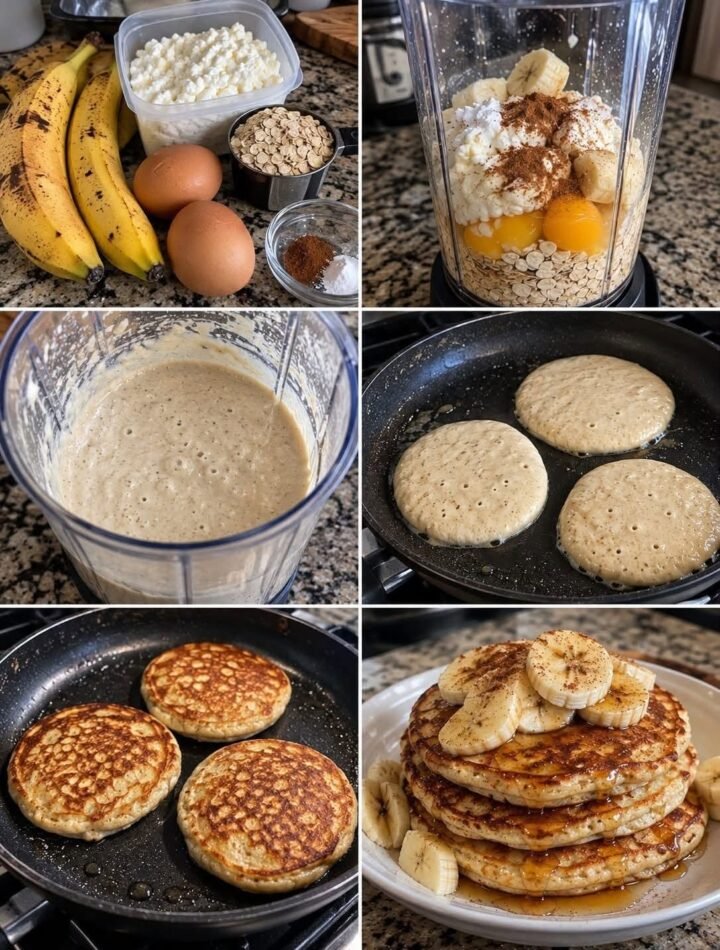
Peel the bananas and slice them into smaller pieces. Measure the rolled oats and cottage cheese. Crack the eggs into a separate bowl to check for shells.
Use ripe bananas with brown spots for the best natural sweetness and a smooth pancake batter.
Step 2: Blend the pancake batter
Add the rolled oats, cottage cheese, eggs, bananas, cinnamon, and optional baking powder, vanilla extract, and salt to a blender.
Blend for approximately 30–60 seconds until the mixture is mostly smooth and thick. Scrape down the sides if necessary.
Allow the batter to rest for 3–5 minutes so the oats can absorb some moisture. If it becomes too thick, add a small splash of milk or water.
Step 3: Heat the pan
Place a nonstick skillet or griddle over medium-low heat. Lightly grease the surface with olive oil or avocado oil.
Avoid excessively high heat because the natural sugars in bananas can cause the pancakes to brown before the centers are fully cooked.
Step 4: Cook the pancakes
Pour approximately 1/4 cup of batter into the skillet for each pancake.
Cook for 2–4 minutes, or until bubbles appear on the surface and the edges begin to look set. Carefully flip each pancake and cook for another 2–3 minutes.
The pancakes should be golden brown on both sides and cooked through in the center. Adjust the heat as needed and cook in batches without overcrowding the pan.
Step 5: Prepare the toppings
Slice the remaining banana and prepare any desired fruit, nuts, or seeds.
For an antioxidant-rich breakfast, add blueberries or strawberries. Chopped walnuts, chia seeds, or ground flaxseed can contribute healthy unsaturated fats and additional nutrients.
Step 6: Assemble and serve
Stack the warm pancakes on a serving plate. Add banana slices, a sprinkle of cinnamon, and your preferred toppings.
Finish with a small drizzle of pure maple syrup if desired. Serve immediately for the best texture and flavor.
What Makes These Pancakes a Good Choice for an Anti-Inflammatory Diet?
An anti-inflammatory diet emphasizes a variety of minimally processed foods, including fruits, vegetables, whole grains, legumes, nuts, seeds, and sources of unsaturated fats.
These pancakes contain several ingredients that can contribute to that overall eating pattern.
- Bananas: Provide potassium, vitamin B6, and carbohydrates for energy.
- Rolled oats: Supply soluble fiber, including beta-glucan, which supports healthy cholesterol levels and digestive health.
- Cottage cheese: Provides protein and calcium to support muscle maintenance and bone health.
- Eggs: Supply high-quality protein, choline, and other essential nutrients.
- Cinnamon: Adds flavor and contains plant compounds with antioxidant activity.
- Walnuts and flaxseed: Optional toppings that provide unsaturated fats, including plant-based omega-3 ALA.
No single recipe can treat or prevent chronic inflammation. The potential benefits depend on the overall dietary pattern, portion sizes, lifestyle, and individual health needs.
Serving Suggestions
1. Anti-inflammatory breakfast bowl
Serve two or three pancakes with blueberries, strawberries, walnuts, and ground flaxseed. This adds color, fiber, and a wider range of plant nutrients.
2. High-protein breakfast
Pair the pancakes with plain Greek yogurt or a small serving of additional cottage cheese. This is a useful option for people who want a more filling breakfast.
3. Healthy post-workout meal
Serve the pancakes with banana slices and plain yogurt. The carbohydrates help replenish energy stores, while the protein contributes to muscle repair and maintenance.
4. Balanced family brunch
Offer the pancakes with fresh fruit, unsweetened yogurt, and a small amount of maple syrup. Let everyone choose their toppings.
5. Lower-added-sugar breakfast
Skip the syrup and use ripe bananas, cinnamon, and fresh berries for sweetness. This is a practical choice for people monitoring their added sugar intake.
6. Meal-prep breakfast
Cook a batch in advance and refrigerate the cooled pancakes in an airtight container for up to 3–4 days. Reheat in a skillet, toaster, or microwave until hot.
For longer storage, freeze the pancakes with parchment paper between layers for approximately 2–3 months for best quality.
Recipe Variations
1. Gluten-free Banana Cottage Cheese Oat Pancakes
Use certified gluten-free rolled oats and check the labels on the remaining ingredients. Oats are naturally gluten-free but may be contaminated during processing.
2. Dairy-free banana oat pancakes
Replace cottage cheese with an appropriate thick, unsweetened plant-based alternative. The texture and protein content will change, so adjust the liquid and batter consistency as needed.
3. Extra-protein pancakes
Serve with Greek yogurt, or replace a small portion of the oats with an appropriate protein powder. Add a little milk if the batter becomes too thick.
4. Blueberry oat pancakes
Gently fold fresh or frozen blueberries into the blended batter. Cook over medium-low heat to allow the centers to cook without overbrowning.
5. Apple cinnamon pancakes
Replace part of the banana with unsweetened applesauce and add extra cinnamon. The sweetness and texture will vary depending on the amount of applesauce used.
6. Chia and flaxseed pancakes
Add 1 tablespoon of ground flaxseed or chia seeds to the batter. Let it rest briefly before cooking and add a little liquid if needed.
7. Nutty banana pancakes
Add chopped walnuts to the batter or sprinkle them over the finished pancakes. This adds crunch and unsaturated fats.
8. Chocolate banana pancakes
Add 1 tablespoon of unsweetened cocoa powder to the batter. For a less sweet version, avoid chocolate chips and use fresh berries as the topping.
9. Savory cottage cheese oat pancakes
For a savory variation, omit the banana and cinnamon. Add chopped herbs, black pepper, and a little grated zucchini, squeezing out excess moisture first. This creates a different recipe with a less sweet flavor.
Nutrition Information
The following values are estimates for the main recipe made with two medium bananas, one cup of rolled oats, one cup of cottage cheese, two large eggs, cinnamon, and a small amount of cooking oil.
Estimated nutrition per serving, assuming three servings:
- Calories: 300–360 kcal
- Protein: 17–21 g
- Carbohydrates: 35–43 g
- Dietary fiber: 4–6 g
- Total fat: 9–14 g
- Saturated fat: 2–4 g
- Total sugars: 8–13 g
- Sodium: 300–550 mg
- Calcium: 100–200 mg
- Potassium: 400–600 mg
Actual nutrition will vary depending on the cottage cheese brand, fat content, banana size, cooking oil, and toppings. The estimates exclude optional toppings and maple syrup.
For more precise nutrition information, calculate the recipe using the nutrition labels of the specific ingredients you use.
Tips for Perfect Pancakes
- Use ripe bananas for natural sweetness and easier blending.
- Blend the ingredients thoroughly for a smoother texture.
- Let the batter rest for a few minutes to thicken.
- Keep the heat at medium-low to prevent the outside from browning too quickly.
- Make smaller pancakes because flourless batters can be more delicate when flipped.
- Wait until the edges are set before flipping.
- Grease the pan lightly rather than using excessive oil.
- If the batter is too thick, add a small amount of milk or water.
- If the pancakes fall apart, let them cook longer before flipping and make the next batch slightly smaller.
Frequently Asked Questions
Are banana cottage cheese oat pancakes healthy?
They can be a nutritious breakfast option because they combine protein, whole-grain oats, fruit, and essential nutrients. Their overall nutritional value depends on the ingredients, portion size, and toppings.
Are these pancakes good for an anti-inflammatory diet?
They can fit into an anti-inflammatory eating pattern that emphasizes whole foods, fruits, vegetables, whole grains, nuts, and seeds. However, these pancakes are not a treatment for inflammation or any medical condition.
Can I make these pancakes without flour?
Yes. Rolled oats replace conventional flour in this recipe. Blending the oats creates a smoother batter while retaining their fiber.
Can I make the batter the night before?
For the best texture, blend the batter shortly before cooking. You can refrigerate prepared batter in a covered container overnight, but it may thicken as the oats absorb moisture. Stir well and add a little liquid if needed. Because the batter contains raw eggs and dairy, refrigerate it promptly at 40°F (4°C) or below and cook it thoroughly.
Can I freeze the pancakes?
Yes. Let the cooked pancakes cool, separate them with parchment paper, and store them in a freezer-safe container. Freeze for 2–3 months for best quality and reheat until hot.
Are these pancakes suitable for weight management?
They may help support a satisfying breakfast because they provide protein and fiber. However, weight management depends on overall energy intake, physical activity, sleep, and other individual factors.
Can I use quick oats instead of rolled oats?
Yes. Quick oats generally work well, although the batter may have a slightly different texture. Instant flavored oatmeal is less suitable because it may contain added sugar and other ingredients.
What can I use instead of cottage cheese?
Thick Greek yogurt or a suitable plant-based alternative may work, but the batter consistency and nutrition will change. Add liquid gradually rather than all at once.
How can I make the pancakes fluffier?
Add 1/2 teaspoon of baking powder, avoid overblending after adding it, and let the batter rest briefly. Cooking small pancakes over moderate heat also helps them cook evenly.
Can I eat these pancakes every day?
They can be included regularly in a varied diet if they suit your nutritional needs. Rotate breakfast options and include vegetables, fruits, legumes, nuts, seeds, and other protein sources throughout the week.
Final Thoughts
Banana Cottage Cheese Oat Pancakes are an easy, versatile way to enjoy a homemade breakfast without refined flour. The combination of ripe bananas, oats, cottage cheese, and eggs creates a naturally sweet, protein-rich pancake with a soft center and golden exterior.