
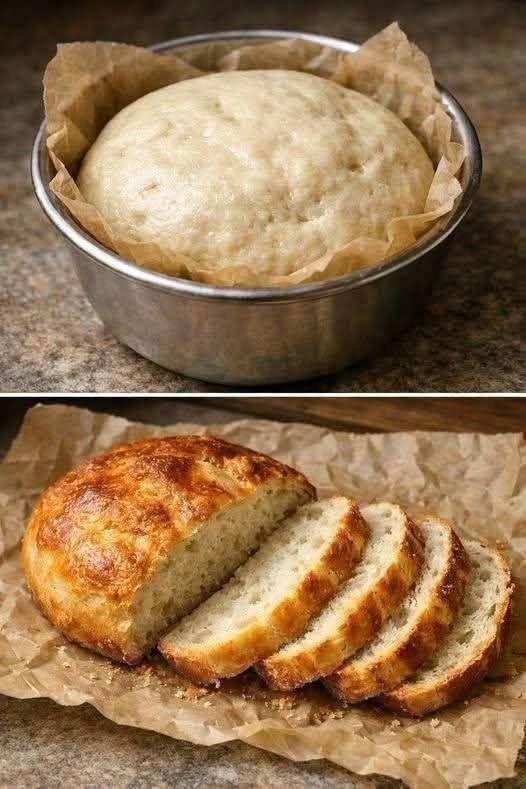
The aroma of freshly baked bread permeating the kitchen is very unique. It reminds me of warm mornings, family get-togethers, and those uncomplicated times when everyone gets together at the table to savour something delectable. To be honest, making bread at home doesn’t have to be difficult. This is demonstrated with this No-Knead Dutch Oven Bread!
My fascination in no-knead bread began when a friend suggested that I attempt a recipe that needed very little manual labour. At first, I was a little dubious. Could a few basic ingredients truly produce a lovely loaf with a crispy, golden crust?
Anti-Inflammatory No-Knead Dutch Oven Bread Recipe
Recipe Description
No-Knead Dutch Oven Bread is a simple, homemade artisan bread featuring a golden, crispy crust and a soft, airy interior. This beginner-friendly bread recipe requires no kneading, no special baking skills, and only a handful of everyday ingredients.
Made with flour, yeast, water, salt, and optional extra-virgin olive oil, this rustic loaf is an excellent alternative to many commercially produced breads containing added sugars, preservatives, and unnecessary additives.
For people interested in an anti-inflammatory diet, homemade bread can be part of a balanced eating pattern when paired with vegetables, legumes, nuts, seeds, and healthy fats. Using whole-wheat flour or adding seeds can increase the fiber and nutrient content. However, bread itself is not a treatment for inflammation, and this recipe is not gluten-free.
Recipe Details
- Preparation Time: 10–15 minutes
- Rising Time: 8–18 hours
- Baking Time: 40–50 minutes
- Total Time: Approximately 9–19 hours
- Servings: 8–10 slices
- Difficulty Level: Easy
- Cooking Method: Dutch oven baking
- Cuisine: Rustic European-inspired
- Diet: Vegetarian; adaptable for a plant-based diet
- Best For: Homemade artisan bread, healthy meal planning, and everyday family meals
Ingredients
Main Ingredients
- 3 cups (375 g) all-purpose flour or bread flour
- 1/4 teaspoon instant yeast
- 1 1/2 teaspoons salt
- 1 1/2 cups (360 ml) lukewarm water
- 1 tablespoon extra-virgin olive oil, optional
Optional Anti-Inflammatory-Inspired Additions
- 1/2 cup whole-wheat flour, replacing an equal amount of white flour
- 1–2 tablespoons ground flaxseed
- 1–2 tablespoons chia seeds
- 1 tablespoon sesame seeds or pumpkin seeds
- 1/2 teaspoon dried rosemary or thyme
- 1/2 teaspoon ground turmeric and a pinch of black pepper for a savory variation
These additions can provide extra fiber, healthy fats, minerals, and plant compounds. They are optional and may slightly change the texture or hydration of the dough.
Instructions
Step 1: Mix the Dough
In a large mixing bowl, combine the flour, instant yeast, and salt. Stir until evenly distributed.
Add the lukewarm water and optional olive oil. Mix with a wooden spoon until a rough, sticky dough forms. The dough should look shaggy and moist rather than smooth.
Do not knead the dough. The long resting period will allow the gluten to develop naturally.
Step 2: Allow the Dough to Rise
Cover the bowl with plastic wrap, a reusable cover, or a clean kitchen towel.
Leave the dough at room temperature for 8–18 hours, depending on the temperature of your kitchen. During this time, the dough should expand, develop bubbles, and become soft and airy.
A cooler room may require a longer rising time, while a warmer room may shorten it.
Step 3: Shape the Dough
Lightly flour a clean work surface. Gently transfer the dough onto the surface.
Fold the edges toward the center to create a loose round shape. Avoid pressing out too much of the trapped air.
Place the dough on a piece of parchment paper, cover it loosely, and allow it to rest for approximately 30–45 minutes while the oven heats.
Step 4: Preheat the Dutch Oven
Place a heavy Dutch oven with its lid inside the oven. Preheat to 230°C (450°F) for approximately 30 minutes.
Use oven mitts when handling the hot pot. A properly preheated Dutch oven helps create the bread’s crisp crust and encourages a good rise.
Step 5: Bake the Bread
Carefully remove the hot Dutch oven from the oven.
Using the parchment paper as a sling, lower the dough into the pot. Cover with the lid and return the pot to the oven.
Bake covered for 30 minutes.
Remove the lid and bake for another 10–20 minutes, until the crust is deep golden brown.
The bread is ready when it sounds hollow when tapped on the bottom. For a more precise check, the center should generally reach approximately 93–99°C (200–210°F).
Step 6: Cool Before Slicing
Carefully remove the loaf from the Dutch oven and transfer it to a wire rack.
Allow it to cool for at least 45–60 minutes before slicing. Cooling helps the interior finish setting and prevents a gummy texture.
Serve warm or at room temperature with your favorite nutritious toppings.
Serving Suggestions
This homemade Dutch oven bread pairs well with a variety of nutritious foods and can fit into a balanced, anti-inflammatory-inspired eating pattern.
- With extra-virgin olive oil: Dip slices into olive oil with rosemary, thyme, and a little black pepper.
- With avocado: Spread mashed avocado over toasted bread and top with lemon juice and pumpkin seeds.
- With soups: Serve alongside lentil soup, vegetable soup, tomato soup, or a Mediterranean bean stew.
- With hummus: Add hummus, cucumber, tomatoes, and fresh parsley for a plant-forward snack.
- With eggs: Serve with boiled eggs, scrambled eggs, or a vegetable omelet for a protein-rich breakfast.
- With salmon: Pair with baked salmon, leafy greens, and olive oil for a meal featuring omega-3 fatty acids.
- As a sandwich: Fill slices with grilled vegetables, chicken, leafy greens, or mashed chickpeas.
- As garlic toast: Brush with olive oil, garlic, and fresh herbs before lightly toasting.
For a more fiber-rich meal, pair bread with protein, vegetables, and healthy fats rather than relying on bread alone.
Recipe Variations
1. Whole-Wheat Dutch Oven Bread
Replace 1 cup of the all-purpose flour with whole-wheat flour. Add 1–2 tablespoons of extra water if the dough feels too dry.
Whole-wheat flour provides more fiber and generally more minerals than refined white flour.
2. Seeded Artisan Bread
Add 2–3 tablespoons of ground flaxseed, chia seeds, sunflower seeds, or pumpkin seeds.
Seeds provide fiber, minerals, and unsaturated fats. You may need a little extra water because seeds absorb moisture.
3. Mediterranean Herb Bread
Mix in dried rosemary, oregano, thyme, and a small amount of minced garlic.
Serve with olive oil, roasted vegetables, or homemade hummus.
4. Turmeric and Black Pepper Bread
Add 1/2 teaspoon of turmeric and a small pinch of black pepper to the dry ingredients.
This creates a warm, earthy flavor. Turmeric contains curcumin, a compound studied for its biological effects, but the amount used in bread should not be expected to produce a therapeutic anti-inflammatory effect.
5. Garlic and Rosemary Bread
Add 1–2 teaspoons of finely chopped fresh rosemary and one small minced garlic clove.
This variation works particularly well with soups, roasted vegetables, and olive-oil-based dips.
6. Olive and Herb Bread
Fold 1/3 cup of chopped olives and 1 teaspoon of dried herbs into the dough.
Because olives are salty, consider slightly reducing the added salt.
7. Higher-Fiber Bread
Use a mixture of whole-wheat flour and white bread flour, and add a small quantity of ground flaxseed.
Increase the water gradually and allow the dough to hydrate well before baking. Changing too much of the flour at once can make the loaf dense.
8. Sourdough-Inspired Variation
For a naturally leavened version, use an active sourdough starter and adjust the flour, water, and fermentation time accordingly. This requires a different formula from the instant-yeast recipe.
Sourdough fermentation can alter bread flavor, texture, and certain aspects of digestibility, but it does not make wheat bread gluten-free.
Tips for Perfect No-Knead Dutch Oven Bread
- Measure flour by weight when possible for consistent results.
- Use instant yeast or adjust the method if using active dry yeast.
- Avoid adding too much flour during shaping; a slightly sticky dough is normal.
- Give the dough enough time to ferment and develop flavor.
- Preheat the Dutch oven thoroughly for the best crust.
- Use parchment paper rated for the baking temperature specified by its manufacturer.
- Never pour cold water into a hot Dutch oven, as sudden temperature changes can damage some cookware.
- Let the bread cool completely before storing.
- If the crust becomes too dark, check your oven temperature and reduce the uncovered baking time slightly.
Storage Instructions
At room temperature: Store the completely cooled loaf in a paper bag or bread box for approximately 2–3 days. A sealed container helps retain softness but may soften the crust.
In the refrigerator: Refrigeration can make bread stale more quickly, so it is generally not the best option for short-term storage.
In the freezer: Slice the cooled bread, place the slices in a freezer-safe bag, and freeze for up to 2–3 months for best quality. Toast slices directly from frozen or thaw them as needed.
Discard bread if you notice mold or unusual spoilage. Do not simply cut mold off a loaf, because mold can extend beyond the visible area.
Nutrition Information
The following estimates apply to the basic recipe made with all-purpose flour, water, yeast, and salt, without optional oil or seeds.
Estimated nutrition per serving, assuming 10 slices:
- Calories: 135–150 kcal
- Carbohydrates: 28–31 g
- Protein: 4–5 g
- Total Fat: 0.5–1.5 g
- Saturated Fat: Less than 0.3 g
- Dietary Fiber: Approximately 1 g
- Sodium: Approximately 340–380 mg
These values are estimates and vary with the flour brand, loaf size, baking losses, and slice thickness. Adding olive oil or seeds changes the nutritional profile.
How to Improve the Nutritional Profile
- Increase fiber: Replace some refined flour with whole-wheat flour.
- Add healthy fats: Include flaxseed, chia seeds, or pumpkin seeds.
- Choose heart-healthy toppings: Use olive oil, avocado, or hummus.
- Balance carbohydrates: Pair a slice with vegetables and protein.
- Monitor sodium: Reduce the salt slightly if appropriate for your recipe and dietary needs, while remembering that salt also contributes to flavor and dough performance.
People managing diabetes may want to consider portion size and total carbohydrate intake. People with celiac disease or a medically necessary gluten-free diet should avoid this wheat-based recipe.
Is No-Knead Dutch Oven Bread Anti-Inflammatory?
The term “anti-inflammatory diet” generally refers to an overall eating pattern rich in vegetables, fruits, legumes, whole grains, nuts, seeds, and unsaturated fats, rather than a single food that eliminates inflammation.
This bread can complement such a pattern, particularly when prepared with whole-grain flour and seeds and served alongside nutrient-dense foods.
Important considerations include:
- Whole grains provide fiber that supports digestive health.
- Flaxseed and chia seeds supply plant-based omega-3 fatty acids.
- Extra-virgin olive oil contains monounsaturated fat and beneficial plant compounds.
- Herbs such as rosemary and turmeric contribute flavor and naturally occurring plant compounds.
- Refined white bread is lower in fiber than whole-grain bread, so the choice of flour matters.
There is no guarantee that eating this bread will reduce inflammation. Chronic inflammation can have many causes, and dietary changes should complement appropriate medical care rather than replace it.
Frequently Asked Questions
1. Can I make No-Knead Dutch Oven Bread without a Dutch oven?
Yes. Use a heavy, oven-safe pot with a lid, provided the cookware and lid are rated for 230°C (450°F). Alternatively, bake the loaf on a preheated baking tray and introduce steam using a suitable oven-safe method. The crust may differ from bread baked in a covered Dutch oven.
2. Can I make this bread with whole-wheat flour?
Yes. Replace part of the white flour with whole-wheat flour and increase the water gradually as needed. Using 100% whole-wheat flour may produce a denser loaf and require additional hydration.
3. Is no-knead bread healthier than store-bought bread?
It depends on the ingredients and serving size. Homemade bread gives you control over the flour, salt, oils, and additives. Whole-grain homemade bread can provide more fiber than bread made exclusively with refined flour, but some store-bought whole-grain breads are also nutritious choices.
4. Does no-knead bread help reduce inflammation?
Not by itself. Bread can be part of a balanced eating pattern, but there is insufficient reason to consider this particular recipe a treatment for inflammation. Overall dietary quality matters more than any single recipe.
5. Can I prepare the dough overnight?
Yes. Overnight fermentation is one of the main advantages of this recipe. Cover the dough and leave it at room temperature, adjusting the time according to your kitchen temperature and the dough’s activity.
6. Why is my bread dense?
Common causes include insufficient fermentation, old yeast, too much flour during shaping, or an excessively dry dough. Allow the dough to develop bubbles and expand before baking.
7. Why is the inside of my bread gummy?
The loaf may have been underbaked or sliced before it cooled. Bake until the center reaches approximately 93–99°C (200–210°F), then allow the loaf to cool fully.
8. Can I make this bread without added oil?
Yes. Olive oil is optional. The basic recipe works without it, although adding oil can slightly change the tenderness and flavor.
9. Is this bread suitable for a vegan diet?
Yes. The basic recipe contains no animal-derived ingredients, provided the flour, yeast, and optional additions are suitable for your needs.
10. Can I make this bread gluten-free?
Not by simply substituting an equal amount of gluten-free flour. Gluten-free bread requires a different formula and often needs binders or a specialized flour blend. Anyone with celiac disease should use ingredients and equipment that prevent gluten cross-contact.
11. Can I freeze homemade Dutch oven bread?
Yes. Slice the cooled loaf and freeze it in a sealed freezer-safe bag. Individual slices are convenient for quick breakfasts and sandwiches.
12. What is the best way to serve this bread on an anti-inflammatory diet?
Pair it with foods such as lentil soup, leafy greens, salmon, hummus, avocado, olive oil, or roasted vegetables. This combination provides a broader range of fiber, protein, healthy fats, vitamins, and minerals.
Related Recipe Ideas
If you enjoy this recipe, consider trying:
- Whole-Wheat Artisan Bread
- Easy Overnight Fermented Bread
- Mediterranean Rosemary and Olive Bread
- Homemade Seeded Sandwich Bread
- Garlic and Herb Dutch Oven Bread
- Flaxseed and Chia Bread
- Rustic Sourdough Bread
- Healthy Avocado Toast
- Homemade Hummus with Olive Oil
- Mediterranean Lentil Soup
These recipes can help you build a varied meal plan featuring whole grains, vegetables, legumes, seeds, and healthy fats.
Final Thoughts
No-Knead Dutch Oven Bread is a practical way to enjoy fresh, homemade artisan bread without the time and effort of traditional kneading. Its simple ingredients, overnight fermentation, crispy crust, and soft center make it an excellent choice for beginners and experienced home bakers alike.