
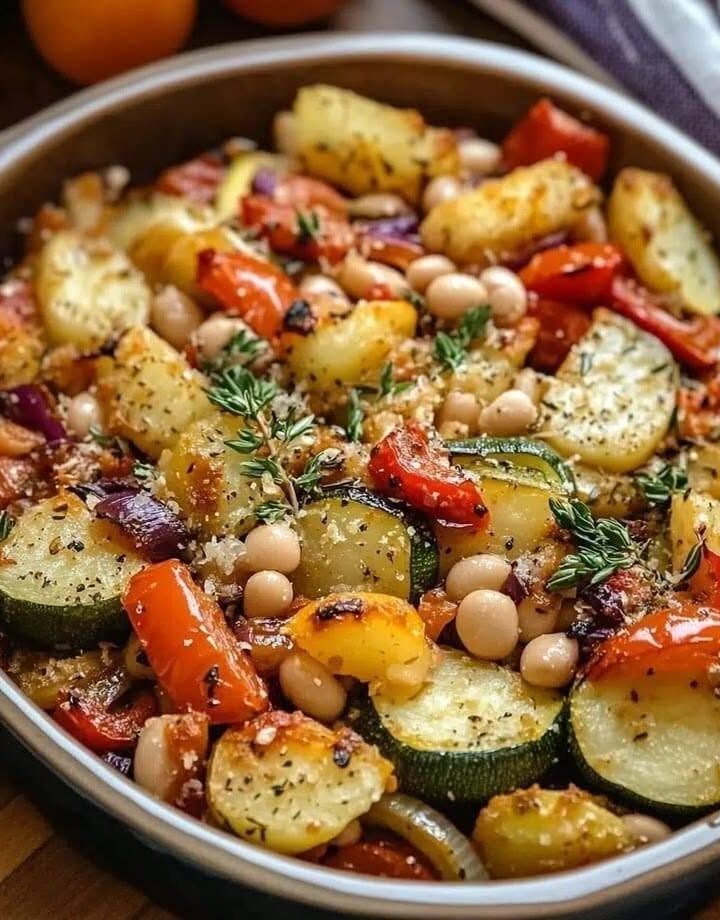
A dish that makes your kitchen smell amazing before you’ve even sat down to dine has a unique quality. When I prepare Mediterranean roasted veggies with white beans and herbs, that’s precisely what happens to me. Golden roasted potatoes, soft zucchini, sweet bell peppers, creamy white beans, and fresh herbs come together in a straightforward, cosy dish that is bursting with lovely Mediterranean flavours.
When I want something healthy without having to spend hours in the kitchen, I use recipes like this one. When you serve it, it seems a bit elegant, but the majority of the labour is actually done by..
Mediterranean Roasted Vegetables with White Beans and Herbs
An Anti-Inflammatory Mediterranean Diet Recipe
Recipe Description
Mediterranean Roasted Vegetables with White Beans and Herbs is a colorful, nutrient-rich meal inspired by the Mediterranean diet. This easy one-pan recipe combines tender roasted zucchini, golden potatoes, sweet bell peppers, juicy tomatoes, red onion, and creamy white beans with extra-virgin olive oil, garlic, and fragrant fresh herbs.
Designed for anyone looking for healthy Mediterranean recipes, plant-based dinner ideas, or an anti-inflammatory meal plan, this wholesome dish provides fiber, plant protein, vitamins, minerals, and healthy fats. The combination of vegetables, legumes, herbs, and olive oil makes it a satisfying option for lunch, dinner, or weekly meal preparation.
Roasting brings out the natural sweetness of the vegetables while creating delicious caramelized edges. White beans add a creamy texture and make the meal more filling without requiring meat.
Recipe highlights:
- Anti-inflammatory Mediterranean-inspired ingredients
- Vegetarian and naturally gluten-free
- Rich in fiber and plant-based protein
- Easy one-pan preparation
- Suitable for healthy meal prep and balanced eating
- Customizable with seasonal vegetables and herbs
Prep time: 15 minutes
Cook time: 35–45 minutes
Total time: Approximately 55–60 minutes
Servings: 4
Cuisine: Mediterranean-inspired
Course: Main dish, lunch, or side dish
Dietary style: Vegetarian, gluten-free, plant-forward
Ingredients
Vegetables and Beans
- 2 medium zucchini, sliced into thick rounds
- 2 medium potatoes, cut into bite-sized cubes
- 1 red bell pepper, chopped
- 1 yellow bell pepper, chopped
- 1 cup cherry tomatoes, halved
- 1 medium red onion, cut into wedges
- 1 can (15 ounces or 425 g) cannellini beans or other white beans, drained and rinsed
Mediterranean Seasonings
- 3 tablespoons extra-virgin olive oil
- 3 cloves garlic, minced
- 1 teaspoon dried oregano
- 1 teaspoon dried thyme
- ½ teaspoon smoked paprika
- ½ teaspoon ground black pepper
- ½ teaspoon salt, or to taste
- 1 tablespoon fresh lemon juice
- 2 tablespoons fresh parsley, chopped
- 2–3 sprigs fresh thyme or rosemary
- 2 tablespoons grated Parmesan cheese, optional
Optional Ingredients
- ¼ teaspoon ground turmeric
- A pinch of red pepper flakes
- 2 tablespoons sunflower seeds or pumpkin seeds
- ¼ cup sliced Kalamata olives
- 1 tablespoon balsamic vinegar
Instructions
Step 1: Preheat the Oven
Preheat your oven to 400°F (200°C). Line a large baking tray with parchment paper or lightly grease a roasting dish with olive oil.
Step 2: Prepare the Vegetables
Wash and dry the zucchini, bell peppers, tomatoes, and potatoes. Slice the zucchini into thick rounds, cube the potatoes, chop the peppers, halve the cherry tomatoes, and cut the red onion into wedges.
Cut the vegetables into reasonably similar sizes so they cook evenly. Keep the potatoes slightly smaller than the other vegetables because they generally require more time to become tender.
Step 3: Make the Herb and Olive Oil Dressing
In a large bowl, combine the extra-virgin olive oil, minced garlic, oregano, thyme, smoked paprika, black pepper, salt, and optional turmeric.
Add the prepared potatoes, zucchini, bell peppers, tomatoes, and red onion. Toss until the vegetables are evenly coated in the seasoned olive oil.
Step 4: Roast the Vegetables
Spread the vegetables in a single layer on the prepared baking tray. Avoid overcrowding the tray, as this can cause the vegetables to steam instead of roast.
Roast for 20 minutes, then gently stir or turn the vegetables.
Continue roasting for another 10–15 minutes, or until the potatoes are tender and the vegetables have golden-brown edges.
Step 5: Add the White Beans
Drain and rinse the white beans thoroughly. Gently fold them into the roasted vegetables.
Return the tray to the oven for another 8–10 minutes, allowing the beans to warm through and absorb the Mediterranean herbs and seasonings.
If using canned beans, adding them toward the end helps preserve their texture.
Step 6: Add Fresh Herbs and Lemon
Remove the tray from the oven. Drizzle the vegetables and beans with fresh lemon juice and sprinkle with chopped parsley and fresh thyme.
Add grated Parmesan cheese, if desired. For extra flavor, finish with a small drizzle of high-quality extra-virgin olive oil.
Step 7: Serve and Enjoy
Serve warm as a complete vegetarian meal or alongside your favorite Mediterranean-inspired dishes.
The finished recipe should have tender vegetables, lightly crisp edges, creamy white beans, and a bright, savory herb dressing.
Why This Recipe Fits an Anti-Inflammatory Eating Pattern
The Mediterranean diet emphasizes vegetables, legumes, whole grains, nuts, seeds, and unsaturated fats. This recipe includes several of those foods in one convenient meal.
Extra-virgin olive oil: Provides monounsaturated fats and polyphenols. Replacing some saturated fats with unsaturated fats can support cardiovascular health.
Zucchini, bell peppers, and tomatoes: Supply vitamins, minerals, fiber, and various antioxidant compounds. Bell peppers are particularly rich in vitamin C, while tomatoes contain lycopene.
White beans: Provide plant-based protein, fiber, folate, and minerals. Their fiber also supports digestive health and helps make the meal satisfying.
Garlic and herbs: Add flavor and contain bioactive plant compounds, making it easier to prepare a nutritious meal without relying heavily on salt.
Potatoes: Supply carbohydrates, potassium, and vitamin C. They can be part of a balanced diet when prepared with vegetables and healthy fats.
Red onion: Contributes fiber and plant compounds, including quercetin.
No single food or recipe can prevent or cure chronic inflammation. However, regularly eating a varied, minimally processed diet rich in vegetables, legumes, and unsaturated fats is consistent with established healthy-eating patterns.
Serving Suggestions
1. Serve as a Complete Vegetarian Dinner
Enjoy a generous bowl of roasted vegetables and white beans on its own. The beans provide plant protein, while the vegetables contribute fiber and micronutrients.
2. Pair with Whole Grains
Serve over:
- Quinoa
- Brown rice
- Whole-wheat couscous
- Farro
- Bulgur wheat
Whole grains make the meal more substantial and add additional fiber.
3. Add a Mediterranean Salad
Pair the roasted vegetables with a fresh cucumber, tomato, and parsley salad dressed with lemon juice and olive oil.
4. Serve with Hummus or Tzatziki
A spoonful of hummus adds creaminess and additional plant protein. Greek yogurt tzatziki provides a refreshing contrast to the warm roasted vegetables.
5. Add a Protein-Rich Side
For additional protein, serve with grilled salmon, baked chicken, or lemon-herb tofu. Salmon provides omega-3 fatty acids, while tofu offers another plant-based option.
6. Use as a Meal-Prep Lunch
Divide the recipe into individual containers and serve with quinoa or brown rice. Pack fresh lemon wedges separately and add them before eating for a fresher flavor.
Recipe Variations
1. Vegan Mediterranean Roasted Vegetables
Omit the Parmesan cheese. Add nutritional yeast, toasted sesame seeds, or chopped almonds for extra flavor and texture.
2. High-Protein Mediterranean Bowl
Increase the white beans to two cans or add chickpeas. Serve the roasted mixture over quinoa and finish with pumpkin seeds.
3. Low-Carbohydrate Vegetable Version
Replace the potatoes with extra zucchini, cauliflower, eggplant, or mushrooms. The result will contain fewer carbohydrates, although the exact nutrition will depend on the ingredients used.
4. Spicy Mediterranean Vegetables
Add red pepper flakes, freshly ground black pepper, and a little smoked paprika. Adjust the heat to your preference.
5. Turmeric and Garlic Version
Add ¼ teaspoon ground turmeric and extra garlic to the olive oil mixture. These ingredients provide additional flavor and plant compounds, but the finished dish should not be considered a treatment for inflammation.
6. Greek-Style Roasted Vegetables
Add Kalamata olives, dried oregano, and crumbled feta cheese after roasting. Serve with whole-grain pita bread and a cucumber salad.
7. Mediterranean Vegetable and Chickpea Tray Bake
Replace the white beans with chickpeas or use half of each. Chickpeas offer a firmer texture and work particularly well with smoked paprika and cumin.
8. Seasonal Vegetable Variation
Use whichever vegetables are in season. Eggplant, cauliflower, carrots, broccoli, and butternut squash all work well. Adjust roasting times according to the size and firmness of the vegetables.
Storage and Meal-Prep Instructions
Refrigeration: Store leftovers in an airtight container in the refrigerator for up to 3–4 days.
Freezing: The dish can be frozen for approximately 2–3 months for best quality. Keep in mind that zucchini and tomatoes may become softer after thawing.
Reheating: Warm in the oven at 350°F (175°C) until heated through, or microwave individual portions. Add a little lemon juice or olive oil after reheating to refresh the flavor.
Meal-prep tip: For the best texture, keep fresh herbs, lemon juice, and optional cheese separate until serving.
Do not leave cooked food at room temperature for more than two hours, or more than one hour when temperatures exceed 90°F (32°C).
Nutrition Information
The following values are estimates for one of four servings, assuming the recipe uses the listed vegetables, one can of white beans, three tablespoons of olive oil, and no optional Parmesan cheese. Actual values will vary with ingredient sizes and brands.
| Nutrient | Approximate amount per serving |
|---|---|
| Calories | 330–380 kcal |
| Protein | 10–13 g |
| Total carbohydrates | 40–48 g |
| Dietary fiber | 9–12 g |
| Total fat | 14–17 g |
| Saturated fat | 2–3 g |
| Total sugars | 7–10 g |
| Sodium | 300–500 mg |
| Potassium | 800–1,100 mg |
| Vitamin C | 40–80 mg |
| Iron | 2–4 mg |
These figures are general estimates, not laboratory-tested nutrition facts. Sodium will vary with the beans, salt, and optional cheese used.
For a higher-protein meal, add extra white beans, chickpeas, tofu, or a serving of fish. For a lower-carbohydrate version, reduce or omit the potatoes and increase the non-starchy vegetables.
Frequently Asked Questions
1. Is this Mediterranean roasted vegetable recipe anti-inflammatory?
It fits an anti-inflammatory eating pattern because it emphasizes vegetables, beans, herbs, and extra-virgin olive oil. Overall dietary habits matter more than any individual recipe, and the dish should not be viewed as a medical treatment.
2. Can I make this recipe ahead of time?
Yes. Roast the vegetables and beans, cool them promptly, and refrigerate them in an airtight container. Reheat portions as needed and add fresh lemon juice and parsley just before serving.
3. Are canned white beans healthy?
Canned white beans are a convenient source of plant protein, fiber, and minerals. Choose no-salt-added or lower-sodium varieties when possible, and rinse canned beans to reduce some of their surface sodium.
4. Can I use dried beans instead of canned beans?
Yes. Cook dried white beans according to their package instructions before adding them to the roasted vegetables. Never add dried beans directly to this roasting recipe because they will not cook adequately in the oven.
5. Can I make this recipe without potatoes?
Absolutely. Substitute cauliflower, eggplant, mushrooms, or additional zucchini. You can also serve the vegetables over cauliflower rice if you prefer a lower-carbohydrate meal.
6. What herbs work best with roasted vegetables?
Oregano, thyme, rosemary, parsley, and basil all pair well with Mediterranean vegetables. Dried herbs are convenient for roasting, while fresh parsley and basil are best added toward the end.
7. Is this recipe suitable for weight management?
It can fit into a balanced weight-management plan because it provides vegetables, fiber, and plant protein. Portion size, added oil, accompanying foods, and overall energy intake will influence the meal’s calorie content.
8. Is this recipe gluten-free?
Yes, the basic recipe is naturally gluten-free when all ingredients are free from gluten-containing additives or cross-contact. Serve with gluten-free grains if desired.
9. How can I increase the protein content?
Add another half-can or full can of white beans, include chickpeas, or serve with quinoa or tofu. For a non-vegetarian variation, add grilled fish or chicken.
10. Can I prepare this recipe in an air fryer?
Yes, provided your air fryer has enough capacity. Cook the vegetables in batches at approximately 375°F (190°C), checking frequently for tenderness and browning. Add the beans near the end so they warm through without drying out. Exact timing depends on the appliance and the size of the vegetable pieces.
11. Does roasting destroy the nutrients in vegetables?
Cooking changes the levels of some nutrients, but roasted vegetables still provide fiber, minerals, and beneficial plant compounds. Tomatoes, for example, can become a useful source of more bioavailable lycopene after cooking. A varied diet containing both cooked and raw vegetables is a practical approach.
12. What is the best oil for this Mediterranean recipe?
Extra-virgin olive oil is an excellent choice because it contains monounsaturated fats and naturally occurring polyphenols. Use a moderate amount to coat the vegetables rather than soaking them in oil.
Helpful Tips for the Best Results
- Cut the potatoes into small, evenly sized cubes to help them cook through.
- Spread vegetables across a large tray rather than piling them up.
- Roast potatoes and firmer vegetables first if you prefer your zucchini to remain slightly firm.
- Add beans toward the end to prevent them from becoming overly soft.
- Use fresh lemon juice and parsley after roasting for a brighter finish.
- Taste before adding extra salt, especially if you use canned beans or Parmesan cheese.
- Choose a variety of colorful vegetables to broaden the range of nutrients in the meal.
Final Thoughts
Mediterranean Roasted Vegetables with White Beans and Herbs is a simple, satisfying way to bring more vegetables and legumes into everyday meals. With tender zucchini, golden potatoes, sweet peppers, juicy tomatoes, creamy white beans, garlic, and aromatic herbs, it offers plenty of flavor without complicated cooking techniques.