
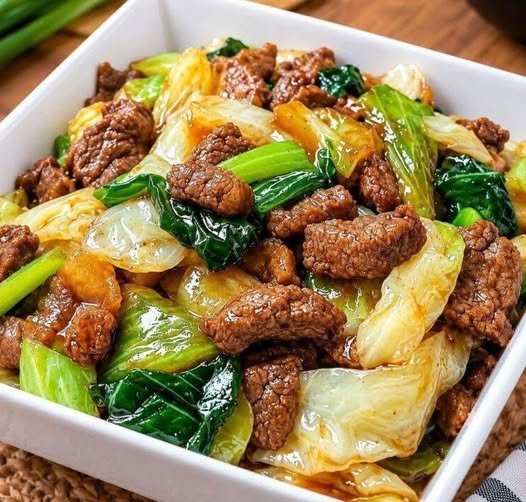
There are some dishes that feel like they were intended for busy days, and this Chinese Beef & Cabbage Stir-Fry is definitely one of them.
A buddy suggested the combination of crisp cabbage, tender meat, and a savoury, glossy sauce, so I made it for the first time. I honestly wasn’t expecting it to become such a regular in our kitchen. However, before I had even sat down to make it for my family last weekend, the pan was almost completely cleaned..
Anti-Inflammatory Chinese Beef & Cabbage Stir-Fry
This Chinese Beef & Cabbage Stir-Fry is a quick, flavorful healthy dinner recipe featuring tender beef, crisp-tender cabbage, leafy greens, garlic, fresh ginger, and a savory homemade stir-fry sauce. The recipe emphasizes ingredients commonly associated with an anti-inflammatory eating pattern—such as ginger, garlic, colorful vegetables, and extra-virgin olive or avocado oil—while keeping added sugar modest.
It is naturally easy to adapt for low-carb meals, high-protein meals, gluten-free diets, and meal prep.
🥢 Recipe at a Glance
Prep time: 15 minutes
Cook time: 12–15 minutes
Total time: About 30 minutes
Servings: 4
Cuisine: Chinese-inspired
Course: Lunch or dinner
Diet options: High-protein, low-carb, gluten-free, dairy-free
🛒 Ingredients
For the Beef
-
1 lb (450 g) lean beef sirloin, flank steak, or tenderloin, thinly sliced
-
1 tablespoon low-sodium soy sauce or tamari
-
1 tablespoon cornstarch or arrowroot starch
-
1 teaspoon toasted sesame oil
-
½ teaspoon freshly ground black pepper
For the Stir-Fry
-
4 cups green cabbage, roughly chopped
-
2 cups bok choy or additional cabbage, chopped
-
1 medium bell pepper, sliced
-
1 medium carrot, thinly sliced
-
3 green onions, sliced
-
4 cloves garlic, finely minced
-
1 tablespoon fresh ginger, grated
-
1–2 tablespoons avocado oil or extra-virgin olive oil
-
½ teaspoon turmeric, optional
-
½ teaspoon red pepper flakes, optional
-
1 tablespoon sesame seeds, for garnish
Anti-Inflammatory-Inspired Stir-Fry Sauce
-
3 tablespoons low-sodium soy sauce or tamari
-
1 tablespoon rice vinegar
-
1 tablespoon fresh orange or lime juice
-
1 teaspoon honey or maple syrup
-
1 teaspoon sesame oil
-
¼ cup water or low-sodium beef broth
-
1 teaspoon grated fresh ginger
-
1 small garlic clove, minced
-
½ teaspoon turmeric
-
¼ teaspoon black pepper
For a thicker sauce: Mix 1 teaspoon cornstarch with 1 tablespoon cold water and add it to the sauce.
👩🍳 How to Make Chinese Beef & Cabbage Stir-Fry
1. Slice the beef
Place the beef in the freezer for about 15–20 minutes. This firms it up and makes it much easier to slice thinly.
Cut against the grain into thin strips.
2. Marinate the beef
Combine the sliced beef with soy sauce, cornstarch, sesame oil, and black pepper.
Let it sit for 10–15 minutes while you prepare the vegetables.
The cornstarch creates a light coating that helps the beef develop that characteristic tender, glossy stir-fry texture.
3. Prepare the sauce
Whisk together the soy sauce, rice vinegar, citrus juice, honey or maple syrup, sesame oil, water or broth, ginger, garlic, turmeric, and black pepper.
Set aside.
4. Sear the beef
Heat a large wok or skillet over medium-high to high heat.
Add about 1 tablespoon of oil.
When the pan is hot, add the beef in a single layer. Cook for approximately 1–2 minutes per side, or until browned.
Avoid overcrowding the pan. Cook in two batches if necessary.
Transfer the beef to a plate.
5. Cook the aromatics
Add another small splash of oil if needed.
Add the garlic and ginger and stir-fry for approximately 20–30 seconds.
Be careful not to burn the garlic.
6. Add the vegetables
Add the carrots and bell pepper first. Stir-fry for about 2 minutes.
Add the cabbage and bok choy.
Continue cooking for 3–5 minutes, tossing frequently.
The vegetables should be tender but still retain some crunch.
7. Bring everything together
Return the beef to the pan.
Pour in the sauce and toss everything together.
Cook for another 1–2 minutes, until the sauce becomes glossy and coats the beef and vegetables.
If using the cornstarch slurry, add it during this final stage and cook until the sauce thickens.
8. Garnish and serve
Turn off the heat.
Top with sliced green onions, sesame seeds, and optional red pepper flakes.
Serve immediately.
🌶️ Serving Suggestions
For a low-carb dinner, serve the stir-fry by itself or over cauliflower rice.
For a more traditional, satisfying meal, serve it with:
-
Steamed jasmine rice
-
Brown rice
-
Quinoa
-
Rice noodles
-
Cauliflower rice
-
Shirataki noodles
-
Steamed edamame
For extra vegetables, add a side of:
-
Steamed broccoli
-
Cucumber salad
-
Roasted Brussels sprouts
-
Steamed green beans
-
Sautéed mushrooms
For meal prep
Divide the stir-fry into 4 airtight containers.
Keep refrigerated and use within about 3–4 days. Reheat gently in a skillet or microwave until thoroughly hot.
For better texture, slightly undercook the cabbage when preparing it for meal prep.
🔄 Healthy Variations
1. Low-Carb Chinese Beef Stir-Fry
Skip the rice and honey/maple syrup, and serve over cauliflower rice.
You can also increase the cabbage, mushrooms, broccoli, and bok choy to make the meal more vegetable-forward.
2. Gluten-Free Beef & Cabbage Stir-Fry
Use certified gluten-free tamari instead of conventional soy sauce and check all packaged ingredients for gluten.
3. Spicy Beef & Cabbage
Add:
-
Chili flakes
-
Fresh sliced chili
-
Chili-garlic sauce
-
A small amount of chili oil
Adjust according to your heat preference.
4. Ginger-Turmeric Beef Stir-Fry
Increase the fresh ginger to 1½ tablespoons and turmeric to ¾ teaspoon.
A little black pepper pairs well with turmeric from a culinary perspective.
5. Beef & Broccoli Version
Replace half of the cabbage with approximately 2 cups broccoli florets.
Steam or stir-fry the broccoli until bright green and crisp-tender.
6. Mushroom Beef Stir-Fry
Add 1–2 cups sliced shiitake, cremini, or oyster mushrooms.
Mushrooms add substantial savory flavor without requiring a heavy sauce.
7. Extra-Protein Version
Add edamame or serve alongside a boiled or fried egg for an additional protein boost.
8. Chicken or Turkey Version
Replace beef with thinly sliced chicken breast or boneless chicken thigh.
Cook poultry thoroughly before serving.
🥬 Why This Fits an Anti-Inflammatory Eating Pattern
There isn’t one universally defined “anti-inflammatory diet,” and a single recipe cannot prevent or treat inflammation.
However, this meal emphasizes several foods commonly included in dietary patterns associated with overall health:
-
Cabbage and leafy greens provide fiber and plant compounds.
-
Bell peppers and carrots add colorful vegetables and micronutrients.
-
Ginger and garlic contribute flavorful plant compounds.
-
Extra-virgin olive or avocado oil can replace heavier cooking fats.
-
Beef provides high-quality protein, iron, zinc, and vitamin B12.
-
Keeping added sugar relatively low makes the sauce less sweet than many restaurant-style stir-fries.
For an overall anti-inflammatory eating pattern, variety matters much more than relying on one “superfood” or recipe.
📊 Approximate Nutrition
Estimated per serving when the recipe is divided into 4 servings and prepared with lean beef. Actual nutrition varies according to the beef cut, oil, sauce, and portion sizes.
| Nutrient | Approximate amount |
|---|---|
| Calories | 400–450 kcal |
| Protein | 35–40 g |
| Carbohydrates | 20–25 g |
| Fiber | 5–7 g |
| Fat | 20–24 g |
| Sugar | 7–10 g |
| Sodium | 700–1,000 mg |
To reduce calories
Use a leaner beef cut and slightly less oil.
To reduce sodium
Use low-sodium tamari/soy sauce and increase the citrus juice, ginger, garlic, and vinegar for flavor.
To increase fiber
Add more cabbage, broccoli, mushrooms, or edamame and serve with brown rice or quinoa.
❓ Related Questions
Is Chinese Beef & Cabbage Stir-Fry healthy?
It can be part of a balanced diet. This version combines lean beef with several servings of vegetables and uses a controlled amount of oil and added sweetener.
Is beef good for an anti-inflammatory diet?
Beef can provide valuable nutrients such as protein, iron, zinc, and vitamin B12. For an overall dietary pattern, balance red meat with fish, poultry, legumes, nuts, seeds, vegetables, fruits, and whole grains.
Can I make this recipe without cornstarch?
Yes. Simply omit it. The sauce will be thinner, but the dish will still taste good. Arrowroot starch is another option.
Can I use frozen cabbage?
Yes. Frozen vegetables can work, although they generally produce a softer texture. Add them directly to the hot pan and cook off excess moisture.
Can I make this Chinese beef recipe ahead of time?
Absolutely. It works well as a meal prep dinner and can be refrigerated for approximately 3–4 days.
What cut of beef is best?
Flank steak, sirloin, and tenderloin work particularly well. The most important step is slicing the meat thinly against the grain.
How do I make beef tender like restaurant stir-fry?
Slice it thinly against the grain, avoid overcrowding the pan, cook over high heat, and use a small amount of cornstarch in the marinade.
Can I make it keto?
Yes. Replace the honey/maple syrup with a keto-friendly alternative if desired, use a low-carb thickener or omit the starch, and serve without rice or noodles.
What can I substitute for cabbage?
Try Napa cabbage, bok choy, broccoli, Brussels sprouts, shredded Brussels sprouts, or a combination of vegetables.
💡 Recipe Tips for Better Flavor
Get the pan hot. A properly heated wok or skillet helps the beef brown instead of steaming.
Don’t overcrowd the beef. Cooking in batches gives you better caramelization.
Cut vegetables evenly. Similar-sized pieces cook more consistently.
Add the sauce near the end. This prevents the vegetables from becoming excessively soft.
Use fresh ginger and garlic. They provide considerably more aromatic flavor than relying entirely on powdered seasonings.
Finish with acidity. A squeeze of lime or orange juice right before serving can brighten the entire dish.
🍽️ Final Thoughts
This Chinese Beef & Cabbage Stir-Fry is an easy way to turn everyday ingredients into a colorful, high-protein healthy dinner recipe. The combination of tender beef, crunchy cabbage, ginger, garlic, and a savory-sweet sauce makes it satisfying without requiring a complicated cooking process.