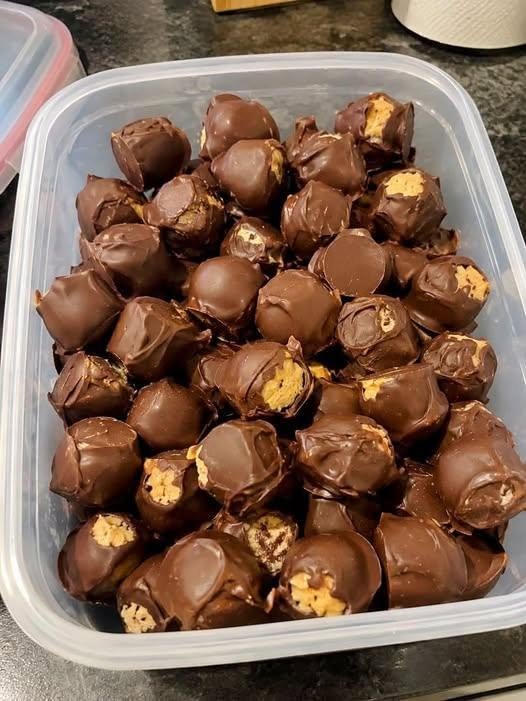
Something about the pairing of chocolate and peanut butter elevates a typical day. Perhaps it’s the thick chocolate coating, the creamy peanut butter filling, or the first bite where the chocolate cracks to reveal a soft, melt-in-your-mouth center. These Chocolate-Covered Peanut Butter Balls always make people grin, no matter what..
Anti-Inflammatory Chocolate-Covered Peanut Butter Balls
Healthy No-Bake Dessert Recipe with Dark Chocolate, Natural Peanut Butter, and Simple Ingredients
Recipe Description
Chocolate-Covered Peanut Butter Balls are a delicious no-bake dessert featuring a creamy peanut butter center wrapped in a smooth chocolate coating. Inspired by classic peanut butter truffles, these bite-sized treats combine rich chocolate flavor with a nutty, slightly sweet filling.
This version uses natural peanut butter, dark chocolate, and optional ground flaxseed to create a more nutrient-conscious treat. Peanuts provide protein and unsaturated fats, while dark chocolate contains cocoa flavanols and other antioxidant compounds. Ground flaxseed adds fiber and plant-based omega-3 fat in the form of ALA.
Although these ingredients can fit into an anti-inflammatory eating pattern, no single dessert is proven to treat inflammation or cure inflammatory conditions. These peanut butter balls are best enjoyed as an occasional treat alongside a balanced diet rich in vegetables, fruits, whole grains, nuts, seeds, and other minimally processed foods.
- Preparation time: 20 minutes
- Chilling time: 30–45 minutes
- Total time: Approximately 1 hour
- Servings: 20 balls
- Serving size: 1 ball
- Difficulty: Easy
- Cooking method: No-bake
- Dietary style: Vegetarian, gluten-free when using certified gluten-free ingredients
- Best for: Make-ahead desserts, holiday treats, lunchbox snacks, and homemade chocolate gifts
Ingredients
For the peanut butter filling
- 1 cup (250 g) natural peanut butter, preferably unsweetened
- 1/4 cup (30 g) almond flour
- 2 tablespoons (30 g) pure maple syrup
- 1 teaspoon vanilla extract
- 1 tablespoon ground flaxseed, optional
- A small pinch of sea salt, if needed
For the chocolate coating
- 200 g dark chocolate, ideally 70–85% cocoa
- 1 teaspoon coconut oil, optional, to help thin the chocolate
Ingredient tip: Choose peanut butter made primarily from peanuts, without unnecessary added sugars or partially hydrogenated oils. For a lower-sugar version, use unsweetened peanut butter and reduce or omit the maple syrup. Check the consistency before adding the almond flour because natural peanut butter varies in thickness.
Instructions
Step 1: Prepare the peanut butter mixture
Add the peanut butter, almond flour, maple syrup, vanilla extract, ground flaxseed, and salt to a mixing bowl.
Stir until the ingredients form a thick, cohesive mixture. It should be soft enough to roll but not so sticky that it clings excessively to your hands.
If the mixture is too soft, add almond flour one tablespoon at a time. If it is too dry, add a small amount of peanut butter.
Step 2: Shape the balls
Scoop approximately one tablespoon of mixture at a time and roll it between your palms to form a ball.
Arrange the balls on a parchment-lined baking tray. Aim for 20 similarly sized pieces so that the portions and nutritional estimates remain consistent.
Step 3: Chill the filling
Place the tray in the refrigerator for 30 minutes, or until the balls feel firm.
Chilling helps the filling hold its shape when dipped into melted chocolate and makes the coating process easier.
Step 4: Melt the dark chocolate
Break the dark chocolate into small pieces and place it in a microwave-safe bowl.
Microwave in 20-second intervals, stirring after each interval until smooth. Alternatively, melt the chocolate in a heatproof bowl over a pan of gently simmering water.
Stir in the optional coconut oil if you prefer a slightly thinner coating. Avoid introducing water into the chocolate, as it can cause the chocolate to seize.
Step 5: Coat the peanut butter balls
Remove the chilled balls from the refrigerator.
Using a fork or dipping tool, lower each ball into the melted chocolate and turn it until fully coated. Lift it out, allow excess chocolate to drip off, and return it to the parchment-lined tray.
For a thicker chocolate shell, let the first coating set briefly and dip the balls a second time.
Step 6: Refrigerate until set
Refrigerate the chocolate-covered balls for 15–20 minutes, or until the coating is firm.
Transfer them to an airtight container and keep refrigerated until serving.
Step 7: Serve and enjoy
Allow the balls to sit at room temperature for approximately 5 minutes before serving for a softer, creamier center.
Enjoy one as a small dessert, pair it with fresh fruit, or serve it on a homemade dessert platter.
Why These Ingredients Can Fit an Anti-Inflammatory Eating Pattern
Natural peanut butter: Peanuts provide plant-based protein, unsaturated fats, and vitamin E. Replacing some foods high in saturated fat with foods rich in unsaturated fats can support a heart-healthy eating pattern.
Dark chocolate: Cocoa contains flavanols and other polyphenols. Dark chocolate can contribute these compounds, although the amount varies by product and processing method. It still contains calories and may contain added sugar.
Ground flaxseed: Flaxseed provides fiber, lignans, and alpha-linolenic acid (ALA), a plant-based omega-3 fatty acid. It adds a mild nutty flavor to the filling.
Almond flour: Almonds provide unsaturated fats, vitamin E, and magnesium. Almond flour also helps bind the filling without relying on refined flour.
Maple syrup: This provides sweetness and helps bind the mixture. It is still an added sugar, so using a modest amount is sensible.
These ingredients may complement an anti-inflammatory dietary pattern, but the recipe itself should not be described as an anti-inflammatory treatment.
Serving Suggestions
- Healthy dessert plate: Serve one or two peanut butter balls with strawberries, blueberries, or raspberries.
- Afternoon snack: Pair one ball with unsweetened tea or coffee and a piece of fresh fruit.
- Holiday dessert platter: Arrange the balls alongside fresh berries, walnuts, and squares of dark chocolate.
- Homemade edible gifts: Place the chilled balls in mini paper candy cups inside a food-safe gift box.
- After-dinner treat: Serve one ball after a balanced meal instead of a larger, sugar-heavy dessert.
- Meal-prep dessert: Prepare a batch on the weekend and portion the balls into small containers for the week.
Recipe Variations
1. Sugar-Free Chocolate Peanut Butter Balls
Use unsweetened peanut butter and a suitable sugar-free dark chocolate sweetened with stevia or another preferred sweetener. Adjust the filling to taste.
Check the sweetener ingredients if you are sensitive to sugar alcohols, which may cause digestive discomfort in some people.
2. Vegan Chocolate Peanut Butter Balls
Use dairy-free dark chocolate and ensure all other ingredients are plant-based. The basic recipe is naturally vegan when the chocolate contains no dairy and the sweetener is plant-derived.
3. High-Protein Peanut Butter Balls
Add a small amount of unsweetened protein powder to the filling. Mix thoroughly and adjust the moisture with additional peanut butter or a teaspoon of plant milk as needed.
The protein content will depend on the protein powder and the size of each ball.
4. Omega-3 Peanut Butter Balls
Increase the ground flaxseed to 2 tablespoons, or replace some of it with finely ground chia seeds. These additions increase fiber and plant-based ALA, although they do not guarantee a measurable reduction in inflammation.
5. Almond Butter Chocolate Balls
Replace the peanut butter with unsweetened almond butter for a different flavor. You may need to adjust the almond flour depending on how runny the almond butter is.
6. Coconut Chocolate Peanut Butter Balls
Add 2 tablespoons of unsweetened shredded coconut to the filling. Roll the finished balls in a little extra coconut before the chocolate coating sets, if desired.
7. Crunchy Peanut Butter Balls
Use crunchy peanut butter or stir in a small amount of finely chopped roasted peanuts for extra texture.
8. Extra-Dark Chocolate Truffles
Use 85% dark chocolate and omit or reduce the maple syrup. This creates a more intense chocolate flavor and may reduce the total sugar, depending on the products used.
Storage and Food Safety
- Refrigerator: Store in an airtight container for approximately 1–2 weeks for best quality.
- Freezer: Freeze in a sealed, freezer-safe container for up to 2–3 months.
- Thawing: Transfer frozen balls to the refrigerator and allow them to thaw before serving.
- Room temperature: Keep serving portions out only as long as needed, especially in warm weather. Refrigerate the remaining batch promptly.
Storage life depends on ingredient freshness, handling, and temperature. If the filling contains fresh dairy or other perishable additions, follow appropriate food-safety guidance.
Estimated Nutrition Facts
The following estimates are for one ball when the recipe makes 20 balls, using natural peanut butter, almond flour, maple syrup, ground flaxseed, and 70% dark chocolate. Actual nutrition will vary by brand, coating thickness, and portion size.
| Nutrient | Approximate amount per ball |
|---|---|
| Calories | 125–145 kcal |
| Protein | 3–4 g |
| Total fat | 9–11 g |
| Saturated fat | 3–4 g |
| Carbohydrates | 8–10 g |
| Dietary fiber | 1.5–2 g |
| Total sugars | 4–6 g |
| Sodium | 20–50 mg |
Nutrition note: These are estimates, not laboratory-tested values. For precise calorie and macronutrient information, calculate the recipe using the nutrition labels of your specific ingredients and divide by the actual number of balls produced.
Although these treats contain beneficial nutrients, they are energy-dense. Portion size matters, particularly if you are managing blood glucose, weight, or overall calorie intake.
Frequently Asked Questions
Are chocolate-covered peanut butter balls anti-inflammatory?
They can fit into an anti-inflammatory eating pattern when made with unsweetened peanut butter, dark chocolate, and modest amounts of added sugar. However, they are still a dessert, and there is insufficient evidence to claim that eating these balls directly reduces inflammation.
Can I eat dark chocolate on an anti-inflammatory diet?
Dark chocolate contains cocoa polyphenols, including flavanols. It can be enjoyed in moderation as part of a balanced diet. Choose a product with a high cocoa percentage and an amount of added sugar that fits your dietary goals.
Are peanut butter balls healthy?
They provide unsaturated fats, some protein, and small amounts of fiber and minerals. Their nutritional value depends on the ingredients and portion size. They are best considered a nutrient-containing dessert rather than a replacement for a balanced meal.
Can I make these peanut butter balls without powdered sugar?
Yes. This recipe uses almond flour and a small amount of maple syrup instead of powdered sugar. You can adjust the sweetener to suit your preferences, keeping in mind that maple syrup is still a source of added sugar.
Can I make them keto-friendly?
You can make a lower-carbohydrate version with unsweetened peanut butter, almond flour, a suitable low-carbohydrate sweetener, and sugar-free dark chocolate. The final carbohydrate count will depend on the brands and quantities used.
Are these peanut butter balls gluten-free?
The basic recipe can be gluten-free when all ingredients are verified gluten-free and there is no cross-contact during preparation. Always check chocolate and other packaged ingredients if you have celiac disease or a medically necessary gluten-free diet.
Can I make this recipe nut-free?
Not as written. Peanut butter and almond flour are both major ingredients. For a nut-free alternative, use sunflower seed butter and a suitable seed flour, checking labels for cross-contact warnings. The taste and consistency may differ.
Why is my peanut butter filling too sticky?
Natural peanut butter can contain a lot of oil. Add almond flour one tablespoon at a time and chill the mixture before rolling. Stir the peanut butter thoroughly before measuring so the oil is distributed evenly.
Why is my chocolate coating cracking?
The filling may be too cold compared with the chocolate, or the chocolate shell may be thick. Let the chilled balls stand briefly before dipping, avoid overheating the chocolate, and use a thin, even coating.
Can I make these peanut butter balls ahead of time?
Yes. Prepare them several days before serving and store them in the refrigerator. They can also be frozen for longer storage, making them convenient for holidays, parties, and weekly dessert preparation.
How many peanut butter balls should I eat per day?
There is no universal recommended number. One or two small balls can be a reasonable dessert portion for many people, depending on their individual energy needs and dietary goals.
Are these suitable for people with diabetes?
They may fit into some meal plans, but they still contain carbohydrates and sugars. Consider the portion size, check the nutrition information, and follow individualized advice from your healthcare professional if you manage diabetes.
Related Recipe Ideas
- Dark Chocolate Almond Butter Truffles
- No-Bake Chocolate Energy Bites
- Healthy Peanut Butter Oatmeal Balls
- Sugar-Free Chocolate Coconut Bites
- Dark Chocolate-Dipped Strawberries
- Homemade Almond Flour Chocolate Cookies
- Flaxseed and Chia Seed Energy Bites
- No-Bake Vegan Chocolate Truffles
These recipes use similar ingredients and can be adapted to suit different preferences for sweetness, fiber, and plant-based ingredients.
Final Thoughts
Chocolate-Covered Peanut Butter Balls are an easy, customizable dessert that combines creamy peanut butter with a rich chocolate shell. Making them at home allows you to choose the chocolate, control the added sugar, adjust the portion size, and incorporate ingredients such as ground flaxseed or almond flour.