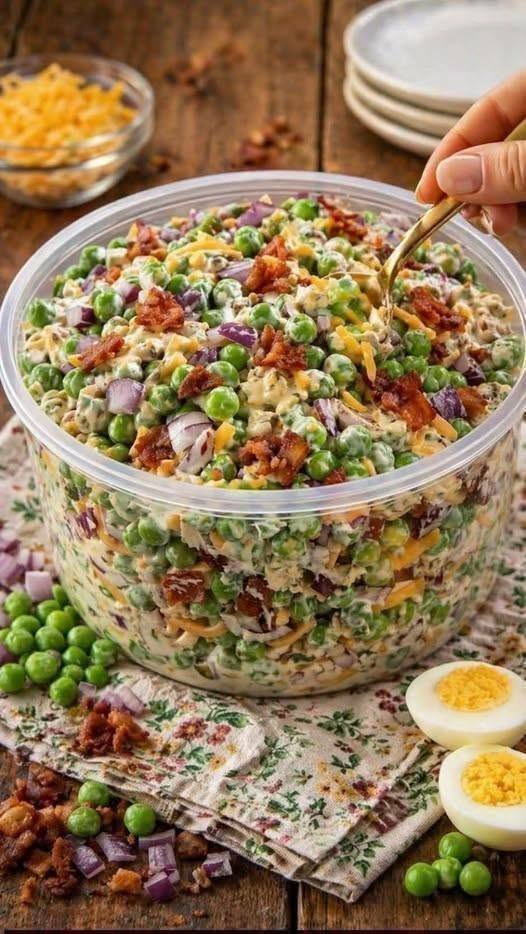
There’s something comforting about a homemade dish that brings everyone together around the table, and this Creamy Bacon Cheddar Pea Salad is one of those recipes I keep coming back to. It’s creamy, cheesy, and packed with crispy bacon, sweet green peas, and crunchy red onions. Every bite has the perfect mix of flavors and textures, making this simple salad surprisingly hard to resist.
I first decided to try it after a family member suggested making a creamy pea salad for our weekend dinner. Honestly, I wasn’t sure how everyone would feel about it because peas aren’t always the most exciting vegetable on the table! But I decided to give it a chance. I tossed the peas with sharp cheddar, crispy bacon, red onion, and a homemade creamy dressing, hoping it would be a hit. The result was so delicious that even the family members who usually pass on peas went back for seconds!
Creamy Bacon Cheddar Pea Salad: Easy, High-Protein Side Dish with an Anti-Inflammatory Twist
Recipe Description
Creamy Bacon Cheddar Pea Salad is a delicious, crowd-pleasing side dish made with sweet green peas, crispy bacon, sharp cheddar cheese, crunchy red onion, and a rich, creamy dressing. This classic pea salad combines fresh textures and savory flavors to create the perfect addition to family dinners, summer barbecues, potlucks, picnics, and holiday gatherings.
This version also includes an anti-inflammatory twist. By using extra vegetables, fresh herbs, olive oil, and a lighter Greek yogurt dressing, you can enjoy a creamy salad with more protein and less saturated fat than traditional mayonnaise-heavy recipes.
Green peas provide plant-based protein, fiber, and antioxidants. Red onions contain beneficial plant compounds, while fresh herbs add flavor without requiring excess salt. Although no single recipe can eliminate inflammation, a balanced diet rich in vegetables, legumes, healthy fats, and minimally processed foods may support overall health.
Recipe Details
- Preparation Time: 15 minutes
- Cooking Time: 10 minutes
- Chilling Time: 30 minutes
- Total Time: 55 minutes
- Servings: 6
- Course: Side Dish, Salad
- Cuisine: American
- Difficulty: Easy
- Dietary Style: Customizable, gluten-free when using verified gluten-free ingredients
- Main Ingredients: Green peas, bacon, cheddar cheese, red onion, eggs, and creamy dressing
Ingredients
For the Salad
- 4 cups frozen green peas, thawed and drained
- 4 slices bacon, cooked until crispy and crumbled
- 1 cup sharp cheddar cheese, shredded or diced
- 1/2 cup red onion, finely chopped
- 2 hard-boiled eggs, chopped (optional)
- 2 tablespoons fresh parsley, finely chopped
- 2 tablespoons chopped green onions (optional)
For the Creamy Dressing
- 1/2 cup plain Greek yogurt
- 1/4 cup mayonnaise
- 1 teaspoon Dijon mustard
- 1 tablespoon fresh lemon juice
- 1/2 teaspoon garlic powder
- 1/4 teaspoon black pepper
- 1/4 teaspoon salt, or to taste
- 1 teaspoon extra-virgin olive oil (optional)
For a more traditional flavor, replace the Greek yogurt with additional mayonnaise. For a lighter dressing, use more Greek yogurt and less mayonnaise.
Instructions
Step 1: Prepare the Green Peas
Place the frozen peas in a colander and thaw them under cool running water or in the refrigerator. Drain thoroughly and pat dry with a clean paper towel.
Avoid boiling the peas for too long, as they should remain bright green and slightly firm. Excess moisture can make the dressing watery.
Step 2: Cook the Bacon
Cook the bacon in a skillet over medium heat until crispy. Transfer it to a paper towel-lined plate to absorb excess grease.
Once cooled, crumble the bacon into small pieces. For a lighter recipe, use less bacon or substitute a leaner protein.
Step 3: Prepare the Vegetables and Cheese
Finely chop the red onion and parsley. Shred or dice the cheddar cheese, and chop the hard-boiled eggs if using them.
For a milder onion flavor, soak the chopped onion in cold water for five minutes and drain before adding it to the salad.
Step 4: Make the Creamy Dressing
In a small bowl, whisk together the Greek yogurt, mayonnaise, Dijon mustard, lemon juice, garlic powder, black pepper, salt, and optional olive oil.
Mix until smooth and creamy. Taste the dressing and adjust the lemon juice, pepper, or salt as desired.
Step 5: Combine the Ingredients
In a large mixing bowl, add the peas, cheddar cheese, red onion, chopped eggs, and parsley.
Pour the dressing over the ingredients and gently stir until everything is evenly coated.
Fold in most of the crumbled bacon, reserving a small amount to sprinkle over the salad before serving.
Step 6: Chill and Serve
Cover the bowl and refrigerate for at least 30 minutes. Chilling allows the flavors to blend and gives the dressing time to coat the ingredients.
Before serving, stir gently and sprinkle the remaining bacon and fresh parsley on top.
Serve chilled as a flavorful side dish or as part of a balanced meal.
Anti-Inflammatory Benefits and Healthy Ingredient Swaps
This salad can be adapted to fit an anti-inflammatory eating pattern, but it is important to distinguish between a potentially health-supportive recipe and a proven treatment for inflammation.
Green Peas
Green peas contain dietary fiber, plant protein, vitamins, and antioxidant compounds. Fiber supports digestive health and can help promote fullness.
Red Onion
Red onions contain quercetin and other plant compounds with antioxidant properties. They contribute flavor and crunch without adding many calories.
Extra-Virgin Olive Oil
Olive oil provides monounsaturated fats and polyphenols. Replacing some saturated fat with unsaturated fat can support heart health.
Plain Greek Yogurt
Greek yogurt provides protein and a creamy texture. Using it in place of some mayonnaise can reduce the amount of added fat while maintaining a rich consistency.
Fresh Herbs and Lemon Juice
Parsley, green onions, and lemon juice add freshness and flavor. They can help reduce reliance on excess salt and heavy dressing.
Bacon and Cheddar Cheese
Bacon and cheddar cheese provide savory flavor, protein, and calcium, but they also contribute sodium and saturated fat. Keeping portions moderate helps balance the recipe.
Important note: This pea salad is not a medical treatment for arthritis, autoimmune disease, or chronic inflammation. People managing a medical condition should follow their healthcare professional’s dietary advice.
Serving Suggestions
Creamy Bacon Cheddar Pea Salad is versatile enough for everyday meals and special occasions.
- Grilled chicken dinner: Serve alongside grilled chicken breast, roasted vegetables, and whole grains for a balanced meal.
- Summer barbecue: Pair with grilled turkey burgers, lean beef, grilled fish, or vegetable skewers.
- Holiday meals: Add it to a spread of roasted turkey, baked chicken, roasted potatoes, and seasonal vegetables.
- Healthy lunch: Serve a moderate portion with whole-grain crackers, fresh fruit, and a boiled egg.
- Potluck and picnic: Transport the salad in a sealed, chilled container and keep it refrigerated or in a cooler until serving.
- Meal prep: Divide the salad into individual portions for convenient lunches and side dishes throughout the next few days.
Recipe Variations
1. Healthier Greek Yogurt Pea Salad
Use 3/4 cup plain Greek yogurt and only 2 tablespoons mayonnaise. Add lemon juice, Dijon mustard, garlic powder, and black pepper for flavor.
This variation provides a lighter dressing with more protein from yogurt.
2. Vegetarian Pea Salad
Omit the bacon and add toasted sunflower seeds, chopped walnuts, or smoked paprika for a savory flavor.
For a fully plant-based version, use dairy-free cheese and unsweetened plant-based yogurt.
3. High-Protein Pea Salad
Add extra hard-boiled eggs or serve the salad with grilled chicken. You can also increase the amount of Greek yogurt in the dressing.
Protein content will vary depending on the ingredients and serving size.
4. Low-Sodium Pea Salad
Choose lower-sodium bacon or omit it, use less salt, and select cheese with a lower sodium content.
Fresh herbs, lemon juice, black pepper, and garlic powder can help maintain flavor.
5. Keto-Inspired Pea Salad
Reduce the quantity of peas and replace some of them with chopped celery, cucumber, or cauliflower.
Peas contain carbohydrates, so this salad is not automatically suitable for a strict ketogenic diet. Check the total carbohydrate content against your individual target.
6. Dairy-Free Pea Salad
Replace the cheddar with a dairy-free cheese alternative and use unsweetened dairy-free yogurt with a suitable mayonnaise.
Check product labels for added sugar, sodium, and allergens.
7. Mediterranean-Inspired Pea Salad
Use olive oil, lemon juice, fresh parsley, cucumber, and a small amount of feta cheese. Reduce the bacon or leave it out.
This version emphasizes vegetables, herbs, and unsaturated fats.
8. Crunchy Pea Salad
Add chopped celery, cucumber, or bell pepper for extra crunch. Toasted pumpkin seeds can also provide a satisfying texture.
Storage and Food Safety
- Store leftovers in an airtight container in the refrigerator at 40°F (4°C) or below.
- For best quality, consume within 3–4 days.
- Do not leave the salad at room temperature for more than two hours, or one hour when temperatures exceed 90°F (32°C).
- Keep the salad chilled during picnics and outdoor gatherings.
- Avoid freezing the finished salad because the creamy dressing may separate and the peas may become mushy.
- If preparing ahead, cook the bacon separately and add it shortly before serving for better crispness.
Nutrition Information
The following values are estimates for one serving, assuming the recipe makes six servings with Greek yogurt, mayonnaise, four slices of bacon, cheddar cheese, and two eggs. Actual nutrition will depend on brands, portion sizes, and ingredient substitutions.
Estimated nutrition per serving:
- Calories: 280–340
- Protein: 13–17 g
- Total carbohydrates: 16–21 g
- Dietary fiber: 4–6 g
- Total fat: 18–24 g
- Saturated fat: 6–9 g
- Total sugars: 5–8 g
- Sodium: 350–600 mg
- Calcium: approximately 120–200 mg
These figures are approximate and should not be treated as laboratory-verified nutrition data. For precise values, calculate the recipe using the nutrition labels of the actual ingredients.
How to Make the Salad More Heart-Healthy
- Replace some mayonnaise with plain Greek yogurt.
- Use less bacon or choose a smaller portion of a lean protein.
- Reduce the amount of cheese or choose a lower-sodium variety.
- Add more vegetables for fiber and volume.
- Use extra-virgin olive oil in moderation.
- Serve alongside whole grains and additional vegetables.
Frequently Asked Questions
1. Is Creamy Bacon Cheddar Pea Salad anti-inflammatory?
It can be modified to fit an anti-inflammatory eating pattern. Green peas, red onions, herbs, and olive oil provide fiber and beneficial plant compounds. However, bacon, cheese, and mayonnaise can contribute sodium and saturated fat, so moderation and ingredient choices matter.
2. Can I make pea salad the day before?
Yes. Prepare the salad, cover it, and refrigerate it overnight. For the best texture, reserve some bacon to add immediately before serving.
3. Should I cook frozen peas before making pea salad?
Usually, no. Thawed frozen peas can be used directly if they are intended to be ready to eat after thawing. If you prefer softer peas, briefly blanch them and cool them completely before mixing.
Follow package instructions and use good food-handling practices.
4. How do I prevent watery pea salad?
Drain the peas thoroughly, pat them dry, and avoid adding warm ingredients to the dressing. If the dressing seems thin, add a little more Greek yogurt or refrigerate the salad before serving.
5. Can I make this recipe without mayonnaise?
Yes. Replace the mayonnaise with additional plain Greek yogurt. You may need a little extra lemon juice, mustard, or olive oil to achieve your preferred flavor and consistency.
6. Is pea salad good for weight management?
It can fit into a balanced weight-management plan. Peas provide fiber and protein, which can support fullness, while portion sizes and calorie-dense ingredients such as bacon, cheese, and mayonnaise influence the overall energy content.
7. Is this recipe gluten-free?
The basic ingredients are naturally gluten-free in most cases, but check labels on bacon, mustard, mayonnaise, cheese, and seasonings for possible gluten-containing additives or cross-contact.
8. Can I use canned peas instead of frozen peas?
Yes. Drain and rinse canned peas gently, then pat them dry. They are generally softer than frozen peas, so handle them carefully to prevent the salad from becoming mushy.
9. What can I use instead of bacon?
Try smoked paprika, toasted sunflower seeds, roasted chickpeas, or a vegetarian bacon alternative. These options change the flavor and nutrition profile, so check labels when using packaged substitutes.
10. What foods pair well with an anti-inflammatory eating pattern?
Common choices include leafy greens, colorful vegetables, berries, legumes, nuts, seeds, whole grains, olive oil, and fish rich in omega-3 fatty acids. Overall dietary patterns matter more than any single food.
Final Thoughts
Creamy Bacon Cheddar Pea Salad is a simple, satisfying recipe that combines sweet peas, sharp cheddar, crisp bacon, red onion, and a tangy dressing. Its creamy texture and savory flavor make it a favorite for family dinners, summer cookouts, potlucks, and meal prep.