
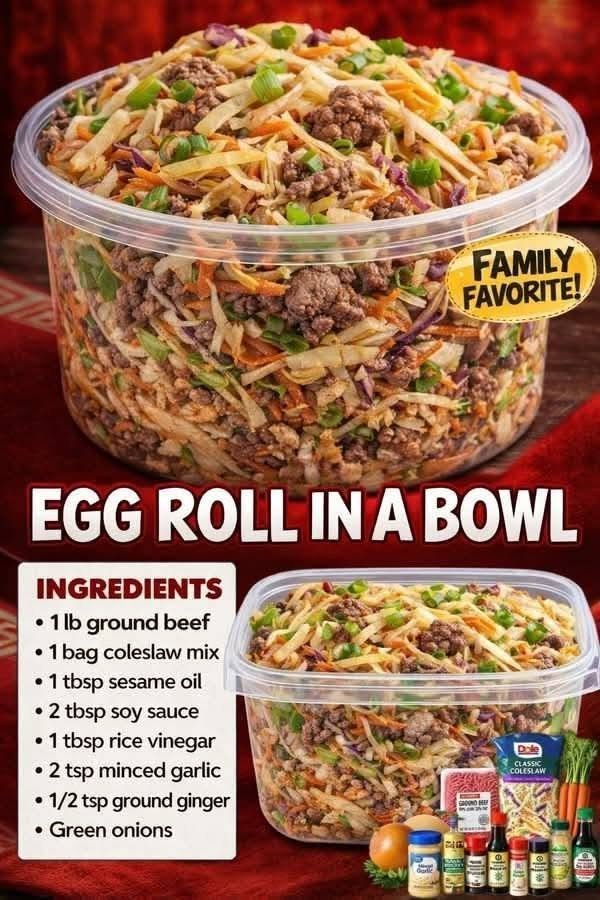
Some meals just have a way of bringing everyone to the table, and Egg Roll in a Bowl is one of those recipes. I love how it takes all the flavors of a classic egg roll and turns them into a simple, homemade dinner without the hassle of wrapping, rolling, or frying anything. Everything cooks in one pan, which means less cleanup and more time to enjoy the evening.
I first heard about this recipe through a recommendation from someone who loves quick, flavorful meals, and I was curious to see if it would live up to the hype. Ground beef, crunchy cabbage, sweet carrots, garlic, ginger, and a savory soy sauce mixture sounded like a combination my family would enjoy. It’s the kind of meal I like making on weekends when I want something comforting but don’t feel like spending the whole evening in the kitchen.
Anti-Inflammatory Egg Roll in a Bowl Recipe: Easy, Healthy, and Flavorful
Recipe Description
If you love the savory flavors of Chinese-inspired egg rolls but want a healthier alternative without deep-frying, this Egg Roll in a Bowl recipe is the perfect choice. Made with lean ground beef, crunchy coleslaw mix, fresh green onions, garlic, ginger, sesame oil, and soy sauce, this one-pan meal delivers delicious flavor with less effort.
This deconstructed egg roll recipe skips the wrapper and focuses on protein-rich meat and fiber-rich vegetables. With a few simple ingredient swaps, you can make it a more anti-inflammatory-friendly meal by incorporating fresh ginger, garlic, extra vegetables, and heart-healthy oils.
Whether you’re looking for an easy weeknight dinner, a low-carb meal, a meal-prep recipe, or a healthy dinner for the family, this Egg Roll in a Bowl is a satisfying option.
Recipe at a Glance
- Prep time: 10 minutes
- Cook time: 15–20 minutes
- Total time: 25–30 minutes
- Servings: 4
- Cuisine: Asian-inspired
- Course: Lunch or dinner
- Diet: Low-carb adaptable, gluten-free adaptable, dairy-free
- Cooking method: Stovetop, one skillet
- Difficulty: Easy
Ingredients
Main Ingredients
- 1 pound lean ground beef, preferably 90–95% lean
- 1 bag coleslaw mix (approximately 14–16 ounces), containing shredded cabbage and carrots
- 1 tablespoon sesame oil
- 2 tablespoons low-sodium soy sauce or gluten-free tamari
- 1 tablespoon rice vinegar
- 2 teaspoons minced garlic
- 1/2 teaspoon ground ginger or 1 teaspoon freshly grated ginger
- 3–4 green onions, sliced
Optional Ingredients for Extra Flavor and Nutrition
- 1 cup sliced mushrooms
- 1 cup chopped bell peppers
- 1 teaspoon sesame seeds
- 1/4 teaspoon crushed red pepper flakes
- 1 teaspoon freshly grated turmeric
- 1–2 teaspoons fresh lemon or lime juice
- 1/4 cup chopped fresh cilantro
- Black pepper, to taste
Instructions: How to Make Egg Roll in a Bowl
Step 1: Prepare the Ingredients
Slice the green onions, mince the garlic, and grate the ginger if using fresh ginger. Prepare the coleslaw mix and any additional vegetables.
For a gluten-free recipe, use certified gluten-free tamari instead of regular soy sauce.
Step 2: Brown the Ground Beef
Heat a large skillet over medium-high heat. Add the ground beef and cook for approximately 6–8 minutes, breaking it into small crumbles with a wooden spoon.
Cook until the beef is thoroughly browned and reaches an internal temperature of 160°F (71°C). Drain excess fat if necessary.
Step 3: Add the Garlic and Ginger
Reduce the heat to medium. Add the sesame oil, minced garlic, and ginger.
Cook for approximately 30–60 seconds, stirring frequently until fragrant. Avoid burning the garlic, as this can make the dish taste bitter.
Step 4: Add the Coleslaw Mix
Add the coleslaw mix to the skillet. Stir well to combine the cabbage and carrots with the beef.
Cook for 4–6 minutes, stirring occasionally, until the vegetables soften slightly but retain some crunch.
If using mushrooms or bell peppers, add them with the coleslaw mix and cook until tender.
Step 5: Season the Dish
Add the low-sodium soy sauce and rice vinegar. Stir thoroughly to distribute the seasonings evenly.
Taste and adjust the flavor with additional ginger, black pepper, or red pepper flakes as desired.
Step 6: Add the Green Onions
Stir in most of the sliced green onions, reserving a small amount for garnish.
Cook for another 1–2 minutes, then remove the skillet from the heat.
Step 7: Serve and Enjoy
Divide the Egg Roll in a Bowl among four serving bowls. Garnish with green onions, sesame seeds, cilantro, or a squeeze of fresh lime juice.
Serve immediately while warm.
Anti-Inflammatory Benefits and Healthy Ingredient Swaps
An anti-inflammatory eating pattern emphasizes vegetables, fruits, whole grains, legumes, nuts, seeds, and healthy fats while limiting highly processed foods and excessive added sugars. This recipe can fit into that pattern with a few thoughtful adjustments.
1. Choose Lean Protein
Lean ground beef provides protein, iron, zinc, and vitamin B12. Choosing a lean cut helps reduce saturated fat.
For a more plant-forward option, replace the beef with extra-firm tofu, tempeh, or edamame. You can also use lean ground turkey or chicken.
2. Include Cabbage and Carrots
Cabbage is a cruciferous vegetable that supplies vitamin C, fiber, and beneficial plant compounds. Carrots provide beta-carotene, which the body can convert into vitamin A.
These vegetables contribute to an overall healthy dietary pattern and make this meal colorful, filling, and nutrient-dense.
3. Use Fresh Garlic and Ginger
Garlic and ginger contain naturally occurring bioactive compounds that have been studied for their potential health effects.
Fresh ginger adds a bright, spicy flavor, while garlic provides savory depth. Although these ingredients may support a healthy diet, this recipe should not be considered a treatment for chronic inflammation.
4. Choose Heart-Healthy Fats
Sesame oil contributes flavor and unsaturated fats. For a different nutritional profile, you can use extra-virgin olive oil for cooking and add a small amount of toasted sesame oil at the end for flavor.
Olive oil is a staple of Mediterranean-style eating patterns, which have been associated with several health benefits.
5. Reduce Excess Sodium
Regular soy sauce can contain substantial sodium. Use low-sodium soy sauce or gluten-free tamari, and avoid adding extra salt before tasting the finished dish.
Rice vinegar, ginger, garlic, lime juice, and fresh herbs help build flavor without relying entirely on salt.
6. Add More Colorful Vegetables
Include mushrooms, bell peppers, broccoli slaw, spinach, or extra shredded carrots. Eating a wider variety of vegetables increases the range of nutrients and plant compounds in your diet.
Important: No single meal can eliminate inflammation. The potential benefits come from your overall eating pattern, lifestyle, sleep, and physical activity, rather than from one particular ingredient.
Serving Suggestions
Egg Roll in a Bowl is versatile enough to serve as a quick lunch, family dinner, or meal-prep option.
- Low-carb dinner: Serve on its own or over cauliflower rice.
- Balanced meal: Serve with brown rice or quinoa for additional fiber and carbohydrates.
- High-protein lunch: Add extra lean beef, chicken, tofu, or edamame.
- Fresh and crunchy: Top with cucumber slices, cilantro, sesame seeds, or fresh lime juice.
- Asian-inspired meal: Pair with steamed broccoli or a simple cucumber salad.
- Family-friendly dinner: Serve sauces and spicy toppings on the side so everyone can customize their bowl.
- Meal-prep lunch: Divide into individual containers with your preferred grain or vegetable side.
For a balanced plate, aim to include a generous portion of vegetables, an appropriate portion of protein, and a whole-grain or other fiber-rich carbohydrate if desired.
Recipe Variations
1. Ground Turkey Egg Roll in a Bowl
Replace the ground beef with 1 pound of lean ground turkey. Follow the same cooking instructions, making sure the turkey reaches an internal temperature of 165°F (74°C).
This version offers a lean-protein alternative with a milder flavor.
2. Ground Chicken Egg Roll in a Bowl
Use ground chicken instead of beef. Add extra garlic, ginger, and green onions to enhance the flavor.
Cook ground chicken to 165°F (74°C).
3. Vegetarian Egg Roll in a Bowl
Replace the meat with 14–16 ounces of crumbled extra-firm tofu or approximately 2 cups of cooked edamame.
For extra texture, add sliced mushrooms. Use tamari or soy sauce and cook until the vegetables reach your preferred tenderness.
4. Vegan Egg Roll in a Bowl
Use tofu, tempeh, or a plant-based ground alternative. Check the labels on packaged meat alternatives and sauces if you want to minimize sodium or avoid particular additives.
5. Gluten-Free Egg Roll in a Bowl
Replace conventional soy sauce with certified gluten-free tamari or coconut aminos. Verify that the rice vinegar and any packaged seasonings are gluten-free as well.
6. Spicy Egg Roll in a Bowl
Add crushed red pepper flakes, fresh chili, or a small amount of chili-garlic sauce.
For a lower-sodium version, check the nutrition label on any bottled sauce.
7. Keto Egg Roll in a Bowl
Use lean or moderately fatty ground beef, cabbage, carrots, sesame oil, and seasonings. Serve without rice or noodles.
Carrots and sauces still contribute carbohydrates, so calculate the nutrition using your actual ingredient brands and quantities if you follow a strict ketogenic diet.
8. Mediterranean-Inspired Variation
For a different flavor profile, use ground turkey, extra-virgin olive oil, garlic, and a larger variety of vegetables. Finish with lemon juice and fresh herbs.
This is a fusion variation rather than a traditional egg roll flavor.
Storage, Meal Prep, and Food Safety
Refrigeration
Allow leftovers to cool promptly and transfer them to airtight containers. Refrigerate within two hours of cooking, or within one hour if the surrounding temperature is above 90°F (32°C).
Store in the refrigerator for 3–4 days.
Freezing
Freeze cooled portions in freezer-safe containers for up to 2–3 months for best quality. The cabbage may become softer after thawing.
Thaw in the refrigerator before reheating when practical.
Reheating
Reheat in a skillet over medium heat, stirring until hot throughout. You can add a small splash of water if the mixture seems dry.
For food safety, reheat leftovers to 165°F (74°C).
Meal-Prep Tips
- Keep the cabbage slightly crisp when first cooking if you prefer a firmer texture after reheating.
- Divide the mixture into individual portions immediately after cooling.
- Store cooked rice separately if serving with rice.
- Add fresh green onions, herbs, or lime juice just before eating to brighten the flavor.
Nutrition Information
The following figures are estimates for one of four servings, assuming 1 pound of 90–95% lean ground beef, one 14–16-ounce bag of coleslaw mix, sesame oil, soy sauce, rice vinegar, garlic, ginger, and green onions.
| Nutrient | Estimated amount per serving |
|---|---|
| Calories | 300–380 kcal |
| Protein | 25–32 g |
| Total carbohydrates | 10–16 g |
| Dietary fiber | 3–5 g |
| Total fat | 15–23 g |
| Saturated fat | 4–8 g |
| Sugar | 4–7 g |
| Sodium | 450–800 mg |
Actual values depend on the fat content of the beef, the weight and composition of the coleslaw mix, the brand of soy sauce, and the amount of oil retained in the finished dish.
These estimates do not include rice, noodles, or additional toppings. For precise nutrition information, calculate the recipe using the specific products you use.
Is Egg Roll in a Bowl Good for Weight Management?
It can be a useful option for weight management because it combines protein and vegetables in a filling meal. The total calorie content depends on your meat selection, cooking oil, sauces, portion size, and side dishes.
You do not need to follow a restrictive diet to enjoy this recipe. Portion sizes and your overall dietary pattern matter more than labeling a single food as good or bad.
Is Egg Roll in a Bowl Keto-Friendly?
It can fit into some low-carbohydrate eating plans when served without rice or noodles. However, the vegetables, sauces, and portion size still contribute carbohydrates. Calculate the net carbohydrates from your actual ingredients if you follow a strict keto diet.
Is This Recipe Gluten-Free?
It can be made gluten-free by using certified gluten-free tamari or another suitable gluten-free alternative instead of conventional soy sauce. Check all packaged ingredients for possible gluten-containing additives.
Frequently Asked Questions
1. Why Is It Called Egg Roll in a Bowl if There Are No Eggs?
The name refers to the familiar filling found inside an egg roll. The dish recreates those savory flavors without wrapping the filling in dough or deep-frying it. Eggs are optional, not essential.
2. Can I Add an Egg?
Yes. Push the cooked meat and vegetables to one side of the skillet, scramble one or two eggs in the empty space, and mix them into the finished dish once cooked.
Eggs add protein and create a variation similar to an egg roll filling with scrambled egg.
3. Can I Make Egg Roll in a Bowl Without Sesame Oil?
Yes. Use a small amount of olive oil or avocado oil for cooking. Add a little toasted sesame oil at the end if you still want its distinctive flavor.
If you have a sesame allergy, avoid sesame oil and sesame seed toppings entirely and check product labels for cross-contact warnings.
4. How Do I Keep the Cabbage from Becoming Soggy?
Use a large skillet, avoid overcrowding, and cook the cabbage only until it reaches your preferred texture. A few minutes of cooking is generally sufficient for a tender-crisp result.
If the coleslaw mix releases excess moisture, allow some liquid to evaporate before adding the final seasonings.
5. Can I Make This Recipe Ahead of Time?
Yes. Cook the recipe in advance and refrigerate it in individual portions. Reheat thoroughly before serving.
For the freshest texture, you can also prepare the vegetables and sauce separately, then cook everything shortly before dinner.
6. What Is the Best Meat for Egg Roll in a Bowl?
Ground beef gives the recipe a rich, savory flavor. Ground turkey and chicken are useful leaner alternatives, while tofu, tempeh, and edamame work well for plant-based meals.
The best choice depends on your taste preferences, nutritional goals, budget, and dietary needs.
7. Can This Recipe Help Reduce Inflammation?
This recipe contains vegetables, garlic, and ginger, which can contribute beneficial nutrients and plant compounds to your diet. Choosing lean protein, limiting excess sodium, and using unsaturated fats can also support a health-conscious eating pattern.
However, there is no guarantee that eating this dish will reduce inflammation or treat an inflammatory disease. If you have a diagnosed condition, discuss individualized dietary changes with a qualified healthcare professional.
8. How Can I Make It More Filling?
Add edamame, extra vegetables, tofu, or a serving of brown rice or quinoa. Protein, fiber, and adequate overall energy intake can help make meals more satisfying.
9. Is Egg Roll in a Bowl Suitable for Meal Prep?
Yes. It is easy to portion, stores well in the refrigerator, and reheats conveniently. Keep fresh toppings separate and add them just before serving.
10. Can I Make Egg Roll in a Bowl Without Soy Sauce?
Yes. Coconut aminos are one alternative, although they have a different flavor and nutritional profile. Check the label for sodium and sugar content, and adjust the quantity to taste.
Final Thoughts
Egg Roll in a Bowl is an easy, flavorful, and customizable one-pan dinner that brings together savory ground meat, crunchy cabbage, sweet carrots, garlic, ginger, and green onions. It offers a practical alternative to deep-fried egg rolls and can fit into a balanced, vegetable-rich eating pattern.