
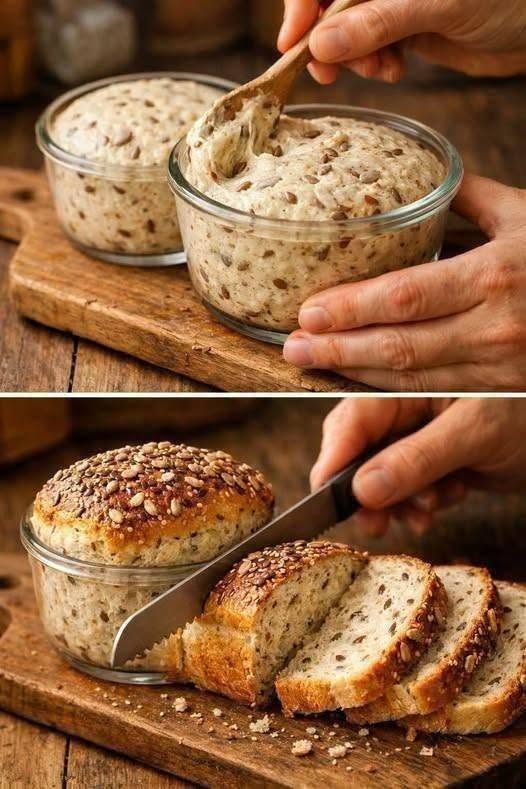
There’s nothing quite like the comforting smell of freshly baked bread spreading through the kitchen. It always reminds me of peaceful mornings, cozy family breakfasts, and those special moments when everyone comes together to enjoy something homemade. I’ve always enjoyed baking bread, but honestly, kneading dough and dealing with a messy kitchen can sometimes feel like too much work, especially on busy days. That’s why this Homemade Seeded No-Knead Bread has become such a favorite. It’s simple, requires very little effort, and still gives you that beautiful homemade loaf with a golden, crunchy crust and a soft, hearty center. The best part? You don’t need to knead the dough or spend hours working in the kitchen. Just mix the ingredients, let the dough rest, and allow your oven to do the magic!
Homemade Seeded No-Knead Bread – Anti-Inflammatory, High-Fiber & Heart-Healthy Recipe
Recipe Description
Homemade Seeded No-Knead Bread is a wholesome, delicious alternative to conventional store-bought bread. Made with whole-grain flour, nutrient-rich seeds, olive oil, and simple pantry ingredients, this rustic bread delivers a satisfying texture, a crispy golden crust, and a soft, hearty interior.
This easy no-knead bread recipe requires minimal effort and no special equipment. The dough develops its texture through resting and fermentation rather than traditional kneading.
Packed with fiber, healthy fats, plant-based protein, and essential minerals, this seeded bread can be part of a balanced anti-inflammatory diet. Ingredients such as flaxseeds, chia seeds, pumpkin seeds, and sunflower seeds provide beneficial nutrients that support overall wellness.
Whether you are looking for healthy homemade bread, a high-fiber breakfast option, or a nutritious addition to your meal plan, this recipe is a wonderful choice.
Recipe Details
-
Preparation Time: 15 minutes
-
Resting Time: 8–12 hours
-
Baking Time: 40–50 minutes
-
Total Time: Approximately 9–13 hours
-
Servings: 12 slices
-
Difficulty: Easy
-
Cuisine: Homemade / European-inspired
-
Diet: Vegetarian, with vegan adaptation
-
Recipe Type: Whole-grain seeded bread
Ingredients
For the Bread Dough
-
3 cups whole-wheat flour
-
1 cup bread flour or all-purpose flour
-
1½ teaspoons salt
-
1 teaspoon instant yeast
-
2 tablespoons extra-virgin olive oil
-
1¾ cups lukewarm water
-
1 tablespoon honey (optional)
For the Seed Mixture
-
2 tablespoons sunflower seeds
-
2 tablespoons pumpkin seeds
-
2 tablespoons flaxseeds
-
1 tablespoon chia seeds
-
1 tablespoon sesame seeds
-
1 tablespoon rolled oats (optional)
For the Topping
-
1 tablespoon sunflower seeds
-
1 tablespoon pumpkin seeds
-
1 tablespoon sesame seeds
-
1 teaspoon flaxseeds
Instructions
Step 1: Prepare the Seed Mixture
Combine sunflower seeds, pumpkin seeds, flaxseeds, chia seeds, sesame seeds, and rolled oats in a small bowl.
Mix well and set aside.
For better texture and easier digestion, you can soak the chia and flaxseeds in 3–4 tablespoons of water for approximately 10 minutes before adding them to the dough.
Step 2: Mix the Dry Ingredients
In a large mixing bowl, combine whole-wheat flour, bread flour, salt, and instant yeast.
Stir until evenly distributed.
Add the prepared seed mixture and mix again.
Step 3: Add the Wet Ingredients
Pour in the lukewarm water, olive oil, and optional honey.
Stir with a wooden spoon until a sticky, shaggy dough forms.
The dough should look moist and slightly uneven. There is no need to knead it.
Step 4: Allow the Dough to Rise
Cover the bowl with plastic wrap or a clean kitchen towel.
Leave the dough at room temperature for 8–12 hours, or until it becomes bubbly, expanded, and airy.
This slow fermentation helps develop the bread’s flavor and texture.
Step 5: Shape the Dough
Lightly flour a clean work surface.
Transfer the dough onto the surface and gently fold the edges toward the center.
Avoid excessive handling.
Shape it into a round loaf and let it rest for approximately 20–30 minutes.
Step 6: Prepare the Bread for Baking
Line a baking dish or loaf pan with parchment paper.
Transfer the shaped dough into the prepared dish.
Lightly brush the surface with water and sprinkle the remaining seeds over the top.
Gently press the seeds into the dough so they adhere.
Step 7: Bake the Bread
Preheat the oven to 220°C (425°F).
Bake for approximately 40–50 minutes, until the crust is golden brown and the loaf is fully cooked.
If the seeds begin browning too quickly, loosely cover the bread with foil.
The internal temperature should reach approximately 96–99°C (205–210°F).
Step 8: Cool and Slice
Remove the bread from the oven and allow it to cool completely on a wire rack.
Cooling helps the crumb finish setting and makes slicing easier.
Cut into slices and enjoy your homemade seeded bread!
Why This Bread Is a Great Choice for an Anti-Inflammatory Diet
This homemade bread contains several ingredients associated with a nutritious, plant-forward eating pattern.
-
Whole-wheat flour: Provides dietary fiber, magnesium, and other essential nutrients.
-
Flaxseeds: Contain alpha-linolenic acid (ALA), a plant-based omega-3 fatty acid, and lignans.
-
Chia seeds: Supply fiber, plant-based omega-3 fats, and minerals.
-
Pumpkin seeds: Provide magnesium, zinc, protein, and unsaturated fats.
-
Sunflower seeds: Contain vitamin E, an antioxidant nutrient.
-
Sesame seeds: Provide healthy fats, fiber, and minerals.
-
Extra-virgin olive oil: Contains monounsaturated fats and antioxidant compounds, including polyphenols.
An important note: No individual bread recipe can prevent or treat inflammation. However, replacing some refined grains with whole grains and incorporating seeds and unsaturated fats can support an overall anti-inflammatory dietary pattern.
Serving Suggestions
Enjoy this nutritious homemade bread in several delicious ways.
-
Healthy Breakfast: Toast a slice and top with mashed avocado, olive oil, and black pepper.
-
Protein-Rich Breakfast: Serve with boiled eggs or scrambled tofu.
-
Heart-Healthy Snack: Spread natural almond butter over a toasted slice.
-
Mediterranean Lunch: Pair with hummus, cucumber, tomatoes, and fresh herbs.
-
Healthy Sandwiches: Use slices for grilled vegetable or chicken sandwiches.
-
Soup Companion: Serve alongside homemade lentil, tomato, or vegetable soup.
-
Nutritious Dinner: Enjoy with roasted vegetables, grilled fish, or a fresh green salad.
Recipe Variations
1. Gluten-Free Seeded Bread
Replace wheat flour with a suitable gluten-free bread flour blend. Add a binding ingredient such as psyllium husk according to the flour blend’s instructions. The water quantity and rising time may need adjustment.
2. Extra Omega-3 Bread
Increase the flaxseeds and chia seeds slightly for additional plant-based omega-3 fats.
3. Mediterranean Seeded Bread
Add chopped olives, dried oregano, rosemary, and a little extra-virgin olive oil for a Mediterranean-inspired flavor.
4. High-Protein Seeded Bread
Add hemp seeds and additional pumpkin seeds to increase plant-based protein.
5. Low-Sodium Bread
Reduce the salt modestly and use unsalted seeds. Avoid removing all the salt because it contributes to flavor and dough structure.
6. Vegan Seeded Bread
Simply omit the honey or replace it with maple syrup. The rest of the recipe is naturally plant-based.
7. Herb and Garlic Bread
Add dried rosemary, thyme, oregano, and garlic powder for a flavorful savory loaf.
Storage Instructions
-
Room Temperature: Store in an airtight bread container or bag for 2–3 days.
-
Refrigerator: Store for up to approximately 5–7 days, although refrigeration may make bread stale faster.
-
Freezer: Slice the cooled bread and freeze in a sealed freezer-safe bag for up to 3 months.
-
Reheating: Toast frozen slices directly or allow them to thaw before warming.
For the best texture, freeze individual slices so you can use only what you need.
Nutrition Information
Estimated nutrition per serving (1 slice, assuming 12 slices per loaf):
|
Nutrient |
Approximate Amount |
|---|---|
|
Calories |
190 kcal |
|
Protein |
7 g |
|
Total Carbohydrates |
29 g |
|
Dietary Fiber |
5 g |
|
Total Fat |
6 g |
|
Saturated Fat |
0.8 g |
|
Omega-3 Fats |
0.8–1.2 g |
|
Sugar |
1–2 g |
|
Sodium |
290 mg |
Nutrition values are estimates and will vary depending on flour brands, seed quantities, loaf size, and the number of slices.
Frequently Asked Questions
1. Is seeded bread good for an anti-inflammatory diet?
Seeded bread made with whole grains, flaxseeds, chia seeds, pumpkin seeds, and olive oil can fit into an anti-inflammatory eating pattern. Its nutritional benefits depend on the ingredients and overall dietary habits.
2. Can I eat seeded bread every day?
Yes, most people can enjoy whole-grain seeded bread regularly as part of a balanced diet. Portion size and individual dietary needs matter.
3. Is homemade seeded bread healthier than white bread?
Whole-grain seeded bread generally provides more dietary fiber, minerals, healthy fats, and plant-based protein than conventional white bread.
4. Does this bread contain omega-3 fatty acids?
Yes. Flaxseeds and chia seeds contain alpha-linolenic acid (ALA), a plant-based omega-3 fatty acid.
5. Can I make this bread without yeast?
Yes, but you will need a different recipe using baking powder or another leavening method. The texture will be more like quick bread than traditional fermented bread.
6. Why is my no-knead bread dough sticky?
Sticky dough is normal for no-knead bread. It contains more moisture than traditional kneaded dough, helping create an airy interior.
7. Can I use only whole-wheat flour?
Yes. However, the bread may be denser. You might need to adjust the water slightly depending on your flour.
8. Is seeded bread suitable for weight management?
It can be. Its fiber and protein contribute to fullness, but total calories and portion sizes still matter.
9. Can I prepare the dough overnight?
Absolutely! Overnight fermentation is one of the easiest ways to develop flavor without kneading.
10. Is this bread suitable for people with diabetes?
Whole-grain bread may offer more fiber than refined white bread, but it still contains carbohydrates. People managing blood glucose should consider portion sizes and their individual dietary requirements.
Related Recipe Ideas
If you enjoy healthy homemade bread, you may also like:
-
Whole-Wheat Flaxseed Bread
-
Homemade Chia Seed Bread
-
Mediterranean Olive and Herb Bread
-
High-Fiber Oatmeal Bread
-
No-Knead Multigrain Bread
-
Homemade Sourdough Whole-Wheat Bread
-
Pumpkin Seed and Sunflower Seed Bread
-
Healthy Gluten-Free Seed Bread
-
Protein-Rich Breakfast Toast
-
Homemade Avocado and Hummus Toast
Final Thoughts
Homemade Seeded No-Knead Bread is a simple and satisfying way to bring more whole grains, seeds, fiber, and healthy fats into your everyday meals.