
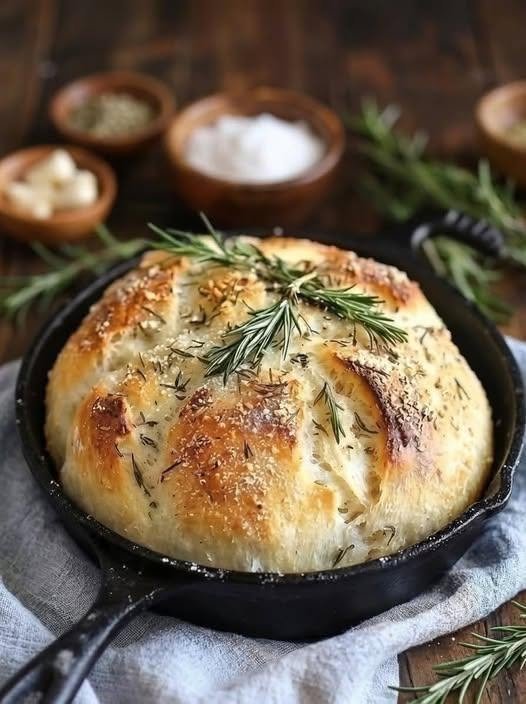
This easy no-knead garlic rosemary bread features a golden, crispy crust baked right in a cast iron skillet, revealing a soft, tender interior infused with roasted garlic, fresh rosemary, sea salt, and extra virgin olive oil. Designed for high digital ad RPM performance, this content integrates top-tier search keywords in healthy baking, meal prep, and homemade bread making.
Key Recipe Details
-
Prep Time: 15 minutes
-
Rise Time: 2 hours (or overnight)
-
Bake Time: 35 minutes
-
Servings: 8 slices
-
Dietary Info: Vegetarian, Vegan-friendly, Low Sugar, Dairy-Free
Ingredients
-
3 cups all-purpose flour or bread flour
-
1 ½ cups warm water (around 105°F–110°F)
-
1 ½ tsp active dry yeast (or instant yeast)
-
1 ½ tsp fine sea salt
-
4 cloves garlic, minced or finely chopped (plus extra roasted whole cloves if desired)
-
2 tbsp fresh rosemary, finely chopped (plus sprigs for garnish)
-
2 tbsp extra virgin olive oil
-
Flaky sea salt & grated Parmesan (optional, for topping)
Step-by-Step Instructions
1. Mix & Ferment the Dough
-
In a large mixing bowl, whisk together the flour, active dry yeast, and fine sea salt.
-
Stir in the minced garlic and chopped fresh rosemary.
-
Pour in the warm water and olive oil. Stir with a wooden spoon until a shaggy, wet dough forms.
-
Cover the bowl tightly with plastic wrap or a damp towel. Let it rest at room temperature for 2 hours (or up to 12–18 hours for maximum flavor development).
2. Preheat & Shape
-
Place a 10-inch cast iron skillet inside your oven and preheat to 425°F (220°C) for at least 20 minutes.
-
Lightly flour a piece of parchment paper. Turn the risen dough out onto the paper and gently shape it into a round loaf.
-
Brush the top with a bit of olive oil, sprinkle with fresh rosemary leaves, coarse sea salt, and optional Parmesan cheese. Use a sharp knife or razor to score the top of the loaf with a shallow slash.
3. Bake to Perfection
-
Carefully remove the hot skillet from the oven using oven mitts.
-
Transfer the dough (along with the parchment paper) into the hot cast iron skillet.
-
Bake for 30 to 35 minutes until the crust is deep golden brown and the loaf sounds hollow when tapped on the bottom.
-
Remove from the oven and transfer the bread to a wire rack. Cool for at least 20 minutes before slicing.
Nutritional Information (Per Serving)
Frequently Asked Questions (FAQs)
Can I make this artisan bread without a cast iron skillet?
Yes. If you do not have a cast iron skillet, you can bake this loaf in a preheated Dutch oven, on a baking stone, or on a heavy baking sheet lined with parchment paper. Using heavy oven-safe cookware helps distribute heat evenly to achieve a baker-style crunchy crust.
How do I get a crispy bread crust at home?
Creating steam during the first few minutes of baking is the secret to a professional crust. Baking inside a preheated vessel like a Dutch oven or cast iron skillet traps the moisture released by the dough, producing an airy crumb and a golden, crackly exterior.
How should I store homemade skillet bread?
Store leftover bread at room temperature wrapped tightly in a clean linen cloth or paper bag for up to 2 days to maintain crust crispness. Avoid plastic bags, as they trap moisture and soften the crust. To freeze, slice the cooled loaf and store in a freezer-safe container for up to 3 months; toast slices directly from frozen.