
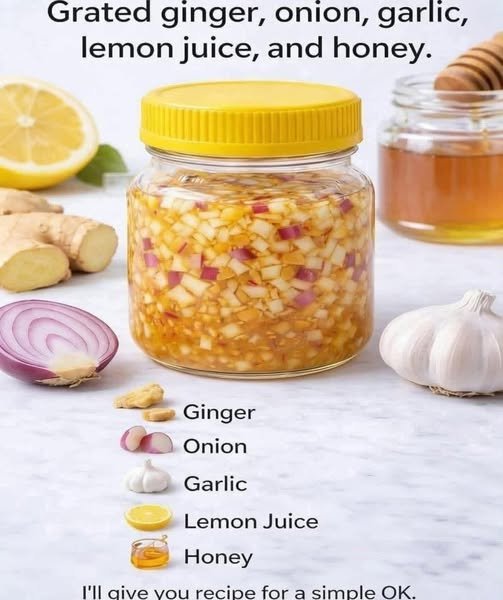
Certain recipes feel more like small rituals than actual recipes. For me, this Ginger-Garlic-Onion Honey Tonic is one of those.
When I originally learned about this combination from a buddy, I recall being a little dubious. Ginger, onion, garlic, lemon, and honey all in one jar? When everyone in the house sniffled, it sounded like something my grandmother may have cooked..
Ginger–Garlic–Onion Honey Tonic
A Simple Anti-Inflammatory-Inspired Wellness Recipe
This Ginger–Garlic–Onion Honey Tonic combines fresh ginger, garlic, onion, lemon juice, and honey into a concentrated homemade wellness mixture. These ingredients contain compounds with antioxidant and anti-inflammatory properties, making this a flavorful addition to a balanced diet.
Important: This tonic is a food, not a treatment or cure for inflammation, infection, arthritis, or other medical conditions. The evidence for individual ingredients does not mean this particular homemade tonic has been proven to treat disease.
🌿 Full Recipe
Ingredients
-
2 tablespoons fresh ginger, finely grated
-
3–4 cloves fresh garlic, finely minced or grated
-
¼ cup red or yellow onion, very finely minced
-
½ cup raw or regular honey
-
2 tablespoons fresh lemon juice
-
Optional: ¼ teaspoon ground turmeric
-
Optional: Pinch of black pepper to complement turmeric
Equipment
-
Clean glass jar with lid
-
Fine grater or garlic press
-
Measuring spoons
-
Small spoon
🥄 Instructions
-
Prepare the ginger
Wash and peel the ginger, then finely grate it. -
Prepare the garlic
Peel and finely mince or grate the garlic. -
Prepare the onion
Finely dice the onion. Smaller pieces release more flavor and make the tonic easier to spoon. -
Combine the ingredients
Add ginger, garlic, and onion to a clean glass jar. -
Add lemon juice
Pour in the fresh lemon juice and mix thoroughly. -
Add honey
Pour the honey over the mixture. Stir until everything is evenly coated. -
Optional additions
Add turmeric and a small pinch of black pepper if desired. -
Rest briefly
Cover and refrigerate for several hours, preferably overnight, so the flavors can combine.
How to Take It
Start with 1 teaspoon once daily, preferably with food.
If you tolerate it well, you can use 1–2 teaspoons per day.
You can also dilute 1 teaspoon in a cup of warm water or tea for a gentler drink.
Don’t use boiling water, particularly if you’re trying to preserve the flavor and some heat-sensitive compounds.
🍯 Serving Suggestions
1. Warm Wellness Drink
Mix:
-
1 teaspoon tonic
-
1 cup warm water
-
Optional squeeze of lemon
Stir well and sip slowly.
2. Ginger-Lemon Tea
Add 1 teaspoon to warm ginger or herbal tea for a stronger immune-support wellness drink.
3. Salad Dressing
Whisk together:
-
1 teaspoon tonic
-
1 tablespoon olive oil
-
1 teaspoon lemon juice
-
Pinch of black pepper
Use over leafy greens or roasted vegetables.
4. Marinade
Mix a small amount with olive oil and use as a marinade for chicken, tofu, or vegetables.
5. Toast or Yogurt
A small amount can be drizzled over plain yogurt or spread on toast for a sweet-savory combination.
🧡 Why These Ingredients?
Ginger
Ginger contains bioactive compounds such as gingerols and is widely used in traditional food and wellness practices. It adds warmth and a naturally spicy flavor.
Garlic
Garlic contains sulfur-containing compounds, including allicin, which are studied for antioxidant and other biological effects.
Onion
Onions provide quercetin and other plant compounds, along with flavor and antioxidants.
Lemon
Fresh lemon juice contributes vitamin C, acidity occurring antioxidant compounds. It also makes the strong flavors of, and bright citrus flavor.
Honey
Honey provides sweetness and has naturally occurring antioxidant compounds. It also makes the strong flavors of garlic, onion, and ginger considerably easier to consume.
Turmeric — Optional
Turmeric contains curcumin, a compound extensively studied for its potential anti-inflammatory effects. Adding black pepper is traditional in turmeric preparations because piperine can increase curcumin absorption.
🔄 Variations
Spicy Anti-Inflammatory-Inspired Tonic
Add:
-
¼ teaspoon turmeric
-
Pinch of black pepper
-
Tiny pinch of cayenne
This creates a considerably hotter version.
Cinnamon Ginger Tonic
Add ¼ teaspoon cinnamon for a warmer, sweeter flavor.
Orange-Ginger Version
Replace half the lemon juice with fresh orange juice for a milder citrus flavor.
Apple Cider Vinegar Version
Add 1 teaspoon apple cider vinegar immediately before serving rather than making a large stored batch. This gives the tonic a sharper flavor.
Mild Family Version
Reduce the garlic vegan. Use maple syrup instead, although the resulting mixture and onion and increase the honey and lemon slightly.
Vegan Version
Honey isn’t vegan. Use maple syrup instead, although the resulting mixture will have a different flavor and nutritional profile.
🥗 Approximate Nutrition
Nutrition varies substantially depending on the amount of honey and the size of the vegetables.
For approximately 1 teaspoon of the finished mixture:
| Nutrient | Approximate amount |
|---|---|
| Calories | 15–25 kcal |
| Carbohydrates | 4–6 g |
| Sugars | 4–6 g |
| Fat | <0.1 g |
| Protein | <0.2 g |
| Fiber | <0.2 g |
| Sodium | Very low |
Most of the calories and carbohydrates come from honey.
This isn’t a significant source of protein, fiber, or essential micronutrients, so think of it as a flavorful wellness food, not a nutritional replacement for fruits, vegetables, whole grains, legumes, nuts, or protein-rich foods.
⚠️ Storage & Safety
Because this recipe contains fresh garlic and onion, don’t treat it as a shelf-stable preserve.
-
Keep it refrigerated in a clean, covered container.
-
Make a small batch rather than storing it for long periods.
-
For a conservative homemade approach, use it within about 5–7 days and discard it if you notice mold, unusual bubbling, unpleasant odors, or other signs of spoilage.
-
Always use a clean spoon rather than repeatedly dipping used utensils into the jar.
-
Honey should never be given to children under 12 months because of the risk of infant botulism.
-
If you have a medical condition, take blood-thinning medication, have significant gastrointestinal sensitivity, or are preparing this for a child, ask a healthcare professional about whether the ingredients are appropriate for you.
The combination can be quite pungent and may cause heartburn, stomach irritation, or digestive discomfort in some people.
❓ Related Questions
Is this Ginger–Garlic–Onion Honey Tonic really anti-inflammatory?
The individual ingredients contain compounds that have been investigated for anti-inflammatory and antioxidant effects. However, this specific homemade tonic hasn’t been established as a treatment for chronic inflammation.
When should I take it?
There isn’t a medically established “best” time. Taking a small amount with or after food may be more comfortable for people who find raw garlic or ginger irritating.
Can I drink it every day?
For most healthy adults, a small food-sized serving can fit into a balanced diet, but more isn’t necessarily better.
Can I take it on an empty stomach?
You can, but raw garlic, onion, lemon, and ginger may cause stomach discomfort or reflux. If that happens, take it with food or dilute it.
Can I use powdered ginger and garlic?
Yes, although fresh ingredients generally provide a different flavor and texture. Start with smaller amounts because powdered spices can be concentrated.
Can I make a large batch?
It’s better to make small refrigerated batches because fresh garlic and onion make long-term room-temperature storage inappropriate.
Does it boost the immune system?
It’s more accurate to describe it as an immune-supportive food within an overall nutritious diet rather than an immune-system “booster.” No single tonic can replace adequate sleep, vaccination where appropriate, physical activity, and a balanced diet.
Can it help with joint inflammation?
Ginger and turmeric have been studied in relation to inflammation and joint symptoms, but this mixture shouldn’t be considered a treatment for arthritis or other inflammatory diseases.
💡 Tips for the Best Tonic
For maximum flavor: grate the ginger and garlic very finely.
For a smoother drink: strain the mixture before diluting it with warm water.
For less intensity: use more honey and lemon and reduce the onion.
For a lower-sugar version: reduce the honey, but expect a much stronger garlic-and-onion flavor.
For meal prep: prepare only a small refrigerated batch rather than trying to create a long-term pantry remedy.
Final Thoughts
The Ginger–Garlic–Onion Honey Tonic is best viewed as a concentrated, flavorful combination of whole-food ingredients rather than a miracle anti-inflammatory remedy. Ginger, garlic, onion, lemon, and honey each bring different flavors and naturally occurring compounds, and incorporating them into an overall diet rich in vegetables, fruits, legumes, whole grains, nuts, seeds, and healthy fats can support general nutrition and wellness.